Prime Minister Le Minh Hung chaired a working session on rental housing development with leaders of Hai Phong city and Quang Ninh, Bac Ninh, Ninh Binh, Hung Yen provinces in Hai Phong on 1/6. Permanent Deputy Prime Minister Pham Gia Tuc, along with leaders from relevant ministries, sectors, and localities, also attended the meeting.
A report presented at the meeting highlighted a significant demand for rental housing from workers in industrial parks within the Northern key economic region. However, there is a shortage of affordable, long-term housing options.
In Hai Phong, home to over 370,000 industrial park workers, the demand for social housing and rental housing for the 2026-2030 period is estimated at 33,000 units. While the locality exceeded its social housing target for 2021-2025, achieving 16,679 units, the city currently plans to purchase only 4,256 units for rent, meeting just over 12% of the demand. Similar situations are also observed in Bac Ninh and Hung Yen.
The prime minister pointed out that most workers currently rely on informal rental rooms built by households. This situation poses significant risks to fire safety, environmental hygiene, and living conditions. Additionally, some public housing assets are not utilized efficiently, leading to waste. Attracting private sector investment also faces difficulties due to low profitability, long payback periods, and insufficient incentive mechanisms.
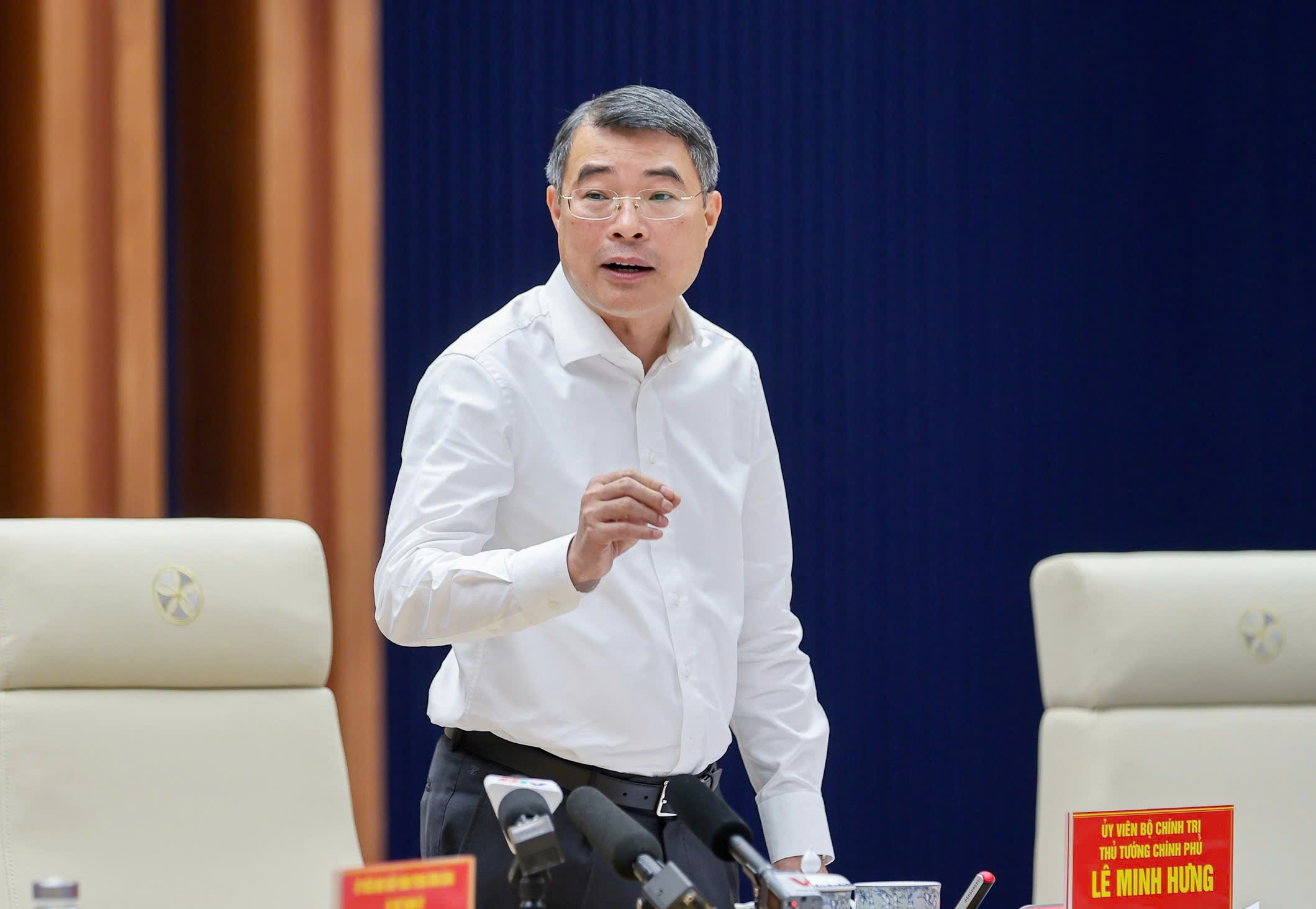 |
Prime Minister Le Minh Hung chaired a working session with leaders of Hai Phong city and Quang Ninh, Bac Ninh, Ninh Binh, Hung Yen provinces on rental housing development. *Photo: Dam Thanh*
Emphasizing that rental housing development is a major, strategic policy of the Party and the State, the prime minister called for a strong shift in housing mindset. The focus should move from primarily developing housing for sale to simultaneously developing both commercial and rental housing. "The State plays a formative role through institutions, policies, planning, and financial-credit tools to ensure that those who cannot afford to own a home can access long-term rental housing at reasonable prices," he stated.
The prime minister urged leaders of provinces and cities to proactively and decisively engage in this initiative. He stressed that the policy is clear, and localities must actively implement it without passively waiting for the Central Government. In cases of obstacles or difficulties, they must identify specific issues for proposed amendments, updates, and improvements to the legal framework.
Regarding project implementation, each locality is tasked with breaking ground on at least one rental housing project in June 2026. Large-scale rental housing projects will commence in Q3 and Q4 2026. Localities must thoroughly review and determine the rental housing needs in their areas to develop a development plan until 2030, submitting it to the Ministry of Construction for consolidation and reporting to the prime minister by the end of June 2026.
Following this, localities will propose specific mechanisms and policies for rental housing development. These proposals will be sent to the Ministry of Construction for consolidation and reporting to the prime minister, and subsequently integrated into the amended Housing Law and amended Real Estate Business Law.
The head of the Government noted that the State must lead by example, considering state resources as a lever. This involves efficiently utilizing national and local housing funds to guide the market and unlock long-term private capital flows rather than solely relying on the budget.
Suggesting capital mobilization solutions, the prime minister indicated that the State could either build directly or mobilize businesses. This includes allowing the determination of a proportion of state-owned rental housing within commercial projects to leverage existing infrastructure. Private businesses investing in rental housing could also be assigned to manage some commercial centers to generate revenue that offsets operating costs.
The prime minister also directed the Ministry of Construction to promptly issue national technical standards for small and medium-sized rental housing, including mini-apartments. The ministry will also coordinate in reviewing mechanisms for businesses to acquire commercial and social housing for rent. The Ministry of Finance and the State Bank of Vietnam are responsible for proposing robust tax and credit incentive packages to attract long-term investment funds.
Le Tan