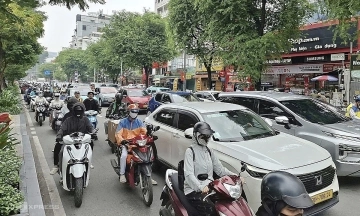
The Ho Chi Minh City People's Committee has mandated these measures for various units to implement, addressing natural disaster situations during this year's rainy and storm season. In recent days, continuous heavy rainfall has caused deep flooding and traffic congestion on many city roads.
Following city directives, the fire and rescue police will deploy mobile pumps in areas affected by heavy rain and high tides. Traffic police will collaborate with youth volunteers to organize mobile forces for traffic regulation at impacted locations.
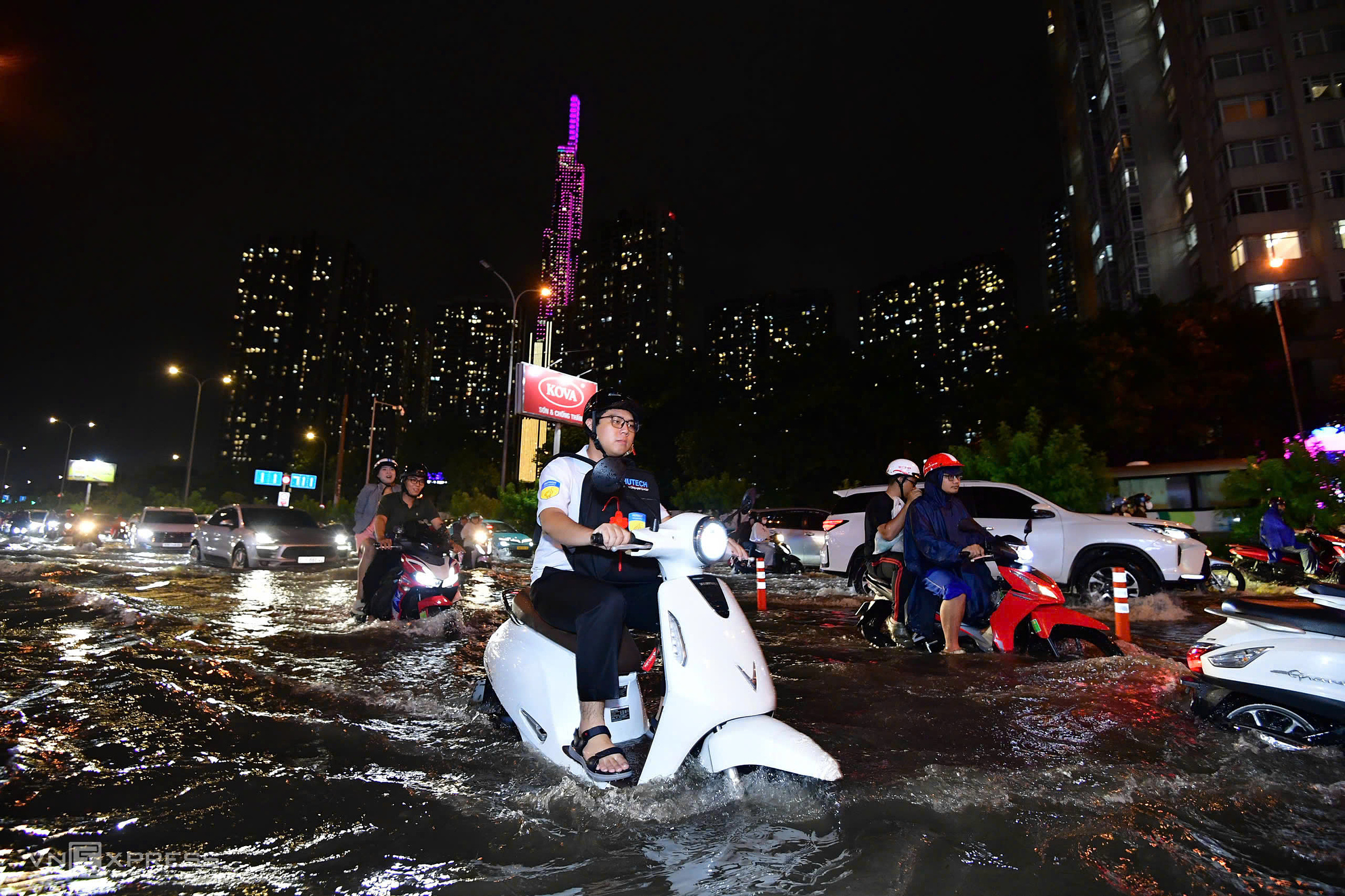 |
Flooding on Nguyen Huu Canh street, evening of 1/10. Photo: Thanh Tung |
In addition to the fire and rescue police, other city infrastructure management units have also been continuously operating both mobile and fixed pumps to manage flooded areas.
During two heavy rainfalls on the evenings of 30/9 and 1/10, this system was deployed in various areas, including Phan Huy Ich, Nguyen Van Khoi, and Ba Trieu streets. Urgent response measures also included operating large tidal control gates such as Nhieu Loc - Thi Nghe, Rach Nhay - Ruot Ngua, Binh Loi, and Binh Trieu, to manage water levels in the canal system.
Beyond these solutions, Ho Chi Minh City has directed departments and local authorities to closely monitor weather developments. This includes deploying guards, issuing warnings, and guiding traffic in critical areas. Residents are advised not to traverse deeply flooded or landslide-prone zones, or any areas posing safety risks. Additionally, units must maintain 24-hour shifts, including weekends and holidays, to ensure readiness for disaster response.
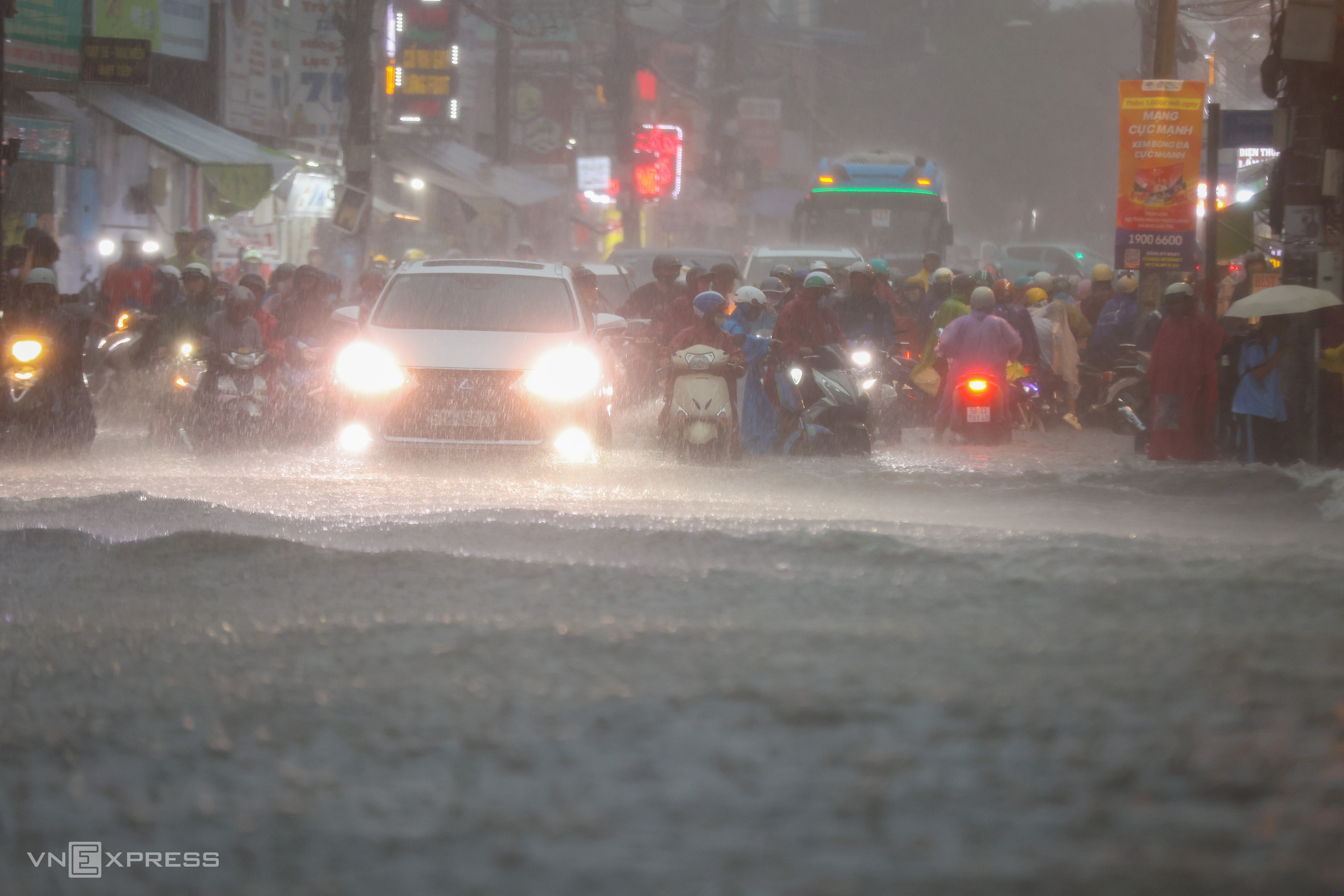 |
Rainfall flooding on Linh Dong street, Ho Chi Minh City, afternoon of 30/9. Photo: Quynh Tran |
Ho Chi Minh City also requires reviewing and evacuating residents from areas at risk of deep flooding due to high tides, heavy rains, or landslides to safe locations. Local forces must be prepared to assist residents with recovery efforts, search, and rescue in emergency situations.
The Ho Chi Minh City Department of Construction, along with infrastructure management units, is responsible for reviewing safety plans for underground structures, tunnels, irrigation systems, dykes, and reservoirs, particularly those currently under construction. These units must also efficiently operate discharge gates, tidal control sluices, pumping stations, and manage any emerging situations according to their administrative functions.
According to the Southern Hydrometeorological Station, the highest tide peak in 2026 at the Phu An station could reach 1,7-1,75 meters from 27-29/10, exceeding alarm III by 0,1-0,15 meters. At the Thu Dau Mot station, the predicted tide level is 1,82-1,87 meters, surpassing alarm III by 0,22-0,27 meters.
Currently, Ho Chi Minh City still has 159 regularly flooded locations: 76 in the former Ho Chi Minh City area, 52 in the former Binh Duong area, and 31 in the former Ba Ria - Vung Tau area. In addition to immediate response measures, the city aims for long-term flood reduction through a series of large projects and basin-specific drainage management plans.
This year, Ho Chi Minh City aims to complete 9 projects, addressing three severely flooded points at Phan Van Hon street, Binh Quoi, and the National Highway 51 - Huynh Thuc Khang intersection. The Department of Construction has also advised the city People's Committee to issue a drainage and anti-flooding plan for the 2026-2030 period to continue addressing the remaining areas.
Giang Anh