The Ho Chi Minh City Center for Traffic Management and Technical Infrastructure, under the Department of Construction, recently piloted an automatic warning system at the foot of Saigon Bridge, on the route from Vo Nguyen Giap street into the city center. This marks the first time an automatic audio warning model has been implemented in Ho Chi Minh City.
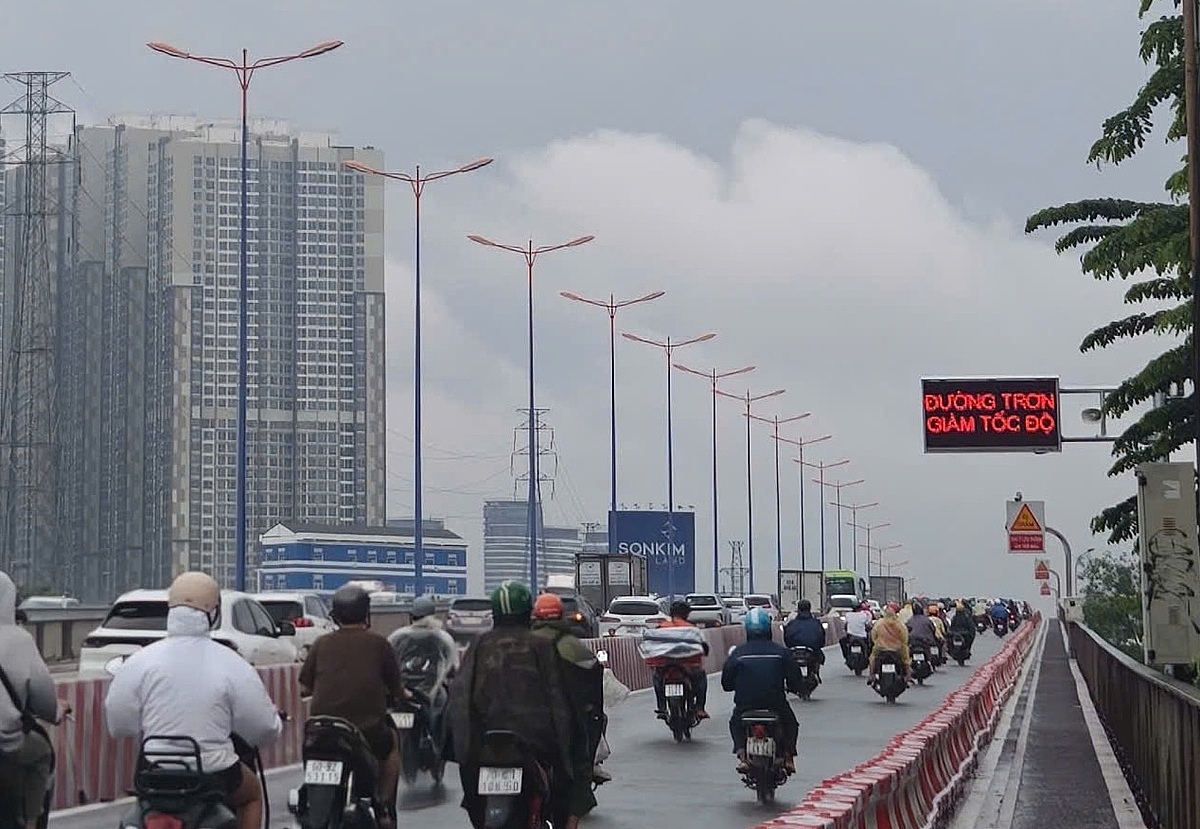 |
An electronic board combined with a loudspeaker installed on Saigon Bridge. Photo: Giang Anh |
The system comprises an electronic board integrated with a loudspeaker. When sensors detect rain or a potentially slippery road surface, the speaker automatically broadcasts the message "slippery road, reduce speed," while the electronic board displays the warning content for commuters to notice from a distance.
According to the implementing unit, Saigon Bridge has recorded numerous instances of motorcycles skidding when the road surface was wet due to rain or strong winds. Previously, authorities inspected the bridge's surface roughness, confirming it met technical standards, and added traffic signs.
However, some incidents continued to occur, primarily because drivers failed to reduce speed or lacked attention during sudden weather changes.
Following the pilot period, authorities will evaluate its effectiveness to consider replicating the model at other locations with similar traffic safety risks.
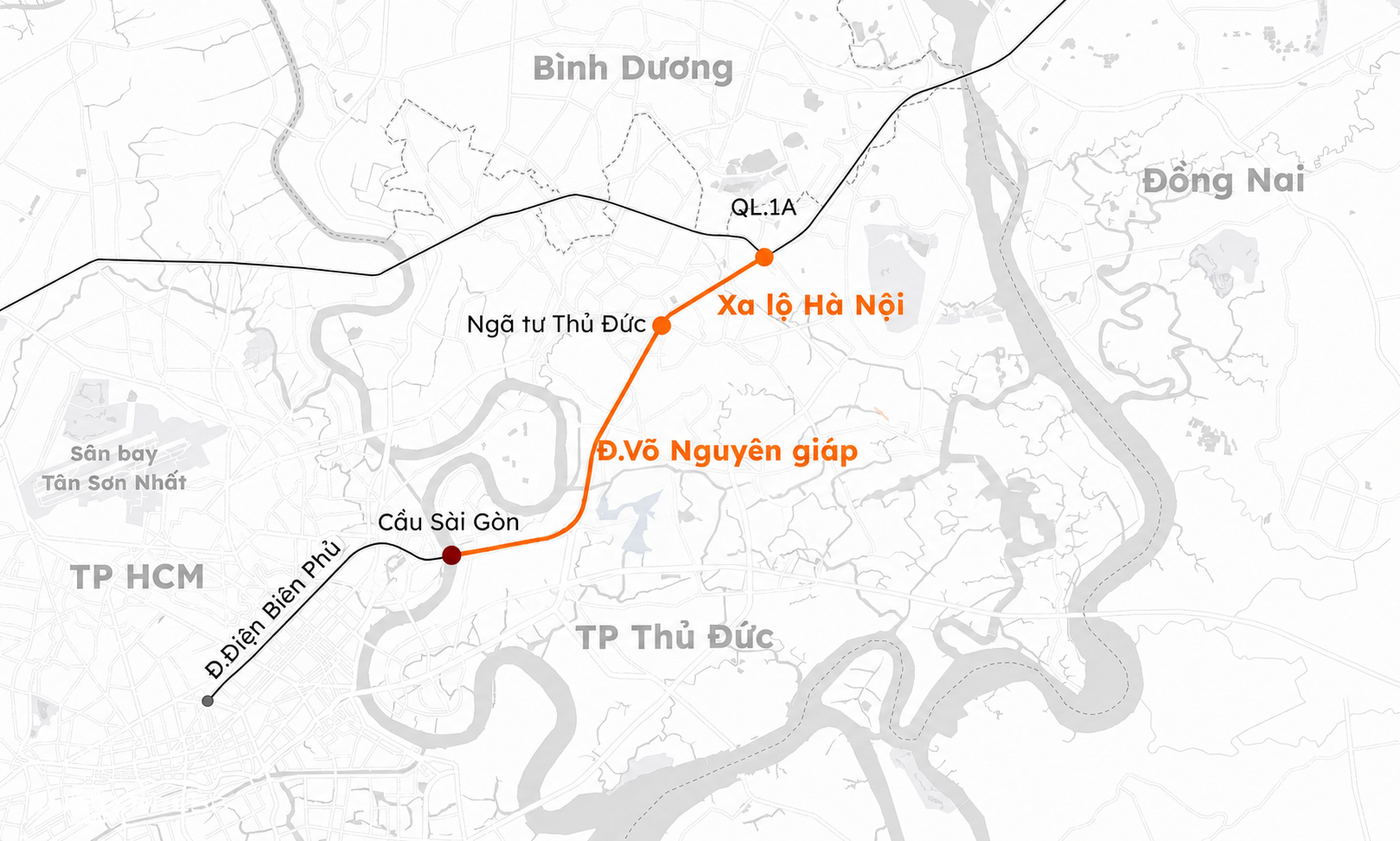 |
Location of Saigon Bridge. Graphic: Khanh Hoang |
Saigon Bridge, built in 1958, spans nearly one kilometer across the Saigon River, connecting Ho Chi Minh City's center with its eastern gateway and the central and northern provinces. Saigon Bridge 2 was constructed parallel to it and began operations in 2012 to alleviate traffic congestion in the area.
Giang Anh