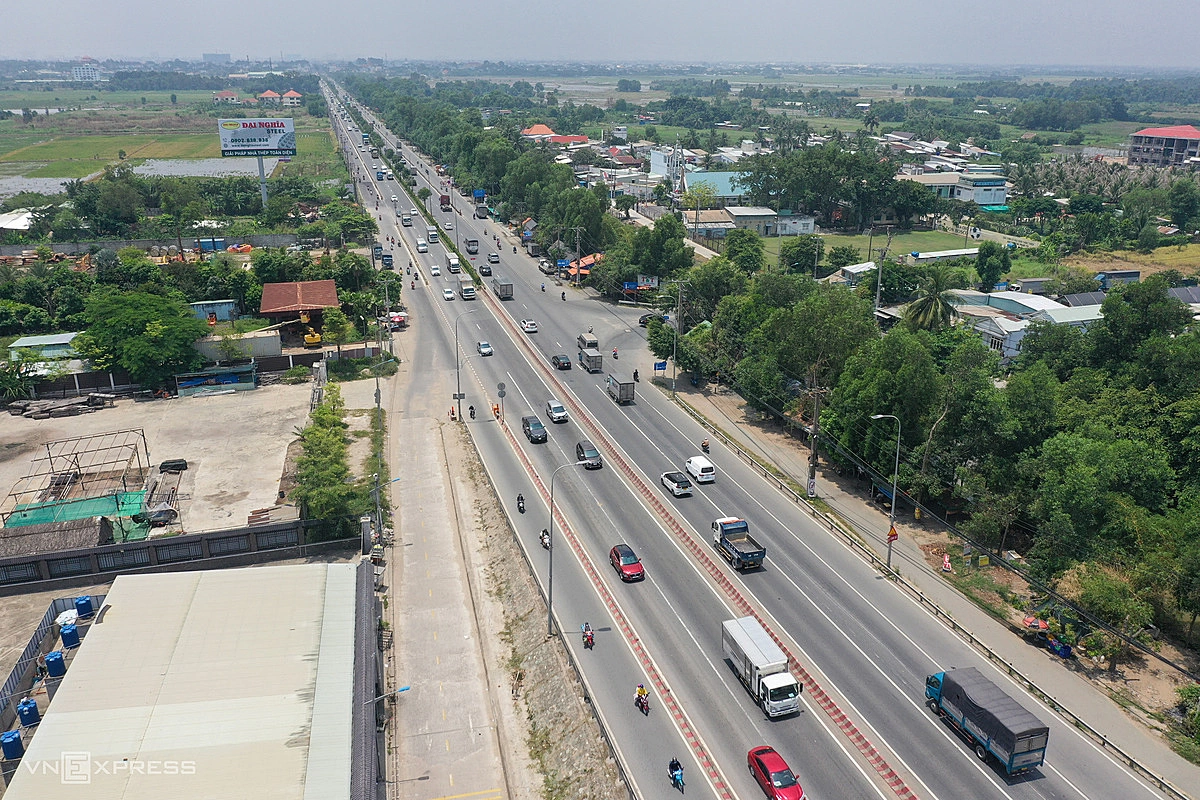
The Ho Chi Minh City People's Committee has approved the Western Saigon Basin Drainage, Wastewater Treatment, and Climate Change Adaptation Project (CRUS2), with a total investment of 7,688 billion VND. The project will span eight wards in the western part of the city: Dong Hung Thuan, Trung My Tay, Tan Thoi Hiep, An Hoi Tay, Tan Son, Tay Thanh, Tan Son Nhi, and Binh Hung Hoa.
The largest component of the project is a nearly 43 km combined sewer system, designed to receive both rainwater and wastewater. This extensive system features various dimensions, including pipes with a diameter of 0,4 m, as well as double box culverts, each compartment measuring 3 m wide and 3 m high.
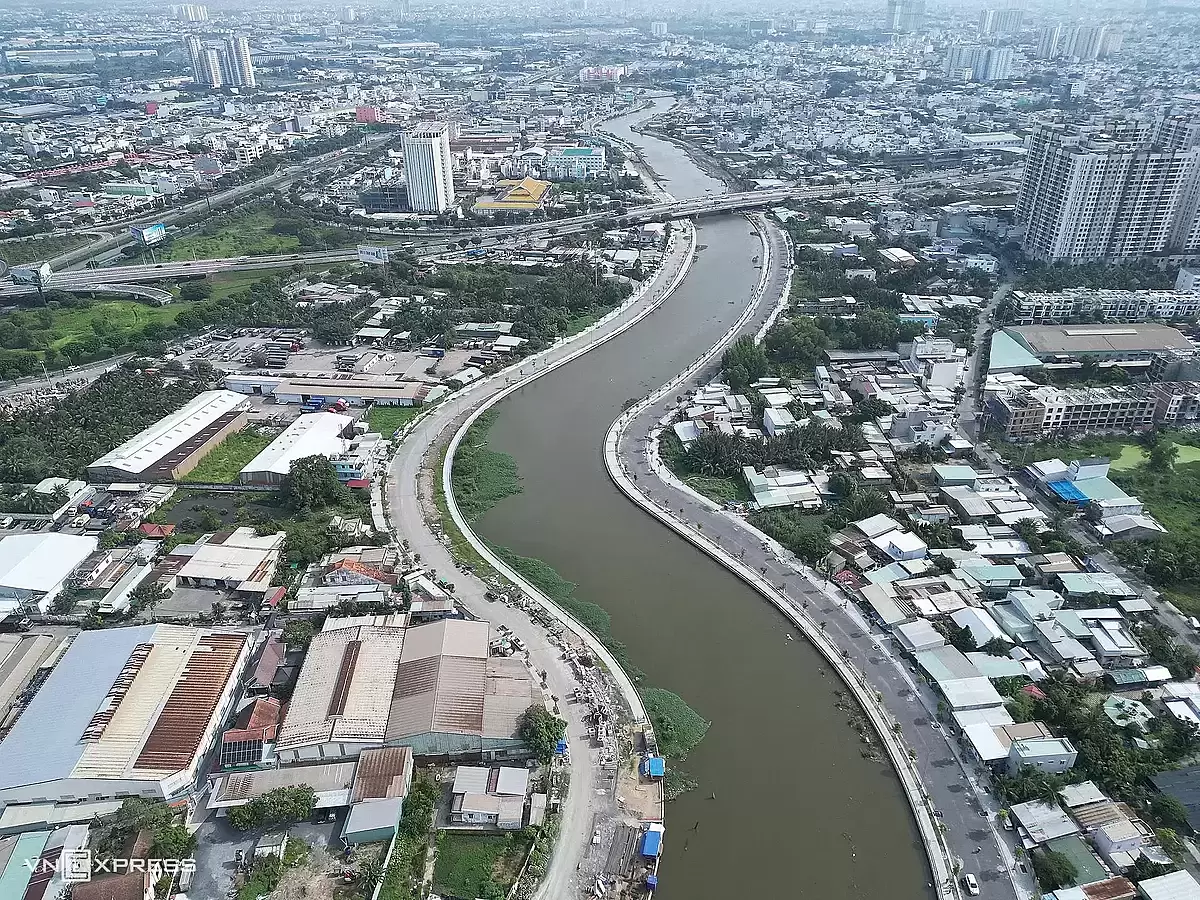 |
The Tham Luong - Ben Cat Canal, where the sewer system will be implemented. Photo: Giang Anh
The project also includes the construction of approximately 13,4 km of interceptor sewers, with diameters ranging from 0,3 to 2,5 m. These will be installed alongside flow separation wells along the Tham Luong - Ben Cat Canal, the 19/5 Canal, and extending to the end of the Western Saigon basin. The wells are crucial for separating rainwater from wastewater within the combined sewer system. Wastewater will then be collected into the interceptor sewers and directed to a centralized treatment plant, while rainwater will continue to drain into canals through discharge outlets along the route.
Of the project's total investment, approximately 5,056 billion VND will be financed by a loan from the Asian Development Bank (ADB), with the remaining 2,633 billion VND sourced from domestic counterpart funds. The city has assigned the Urban Infrastructure Investment Project Management Board as the primary investor, with implementation scheduled from now until 2029.
Upon completion, the project is expected to significantly enhance drainage capacity, reduce flooding, and expand the currently insufficient wastewater collection network in the western area. This initiative aims to curb the direct discharge of untreated domestic wastewater into canals, a major contributor to pollution.
Statistics show that Ho Chi Minh City's urban wastewater collection rate currently stands at about 52%, with only nearly 20% of collected wastewater meeting standard treatment requirements. The city aims to increase the collection rate to 80% and achieve a 40-45% rate for treated wastewater by 2030.
Giang Anh