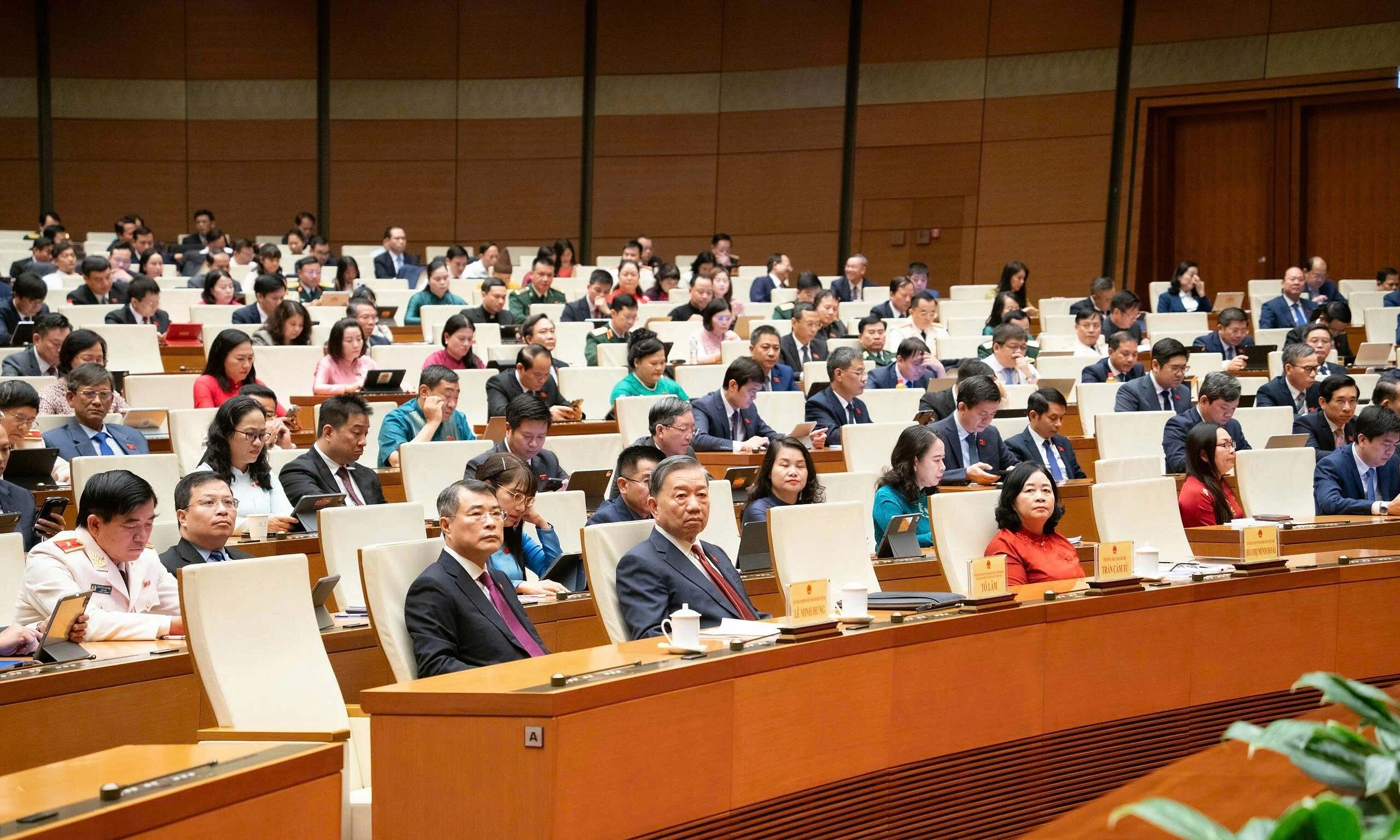
On the morning of 25/9, the National Assembly Standing Committee discussed the draft Penal Code (amended). The draft suggests reducing the scope of the death penalty from ten to four crimes: treason, murder, terrorism, and illegal drug production. Among the crimes proposed for abolishing the death penalty, there are differing opinions regarding illegal drug trafficking and the rape of children under 16.
Regarding illegal drug trafficking, Deputy Minister of Public Security Pham The Tung noted that the quantity of drugs in many cases often far exceeds the threshold for the highest penalty. Once this threshold is surpassed, offenders might believe that trafficking larger quantities of drugs will not alter their penalty. This complicates efforts to combat crime.
Despite the relatively high application rate of the death penalty for illegal drug trafficking, this crime remains complex. The drafting agency believes that effective crime prevention and control primarily depend on timely prevention, detection, and handling, not solely on the maximum penalty.
Under the current Penal Code, trafficking 30 kg of opium resin, cannabis resin, or coca paste (containing the main active ingredient cocaine) carries a penalty of life imprisonment or death. The corresponding thresholds are 3 kg for heroin, cocaine, methamphetamine, amphetamine, ketamine, fentanyl, MDMA, or XLR-11; 9 kg for other solid narcotics; and 22 liters for other liquid narcotics.
 |
Senior Lieutenant General Pham The Tung, Deputy Minister of Public Security, speaks at the session on the morning of 25/9. Photo: National Assembly E-portal |
For the crime of raping children under 16, the drafting agency emphasizes the need for special protection of children and strict handling of harmful acts. However, the scope of the death penalty must be considered within Vietnam's overall criminal policy and international obligations.
Article 6 of the International Covenant on Civil and Political Rights limits the death penalty to the most serious crimes, those involving intentional deprivation of life. Following this guideline, the draft abolishes the death penalty for the rape of children under 16 but retains penalties of 20 years in prison or life imprisonment for particularly serious cases. If the act simultaneously constitutes another crime against life, criminal responsibility will be determined according to the corresponding provisions of the Penal Code.
Phan Chi Hieu, Chairman of the Law and Justice Committee, stated that the Standing Committee supports the policy of further narrowing the death penalty's scope. However, abolishing this penalty for specific crimes requires careful consideration, especially for illegal drug trafficking and the rape of children under 16, to avoid impacting deterrence, prevention, and crime handling.
The verification agency proposed seeking opinions from National Assembly deputies if options still have differing views; if necessary, the drafting agency will report to competent authorities for consideration.
Proposal to add four data-related offenses
In addition to the death penalty policy, the draft reorganizes seven articles to ensure that acts already defined as crimes are not overlooked. It also proposes adding four offenses: illegal data collection over a transmission line; forgery related to information systems and electronic means; infringement of personal data; and obstruction of personal data protection activities.
The government identifies this as a significant part of the Penal Code amendment. According to the drafting agency, new offenses are only added for acts significantly dangerous to society where civil, economic, or administrative measures are insufficient for prevention and handling.
The elements of each crime must be strict, with clear criminal liability thresholds consistent with specialized laws. The government states it will differentiate these acts from administrative violations, avoiding overlap or hindering legitimate production, business, and innovation.
The draft Penal Code was first reviewed by the National Assembly during its August session and is expected to be submitted for approval in the October session.
Son Ha