The Ho Chi Minh City People's Committee has submitted this plan to the City People's Council for consideration at its mid-year session (19-20/6). The total estimated cost for implementation until the end of 2026 is approximately 665 billion VND.
The policy is expected to roll out in two phases. From July to September, all passengers on 135 intra-provincial bus routes will receive free fares without needing to scan a card or provide identification. The city will compensate transport operators based on the revenue of each trip, according to agreements between the two parties.
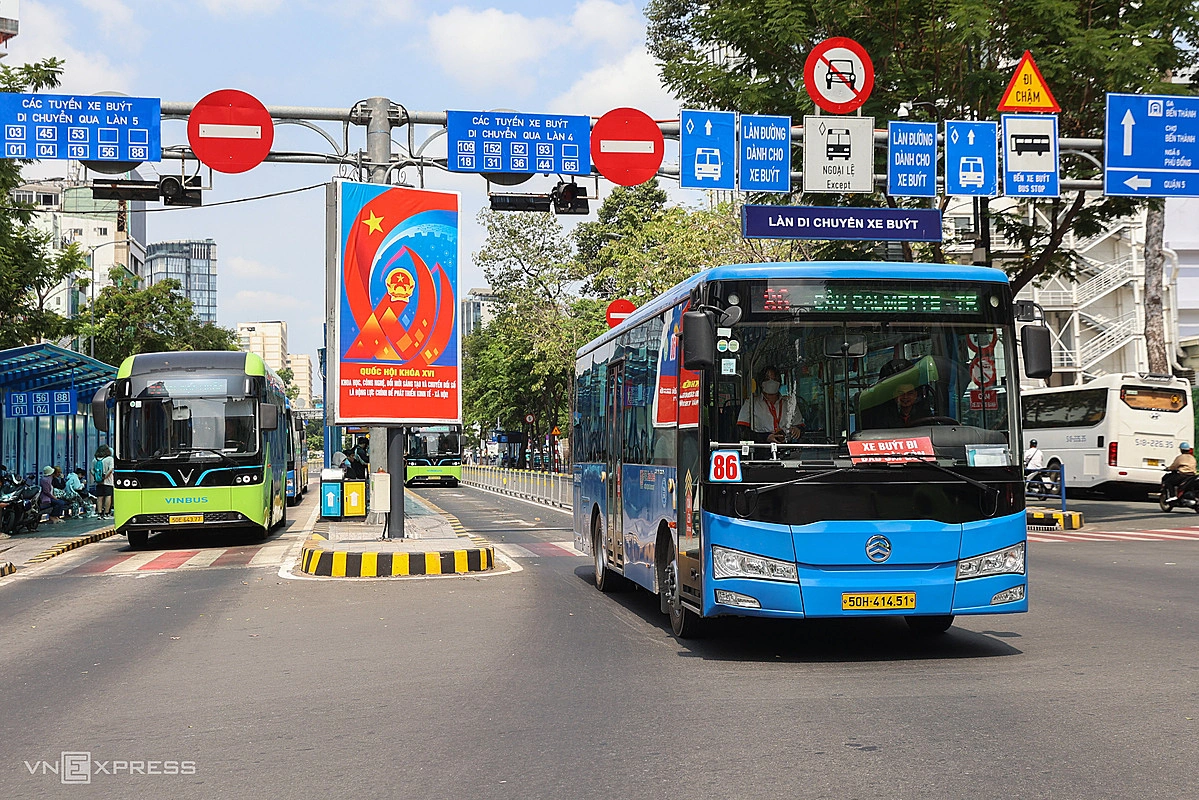 |
A bus operates in central Ho Chi Minh City, 4/2026. *Photo: Quynh Tran*
During this period, authorities will complete the technical infrastructure, technology, and electronic ticketing system across the entire network. Bus operations will be monitored via GPS, cameras, and management platforms to ensure service quality.
From October until the end of the year, passengers will continue to receive free fares but must verify their identity using a bank card, e-wallet, VNeID account, MultiGo application, or other electronic methods integrated with the ticketing system.
The identification requirement applies to all passengers, including the elderly, students, and veterans. Data recorded and cross-referenced on the system will serve as the basis for the city to compensate transport operators based on actual passenger counts, replacing the trip revenue model used in the initial phase.
According to the City People's Committee, the policy aims to reduce travel costs, encourage public transport usage, and contribute to mitigating congestion and pollution. Currently, standard fares on subsidized routes range from 5,000-7,000 VND per trip, while students pay 3,000 VND.
Following the merger of Binh Duong and Ba Ria - Vung Tau, Ho Chi Minh City has 180 intra-provincial and inter-provincial bus routes, operated by over 2,400 vehicles. The free fare policy is expected to apply to 135 intra-provincial routes, excluding the remaining routes.
Giang Anh