Le Quoc Phong, Deputy Permanent Secretary of the Ho Chi Minh City Party Committee, announced this initiative at a conference held on the morning of 6/6. The event focused on studying, grasping, and implementing Resolution 09 of the Politburo, which outlines strategies for building and developing the city in the new era.
According to Phong, Ho Chi Minh City's action program targets the creation of socialist residential areas. This initiative seeks to foster values such as solidarity, humanity, compassion, discipline, social responsibility, and active citizen involvement in community governance.
The city plans to pilot at least five wards and communes under this model. The goals include enhancing living quality, cultivating a healthy cultural environment, fostering comprehensive human development, and reinforcing national unity. The project is slated for completion in 2026, with implementation scheduled for the 2026-2030 period.
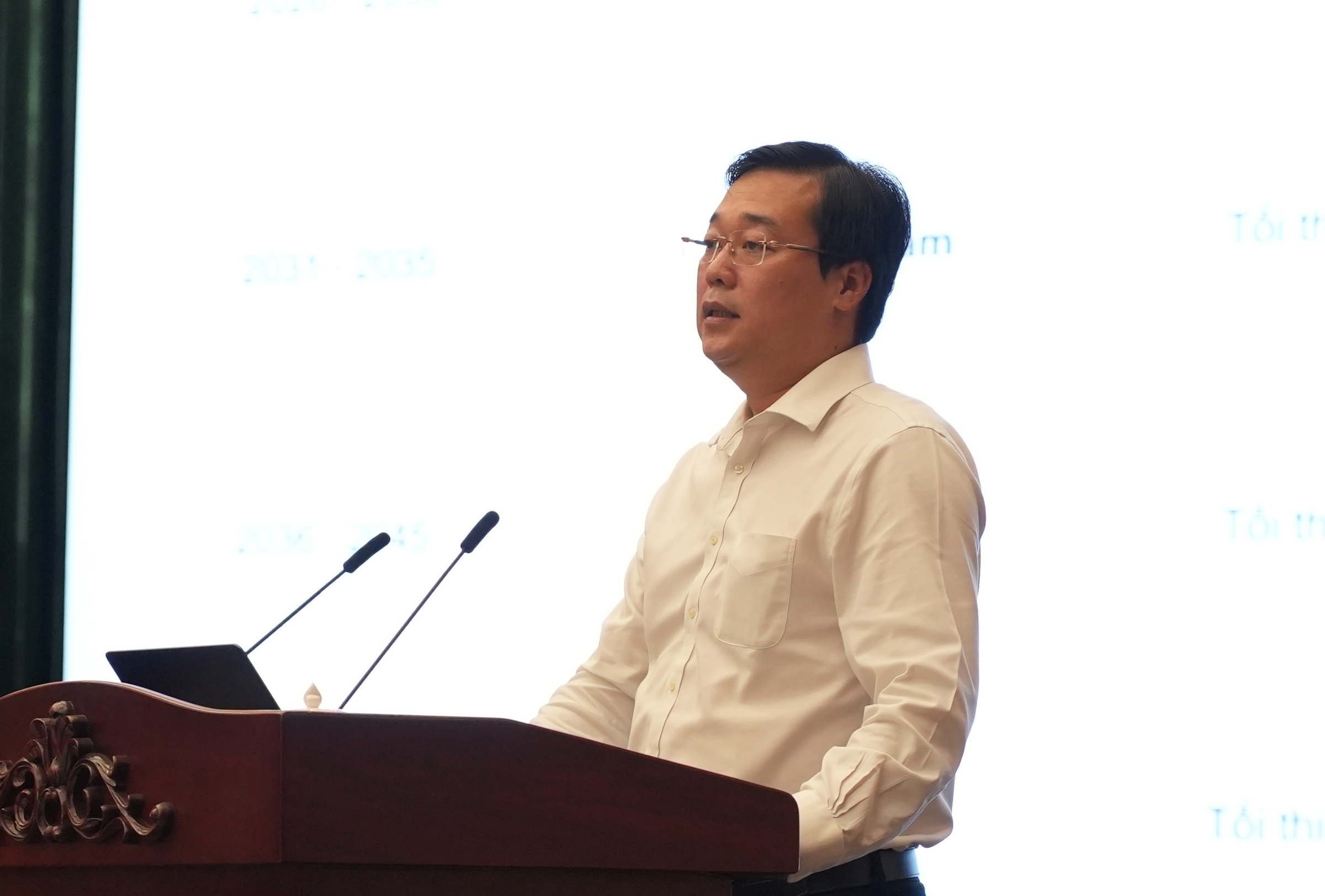 |
Le Quoc Phong, Deputy Permanent Secretary of the Ho Chi Minh City Party Committee, at the conference implementing Resolution 09, morning of 6/6. Photo: An Phuong
This pilot initiative stems from Politburo's Resolution 09, which mandates Ho Chi Minh City to "build and promptly establish socialist residential areas" and "pilot the development of socialist wards and communes." The resolution also guides solutions aimed at better addressing citizen needs, progressively materializing the socialist model within the city, and extending its influence to neighboring localities.
Prior to Ho Chi Minh City, Hanoi conducted its own research into the socialist commune and ward model. This research identified 54 quantifiable criteria, encompassing diverse sectors such as economy, employment, income, infrastructure, healthcare, education, environment, digital transformation, and citizen participation. Notably, citizen satisfaction and happiness are considered vital comprehensive indicators.
During a meeting with Hanoi voters on 4/5, General Secretary and President To Lam raised the possibility of Vietnam completing its transitional period to socialism by 2045. He further suggested that Hanoi explore this model for areas with populations between 500,000 and one million, emphasizing synchronized investment in infrastructure, schools, hospitals, public spaces, and smart city development.
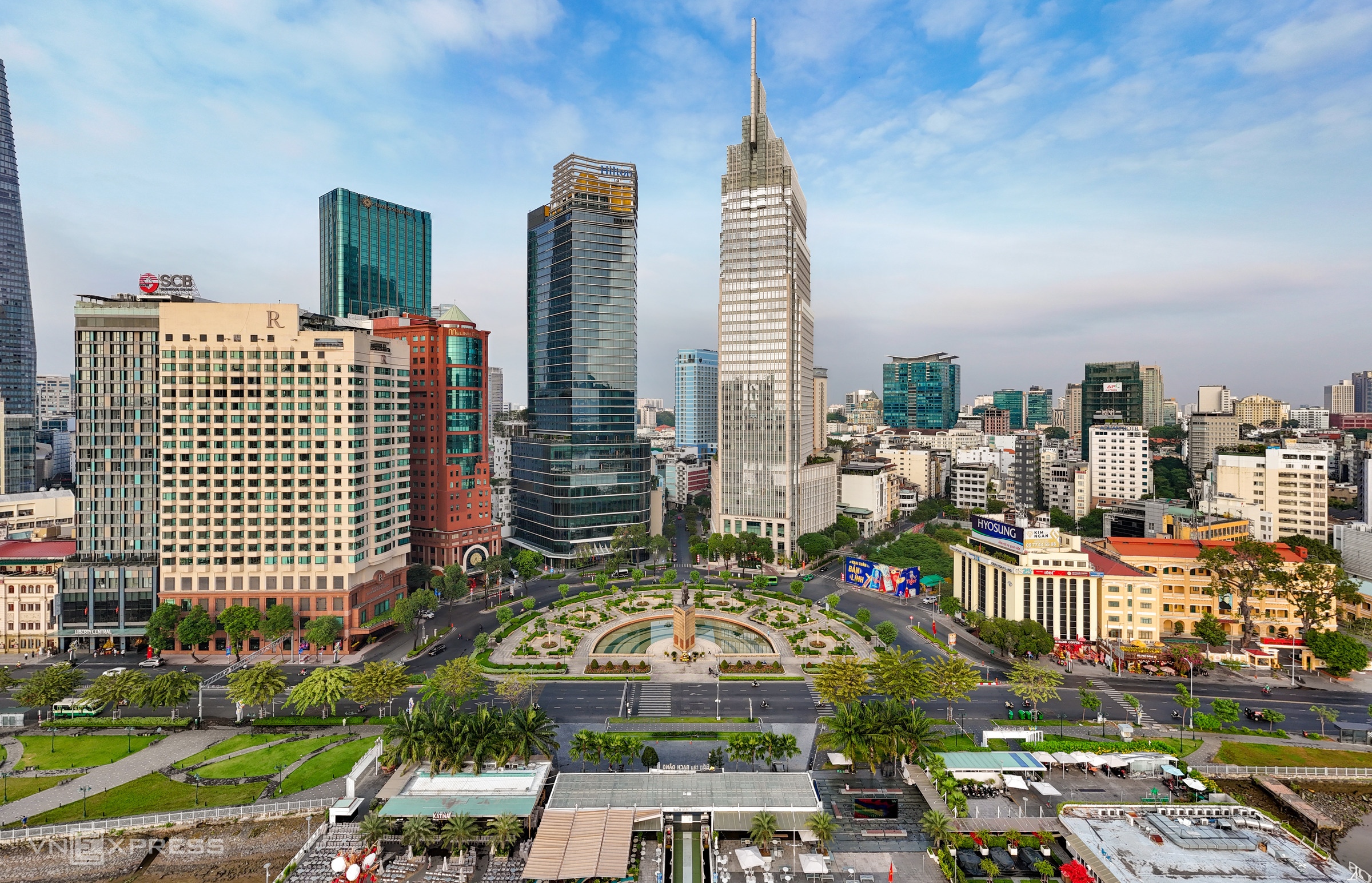 |
Ho Chi Minh City's downtown area, Me Linh Square section, 1/2025. Photo: Quynh Tran
Resolution 09 outlines ambitious goals for Ho Chi Minh City by 2030: to transform into a civilized, modern, dynamic, and innovative urban hub. The city is envisioned as the national center for economy, culture, science and technology, innovation, logistics, and international integration, securing a prominent position in Southeast Asia.
By 2045, the city aims to serve as Asia's economic, cultural, science and technology, and innovation hub, establishing itself as a globally appealing destination known for its high quality of life. The long-term vision for 2075 sees Ho Chi Minh City striving to become a global, smart, and modern metropolis, developing in line with the world's foremost cities.
The resolution further mandates a minimum annual GRDP growth of 10% throughout the 2026-2045 period. By 2030, specific targets include a per capita GRDP of at least 14,000 USD, the digital economy contributing approximately 40% to GRDP, the completion of around 200 km of urban railway, and a Human Development Index (HDI) of about 0,9. The city also aims to largely overcome challenges such as flooding, environmental pollution, traffic congestion, and drug-related issues.
Le Tuyet