Japan entered a period of rapid urbanization in the 1950s. Over several decades, numerous roads, residential areas, factories, and infrastructure projects were continuously built. This process generated an increasing volume of construction waste. Initially, Japan largely managed this waste by transporting it to landfills or dumping sites.
This model quickly reached its limits as land for landfills diminished and processing costs steadily rose. Simultaneously, large-scale sand and stone extraction began to cause severe environmental pressure in many riverside and coastal areas.
According to studies on Japan's circular economy model, the country shifted to a "material-cycle society" strategy by the end of the 20th century. In this approach, reuse and recycling became pillars to reduce reliance on natural resources.
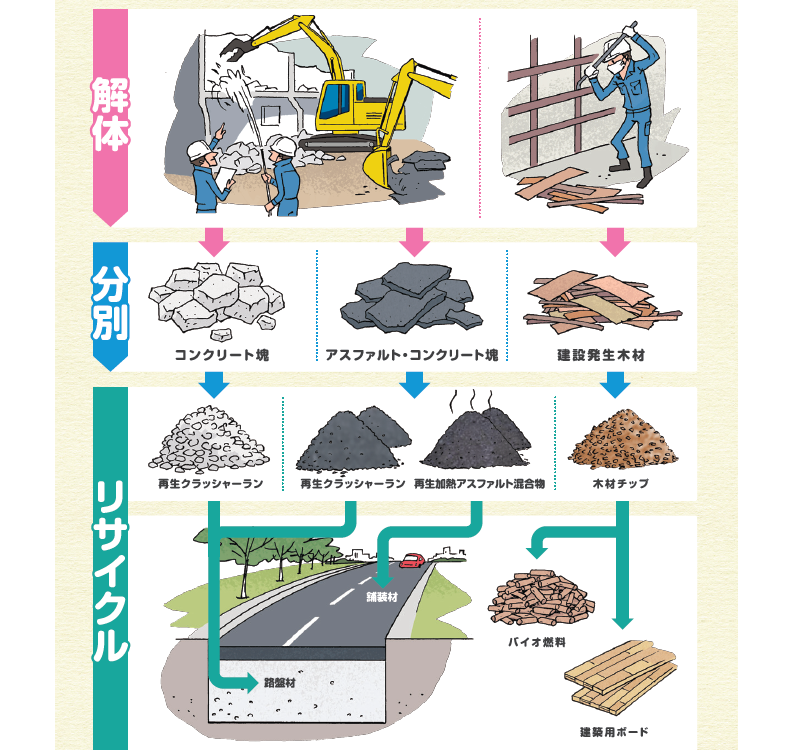 |
A graphic illustrating the use of construction waste in Japan. Source: Sanpai-office.com |
The main challenge in the initial phase was the uncoordinated construction waste management system. At many construction sites, concrete, metal, wood, plastic, and earth were often mixed. When processed, the crushed materials did not achieve consistent quality, making them difficult to reuse in construction.
Furthermore, the construction market at that time did not fully trust recycled materials. Natural sand and stone in Japan remained relatively inexpensive, meaning businesses were not keen to invest in recycling technology.
To address these issues, Japan invested in technology and transformed its entire construction waste management system. Various regulations were enacted, mandating material sorting directly at demolition sites. Project owners and contractors became responsible for collecting and processing waste after demolition. Japan also developed a system of technical standards for recycled aggregates to build market confidence.
According to cooperation documents between Japan and Vietnam in environmental fields, the construction waste recycling rate in Japan currently exceeds 95%. Demolished concrete, once collected, is crushed, steel is separated using industrial magnets, and then sorted by size to create recycled aggregates. These materials are commonly used for road bases, building foundations, infill materials, block bricks, and low-strength concrete.
Japan has actively developed crushed sand and manufactured sand to reduce its dependence on natural sand. This is considered an important solution as many Asian countries begin to face construction sand scarcity. According to the Ministry of Land, Infrastructure, Transport and Tourism of Japan (MLIT), the volume of construction waste requiring landfill disposal decreased by 85% after the law's implementation, from 12,85 million tons in 2000 to 2,12 million tons in 2018.
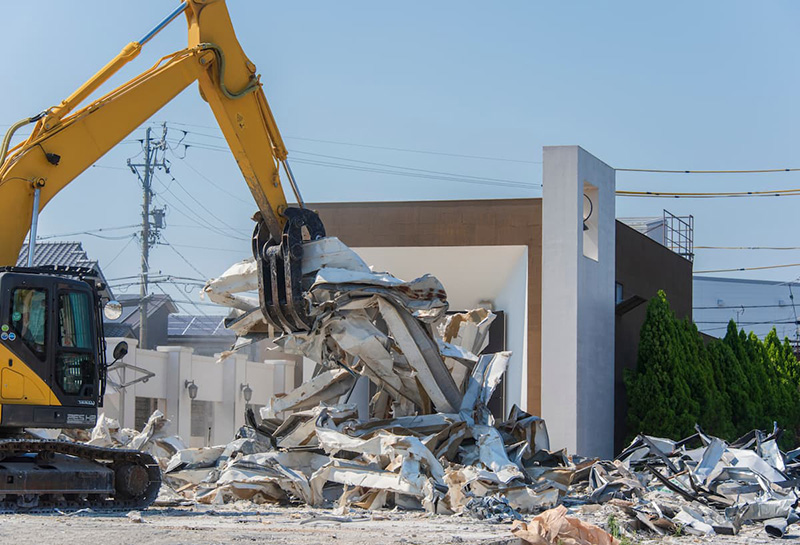 |
A structure in Japan being demolished for construction waste recycling. Photo: Rakuoh.jp |
Singapore creates a stable market for recycled construction materials
Singapore also faces the pressing issue of insufficient land for waste disposal. The island nation has virtually no significant natural construction resources, while its land area is limited. Continuing to manage waste through traditional landfill methods posed a risk of exhausting the land available for waste treatment.
During the initial phase of implementing recycling, Singapore encountered challenges similar to many other countries. Collection systems were not standardized, technology costs were high, residents had not yet adopted waste sorting habits, and businesses were hesitant to use recycled materials in construction.
From the late 1970s, Singapore began developing a strategy to reduce landfill reliance through significant investment in waste treatment and recycling technology. The government developed large-scale waste treatment plants while promoting material sorting and reuse in many sectors, including construction.
For construction waste, Singapore adopted a cautious approach. Instead of immediately using recycled materials for high-technical requirement projects, the country prioritized crushed concrete for road bases, infill, or auxiliary structures. This approach helped reduce technical risks and allowed businesses and the market to adapt to recycled materials.
One of the main challenges Singapore faced was creating a stable market for recycled materials. Without a consumer market, recycling operations would remain dependent on financial support and struggle for sustainable operation. Therefore, Singapore combined waste management policies with market development for recycled materials.
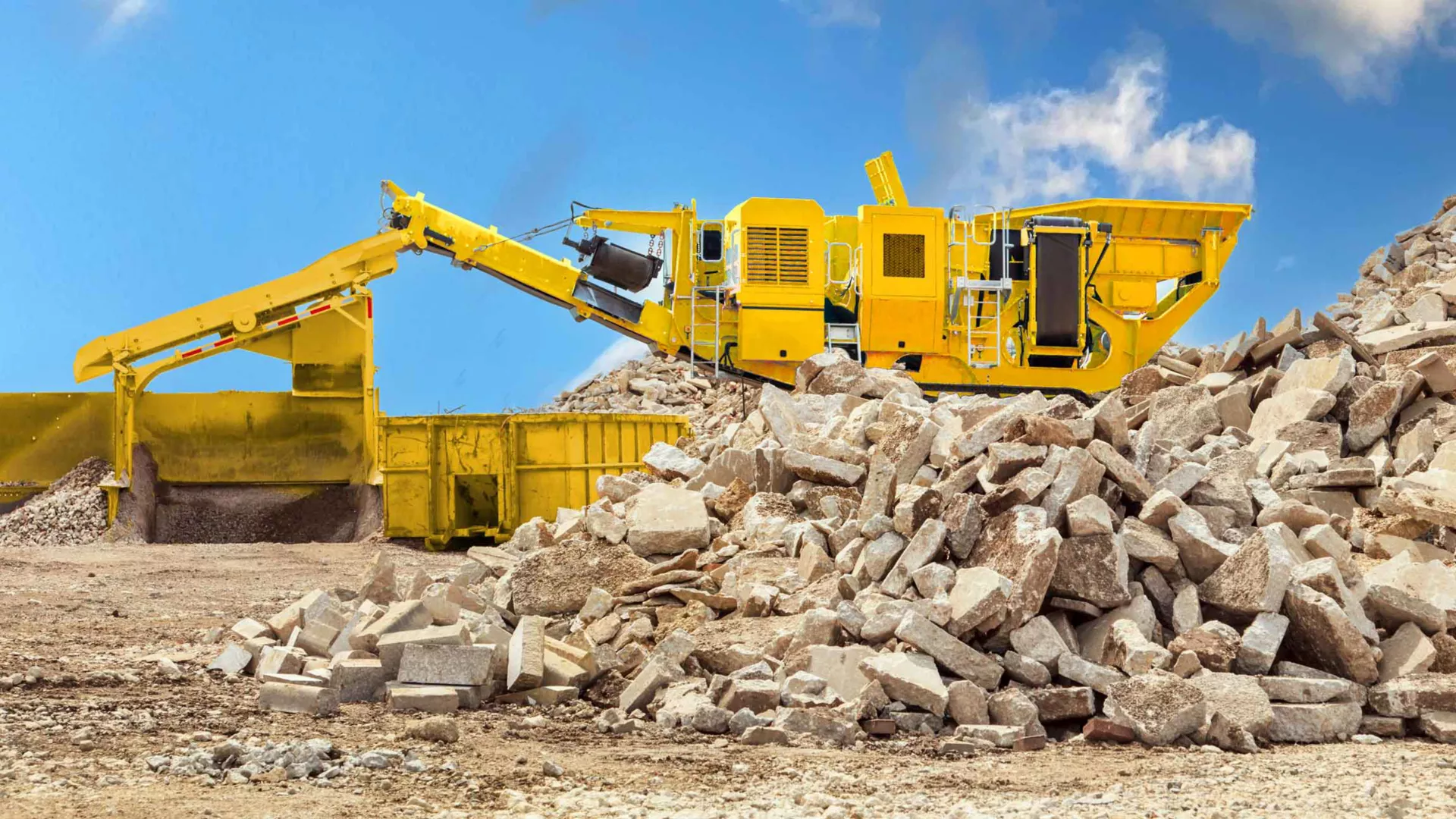 |
A concrete recycling system developed by Sika. Photo: Sika.com |
Currently, the island nation has significantly reduced the amount of waste requiring landfill through a combination of recycling and high-tech processing.
In many European countries, such as the Netherlands, Germany, and Denmark, construction waste recycling has gained momentum as sand and stone extraction and landfill expansion faced significant public opposition. European governments gradually shifted from a "waste disposal" model to a circular economy model, where waste is viewed as a resource for the next production cycle.
European countries debated for years over the safety standards of recycled materials, legal liability if structural failures occurred, and the economic efficiency of recycling compared to extracting new resources. To resolve this, many nations simultaneously applied financial and legal measures. Landfill operations were taxed at higher rates, while recycling businesses received technological and policy support. Concurrently, a robust system of technical standards for recycled aggregates was established to foster market confidence.
As a result, recycled materials are now commonly used in road construction, technical infrastructure, infill, and low-grade concrete projects across many European countries.
International experience demonstrates that construction waste recycling is only truly effective when viewed as an integral part of the construction materials industry, rather than merely a waste treatment activity. This requires not only technology but also coordinated management mechanisms, clear standard systems, and policies that create a market for recycled materials.
Son Ha