On a late May afternoon, the sound of hammers and saws echoed through the nearly 100-year-old ancestral home of Ms. Nguyen Thi Nga's family in Thuan My commune, Tay Ninh province. "We've waited almost 20 years for the state to fix it, but nothing has happened, so we decided to repair it ourselves to save the house," Ms. Nga said.
While a team of workers climbed onto the roof to replace broken tiles, family members quickly covered furniture and moved ancestral photos from the altar to protect them from falling debris.
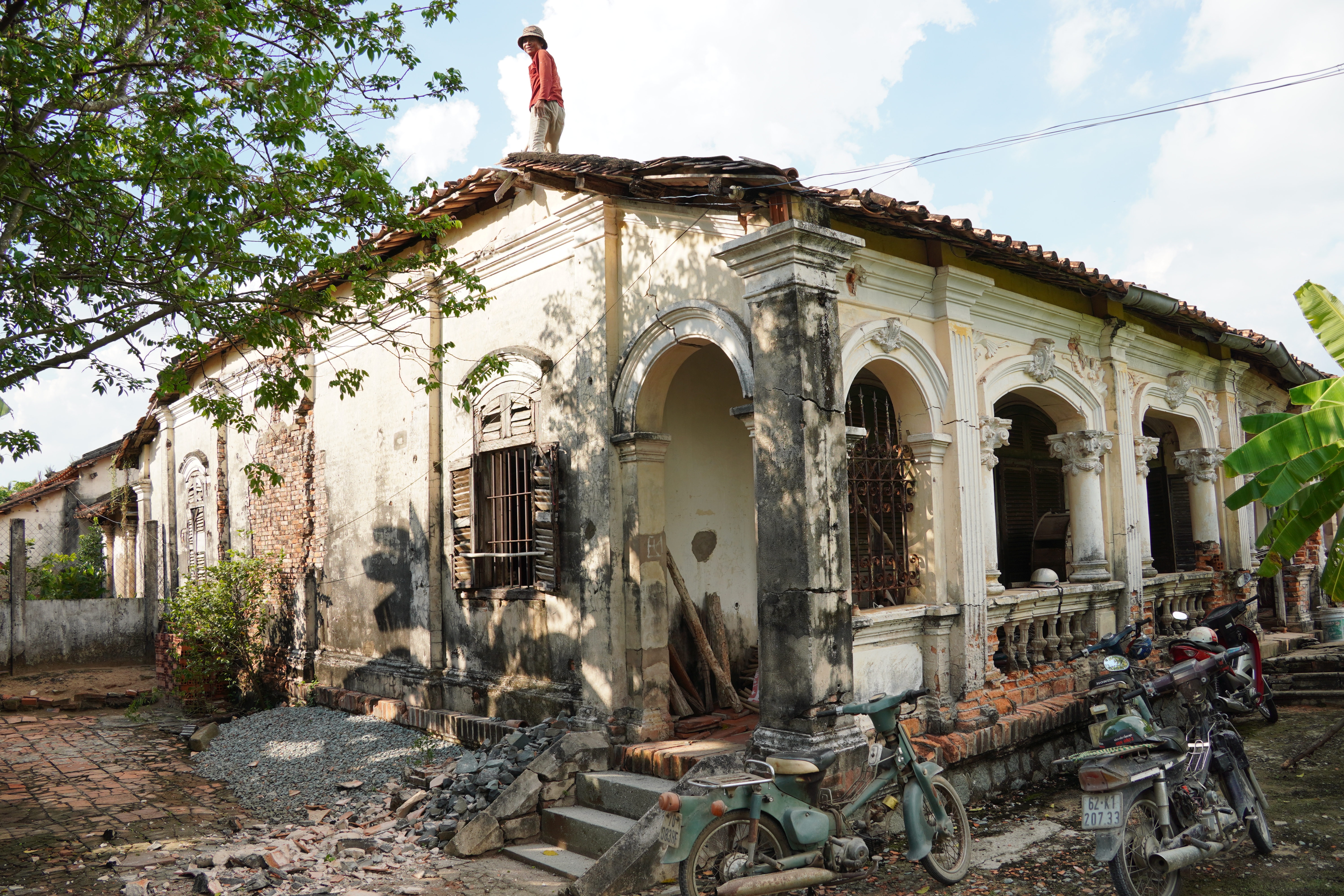 |
A mason climbs onto the roof of the nearly 100-year-old house to replace broken tiles in late May.
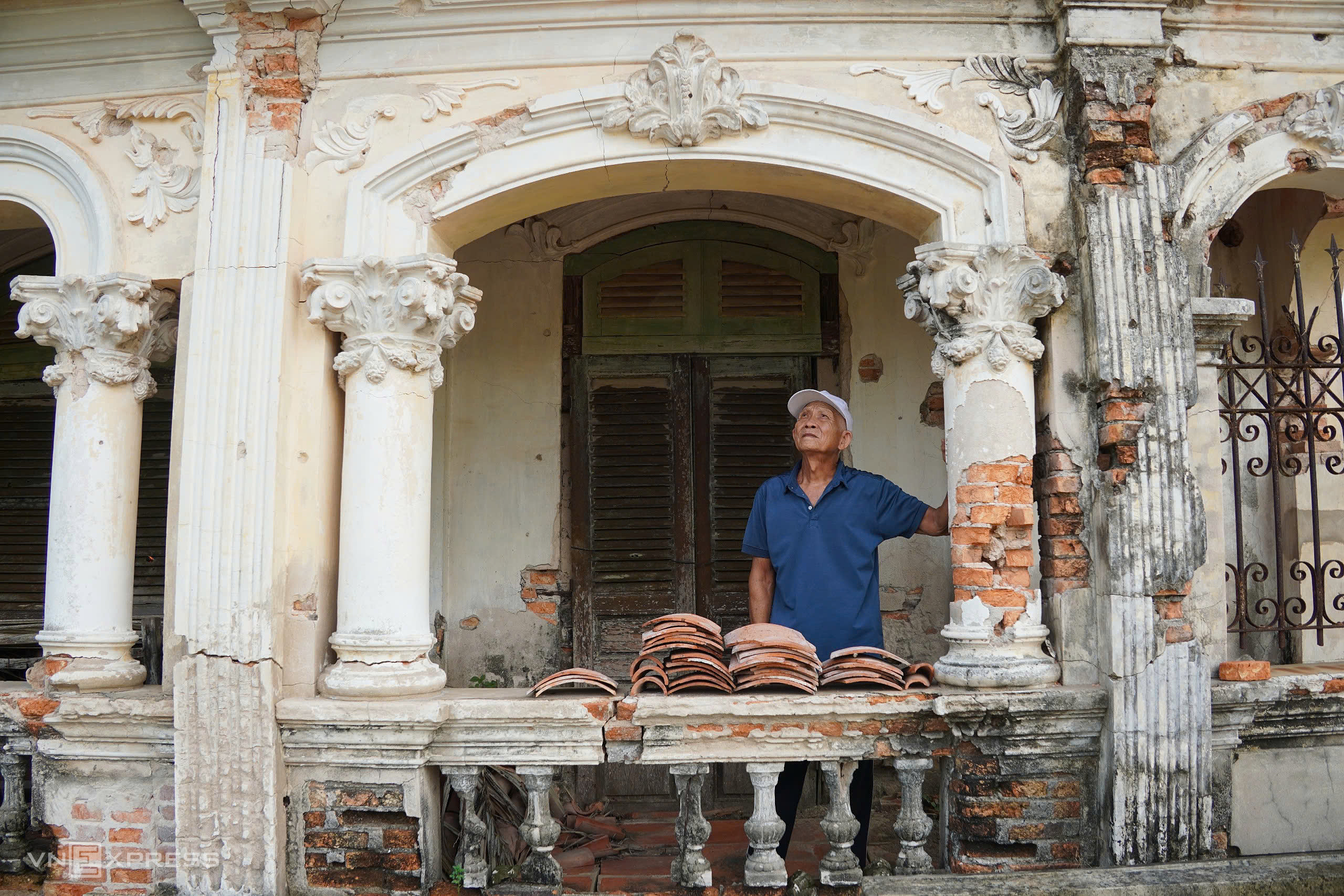 |
Ms. Nga's relatives stand anxiously beside the veranda of the house, where walls and columns show significant damage.
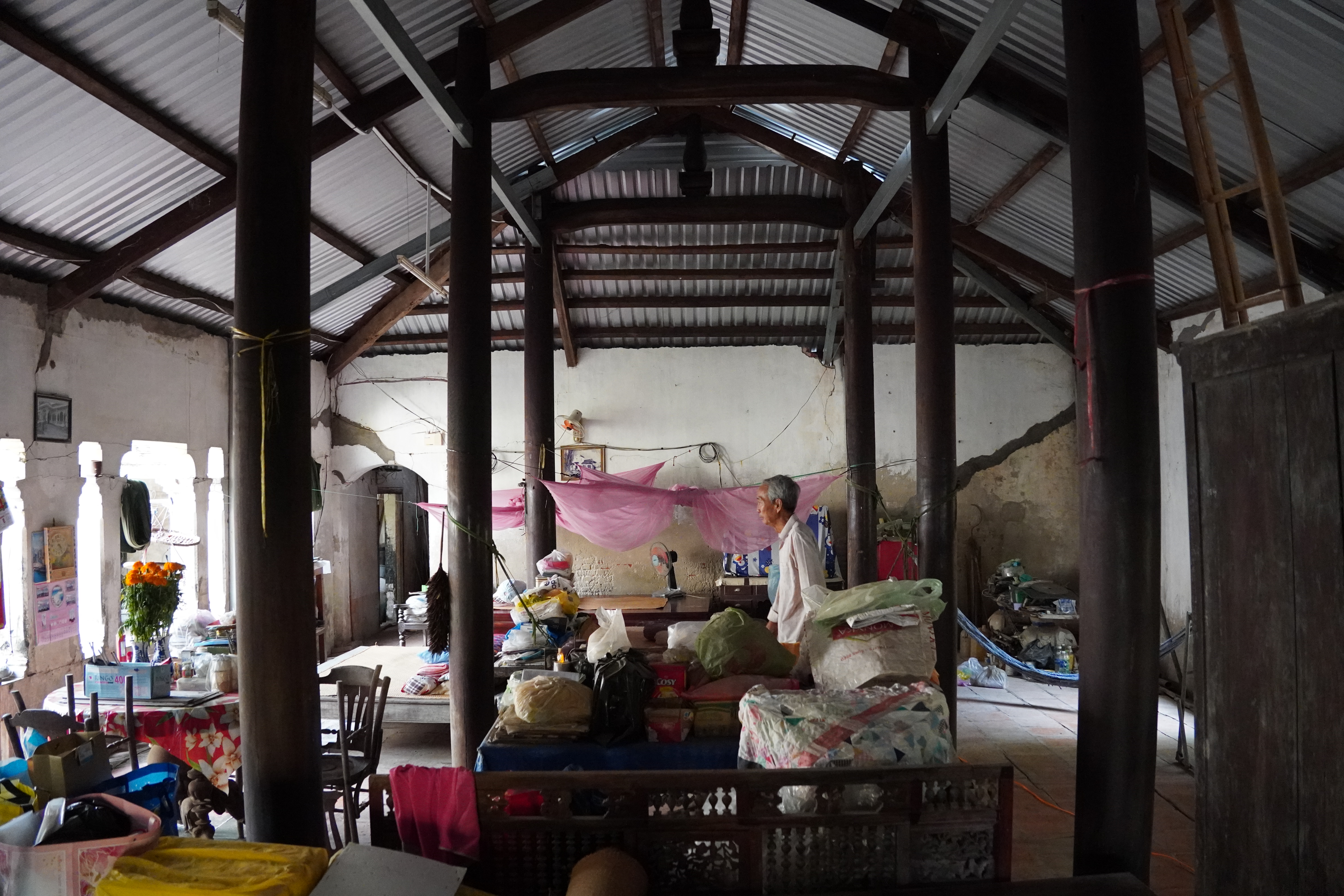 |
Inside, the ironwood timber frame remains sturdy, but many rafters and purlins are severely damaged by termites. Walls are peeling, damp, moldy, and show large cracks. The tiled floor is sunken and broken; many wooden doors are unusable. The veranda area is in serious disrepair, with some supporting columns broken and temporarily propped up with wood.
Ms. Nga's house is one of three in the famous "rich neighborhood" cluster in Thanh Phu Long commune (formerly Long An), recognized as a national heritage site in 2006.
This cluster of over 100-year-old houses belongs to the Nguyen Huu family, who were once renowned wealthy landowners in the region. Each house spans approximately 600 square meters, featuring traditional Southern Vietnamese architecture with precious wooden frames and intricate carvings.
The house belonging to Ms. Nga's family was built in 1924 and took five years to complete. At the time, construction costs amounted to about 12,000 Indochinese dong, a substantial sum.
During wartime, the structure was hit by artillery shells multiple times and required repairs. Ms. Nga's family has four siblings, but they all established lives elsewhere, leaving only her to look after the ancestral home.
Every year during the rainy season, the 75-year-old woman busily prepares dozens of buckets and basins to catch water. At times, she has to place nearly 50 containers throughout the house due to numerous leaks in the tiled roof.
According to regulations, structures classified as heritage sites must receive approval from specialized agencies before any repairs can be undertaken. Over the years, the family has repeatedly requested restoration, but for various reasons, conservation efforts have not materialized.
Three years ago, the rear house was at risk of collapse, forcing the family to dismantle all wooden purlins and roof tiles, replacing them with a steel structure and corrugated iron roof. The main house continued to deteriorate, rendering it uninhabitable for Ms. Nga, who now only enters to light incense.
Recently, the rain leaks have worsened, constantly soaking and damaging the furniture inside. Unable to wait any longer, Ms. Nga's siblings pooled their money to hire workers to repair the roof.
They repurposed some of the old wooden purlins and tiles from the rear house to save costs. Even so, this round of repairs is still expected to cost around 100 million VND.
Over 100 kilometers away, the historic Huynh Thuy Le house in Sa Dec ward, Dong Thap province – one of the most famous old houses in the Mekong Delta – is also deteriorating.
Despite it being a weekend, the heritage site remained quiet. Staff there noted that most visitors are European, typically arriving in late and early parts of the year. Some tourists mentioned that the house's state of disrepair made them hesitant to visit.
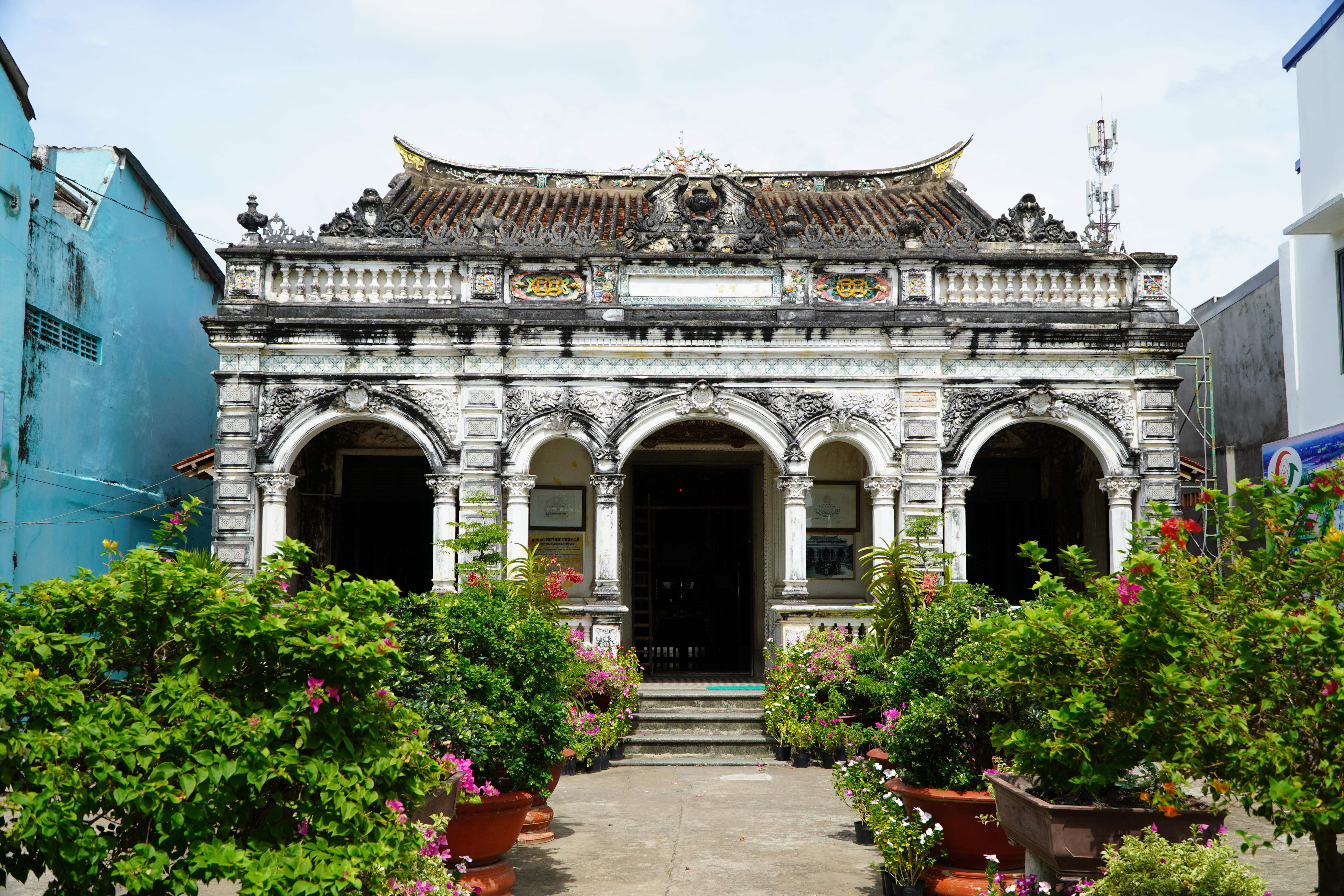 |
The facade of the house is covered in moss, and the reliefs are damaged.
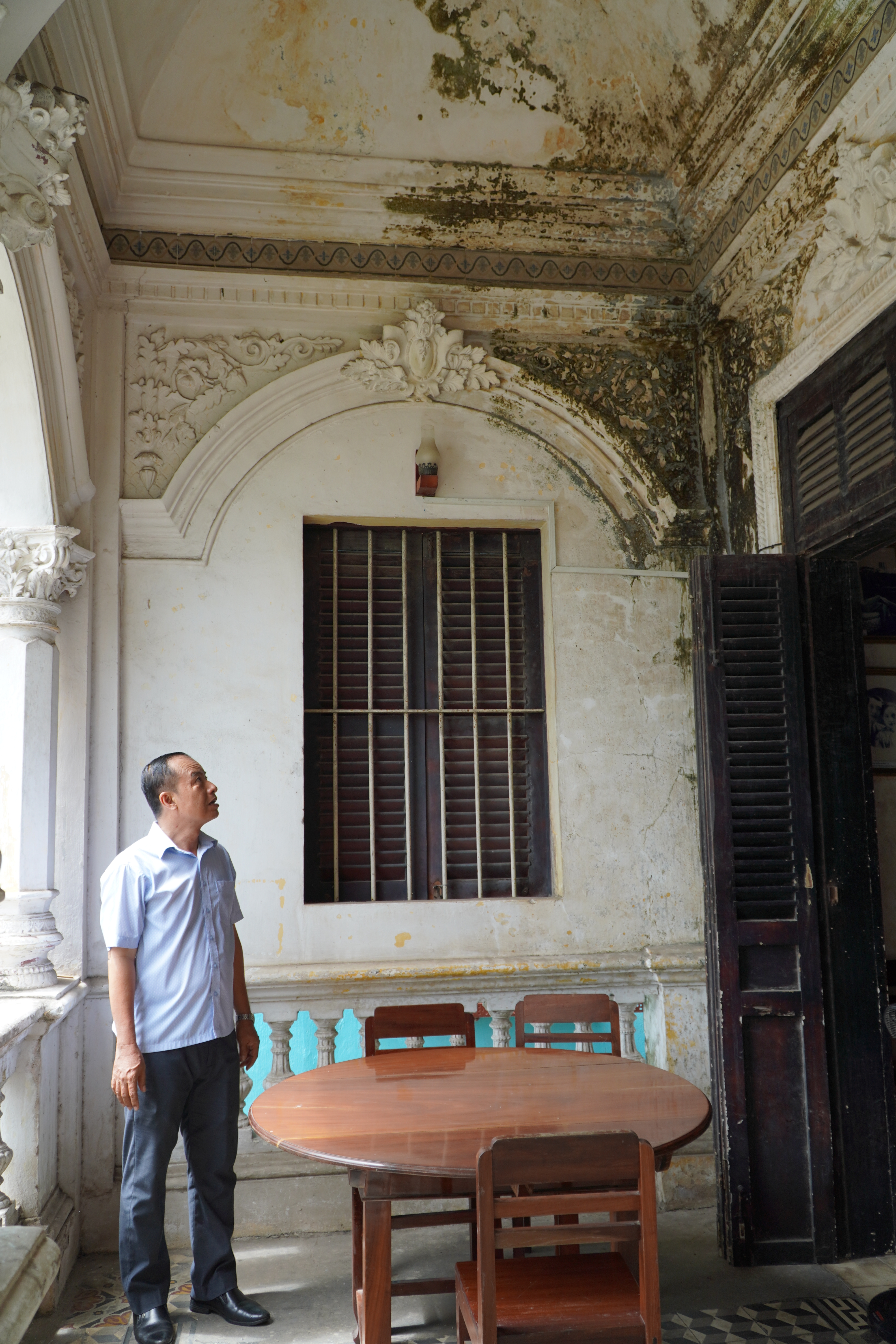 |
Wall sections on the veranda are water-stained and covered in moss, with damaged and crumbling stucco patterns.
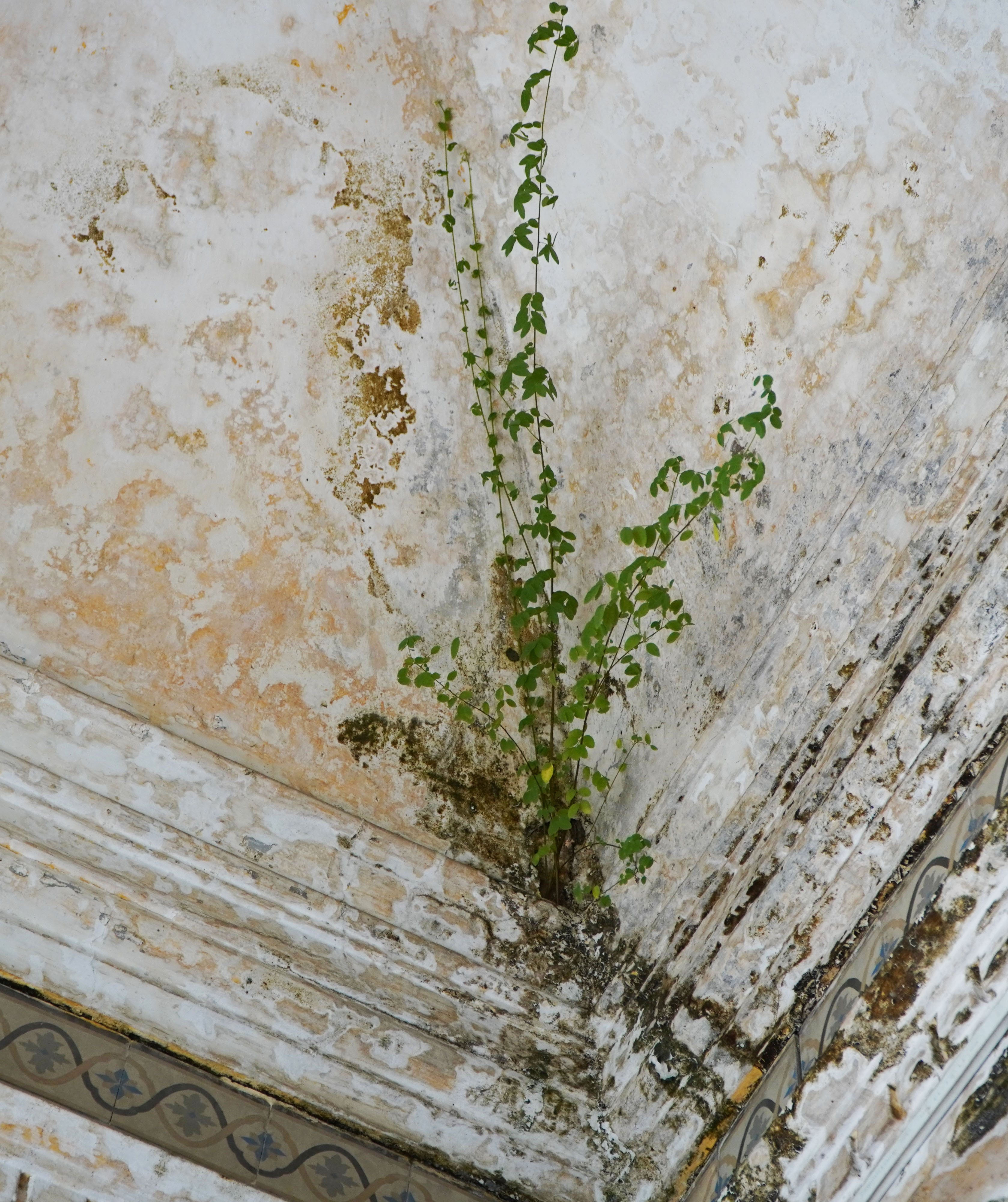 |
Due to a leaky tiled roof, many wall sections are damp, moldy, and covered in ferns.
The nearly 260 square meter house, built in 1895, is renowned for its blend of Vietnamese, Chinese, and French architecture and its association with the love story between Huynh Thuy Le and French writer Marguerite Duras.
After over 130 years, many parts of the house have deteriorated. The facade is covered in moss, and some reliefs and stucco lettering are peeling. A damaged tiled roof allows rainwater to seep into the walls, causing dampness and paint peeling.
On the veranda, many walls are overgrown with moss and ferns. The floor is unevenly sunken, and some wooden details in the altar area are damaged by termites.
A similar situation exists in Dong Hoa Hiep ancient village, Cai Be commune. This area boasts dozens of old houses over 100 years old, but only about three are effectively managed and utilized for tourism. Most others are deteriorating over time.
Standing next to termite-damaged wooden columns in Ong Tong's old house, Ms. Do Hong Van, 39, a fourth-generation descendant of the owner, stated that her family has undertaken numerous repairs to preserve the structure.
In 2000, due to rotten wooden partitions, the family had to build new walls and re-tile the floor. Six years later, the owner reinforced the kitchen area.
In recent years, the family's finances improved thanks to cultivating about one hectare of durian. Ms. Van and her husband wish to combine this with tourism, but they face many obstacles.
"Guests mostly stand outside to take photos and leave because the house is too dilapidated," she explained.
According to Ms. Van, many wooden decorative panels have rotted, and some areas require temporary bamboo supports. The rafters and purlins are also severely damaged, posing a risk of collapse at any moment. During heavy rains, water leaks in, causing further damage to household items.
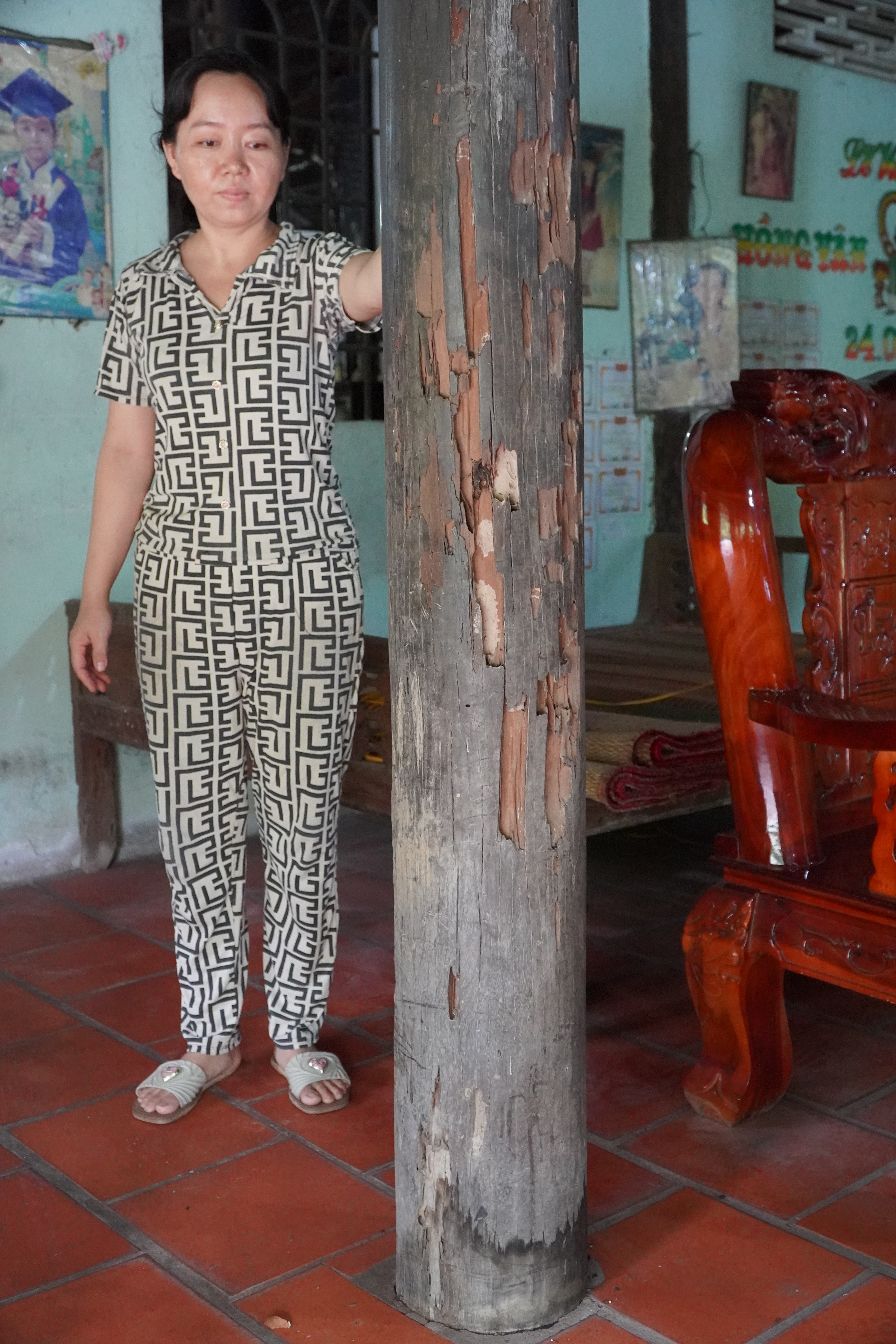 |
The owner next to the termite-damaged wooden columns.
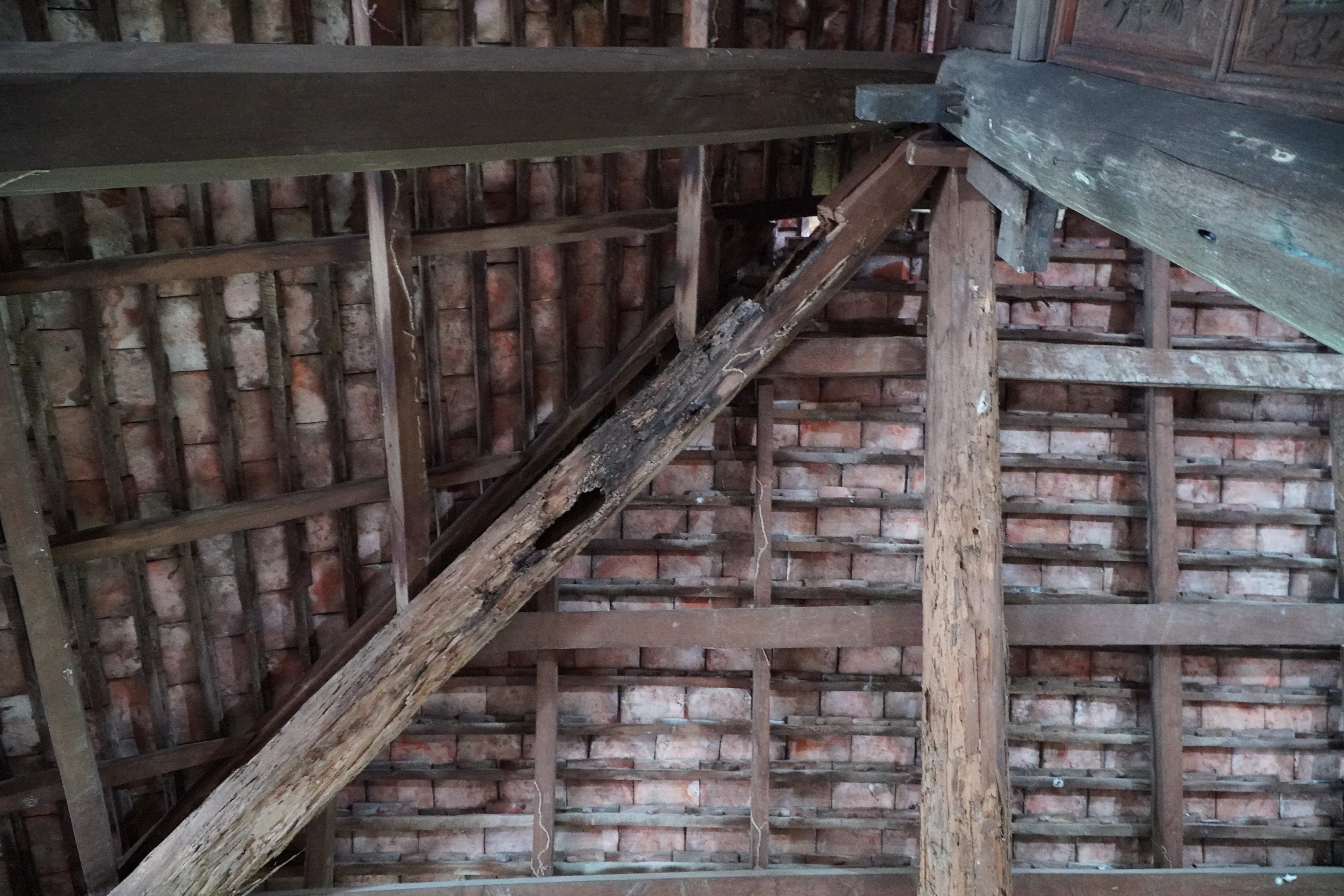 |
Many sections of purlins and rafters are rotten, risking collapse at any moment.
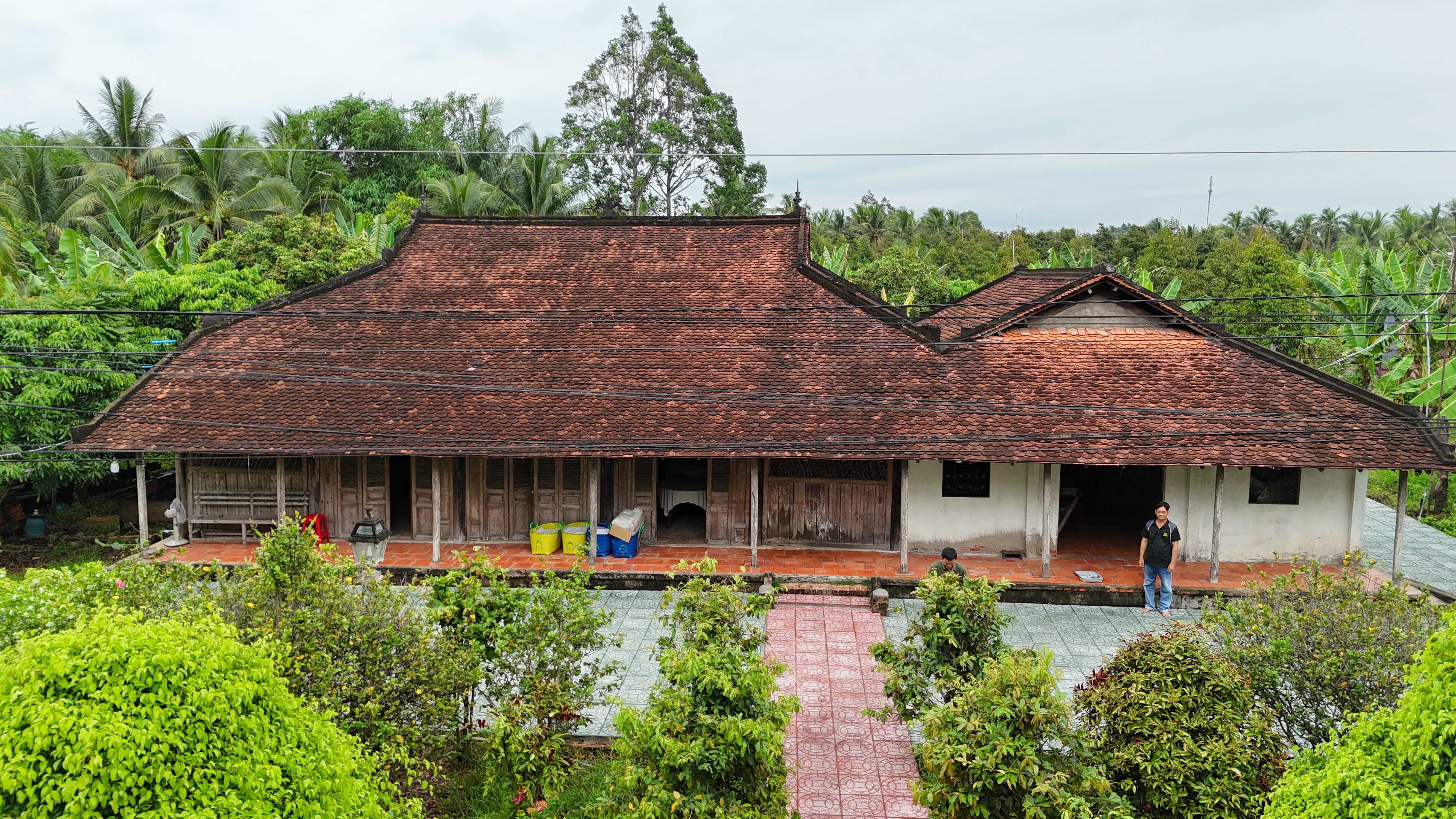 |
An overview of Ong Tong's old house.
Beyond Tay Ninh and Dong Thap, many localities in the Mekong Delta region are grappling with the challenge of preserving old houses.
In Ca Mau, the province currently has 21 old houses, with 14 classified as provincial-level heritage sites. Statistics show that at least 8 structures are deteriorating, some requiring urgent restoration, such as the old house at 174 Dien Bien Phu street, house number 29 Tran Phu street, or house number 25 Hai Ba Trung street.
Mr. Ly Vy Trieu Duong, Deputy Director of the Department of Culture, Sports and Tourism of Ca Mau province, noted that most of these structures were built from the late 19th to early 20th century.
Some houses became vacant after administrative restructuring, while others are privately owned, making management and preservation challenging.
According to Mr. Duong, the greatest value of these structures lies in their architectural artistry, but restoration costs are high, and local resources are limited.
Sharing this view, Mr. Nguyen Tan Quoc, Deputy Director of the Department of Culture, Sports and Tourism of Tay Ninh province, stated that while the Mekong Delta has a large number of old houses, not all qualify for restoration investment.
The classification of a heritage site must be based on criteria of typical value, while the conservation budget must be allocated among various types of heritage.
Mr. Quoc mentioned that some old houses in Tay Ninh have received restoration investment, but the actual need remains significant. Therefore, in addition to state funding, it is crucial to mobilize socialized resources.
"Strengthening management capacity and effective exploitation will help these structures secure additional resources for long-term preservation," he said.
After more than a century, the three houses in the "rich neighborhood" heritage cluster have faced different fates.
One house received approximately 7 billion VND in state investment for restoration 14 years ago. Another owner spent about 800 million VND on self-funded repairs.
However, Ms. Nguyen Thi Nga's house continues its arduous battle against time.
"My siblings and I are all retired and not well-off, so we repair as much as we can afford. I don't know how much longer we can keep the house," Ms. Nga said sadly.
Hoang Nam – Chuc Ly