Under current regulations, individuals aged 75 and older who do not receive a pension or social insurance (BHXH) benefits are eligible for a social pension of 500,000 dong per month. For poor and near-poor households, this age requirement applies to those from 70 to under 75 years old.
Based on economic conditions and budget balancing capabilities, many provinces and cities have proactively increased support levels and expanded health insurance (BHYT) coverage for the elderly.
Quang Ninh is the locality that provides the highest social pension in the country, at 700,000 dong per month, effective from 27/7. Groups currently receiving a monthly allowance lower than this amount will automatically transition to the new benefit level without needing to reapply. From 2026 to 2030, elderly residents here will also receive additional Tet holiday gifts ranging from 300,000 to 500,000 dong per person.
 |
Elderly residents of Quang Ninh attend a new rice celebration. Photo: Le Tan |
Hai Phong City will also implement a 700,000 dong per month benefit starting from early 2026. With a population of 4,66 million people after merging with Hai Duong, Hai Phong expects to spend over 18 trillion dong on social protection during the 2025-2030 period.
The city also allocates nearly 400 billion dong annually to support 100% of health insurance contributions for 266,000 people aged 60 to 74, party members with 40 years of party membership, and several vulnerable groups. It covers 70% for waste collectors in villages and residential areas; 30% for near-poor households; and 20% for farming, forestry, fishery, and salt production households with an average standard of living.
Hanoi currently ranks second nationwide in population with over 8,6 million people, with an estimated budget revenue of 600 trillion dong in 2025. From 1/1/2026, the capital's social assistance standard will increase to 650,000 dong, which is 150,000 dong higher than the national average. This increase forms the basis for Hanoi to implement a range of specific social welfare policies.
Accordingly, individuals aged 75 and older without a pension will receive 650,000 dong per month, along with annual Tet gifts. Elderly poor, near-poor, and those without caregivers will receive allowances based on a new coefficient: specifically, individuals aged 60 to under 80 will receive 975,000 dong (coefficient 1,5); those aged 80 and older will receive 1,3 million dong (coefficient 2).
The city also expands health insurance contribution support. Groups receiving 100% budget support include: elderly people aged 70 to under 75 who do not yet have a card; people with mild disabilities; ethnic minorities; and members of newly escaped poor or near-poor households (supported for 36 months).
Other groups also receive various levels of health insurance contribution support: 50% support (equivalent to 52,650 dong) for students from farming, forestry, and fishery households with an average standard of living; 30% support (equivalent to 31,590 dong) for ethnic minorities in communes and villages that were classified as particularly difficult during the 2016-2020 period, and for agricultural households with an average standard of living.
The remaining funding for these groups (from 30% to 70%) is covered by the Central budget.
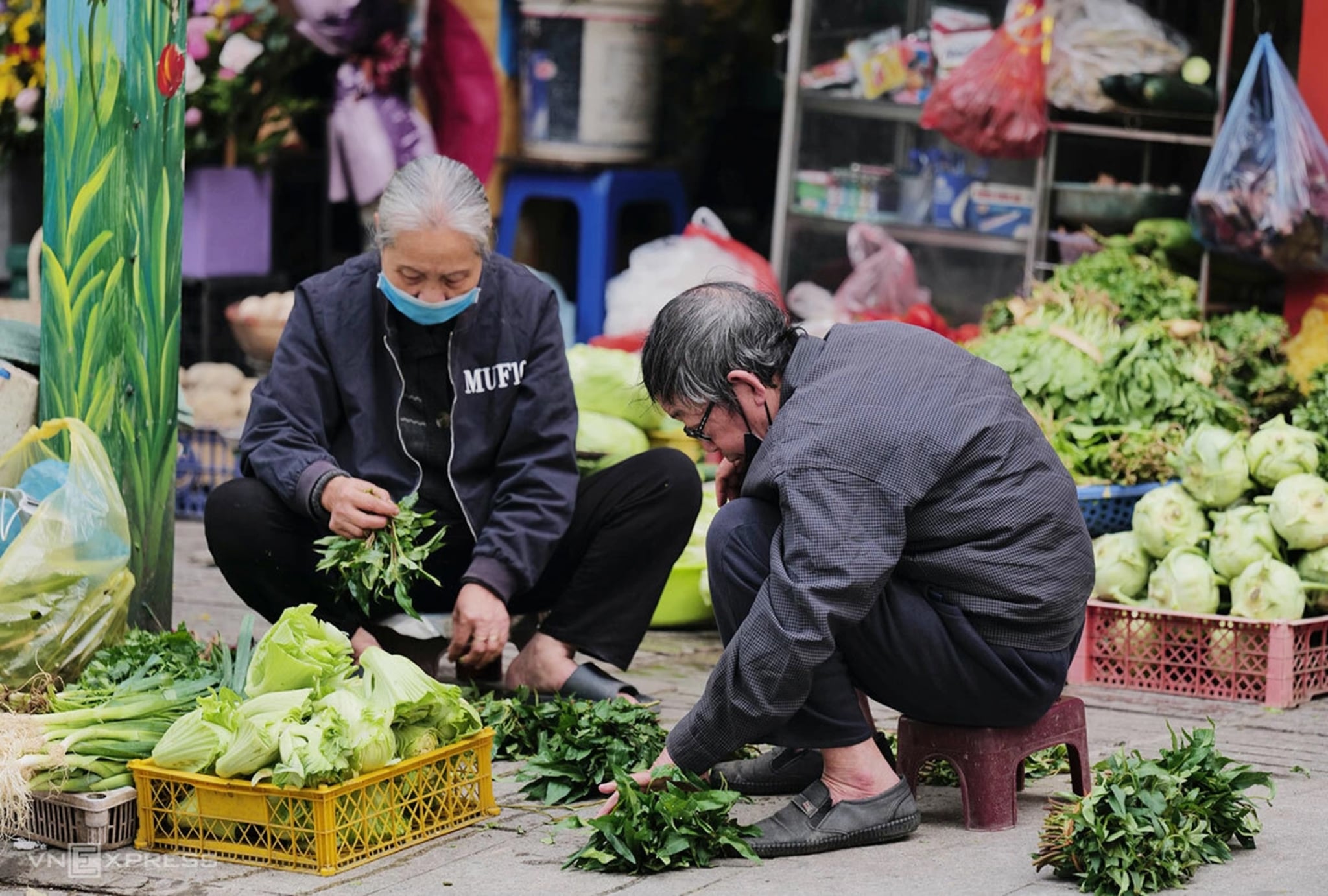 |
Elderly people make a living selling vegetables at Thanh Cong market, Hanoi. Photo: Ngoc Thanh |
Ho Chi Minh City, after merging with Binh Duong and Ba Ria - Vung Tau, became a megacity with a population of approximately 14 million people and budget revenue of nearly 678 trillion dong, leading the country. With abundant resources, the city will apply a social pension benefit of 650,000 dong for people aged 75 and older starting from 9/2025.
The city also leads the way in allocating budget to purchase health insurance cards for large population groups. Specifically, for individuals aged 65 to 75, the budget covers the entire contribution amount (approximately 1,26 million dong per year); for students: the city supports 50% of the contribution, with the remaining 50% from the Central government.
An estimated 0,53 million elderly people and over 2 million students benefit from this policy, with a total cost of 2 trillion dong. Additionally, the city continues to provide free health check-ups for all people over 60, regardless of permanent or temporary residence. This policy is expected to reduce the burden of medical costs as Ho Chi Minh City has the fastest aging population rate in the country (10,5% of the population is over 60).
In Lao Cai (after merging with Yen Bai), the province's total area is currently the 8th largest nationwide, with a population of nearly 1,8 million. Due to the unique characteristic that over half of its population consists of ethnic minorities such as Mong, Tay, Dao, Thai, Ha Nhi, social welfare policies here strongly focus on medical support.
While the social pension benefit remains at the general rate of 500,000 dong per month, from 1/1/2026, the local budget will increase health insurance contribution support to reduce barriers to accessing healthcare. Specifically, 100% of the contribution amount will be supported for ethnic minorities with specific difficulties; 50% for people aged 60 to under 75; and 30% for near-poor households.
As of 10/2025, Lao Cai has nearly 1,5 million people participating in health insurance, achieving a coverage rate of 88% of the population. The new policy is expected to help highland communities, where areas are vast and the economy remains challenging, receive better healthcare.
Nationwide statistics show approximately 1,6 million elderly people receive social pension benefits, including 1,5 million people aged 75 to 80 without a pension, and 100,000 people aged 70 to under 75 belonging to poor or near-poor households.
Hong Chieu