 |
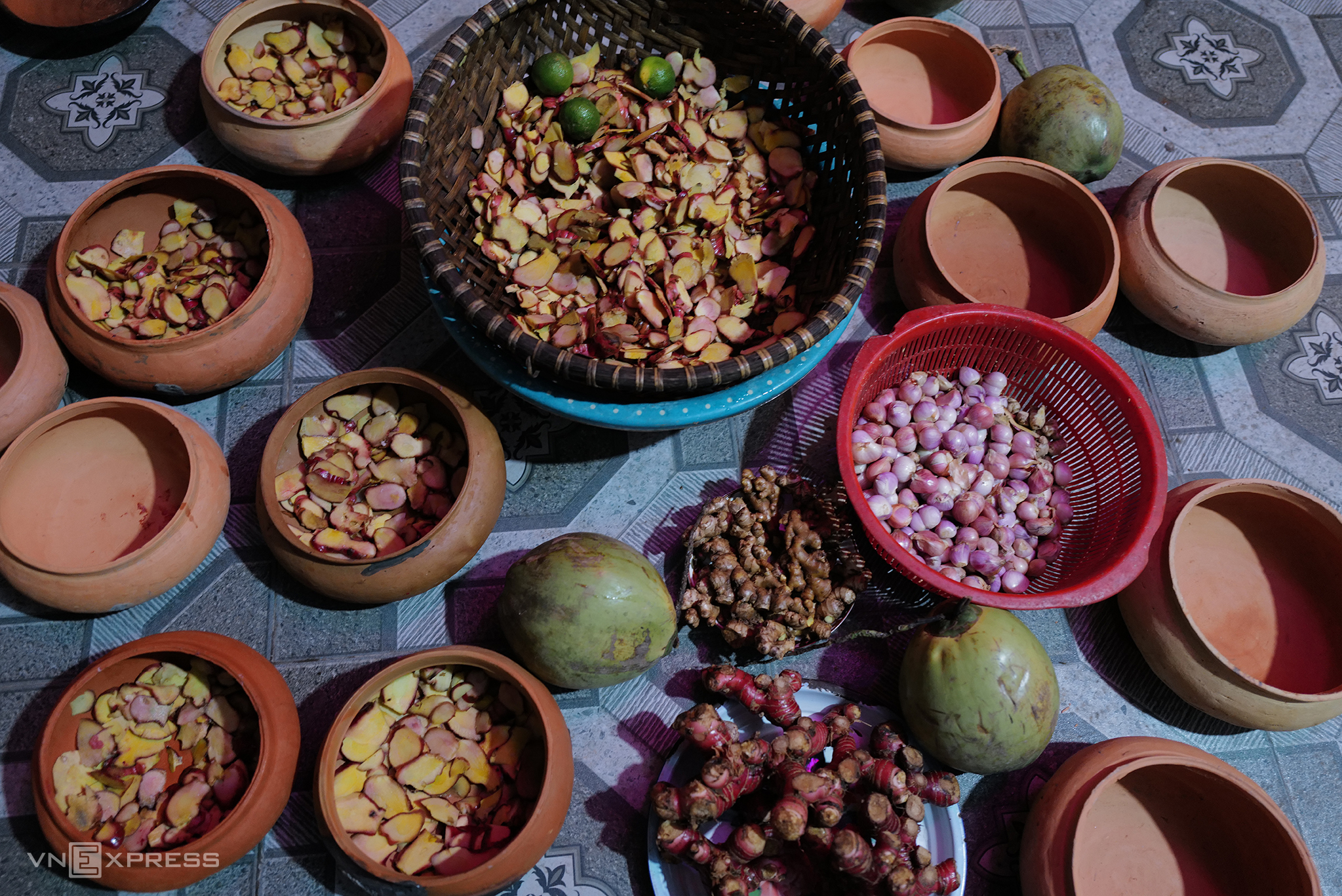
Before layering the fish into the pot, Ms. Thin, who is 72 years old, and her daughter spread a layer of thinly sliced galangal at the bottom to prevent the fish from drying out or burning. Fish segments are then arranged according to the pot's capacity, with each layer of fish interspersed with a layer of seasonings. |
In the days leading up to Tet, Nhan Hau village in Nam Ly commune, Ninh Binh province, once again lights up its stoves for braised fish. Throughout the village, the scent of wood smoke emanates from dozens of households practicing the traditional braised fish craft, creating a lively atmosphere day and night.
Mr. Tran Ba San's family has been dedicated to this craft for more than 15 years. While they typically handle individual orders, since the beginning of the twelfth lunar month, order volumes have surged. This requires family members to take turns staying up through the night, tending the stoves to ensure timely delivery of fish to customers nationwide.
 |
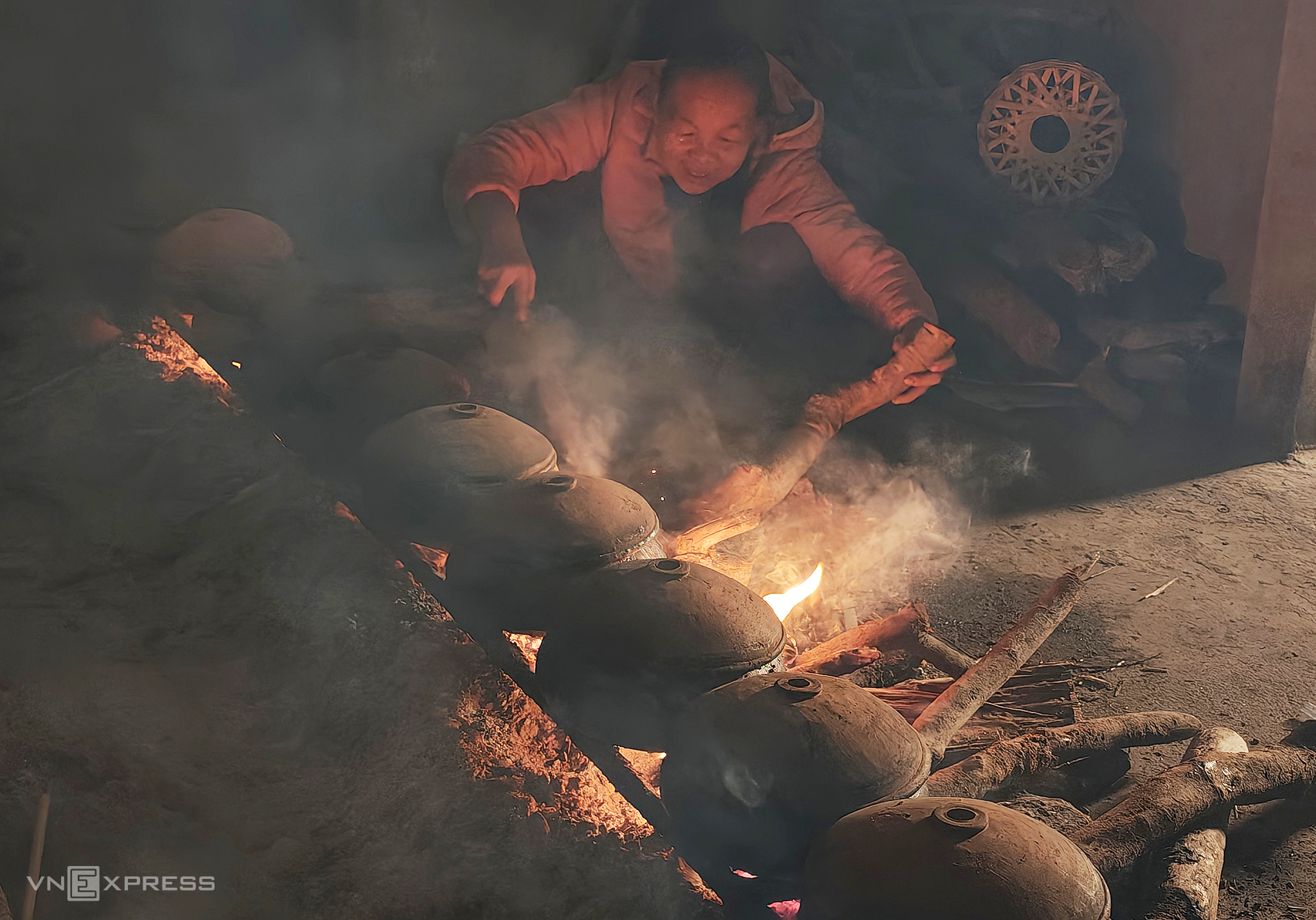
Longan wood is essential for braising the fish due to its high heat, stable burning, and abundant charcoal, which is ideal for slow-cooking the fish. |
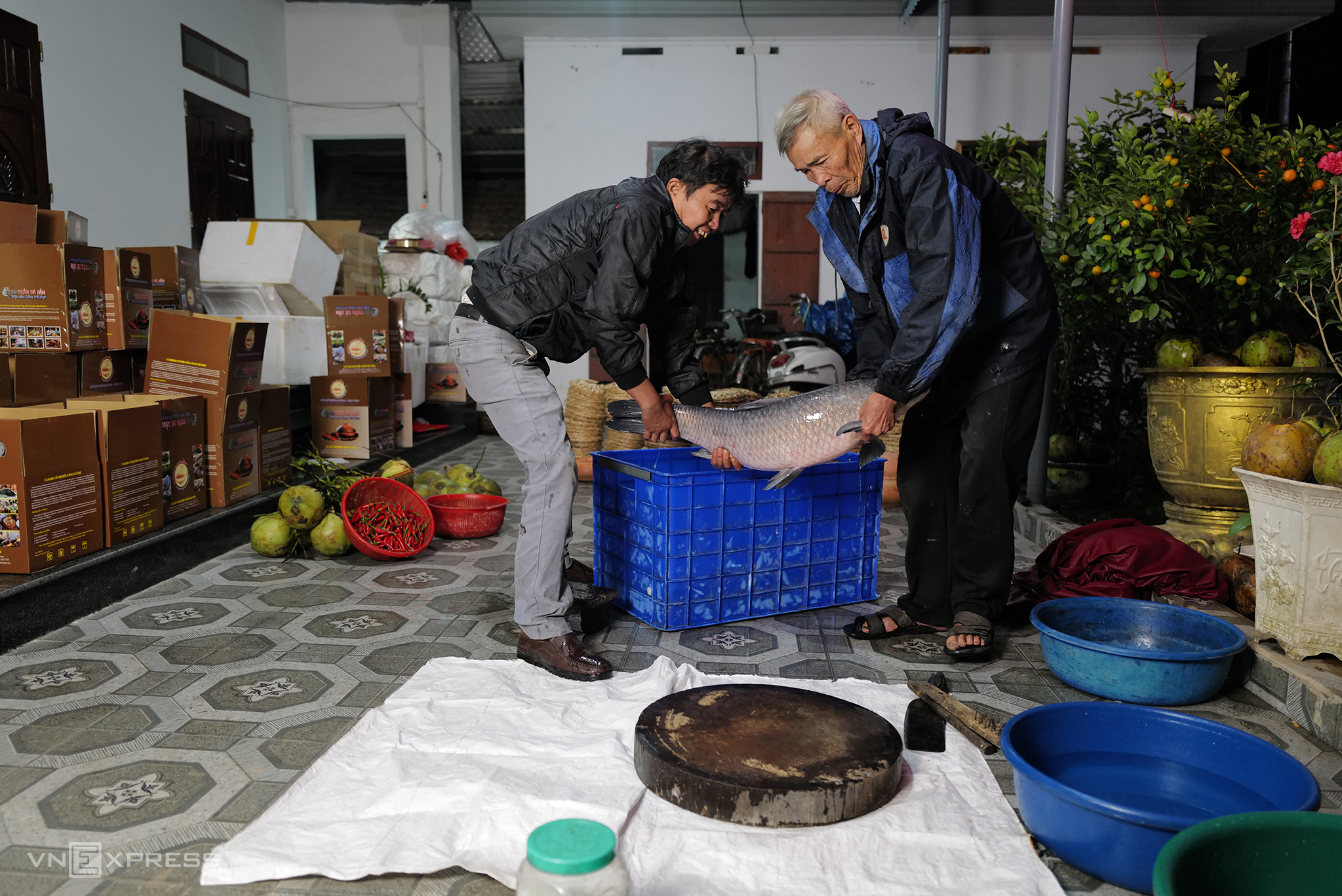
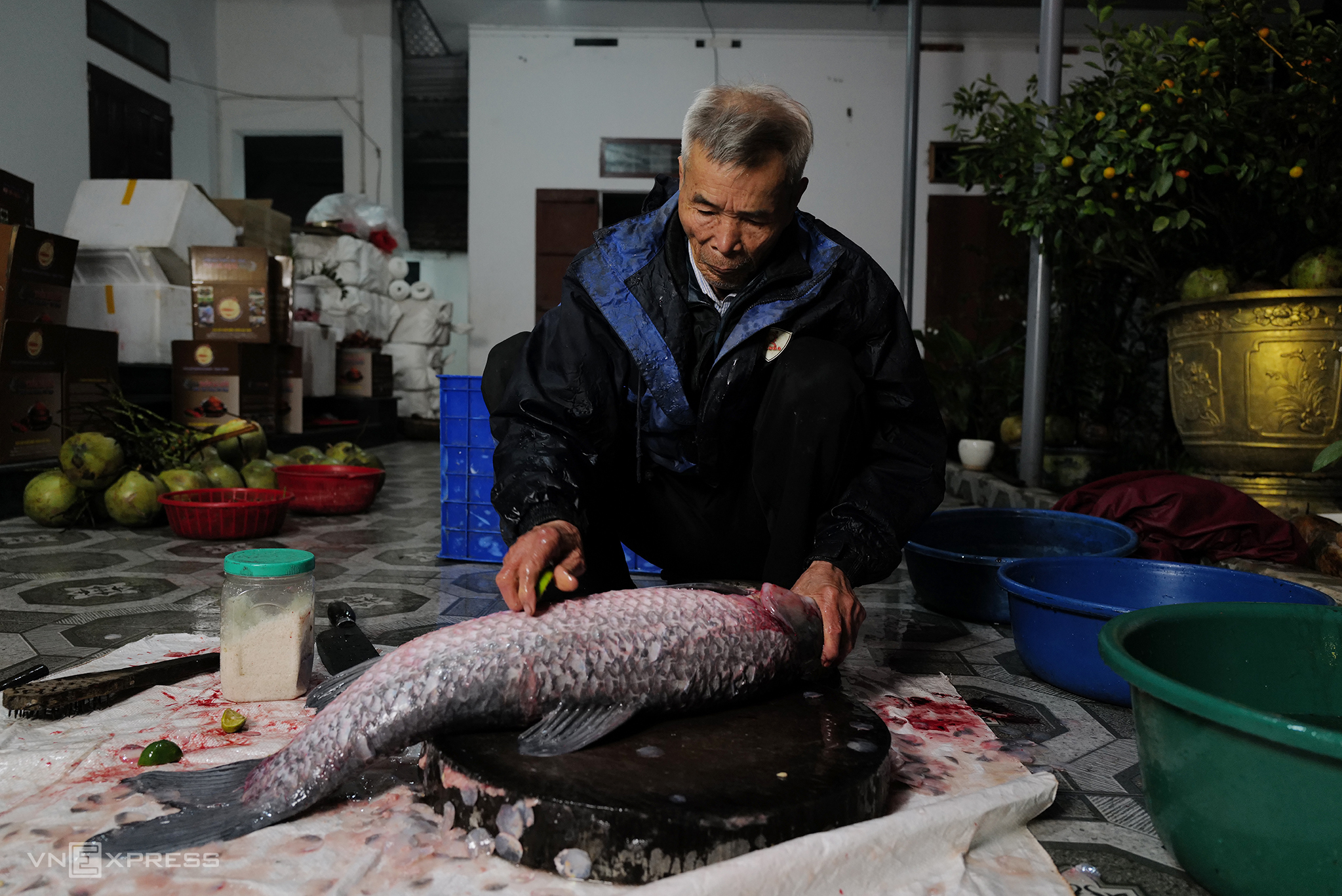
The preferred fish for braising is black carp, raised for three years or more, weighing 6-10 kg. Fed on corn, these fish develop slender bodies with thick, firm flesh. Mr. San notes that this period yields the best quality meat. Fish raised on growth-promoting feed, in contrast, often have larger bellies, shorter bodies, and soft flesh that can become mushy and lose weight during the braising process.
After scaling, the fish is rubbed with salt, rinsed multiple times, and then treated with lemon to remove any fishy odor. The head, guts, and fins are removed, and the fish is cut into segments. A 10 kg fish, for example, yields approximately 7 kg of prepared meat for braising.
 |
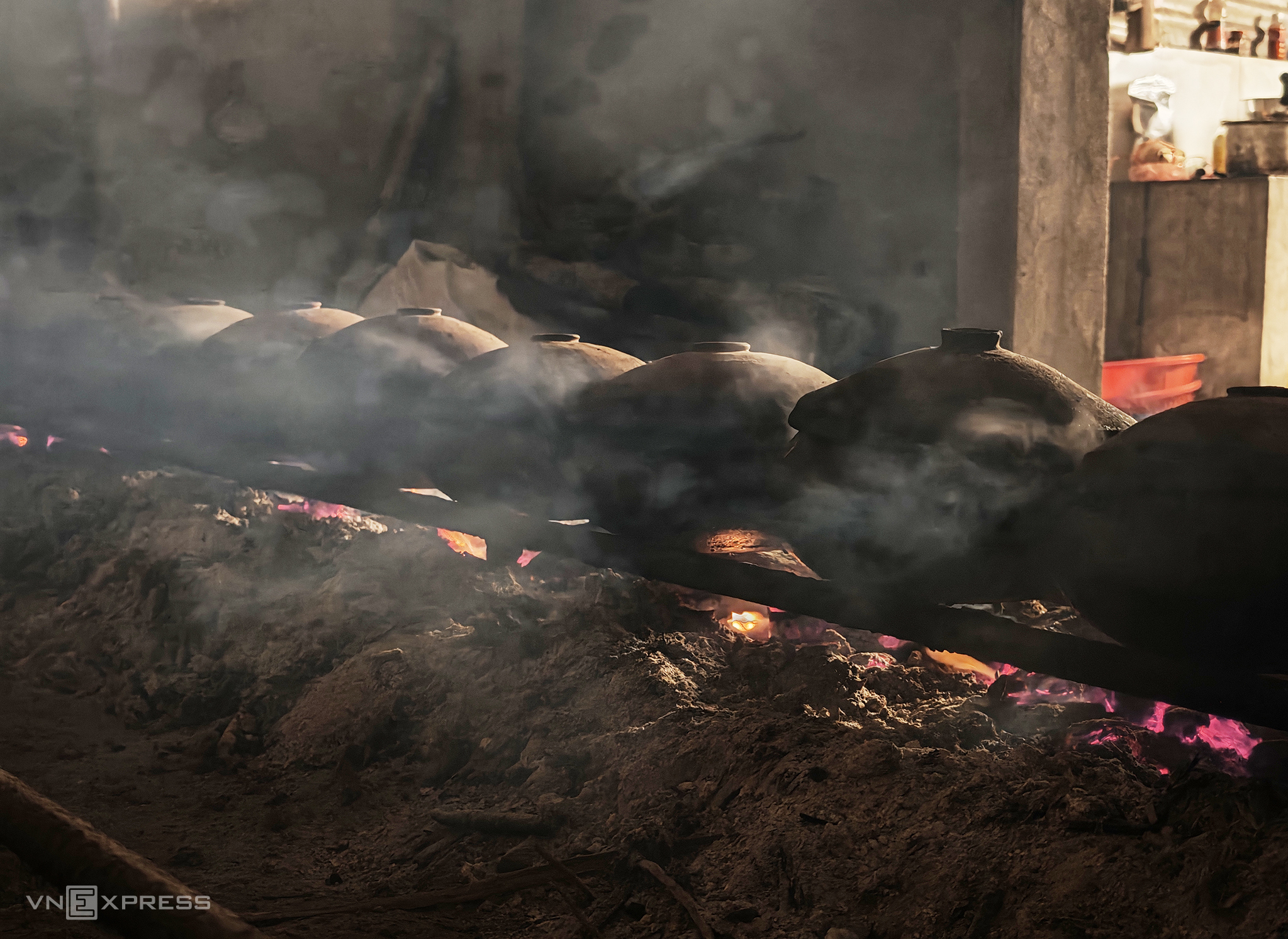
The fish is braised over a fire for about 9 hours with coconut water. Subsequently, pork belly and bone broth are added, and the pot continues to simmer, allowing the fish to cook evenly for another 12 hours. |
The seasonings for the braised fish include: quality fish sauce, soybean paste, galangal, onion, ginger, bone broth, coconut water, pork belly, lemon, and chili.
The earthen pots used for braising must be from Nghe An, known for their ability to withstand high temperatures. The lids, made in Thanh Hoa, are thicker than the pot bodies and must be free of cracks.
 |
 |
 |
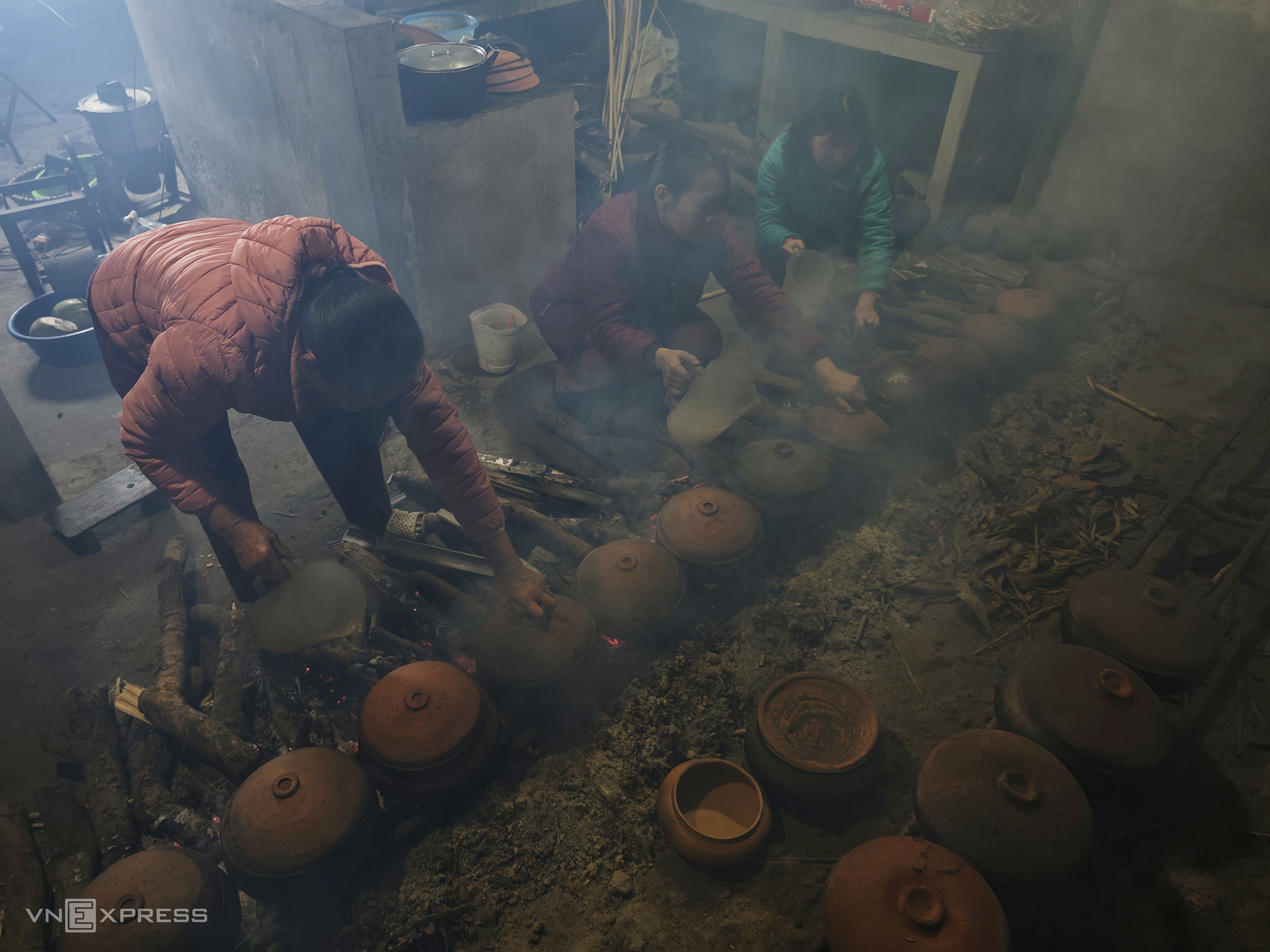 |
Ms. Thin explains that while her family typically employs five people, the surge in Tet orders necessitates hiring more than 10 additional workers, who operate in shifts day and night.
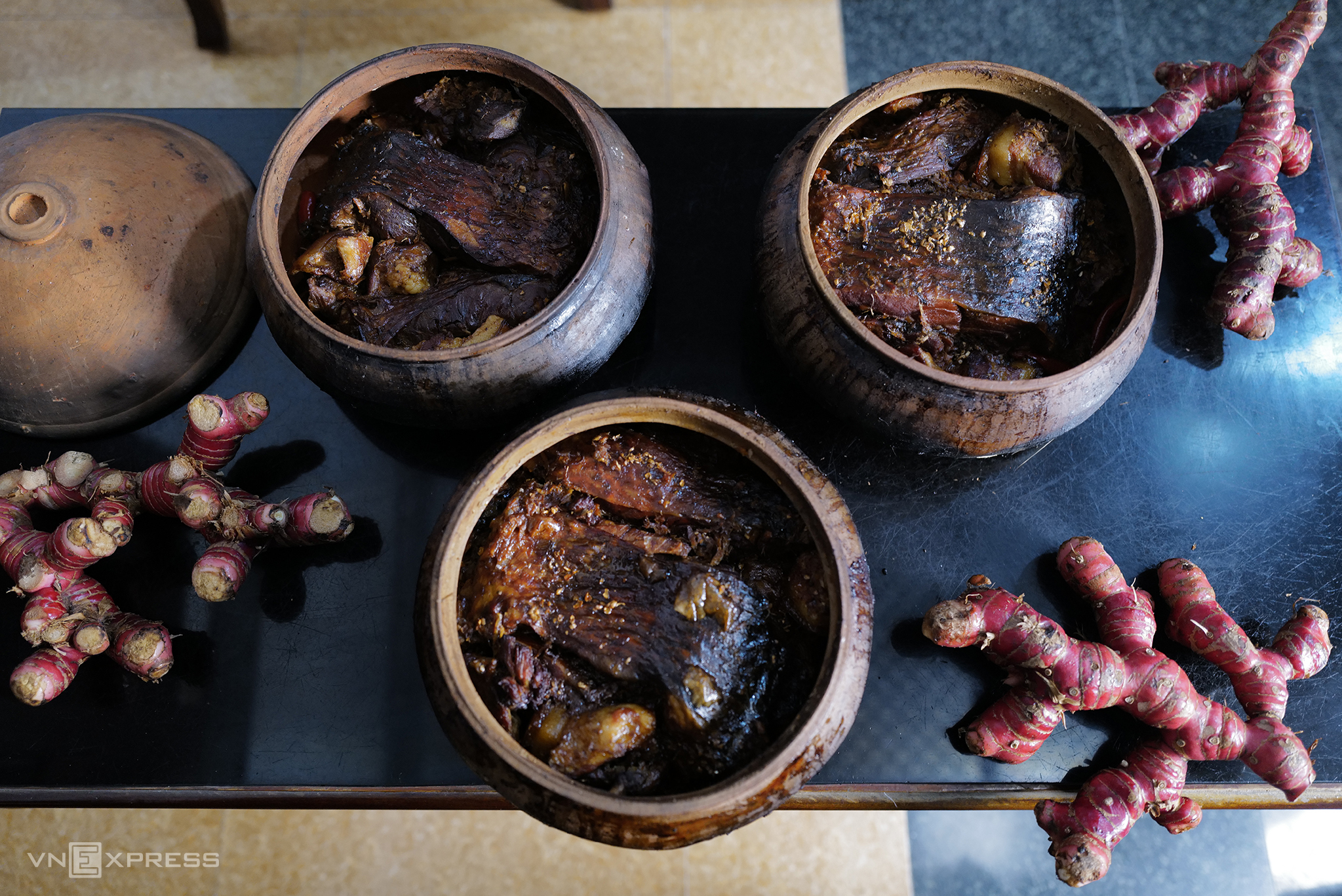 |
Each finished fish pot weighs 1,5-5 kg, with prices ranging from 500,000 to 2 million Vietnamese dong. During the Lunar New Year period, the family sells hundreds of fish pots daily on average.
Orders primarily come from repeat customers through word-of-mouth referrals, supplemented by social media promotions. Annually, the family sells thousands of fish pots.
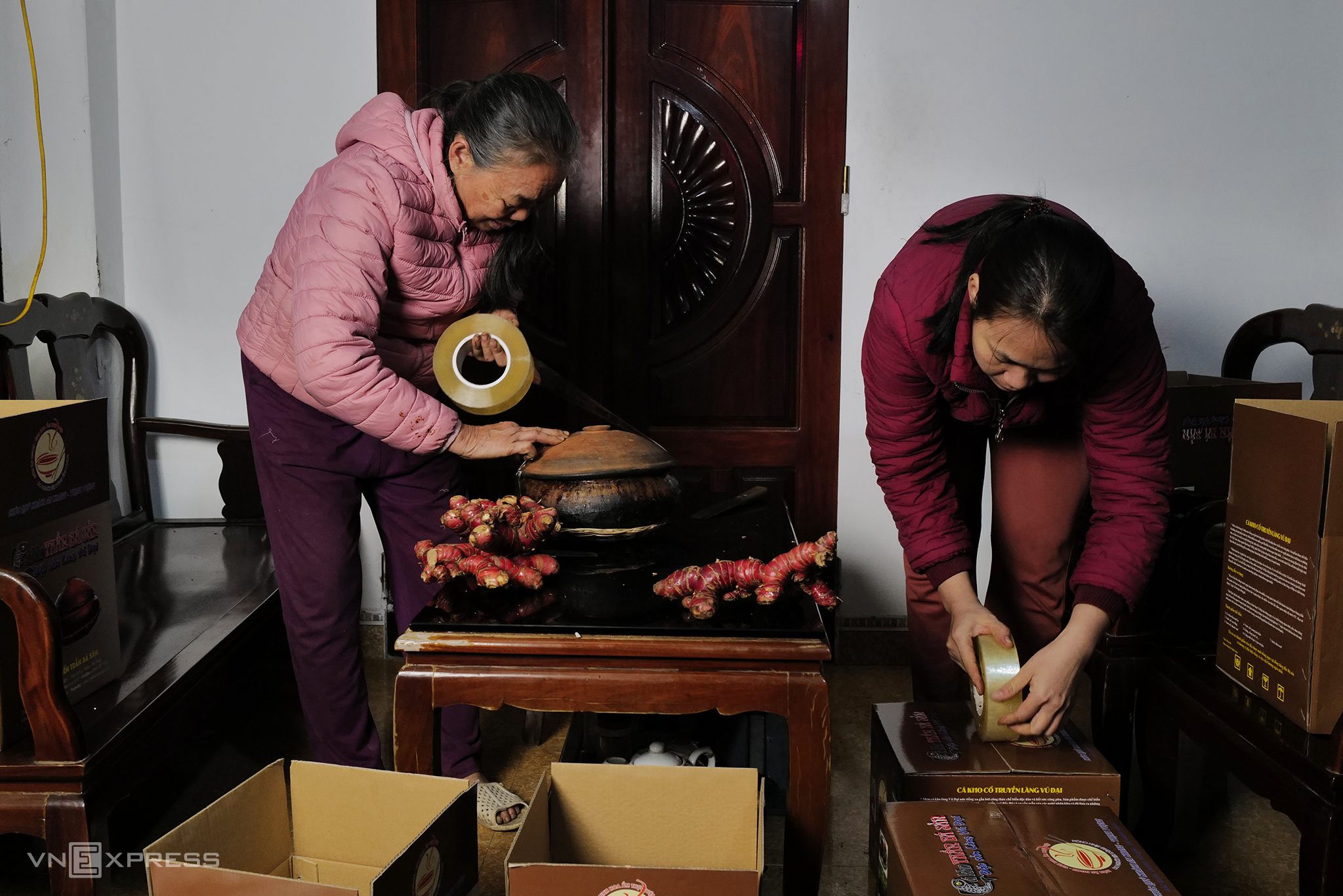 |
Once the fish is braised, orders for distant destinations are allowed to cool. Local orders are immediately lidded, sealed with tape, packed into boxes, and dispatched the same day. Ms. Thin advises customers not to add more water when reheating this braised fish, as it will diminish the flavor.
The family continues braising fish until the 28th day of Tet, with final orders dispatched on the 29th. These shipments primarily go to Ha Noi, Hai Phong, and the central and southern regions, markets that highly favor this specialty.
Thanh Hai