On the afternoon of 21/5, General Secretary and President To Lam met with the Central Policy and Strategy Committee to discuss the development direction for Vietnam's materials industry.
To Lam noted the rapid development of several sectors, including steel, cement, construction materials, basic chemicals, fertilizers, plastics, rubber, textile fibers, and industrial wood. Many products now meet domestic demand and are exported, with some enterprises investing in large-scale complexes.
General Secretary and President To Lam highlighted Vietnam's substantial potential in rare earth, bauxite, titanium, tungsten, graphite, white sand, and limestone. Emerging areas like new materials, green materials, recycled materials, semiconductors, electronics, batteries, renewable energy, biomedical applications, and composites are also gaining focus.
Despite this potential, the materials industry often prioritizes breadth over depth. While production volumes are high, quality remains inconsistent. The nation possesses abundant resources, yet deep processing capabilities are limited. Furthermore, some large-scale industries are characterized by high emissions and significant consumption of energy and resources.
To Lam pointed out that Vietnam has ample resources but lacks core technology, robust deep processing capabilities, leading enterprises, and a strong ecosystem for research, testing, inspection, and commercialization essential for a national materials value chain.
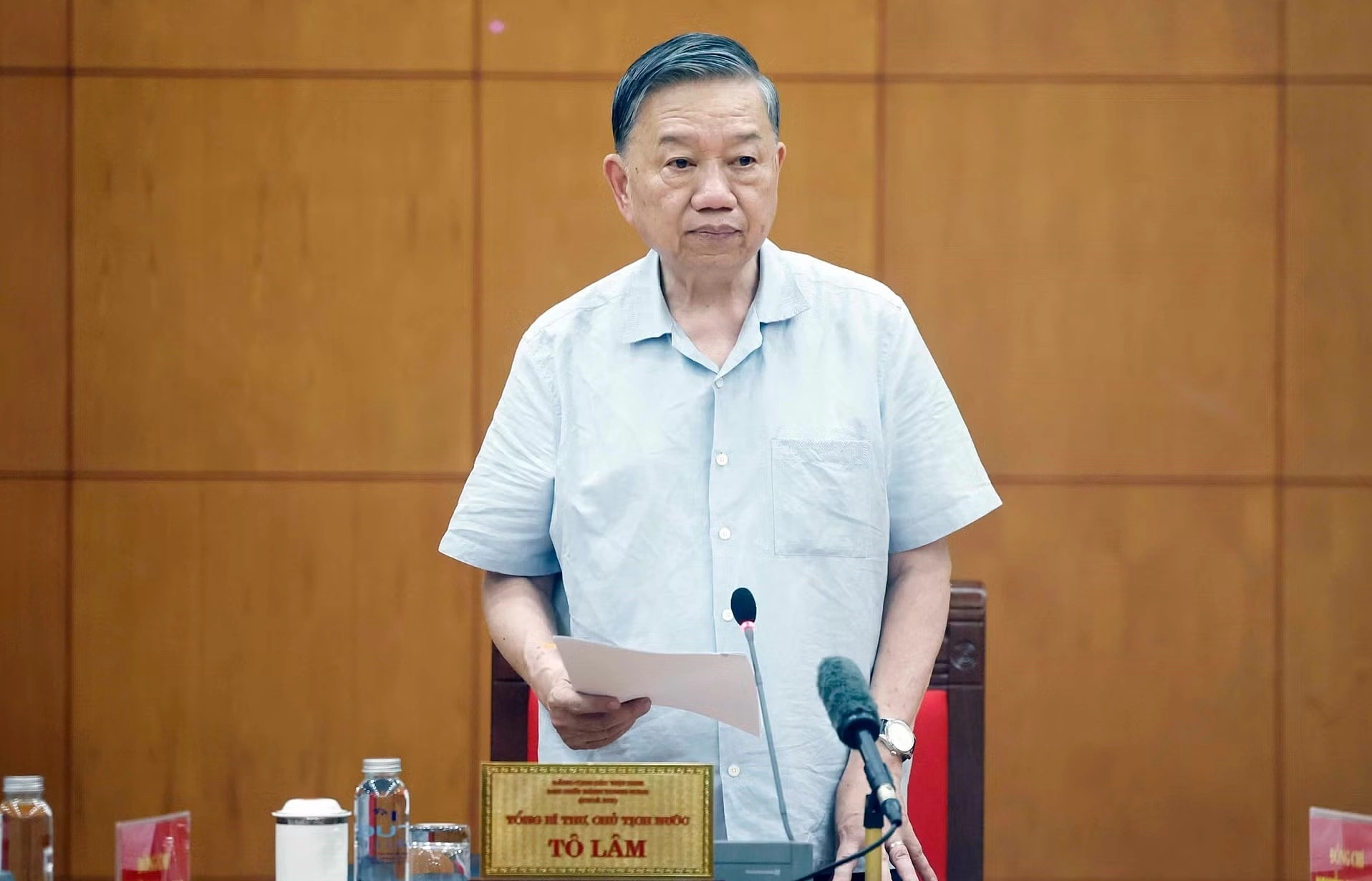 |
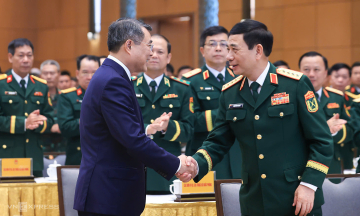
General Secretary and President To Lam worked with the Central Policy and Strategy Committee on the afternoon of 21/5. Photo: TTXVN |
General Secretary and President To Lam underscored the materials industry's role as a foundational and strategic sector for the nation's industrialization and modernization. He stressed the importance of focused development, avoiding a broad, unfocused approach.
This new direction mandates a significant shift for the materials industry: moving from raw resource exploitation to deep processing, mastering technology, and boosting domestic added value. Science and technology, robust standards, skilled human resources, and Vietnamese enterprises must serve as the core pillars of this development.
To Lam called for the industry to develop sustainably, independently, and with international competitiveness, aligning with global commitments while safeguarding national interests. The Party Committee of the Government has been tasked with formulating a comprehensive strategy for Vietnam's materials industry development until 2030, with a vision extending to 2045, in the shortest possible timeframe.
General Secretary and President To Lam emphasized that this strategy requires long-term vision, clear objectives, feasible roadmaps, and specific allocation of responsibilities. It must move beyond general outlines to precisely define which material groups to develop, the extent of technological mastery, the lead agencies, the guiding enterprises, and the sources of funding. This framework will enable agencies to create a national strategic materials list, an import dependence map, and a domestic capacity map.
The State must implement specific product ordering mechanisms, controlled testing protocols, robust intellectual property policies, and equitable benefit-sharing arrangements among scientists, research institutes, universities, and businesses.
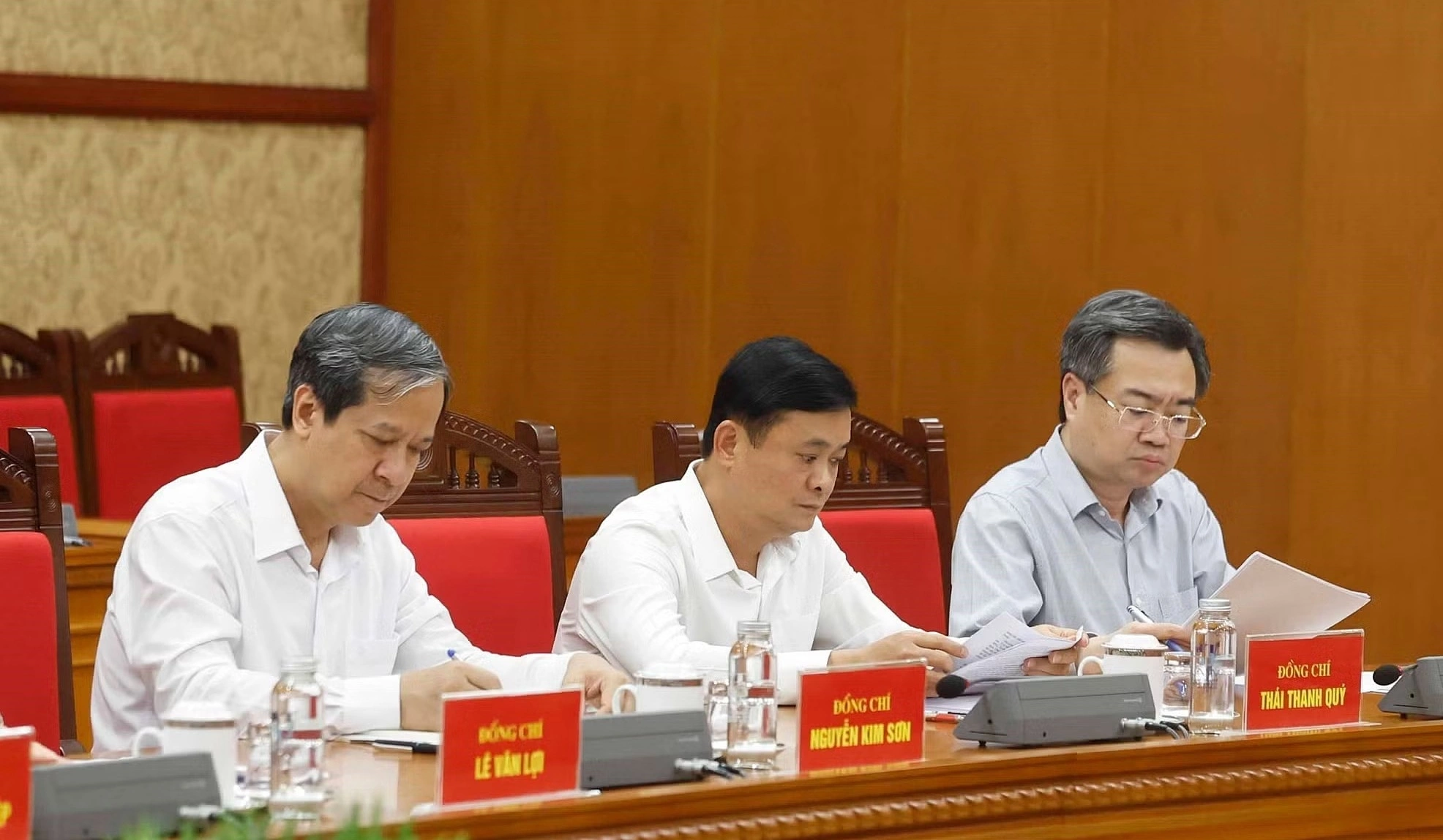 |
From right: Head of the Central Policy and Strategy Committee Nguyen Thanh Nghi and two Deputy Heads Thai Thanh Quy, Nguyen Kim Son. Photo: TTXVN |
To Lam proposed immediate prioritization of five key material groups: rare earth materials, semiconductor materials, battery and energy storage materials, new materials, and next-generation construction materials.
Agencies are tasked with reviewing the potential, reserves, current exploitation status, processing technologies, environmental risks, and value chain formation capabilities for rare earth, bauxite, titanium, tungsten, graphite, white sand, limestone, and other critical minerals.
"Our objective is to prevent resource loss, avoid raw exports, and halt exploitation at all costs, ensuring no environmental compromise," General Secretary and President To Lam affirmed. "Crucially, we must not allow resources to remain untapped due to insufficient policy, technology, or coordination."
The Central Policy and Strategy Committee is responsible for finalizing a report for submission to the Politburo. This report will form the basis for the Government's comprehensive strategy for Vietnam's materials industry development.
Vu Tuan