Hue City recently issued regulations for civilized funeral practices, setting a maximum duration of 72 hours from death to burial, with exceptions granted by the chair of the commune People's Committee. The Hue City People's Council also approved a policy to support 100% of cremation costs until 2030.
Most Venerable Thich Hue Phuoc, abbot of Tu Lam Pagoda and standing vice head of the Executive Board of the Buddhist Sangha of Vietnam in Hue City, assessed the 72-hour funeral regulation as suitable for ensuring environmental hygiene, public health, and fostering a civilized lifestyle. The purpose of a funeral is for family, relatives, and friends to express grief, gratitude, and bid a dignified farewell to the deceased. The value of a funeral lies not in its duration, but in the sincerity, filial piety, and moral obligation of the living towards the departed.
From a Buddhist perspective, this regulation does not contradict Buddhist teachings. Buddha did not specify how long a coffin must be kept to fulfill filial piety. Buddhist teachings emphasize impermanence, awareness of life and death, and the creation of merit through chanting, prayer, and good deeds dedicated to the deceased.
Historically, the people of Hue are known for their dignity, order, and respect for rituals. However, Hue's culture also adapts to changing times. Today, with improved transportation and communication, distant relatives can quickly return or share their condolences through various means. Therefore, organizing a funeral within three days still ensures all traditional rites, such as embalming, wearing mourning clothes, prayer ceremonies, soul liberation, and other religious rituals.
"The important thing is to organize funerals in a dignified, economical, and civilized manner, avoiding ostentation, not affecting surrounding communities, while preserving filial piety and the beautiful traditional cultural aspects of the nation," the Most Venerable said.
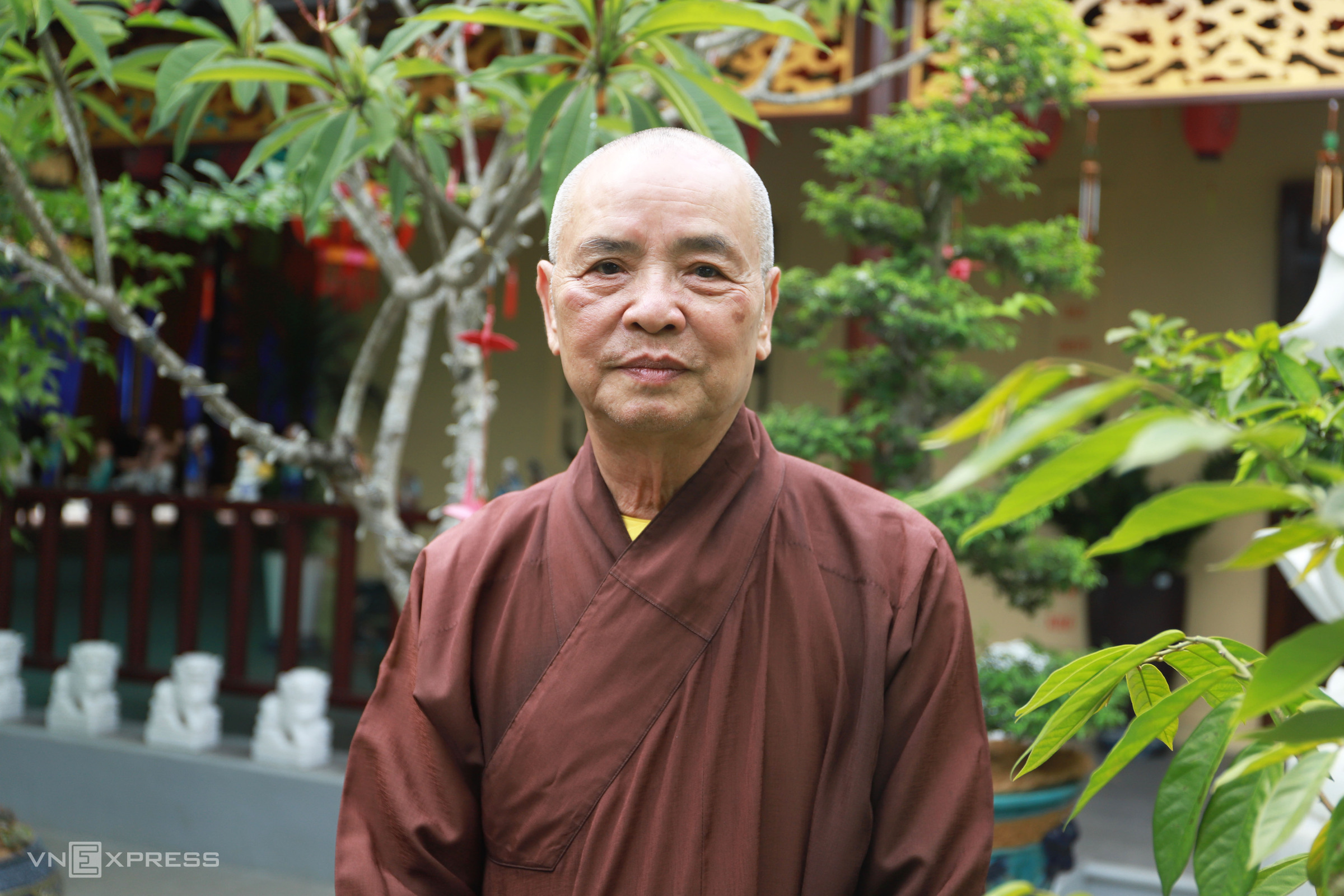 |
Most Venerable Thich Hue Phuoc, standing vice head of the Executive Board of the Buddhist Sangha of Vietnam in Hue City. *Photo: Vo Thanh* |
To ensure the policy's success, the Most Venerable suggests that religious organizations guide followers and the public to properly understand the meaning of funerals, the value of filial piety, and remembrance. Religious groups can work with authorities to promote civilized living, reducing outdated customs, ostentation, and waste in funeral ceremonies. Communities and families need to gradually shift their perception, prioritizing dignity, economy, and humanistic meaning over mere formality.
If explained thoroughly and implemented flexibly in special cases as per legal regulations, he believes residents will agree, viewing this as progress in local cultural development.
A Hue cultural researcher shares this view, stating that the maximum 72-hour funeral regulation aligns with current trends, balancing traditional rituals with the urban civilized lifestyle.
According to the researcher, when a loved one dies, Hue residents often consult auspicious times for embalming and burial, considering the age of the deceased and their descendants. Some families in coastal areas often extend funerals to await relatives returning from abroad. For these reasons, funerals in Hue often last three to five days, sometimes even one week, which differs significantly from some northern provinces.
"This regulation will become practical when the authorities and religious organizations work with the people. The role of neighborhood leaders and commune/ward leaders will be significant, both in dissemination and supervision," the researcher stated.
Buddha did not emphasize burial forms
Regarding the policy to support 100% of cremation costs for residents, Most Venerable Thich Hue Phuoc considers it humane, showing the city's Party Committee and authorities' concern for residents, especially disadvantaged families. The policy helps reduce the economic burden on people and encourages civilized funeral practices. With increasingly limited land, cremation also promotes efficient land use, protecting the environment and public health.
"From a Buddhist perspective, the important thing is not earth burial or cremation, but the filial piety, remembrance, and good deeds performed by the living to dedicate merit to the deceased," he said, explaining that Buddha did not emphasize burial forms but rather ethical values, compassion, and impermanence. Buddha himself was cremated after entering Nirvana. In the Dhammapada, Buddha taught that the body after death is merely impermanent matter, eventually returning to the four elements.
Therefore, according to the Most Venerable, earth burial or cremation does not determine the spiritual value of the deceased or negate filial piety. Children's affection is shown through care during life, respect at farewell, and lasting remembrance after a loved one's passing.
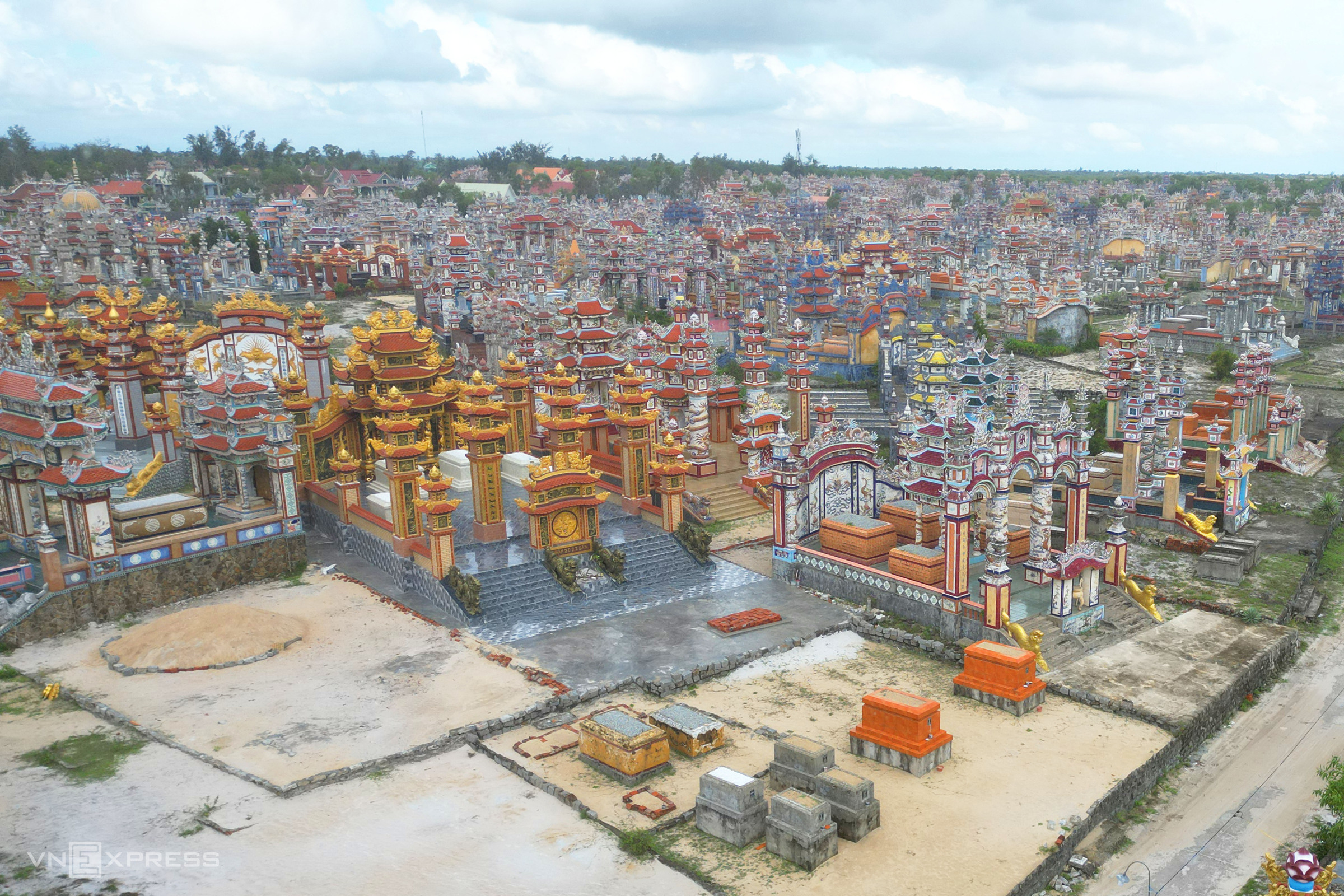 |
Tombs in An Bang village, Phu Vinh commune. *Photo: Vo Thanh* |
To encourage cremation, the Most Venerable suggests that religious organizations, including Buddhism, increase dissemination and explanation, so people understand that cremation aligns with Buddhist teachings. After cremation, families can still organize dignified funerals, pray, worship, keep ashes, or send them to spiritual centers as desired.
Additionally, the city needs to build civilized, dignified, green, clean, and beautiful memorial parks and ash storage areas so residents feel secure choosing this method. When people see practical environmental, economic, and cultural benefits, while still ensuring spiritual life, social perception will naturally change.
"I believe that when the authorities, religious organizations, and the people work together, we will build a funeral culture that is both civilized and modern, suitable for the city's development, while preserving the tradition of gratitude, filial piety towards ancestors, and the beautiful traditional values of the Vietnamese nation," Most Venerable Thich Hue Phuoc said.
Vo Thanh