


This initiative is outlined in the Politburo's Resolution 80 on the development of Vietnamese culture, issued on 7/1. The resolution aims to enhance public cultural engagement, encourage artistic creation, and foster a cultural and civilized lifestyle across society.
The Politburo recognizes Vietnamese culture as the culmination of the nation's values forged over thousands of years of nation-building and defense. It is considered a vital internal resource shaping the intellect, spirit, and character of the Vietnamese people. Despite this, the development of Vietnamese culture and people still faces limitations, inadequacies, and challenges.
Amidst rapid global shifts, increasing competition for values, and the growing influence of the cultural industry, Vietnam must define its position in the new world order. The Politburo stresses that "culture must guide development, integrate into every policy, and uphold humanitarian values and social ethical standards." It views cultural development as a foundation for achieving the nation's 100-year objectives.
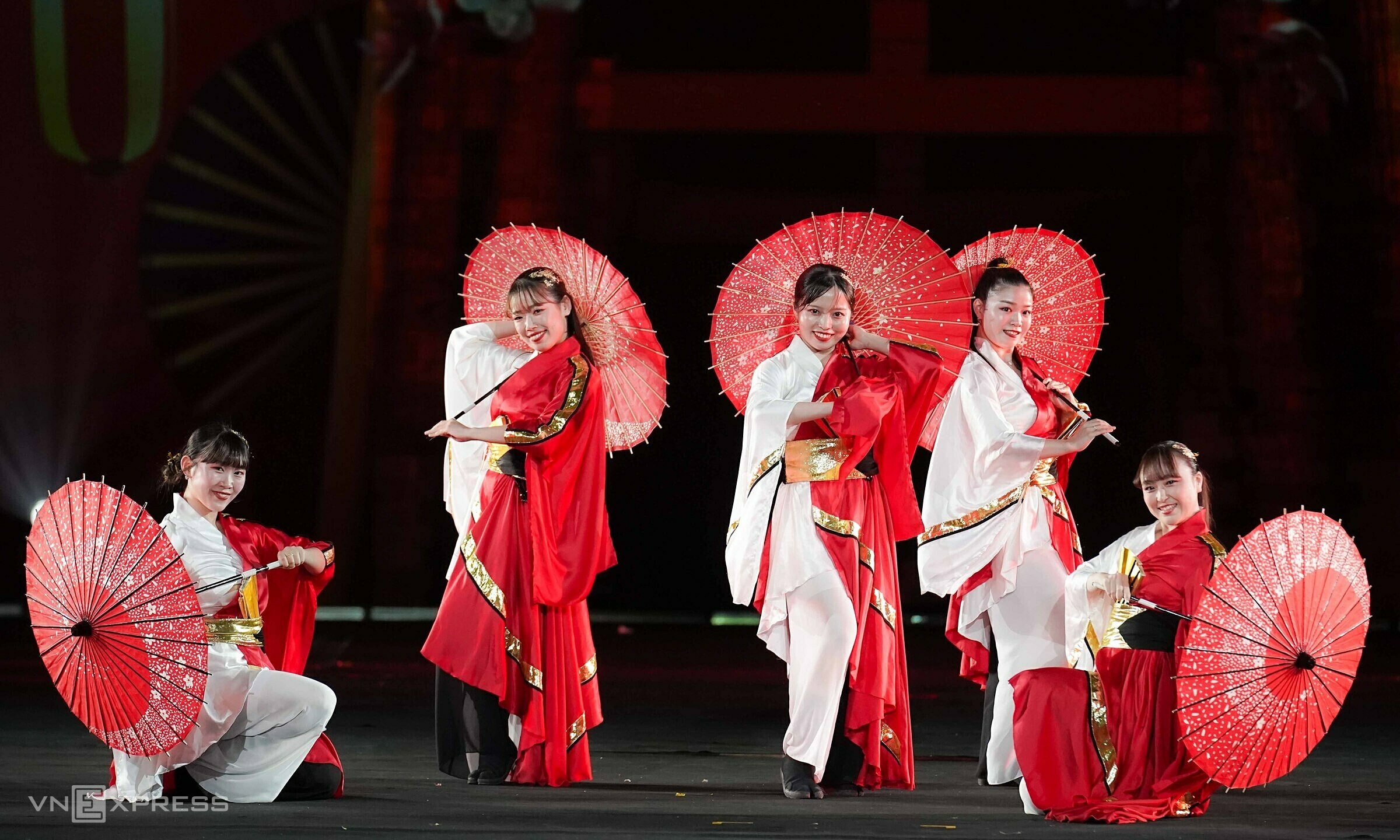 |
Hanoi world culture festival. Photo: Hoang Giang |
Building cultural industry groups
By 2030, the Politburo aims for Vietnam to establish an advanced culture, rich in national identity, unified in diversity, and characterized by national, democratic, humanistic, scientific, and modern traits.
A healthy cultural environment will be fostered across families, schools, society, and digital platforms. Literature and arts will develop in alignment with the nation's cultural history and its standing in the new era. Key national relics are expected to be restored, intangible cultural heritage preserved, and endangered traditional arts urgently protected.
The resolution targets boosting cultural industries, fostering a startup ecosystem in this sector, and establishing several cultural industry groups, creative industrial clusters, and international-scale cultural creative complexes. These will leverage high technology and innovative business models. Vietnam aspires to become a leading destination for global and regional cultural and artistic events.
The State budget will allocate a minimum of 2% of its total annual expenditure to culture, with gradual increases as needed. The Politburo proposes implementing preferential financial mechanisms for three priority areas: training and nurturing cultural and artistic talent, applying science and technology and digital transformation in culture, and commissioning valuable cultural and artistic works.
2030 goal: cultural industry to contribute 7% of GDP
By 2030, cultural industries aim to contribute 7% to GDP and establish 5-10 national brands in sectors like cinema, performing arts, cultural tourism, design, and fashion. Vietnam plans to develop five international art and cultural festival brands for cinema, music, and fine arts. It also seeks to open one to three additional Vietnamese cultural centers abroad, focusing on comprehensive strategic partner regions, and aims for five more cultural heritage sites to be recognized by UNESCO.
By 2045, Vietnam envisions becoming a dynamic cultural and creative industry hub in the region and globally. The cultural industry and creative economy are projected to become pillars of sustainable development, contributing 9% to GDP. The resolution targets establishing 10 international-scale art and cultural festival brands, securing eight to 10 additional UNESCO-recognized heritage sites, and ranking among the top three in ASEAN and top 30 worldwide for the soft power index and cultural industry product exports.
To achieve these goals, the Politburo outlines eight solution groups, including institutional reform to create strategic breakthroughs and unlock resources for cultural development. These solutions also involve encouraging cultural industry enterprises to use advanced technology for digital content production, product and service development, and intellectual property protection. The Politburo mandates appropriate remuneration for artisans and artists and calls for mechanisms to repatriate national treasures and rare antiquities.
The resolution underscores a human-centric approach, emphasizing character building as the core of cultural, educational, and scientific activities. It prioritizes moral and cultural education from preschool onward.
The State encourages businesses to invest in digital cultural products and services, integrating culture with tourism, commerce, and technology to form value chains. Cultural innovation and digital content creation centers will be established, enabling public participation in production, consumption, critique, and benefit-sharing from cultural resources.
Key cultural industry sectors, including cinema, music, fine arts, cultural tourism, design, fashion, traditional handicrafts, video games, cuisine, software, and digital content, will see focused development. Vietnam will pilot high-tech application models across the entire cultural industry value chain—from creation, production, and distribution to consumption and copyright protection. This initiative aims to position and promote the national brand internationally, aligning it with Vietnamese cultural identity and people.
The tourism sector will be restructured to enhance competitiveness and develop culturally rich, experiential tourism products. Models of "heritage-led economic development" will be implemented in world heritage sites and select heritage cities.
Vu Tuan


