Vietnam is gearing up to implement mandatory emission inspections for over 70 million motorcycles nationwide, a move aimed at improving air quality. The Ministry of Agriculture and Environment's latest proposal mandates these inspections in Hanoi and Ho Chi Minh City starting july 2027. By 2028, all motorcycles in these two major cities must meet level 2 standards, which require maximum carbon monoxide (CO) concentrations at 4.5% and hydrocarbons (HC) for four-stroke engines at 1,200 parts per million (ppm).
The initiative will expand to other major urban centers, with emission inspection activities for motorcycles in Hai Phong, Da Nang, Can Tho, and Hue commencing later, from july 2028.
On the afternoon of 29/1, Nguyen To An, Deputy Director of Vietnam Register, highlighted the urgency of the task, stating the inspection sector has only 18 months to prepare. To manage the vast number of motorcycles, the country requires over 5,000 operational facilities. This necessitates more than 5,000 sets of emission testing equipment and over 5,000 qualified inspectors. Most of these inspection facilities are expected to be established or adapted from existing motorcycle maintenance units operated by businesses affiliated with the Vietnam Association of Motorcycle Manufacturers.
In parallel, Vietnam Register needs a robust database infrastructure to manage data for over 70 million motorcycles. The agency is currently designing a software system that integrates artificial intelligence (AI) for efficient data management. This system will also include solutions to facilitate convenient and swift inspections for the public, while minimizing fraud.
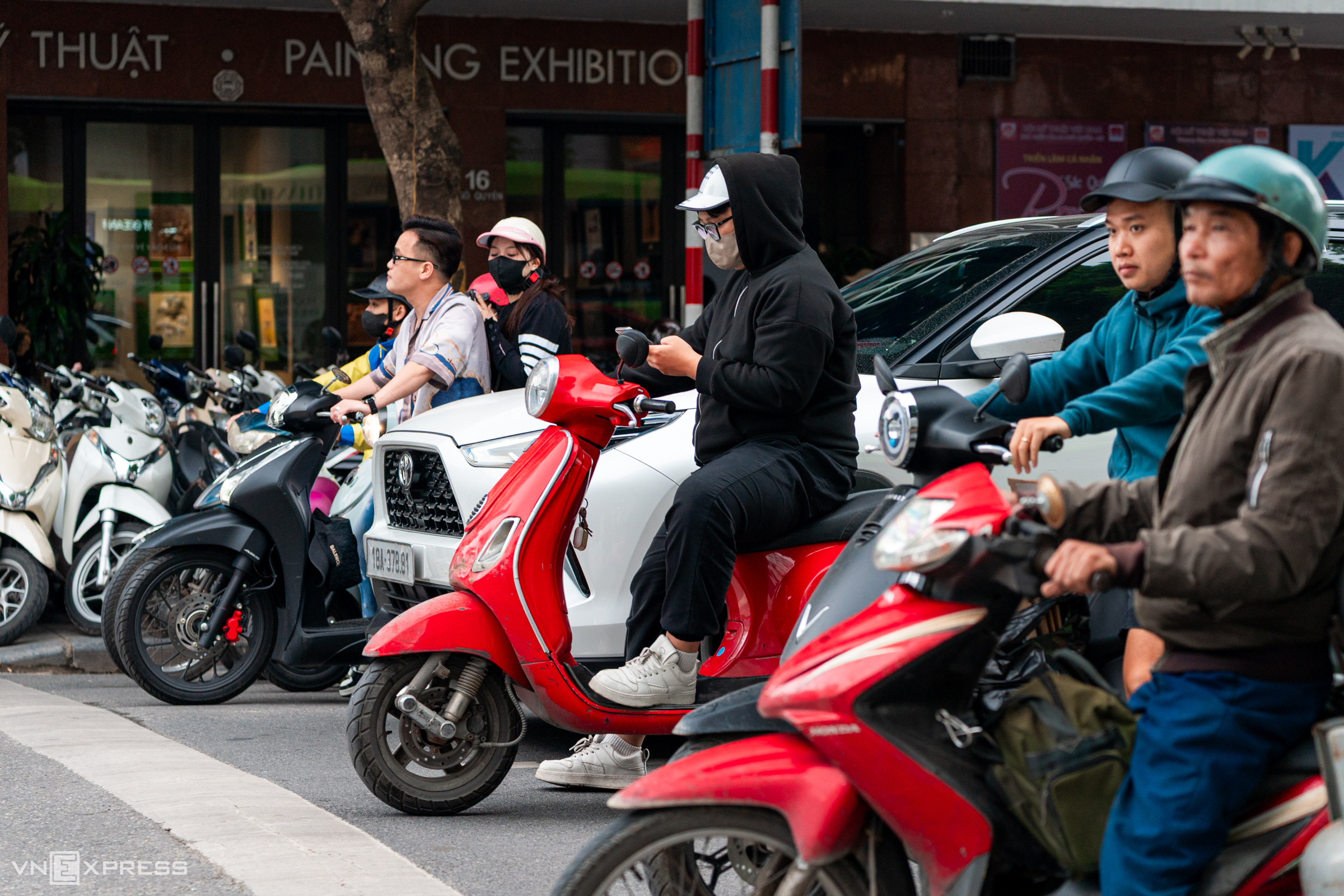 |
Motorcycle emissions are a significant source of air pollution. *Minh Quan* |
To further enhance vehicle maintenance quality, Vietnam Register has proposed establishing the Vietnam Association of Motor Vehicle Maintenance and Repair. This move is crucial as the context of vehicle emission control is projected to rapidly increase the demand for proper maintenance, adherence to technical standards, quality control of spare parts, and standardized professional skills in the near future.
According to Nguyen To An, vehicle technical safety cannot rely solely on periodic inspections. Instead, it requires a continuously operating ecosystem where maintenance, repair, inspection, and oversight are systematically organized with professional standards. Many developed countries have already established models where the state designs mechanisms for associations to participate deeply in the professional standardization process and enhance service quality.
Currently, Vietnam has over 74.3 million motorcycles and 6.3 million automobiles. The Ministry of Agriculture and Environment emphasizes that implementing the roadmap for motorcycle emission standards will significantly improve air quality. This, in turn, is expected to indirectly reduce healthcare costs and economic losses stemming from air pollution-related illnesses.
Doan Loan