The Prime Minister's plan, dated 30/8, implements the conclusion of the Ban Bi Thu on enhancing national labor productivity. This aligns with developing a synchronized, modern, and effective labor market in the new period. The plan also assigns the Ministry of Education and Training to develop and execute a national human resource development strategy. This strategy focuses on high-quality personnel, technical personnel, digital personnel, and those serving strategic, important, and key sectors, including national defense and security industries.
Developing a lifelong learning system is essential, enabling workers to continuously learn, retrain, and upgrade their skills. Training models will be innovated, strengthening the connection between general education, vocational training, and university education. Programs for practical engineers, high-tech personnel, and new professions emerging from digital transformation, green transition, population aging, and technological innovation will be developed.
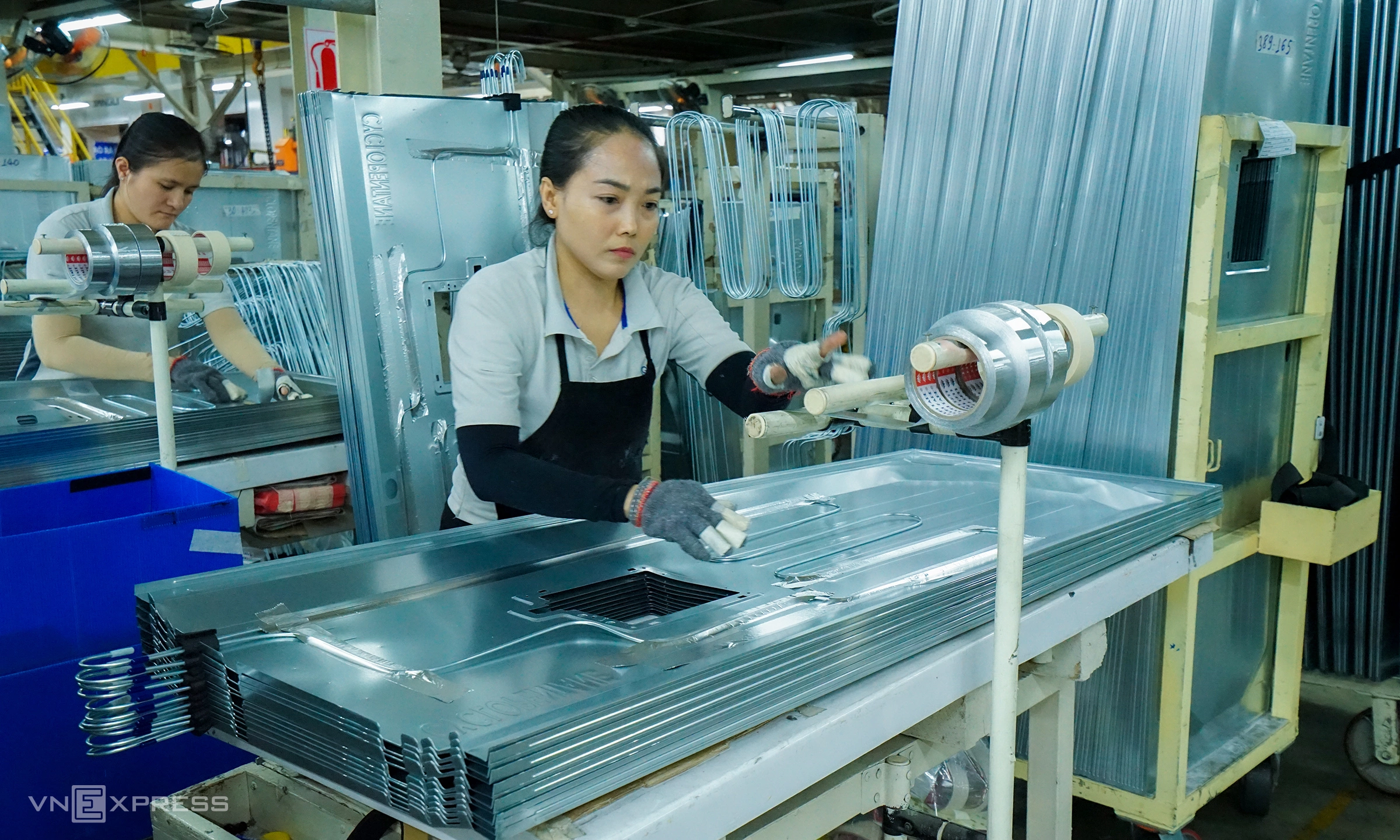 |
Workers inside the Aqua washing machine/refrigerator factory in Bien Hoa (Dong Nai). Photo: Bao Lam |
Vocational guidance and streaming after lower secondary school must be enhanced. This includes researching and implementing a vocational training model after lower secondary school (9+ vocational high school) that meets international standards and market demands, integrating general and vocational education. The goal is to ensure students complete the secondary education program while achieving a vocational qualification, ensuring seamless progression and enabling early entry into the labor market.
A high-quality human resource training ecosystem will be established, linked to key industries, high-tech zones, innovation centers, key economic regions, and strategic areas.
The Prime Minister directs the Ministry of Finance, the Ministry of Construction, and the Ministry of Science and Technology to refine investment attraction policies. These policies will prioritize projects that use advanced and high technology, offer high added value, feature modern management, efficiently use resources, and create quality jobs with high productivity and income. The Ministry of Finance will research superior incentive policies on taxes and investment funds to support businesses and experts. This aims to attract high-quality human resources, foreign experts, and scientists to work, research, and innovate in Vietnam.
The Ministry of Science and Technology will develop superior mechanisms and controlled experimental (sandbox) programs. These initiatives aim to attract, utilize, and develop high-quality domestic and international experts, scientists, and personnel in science, technology, innovation, and digital transformation.
The Ministry of Agriculture and Environment will implement solutions to cultivate a professional and digital farming workforce. These farmers will possess skills in applying science, technology, digital transformation, green transition, and operating modern machinery and equipment.
The Ministry of Home Affairs will finalize regulations on salaries, income, and labor permits to attract foreign experts and scientists. It will also review and improve policies that encourage businesses to train, retrain, and develop skills for their employees.
Vu Tuan