The proposal was made by Nguyen Thanh Do, Director of the Legal Consulting Center under the Ho Chi Minh City Labor Federation, during a thematic discussion at the 14th National Congress of Vietnam Trade Unions on the afternoon of 3/6.
Following its merger, TP HCM has over 7,2 million workers, with approximately 4,7 million participating in social insurance, representing 58% of the workforce. While no large-scale collective work stoppages have been recorded in the past six months, workers' lives and employment still face significant pressure regarding income, housing, healthcare, and social security.
Do noted that widespread social insurance arrears and evasion persist, while rapidly increasing urban living costs reduce workers' real incomes. The growing gap between existing benefits and minimum social security needs poses a potential risk for labor disputes.
To address issues proactively, the Ho Chi Minh City Labor Federation proposes establishing a rapid coordination mechanism among the Labor Federation, the Department of Home Affairs, the Social Insurance Agency, the Management Board of Industrial Parks and Export Processing Zones, and local authorities. When grievances or conflicts arise, these parties would directly communicate and agree on solutions, rather than waiting for lengthy administrative processes.
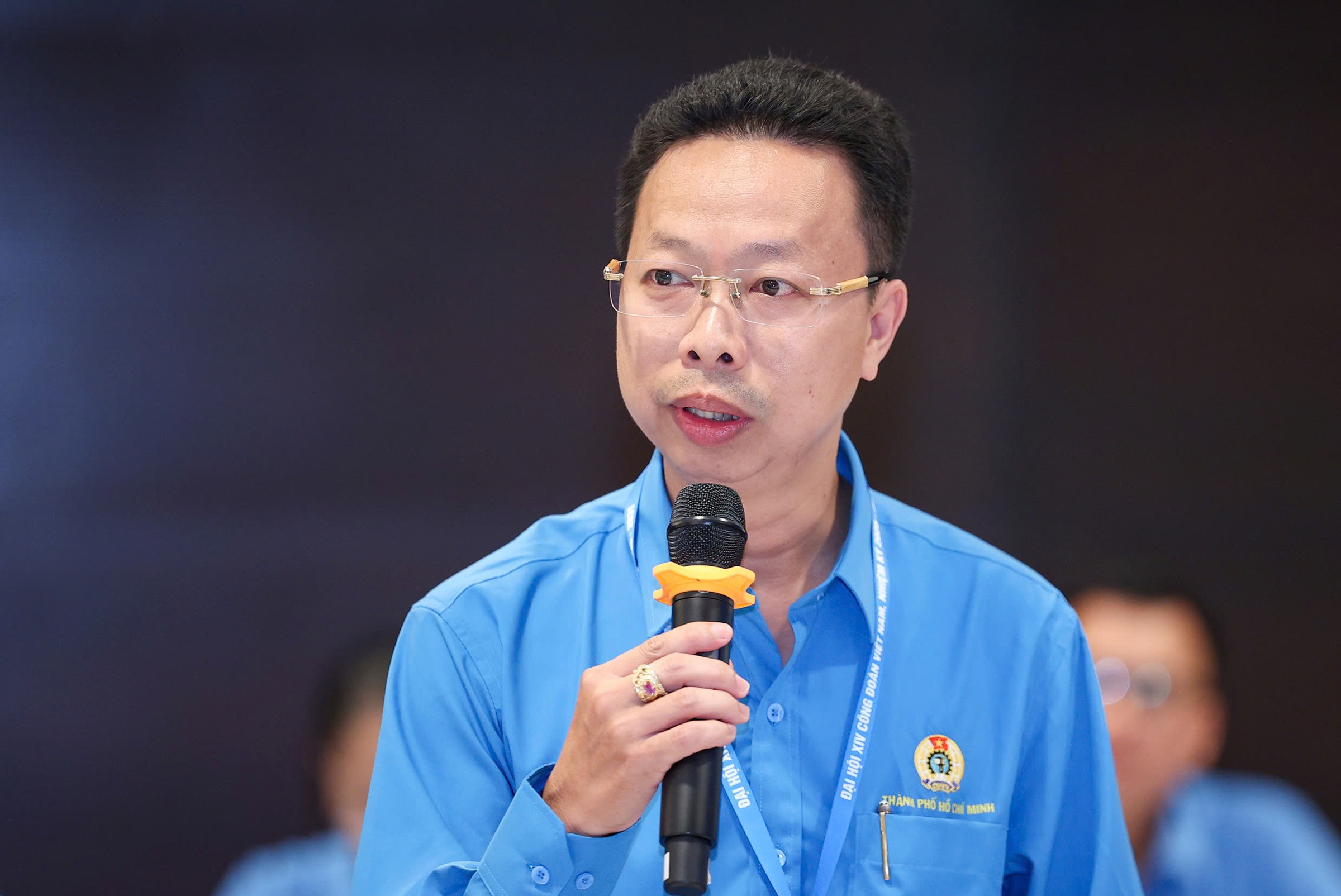 |
Nguyen Thanh Do, Director of the Legal Consulting Center under the Ho Chi Minh City Labor Federation, at a discussion on the afternoon of 3/6. Photo: Hoang Phong
According to Do, alongside an early warning mechanism, authorities need to create special monitoring files for businesses that consistently violate labor laws, have outstanding wages, or prolonged social insurance debts. This would enable the Labor Federation to proactively advise local authorities to engage with these businesses, prevent conflicts from escalating, and protect workers' rights.
He also emphasized the importance of regular dialogue as an early dispute prevention tool, especially in labor-intensive industries. Recently, the Legal Consulting Center initiated lawsuits and participated in legal proceedings to protect the rights of over 2,500 workers in businesses with outstanding wages and social insurance debts, compelling companies to repay over VND 49 billion.
Sharing a similar perspective, Bui Van Truong, Chairman of the Trade Union at Luxshare-ICT Co., Ltd. in Bac Ninh, stressed the need to diversify channels for receiving worker feedback. At this company, trade union officials wear identification armbands and publicly share their personal phone numbers so workers can easily contact them for support.
Monthly, production lines organize forums with the participation of workshop leaders and company management. All worker recommendations are recorded, monitored, and their implementation supervised by the Trade Union.
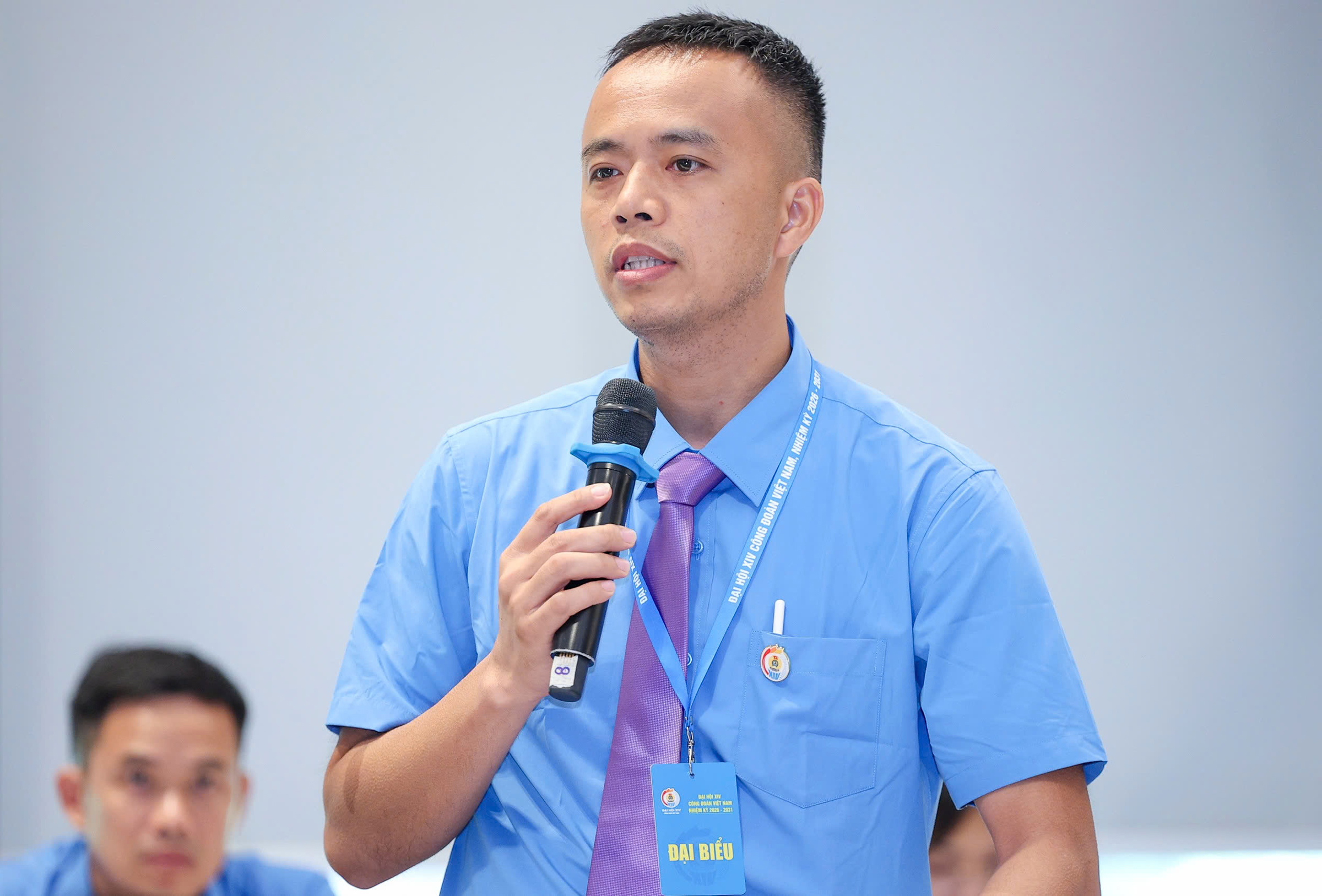 |
Bui Van Truong, Chairman of the Trade Union at Luxshare-ICT Co., Ltd. (Van Trung Industrial Park, Bac Ninh). Photo: Hoang Phong
Welfare must meet worker aspirations
Dinh Sy Phuc, Chairman of the Trade Union at Taekwang Vina Company – a business with 32,000 workers, 85% of whom are female – stated that welfare is a crucial factor in retaining workers and is often developed through dialogue and collective bargaining.
He advised that grassroots trade unions should regularly understand workers' thoughts and aspirations through various channels, from social media and direct dialogue to workplace forums. Based on this, the Trade Union selects appropriate topics for negotiation with the business.
"During dialogue sessions, the Trade Union must be both flexible and resolute to achieve outcomes that align with the aspirations of the majority of workers", Phuc said.
Thanks to regular dialogue, in addition to an average income of over VND 11 million per month, workers at Taekwang Vina also receive average allowances and subsidies exceeding VND 2,3 million; and Tet bonuses equivalent to 150% of a month's salary. Workers are supported with cultural and foreign language education, skill enhancement; female workers receive additional support for raising young children and monthly prenatal milk distribution.
A representative from the VNPT Trade Union proposed shifting from traditional welfare models to a digital model based on data, technology, and worker experience. According to the unit, today's workers not only need stable employment and income but also a humane working environment, physical and mental healthcare, and opportunities for personal development.
The VNPT Trade Union advocated for the early development of a unified national digital trade union platform and the concretization of the Vietnam Worker Happiness Index Set as a basis for evaluating workplace quality.
 |
Viettel's AI camera system, part of the National Defense Trade Union, displayed at an exhibition on the sidelines of the Congress. Photo: Hong Chieu
Ensuring employment in the AI era
Tran Duc Thich, Chairman of the Trade Union of Vietnam Post Corporation under the Science and Technology Trade Union, noted that artificial intelligence is increasingly integrated into corporate governance, customer service, content creation, and various office tasks. This poses a risk of displacement for some traditional occupations.
He believes that without timely skill enhancement, workers could lose their competitive edge in the labor market. Trade unions need to collaborate with businesses and technology providers to promote digital skills, digital platform work skills, and ensure information security for workers.
Thich predicted that with the advancement of AI, new labor models will emerge, such as platform workers, tech-driven freelancers, and remote workers. Many of these worker groups currently lack adequate social insurance, stable income, regulated working hours, and personal data security. Therefore, the Trade Union must proactively participate in refining labor laws and policies in the digital environment to protect workers' rights.
The 14th National Congress of Vietnam Trade Unions for the 2026-2031 term is taking place from 3/6 to 5/6. On 5/6, discussions between the Prime Minister and Congress delegates will focus on enhancing labor productivity and achieving a double-digit economic growth target.
Hong Chieu