The Ministry of Agriculture and Environment is currently soliciting feedback on a draft Law amending and supplementing certain articles of the Law on Environmental Protection, which is expected to be submitted to the National Assembly for comments this year. The draft continues to refine regulations on waste management in the direction of a circular economy, considering waste as a resource that can be reused, recycled, and returned to the production and consumption cycle.
According to clause 5, article 64 of the draft, solid waste with residual value must be recycled or reused for appropriate purposes. Soil, stone, concrete, brick, sand, and other inert waste generated from construction activities are to be reused as construction materials or for site leveling for specific projects and activities, based on the needs of organizations and individuals.
Compared to current regulations, which only generally mention "soil, stone, and solid waste from construction activities", the new draft specifies the types of construction waste that need to be recycled or reused. The draft also adds regulations on managing materials and products manufactured from waste after treatment, recycling, or reuse. The government will stipulate a roadmap for applying the proportion of recycled materials in goods and products.
According to the drafting agency, this regulation creates a legal basis for the formation and development of a recycled materials market, while simultaneously promoting sustainable production, consumption, and the development of a circular economy.
According to 2025 statistics, Hanoi generated approximately 4,000 tons of construction solid waste and 5,000 tons of domestic waste daily.
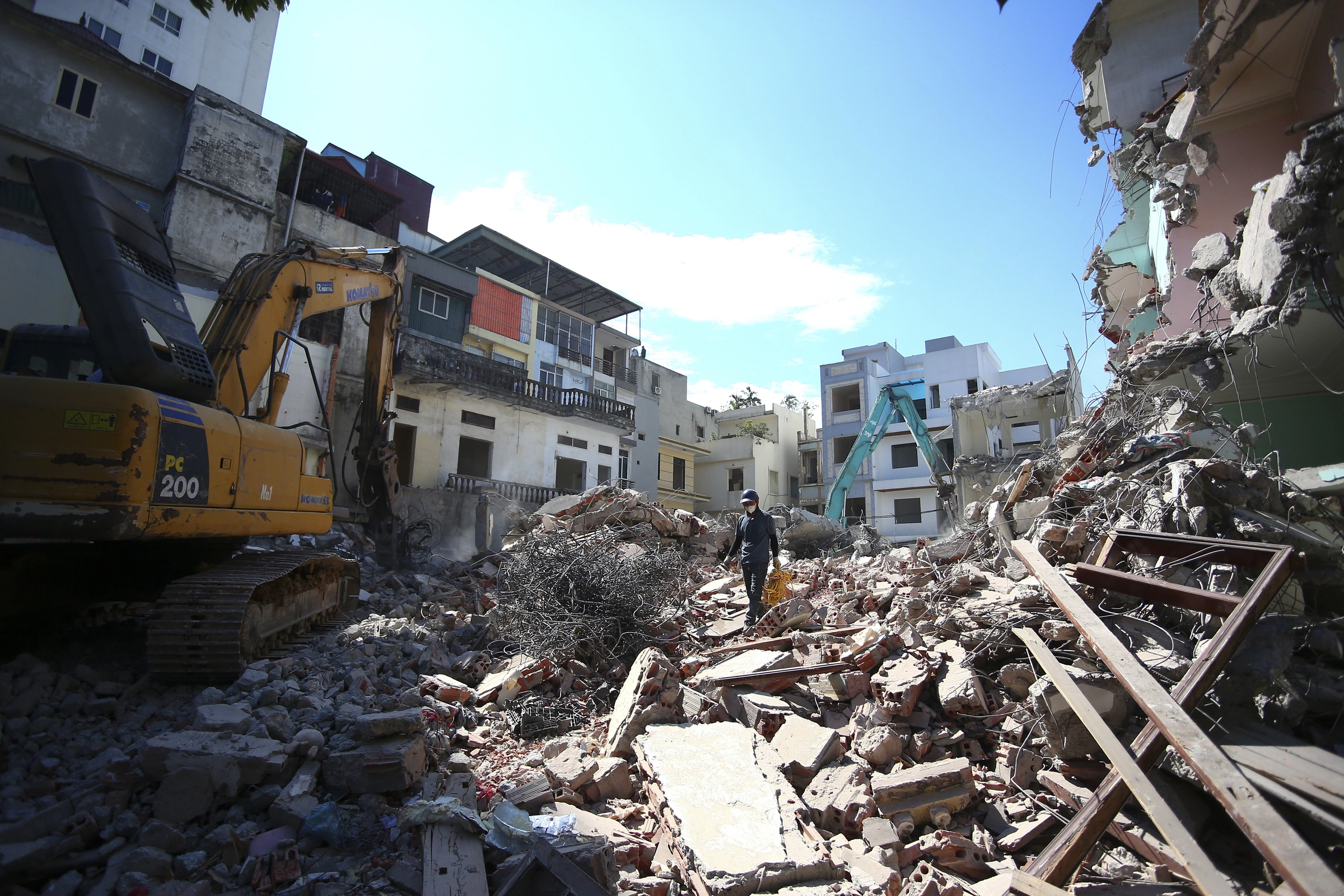 |
Construction waste from demolition projects in Hanoi. Photo: Pham Chieu |
The draft law states that organizations and individuals generating, collecting, transporting, recycling, and treating waste are responsible for providing and updating electronic data on waste into the environmental information system and database. Waste management activities will gradually be implemented in a digital environment, including electronic documents and handover records.
According to the drafting agency, the online waste management system will contribute to modernizing state management, increasing transparency, reducing paper documentation, and enhancing the ability to monitor and trace waste from generation to treatment.
Additionally, the draft adjusts regulations on the classification of domestic solid waste to be more flexible. Instead of applying a uniform model nationwide, the provincial People's Committees will decide on classification methods appropriate to the actual conditions of each locality.
The drafting agency believes this approach helps localities proactively choose solutions suitable for their infrastructure, treatment technology, and waste generation characteristics. The draft also proposes amending regulations on selecting projects and facilities for collecting, transporting, and treating domestic solid waste, aligning them with laws on bidding and state budget, to avoid overlaps during implementation.
Son Ha