The Ministry of Justice is currently evaluating the draft decree that regulates the mandatory social insurance (BHXH) contribution rate to the occupational accident and disease insurance fund, a draft developed by the Ministry of Interior.
According to the draft, employers subject to mandatory contributions will universally apply a 0.3% rate of the salary fund, which serves as the basis for social insurance contributions. This rate will be effective from the decree's effective date until 31/12/2027. From 1/1/2028, the contribution rate will revert to 0.5%.
The scope of application includes state agencies, public service units, agencies and enterprises within the Military and Public Security forces, political-social organizations, businesses, cooperatives, and other employer units subject to mandatory contributions.
Under current regulations, employers contribute a maximum of 1% of the monthly salary fund, which forms the basis for employees' social insurance contributions, to the occupational accident and disease insurance fund, with the government specifying the exact rate.
Decree 58/2020 stipulates a standard contribution rate of 0.5%. A lower rate of 0.3% currently applies only to specific cases that meet certain conditions and require submitting an application to competent authorities for consideration and approval.
 |
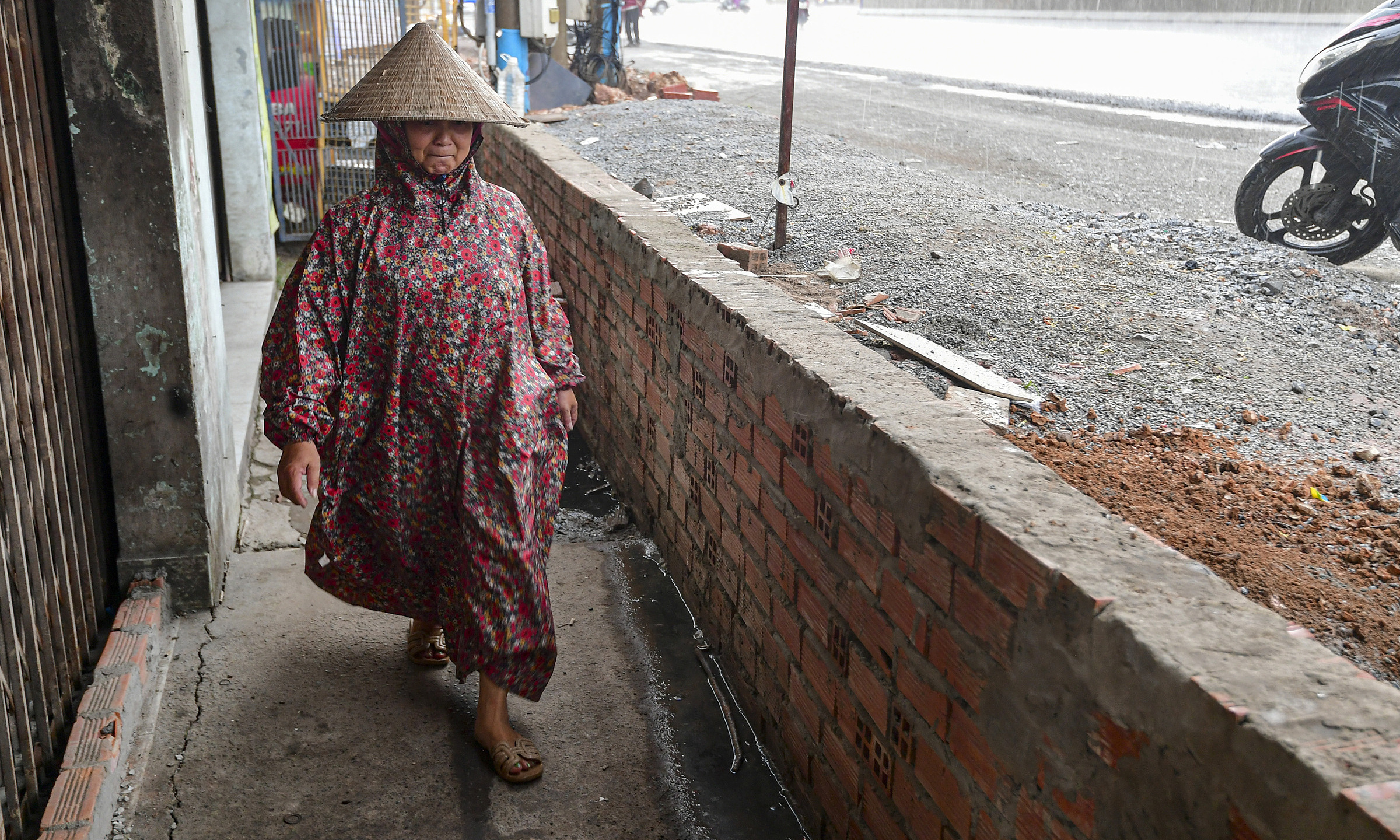
Workers at a construction site in Hanoi, May 2026. Photo: Giang Huy |
The Ministry of Interior stated that a review of implementation showed the 0.3% contribution mechanism has rarely been applied. This is due to strict conditions, complex criteria, and multi-step procedures, while the reduction itself has not been sufficient to incentivize businesses to implement it.
Therefore, the draft proposes eliminating several administrative procedures and applying a universal 0.3% contribution rate for all employers, rather than limiting it to units that meet specific conditions as is currently the case.
The drafting agency believes the 0.3% rate can balance supporting employers with ensuring the fund's solvency. The policy is limited until the end of 2027 to prudently address the impact of reduced revenue and allow time to assess the fund’s income, expenditures, and balance before considering policies for the subsequent phase.
The fund could see a revenue reduction of nearly 3,000 billion VND annually.
According to the Ministry of Interior, in 2025, the occupational accident and disease insurance fund collected nearly 7,369 billion VND with a 0.5% contribution rate. If reduced to 0.3%, the estimated revenue would be 4,421 billion VND, representing a reduction of approximately 2,948 billion VND.
In contrast, average annual expenditures for benefits are about 1,000 billion VND. The fund currently holds a surplus of 86,442 billion VND, leading the drafting agency to conclude that it can still ensure benefit payments even with the reduced contribution rate.
During the 2020-2025 period, the fund's annual revenue consistently exceeded expenditures. In 2025, revenue increased by over 53% and expenditures increased by 70% compared to 2020. Over these six years, the country provided new one-time benefits to over 29,700 people and monthly benefits to over 11,600 people.
The draft also proposes support for newly established businesses converting from cooperatives or household businesses, with one to 10 employees subject to mandatory social insurance (BHXH). This group is proposed to have a 0% contribution rate to the occupational accident and disease insurance fund for 12 months from the month of establishment or conversion. This policy is expected to apply from the decree's effective date until 31/12/2030.
During the period of enjoying the 0% rate, if the number of employees subject to mandatory social insurance increases to more than 10, the business will no longer qualify for this preferential treatment. In such cases, the contribution rate will be 0.3% until the end of 2027 and 0.5% from 2028.
Hong Chieu