On 21/4, delegate Nguyen Dang An, Director of Lang Son province's Department of Culture, Sports and Tourism, addressed the socio-economic discussion session. He affirmed that the administrative unit arrangement is a sound policy, noting that commune-level operations have stabilized, streamlining procedures for citizens and businesses.
However, An highlighted ongoing challenges in human resource allocation and organizational structure. Several areas face civil servant shortages, particularly in construction, transport, and information technology, even as workloads surge from added responsibilities delegated by higher authorities. Commune-level civil servants are now processing a higher volume of documents and engaging more with citizens and businesses than prior to the restructuring.
Public service units, including healthcare and education, also face mounting pressure. They contend with personnel shortages while simultaneously implementing staffing reduction mandates. A regulation capping labor contracts at 70% of the deficit restricts local flexibility in recruiting additional staff. Furthermore, numerous officials retiring under Decree 178 have created immediate personnel gaps that cannot be quickly filled, as training and retraining initiatives require time.
Given these challenges, delegate Nguyen Dang An urged the Government to conduct a comprehensive review of staffing levels. This review should consider criteria like area and population, alongside specific regional characteristics such as mountainous, border, coastal, and island localities, to ensure appropriate personnel allocation. He also called for prompt guidance to enable ministries, sectors, and localities to implement training programs, enhancing the qualifications of commune-level civil servants to meet the demands of the new phase.
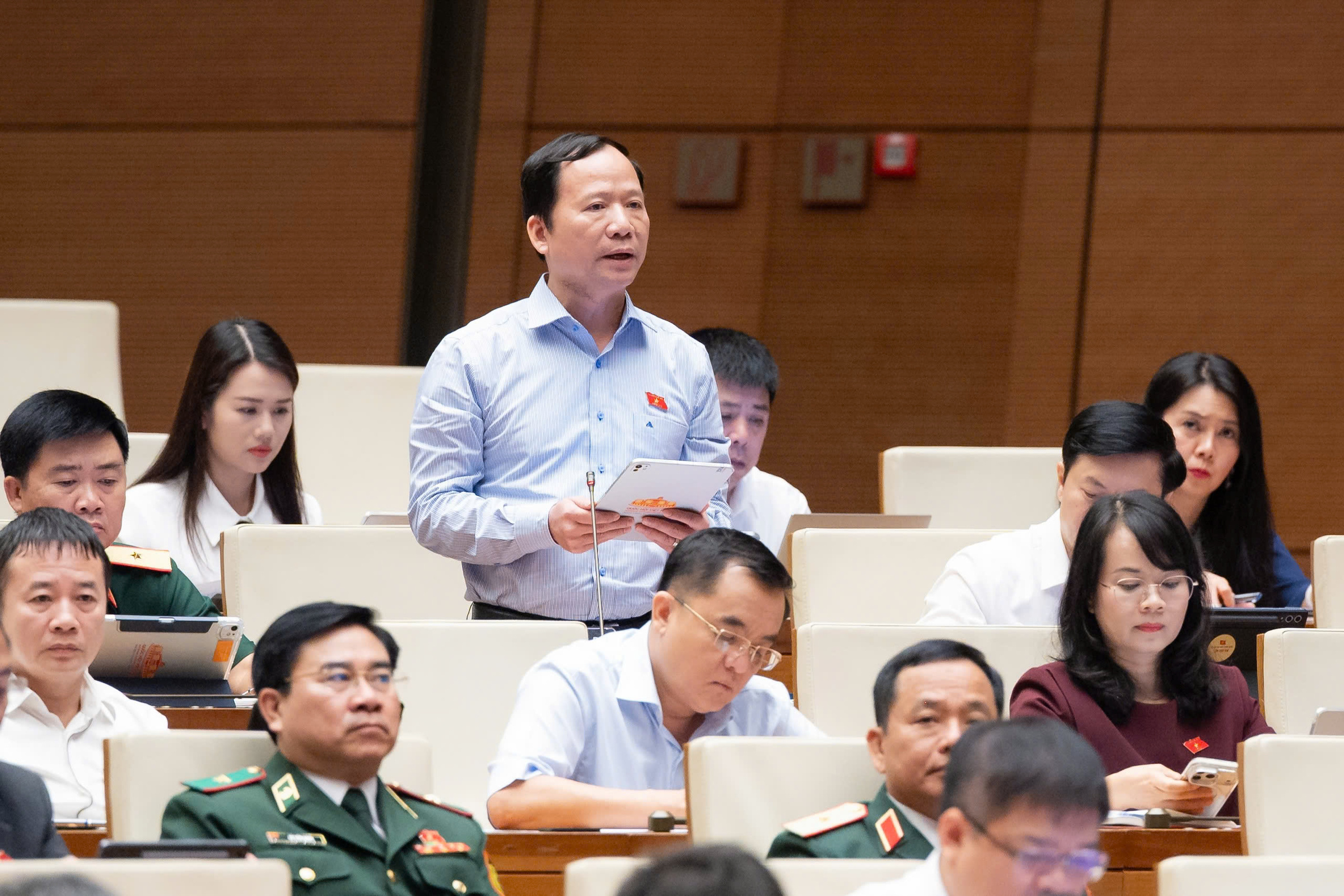 |
Delegate Nguyen Dang An, Director of Lang Son province's Department of Culture, Sports and Tourism. Photo: Hoang Phong
Echoing these concerns, delegate Siu Huong, Deputy Head of the Gia Lai provincial delegation, noted that commune-level agriculture and environment civil servants face substantial workloads but are hampered by personnel shortages, limited expertise, and inadequate equipment.
Huong proposed a comprehensive reassessment of the workload for commune-level agriculture and environment civil servants within the two-tier local government model. This assessment would inform plans for appropriate staffing additions, either by maintaining the current total allocated headcount or by allowing job-based employment contracts.
Delegate Siu Huong also advocated for ensuring digital infrastructure and equipment, allocating sufficient funding, and increasing inspection and guidance from the Central Government to address local challenges promptly. She explained that commune-level authorities are now undertaking numerous additional tasks from higher tiers while still performing all existing functions, creating significant human resource strain.
The delegates collectively urged the Government to conduct a comprehensive evaluation of the two-tier local government model's operation after one year of implementation. This evaluation should clarify the organizational structure, human resources, and the commune level's capacity to fulfill its duties.
On 22/4, the National Assembly chamber held discussions on a resolution outlining breakthrough mechanisms and policies for Vietnam's cultural development. They also addressed the proposal to establish Dong Nai city as a centrally-governed municipality and deliberated on piloting the public lawyer institution.
Son Ha