Phase one of the Chau Doc - Can Tho - Soc Trang expressway project spans over 188 km with a total investment of nearly VND 45,000 billion. The section passing through Can Tho city is over 132 km long, with an investment exceeding VND 31,200 billion, and is divided into three component projects.
The Can Tho City Project Management Board for Investment and Construction of Transport and Agricultural Projects, the investor, reported that the three component projects in the area have reached approximately 57% of their volume and disbursed over 79% of funds. However, the 2026 disbursement plan has only achieved over 15%, equivalent to VND 694 billion out of a total of VND 4,563 billion.
Most bridge components have been largely completed. However, many road packages are at risk of delay due to a substantial shortage of sand and stone.
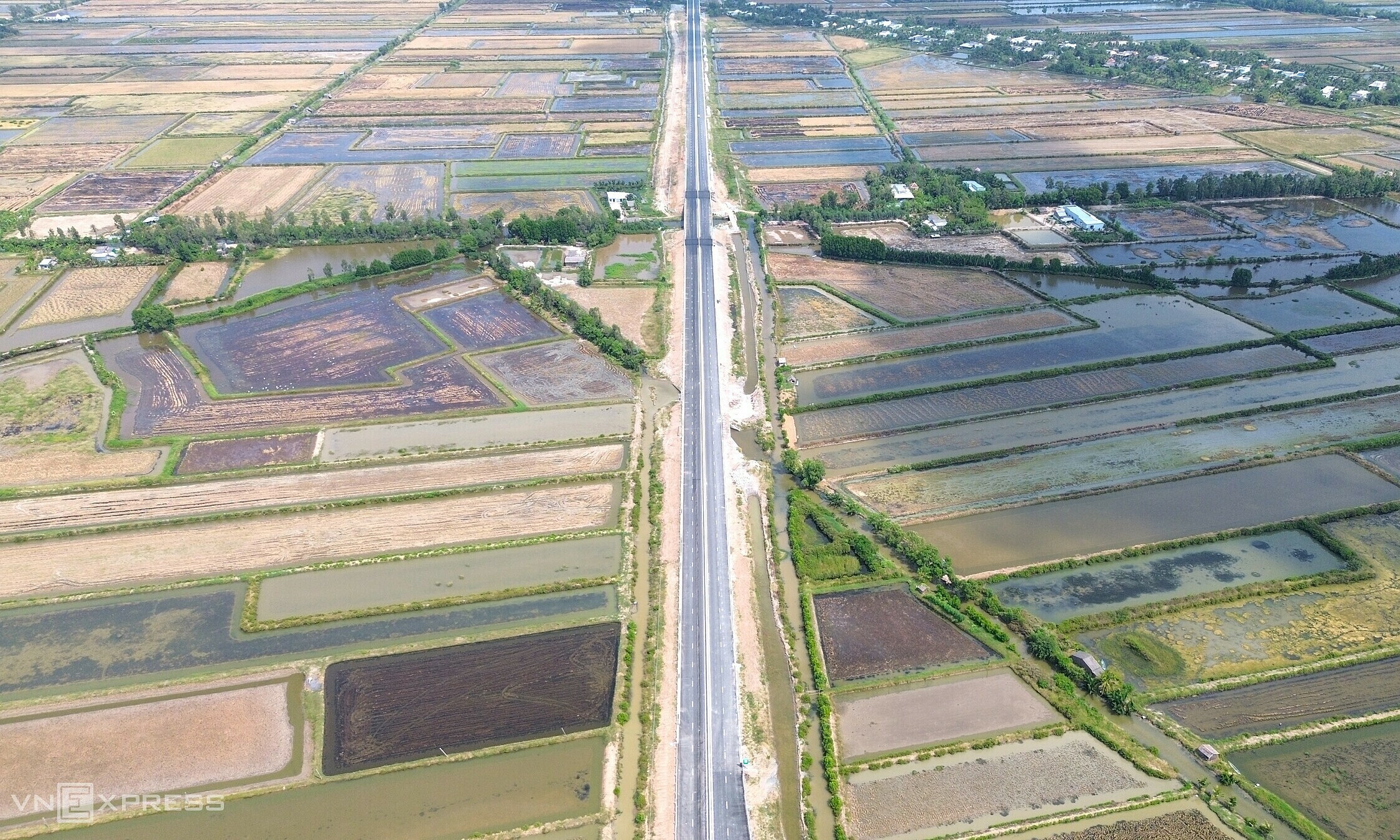
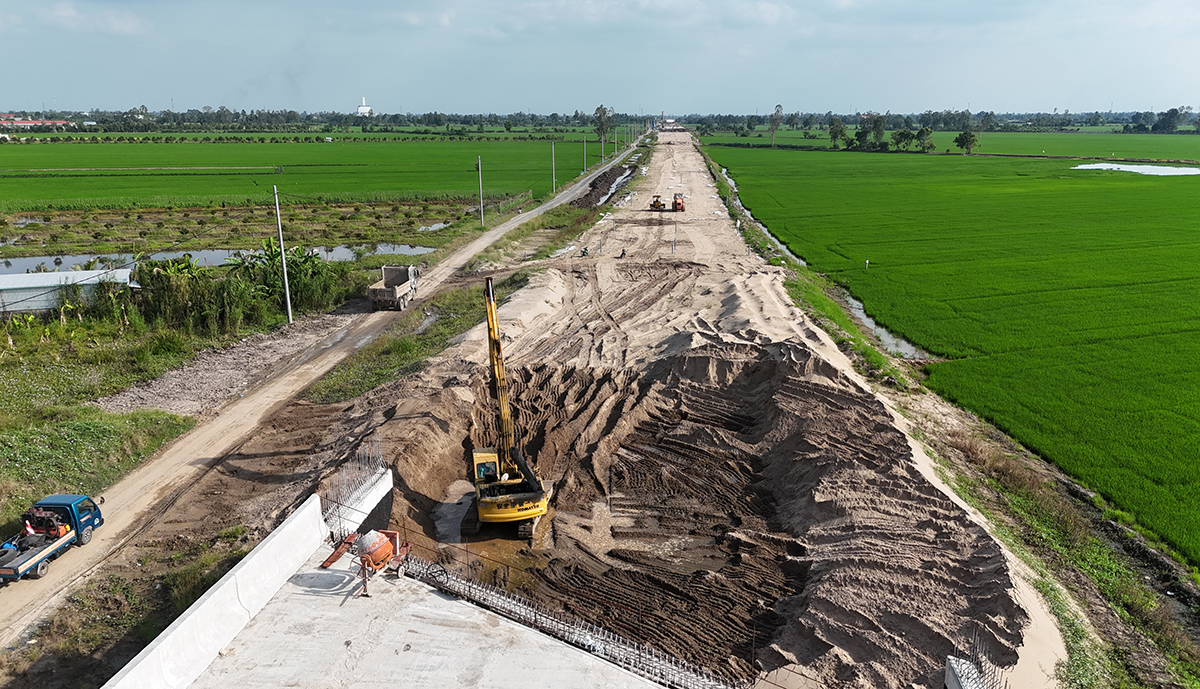 |
Construction site of the Chau Doc - Can Tho - Soc Trang expressway, section through Truong Xuan commune, Can Tho city. Photo: An Binh |
Phan Minh Tri, deputy director of the Can Tho City Project Management Board for Investment and Construction of Transport and Agricultural Projects, stated that all 11 bidding packages across the three component projects are currently under intensive construction. While the contractors' machinery, equipment, human resources, and financial capacity are largely sufficient, the most significant challenge has been the persistent material shortage since the project's inception.
The total sand requirement for the three component projects is over 16,6 million m3, but the amount delivered to the construction site is less than 10,6 million m3. The demand for stone is over 4,17 million m3, yet the volume gathered and used is only nearly 0,9 million m3.
According to the investor, component projects two and four still face a deficit of about 4 million m3 of sand, with approximately 3 million m3 of this quantity lacking an identified source. To ensure progress, the construction sites need to mobilize 3,44 million m3 of sand before august for roadbed preloading, a target deemed very difficult to achieve.
The sand shortage stems from several factors. Some sand mines in Dong Thap and An Giang have temporarily ceased operations due to concerns about riverbank erosion or are in the process of renewing their licenses. Active mines operate at a low capacity of only 1,000-2,000 m3 daily, while the demand for these packages is about 30,000 m3 daily.
The planned supply of seaborne sand for the section through the former Soc Trang area also faces difficulties. This is due to complex "gio chuong" (northeast monsoon) weather conditions and significantly higher costs for mobilizing offshore extraction machinery and equipment compared to inland river sand.
Regarding stone, the three component projects still require over 2,4 million m3. The investor assesses that the ongoing sand and stone shortages are exerting considerable pressure on the overall project timeline.
According to the plan, all bidding packages must complete preloading for settlement by 30/7, followed by unloading and the construction of finishing items for technical opening of the entire route by july 2027.
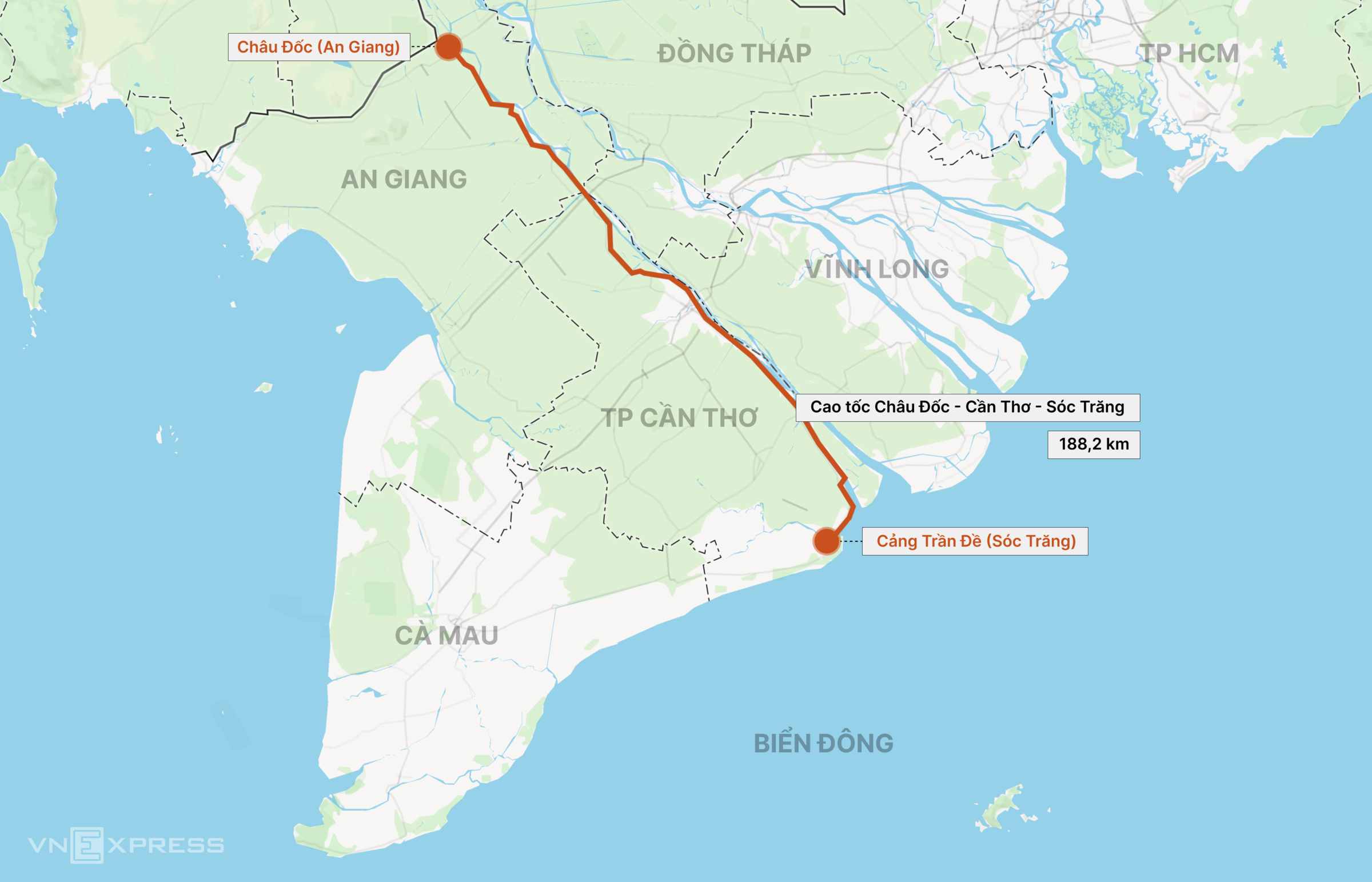 |
Route map of the Chau Doc - Can Tho - Soc Trang expressway. Graphic: Tam Thao |
In response to this situation, the investor has proposed that the Can Tho City People's Committee and the Department of Agriculture and Environment continue to support the management board and contractors in sourcing backfill sand and stone from An Giang, Dong Thap, Vinh Long, TP HCM, and the Southeast region. This support is crucial to ensure the project's progress aligns with directives from the National Assembly and the Government.
The management board is also considering using commercial sand to offset the deficit. Commercial sand is estimated to cost about 193,000 dong per m3, which is 123,000 dong higher than the price included in the project's initial estimate. If nearly 3 million m3 of commercial sand are purchased, the project cost would increase by nearly VND 360 billion, expected to be drawn from contingency funds.
As an immediate measure, the investor has recommended that the Can Tho City People's Committee approve the use of 800,000 m3 of commercial sand for construction. While this option entails higher costs, it is considered environmentally safe and is expected to gain easier consensus from local authorities and residents in the project area.
In the An Giang section, component project one, which is 57 km long and has an investment of over VND 13,500 billion, is currently over 75% complete, exceeding the contractual schedule by about 0,2%.
An Binh