Speaking before the National Assembly on 21/4, Deputy Prime Minister Nguyen Van Thang highlighted that Vietnam's current food safety management system, overseen by multiple ministries, creates both overlapping responsibilities and control gaps. Consequently, the government is developing a proposal to establish a unified management agency. This initiative aims to centralize oversight, address the fragmented approach, and enhance the effectiveness of management, inspections, and enforcement against violations.
Under the 2010 Food Safety Law, state management responsibilities are divided among three key ministries, each assigned specific product groups and stages. The Ministry of Health oversees functional foods, additives, bottled water, and institutional kitchens in settings such as schools and hospitals. The Ministry of Agriculture and Environment manages fresh food, including cultivation, animal husbandry, slaughter, and initial processing, while also controlling diseases, quarantine, and veterinary hygiene. Meanwhile, the Ministry of Industry and Trade regulates industrial processing, circulation, and market distribution of food.
These regulations are further detailed in decrees and guiding documents, shifting the focus from pre-inspection to post-inspection and increasing corporate accountability. At the local level, provincial and communal People's Committees (UBND), alongside specialized agencies and inspection forces, directly enforce these measures.
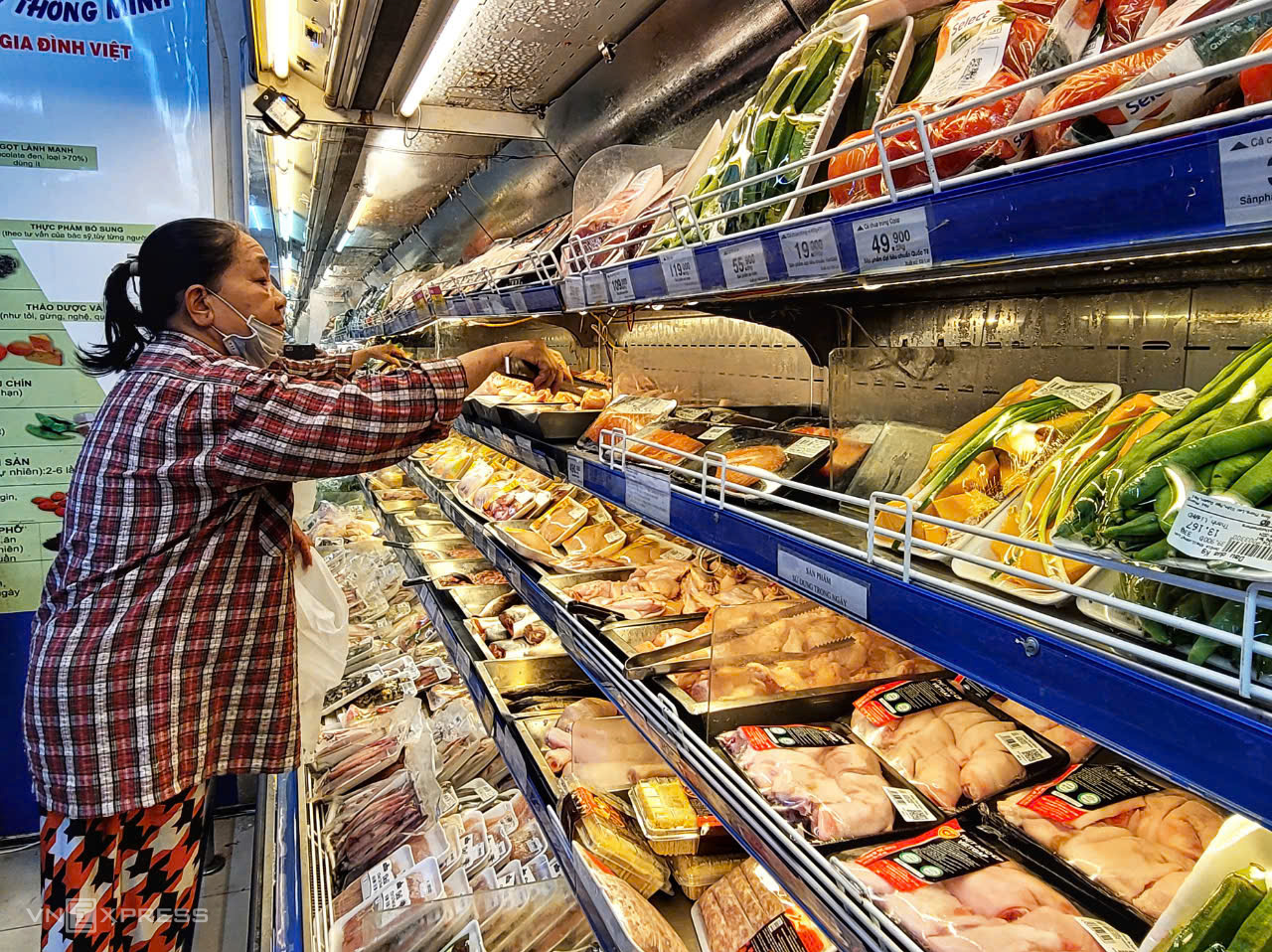 |
People shopping at a supermarket in Ho Chi Minh City. Photo: Le Tan |
The food supply chain illustrates how the management system is segmented by stage. During animal husbandry, the agricultural sector is responsible for disease control, issuing quarantine certificates, and monitoring hygiene standards. At the slaughter stage, veterinary agencies and local authorities assume responsibility. For industrial processing, the industry and trade sector takes over, requiring businesses to verify clear origins for raw materials. Finally, in the distribution phase, market management forces and local authorities inspect goods in circulation.
For institutional kitchens, particularly in schools, the health sector serves as the primary regulatory body. The head of each unit bears full responsibility, from selecting suppliers to overseeing processing procedures.
Consider a scenario where diseased pork is found in a school kitchen: responsibility is traced along the entire supply chain. Violating livestock facilities could face criminal charges. Veterinary agencies are accountable if quarantine protocols are bypassed, and slaughterhouses are liable for processing unqualified animals. Food suppliers must verify the origin of their products, while schools are responsible for inspecting incoming ingredients. Local regulatory bodies also share responsibility for inspection and oversight.
Pham Khanh Phong Lan, Director of the Ho Chi Minh City Food Safety Department, highlighted that a significant challenge lies in the current inspection process. The shift from specialized inspections to general checks has hindered the detection and resolution of unsafe food issues, with current inspection procedures often being superficial.
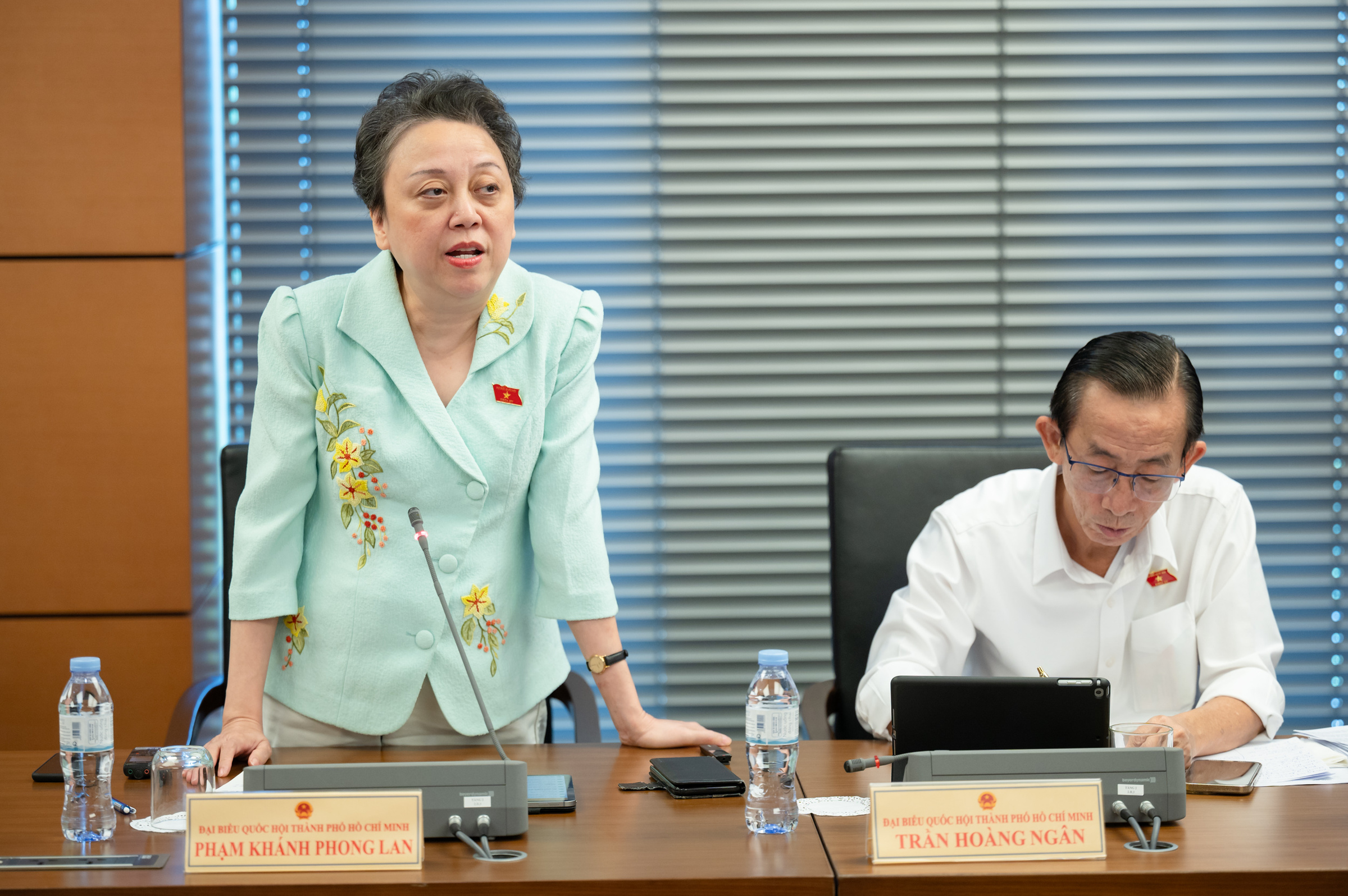 |
Delegate Pham Khanh Phong Lan (Director of Ho Chi Minh City Food Safety Department). Photo: Hoang Phong |
Lan noted that inspections, primarily conducted according to pre-approved plans, reduce the likelihood of detecting violations. "Once approved, sending a prior notice to businesses before an inspection significantly diminishes its effectiveness", she stated.
Furthermore, regulatory bodies are often restricted to inspecting only facilities they have licensed. This limitation allows violating individuals and organizations to operate covertly, outside official oversight, or engage in illicit trade. Many cases necessitate police involvement for resolution.
Currently, only Ho Chi Minh City has adopted a single-agency model for its Food Safety Department. Other localities continue to operate with fragmented management across three sectors. According to Lan, this often results in multiple agencies claiming credit for positive outcomes, but makes it challenging to pinpoint responsibility when incidents occur.
She also noted the complexity of the administrative penalty process, which often involves lengthy procedures from recording violations to issuing final decisions. Businesses can lodge extended appeals, complicating enforcement for regulatory agencies. The widespread nature of small-scale production and business further exacerbates the challenges in food safety control.
To address these issues, Pham Khanh Phong Lan advocates for strict implementation of Central Directive 17, which emphasizes unifying management oversight and enhancing post-inspection. However, the primary obstacle remains the legal framework. The Ministry of Health is currently drafting amendments to the Food Safety Law, slated for submission to the National Assembly in its October session. Enacting this law will enable the synchronized completion of new decrees and circulars, thereby replacing the existing overlapping regulations.
Son Ha