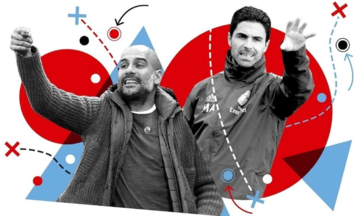
Just days after taking the Arsenal managerial role in 2019, Arteta stood in his office, contemplating how to apply the lessons learned from Guardiola. "I witnessed firsthand what worked and what didn't. I know what a true winning culture needs to be, and that is the most important factor," Arteta shared at the time.
Then 37 years old, Arteta brought with him two Premier League titles and three other domestic cups won with Man City during his three years as Guardiola's assistant. In the years since, with strong financial backing and the board's unwavering trust through difficult periods, Arteta has transformed Arsenal into a genuine title contender.
This season, the 43-year-old manager faces not one, but four opportunities to become a champion. It begins with the English League Cup final at Wembley today, 22/3, against his former club and "mentor" Guardiola.
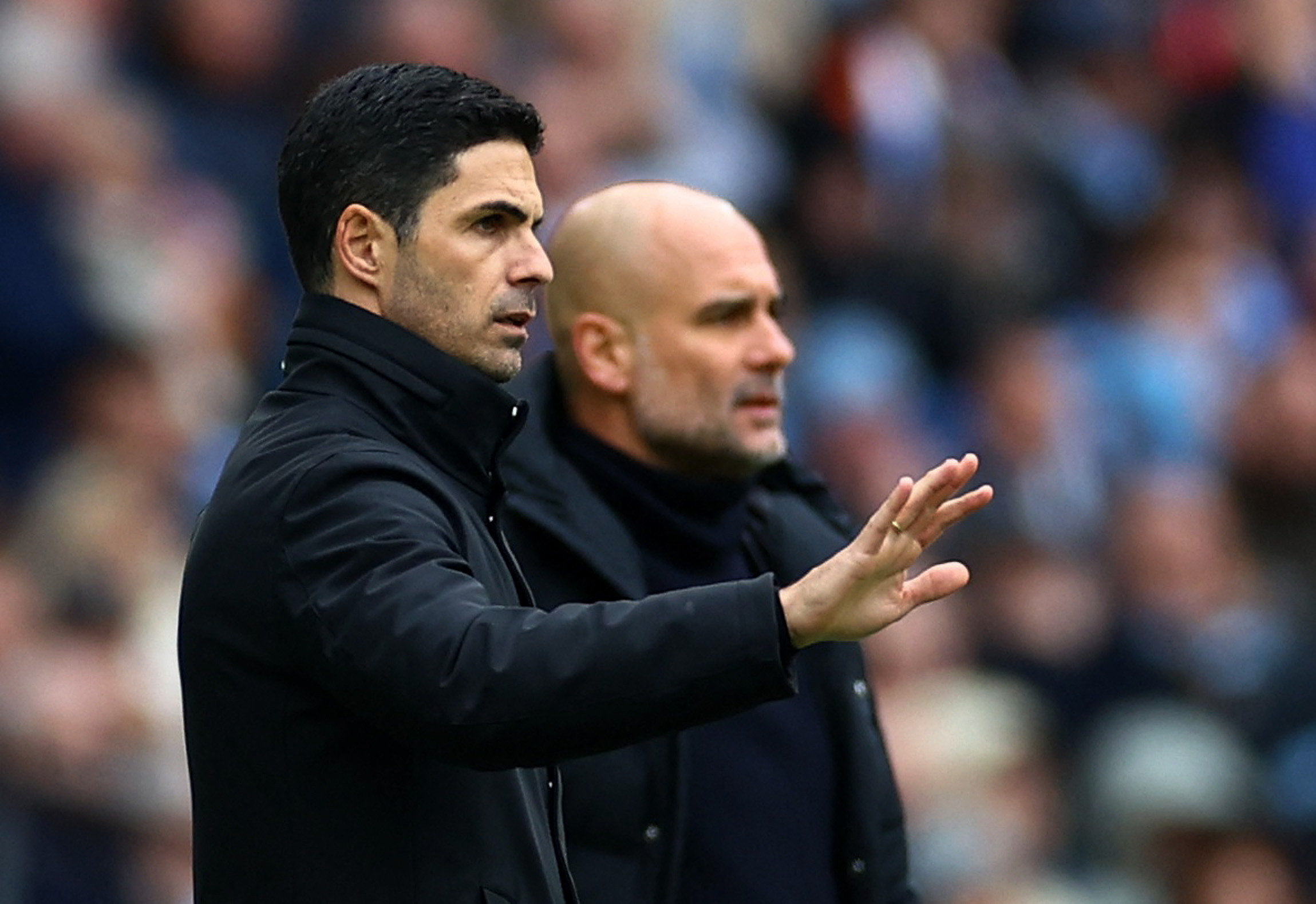 |
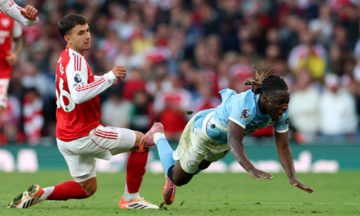
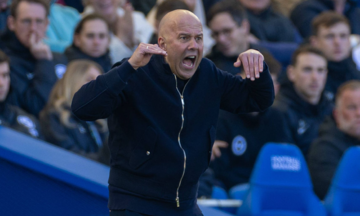
Coach Arteta instructs Arsenal during a Premier League match against Man City at Etihad Stadium, Manchester, 31/3/2024. Photo: Reuters |
Coach Arteta instructs Arsenal during a Premier League match against Man City at Etihad Stadium, Manchester, 31/3/2024. Photo: Reuters
Arteta understands the pressure to deliver major trophies, even hinting that this could be the key to a new contract beyond 2027. He has tasted success with Arsenal before, winning the FA Cup at Wembley in 2020, albeit in an empty stadium. On their way to that triumph, Arteta's team defeated Man City 2-0 in the semi-finals, affirming the managerial capabilities of the coach born in 1982.
However, the "Gunners" of then are vastly different from today. Of the squad registered for the final against Chelsea six years ago, only Bukayo Saka and Reiss Nelson remain, with Nelson currently on loan at Brentford. Therefore, the Arsenal squad Arteta has meticulously molded, a team that has finished second in the Premier League three times in a row, still yearns for a coronation to validate their status.
If the 2026 English League Cup is viewed as a stepping stone for Arsenal's ambition to elevate and enter a new era, history would nod in agreement. Jonathan Wilson, a journalist specializing in world football tactical history, once recounted the special significance of the Anglo-Scottish Cup for Brian Clough's Nottingham Forest, a reference point Arteta could consider.
A short-lived competition that struggled to find its place, existing only from 1975 to 1981 and never truly beloved, the 1976 Anglo-Scottish Cup final holds a significant position in football history.
That year, Clough's Nottingham defeated Leyton Orient 5-1 on aggregate over two legs. The second leg at their home ground, City Ground, saw only 12,717 spectators, creating a strangely deflated atmosphere. However, Clough envisioned a bright future. "My players had a taste of champagne, and they realized they liked it," Clough once said.
After securing that first title for Nottingham, Clough led the team to promotion to the First Division (later the Premier League) in the 1976-1977 season. Within three years, they collected an additional national league title, two Champions League trophies, and two English League Cups. A similar story unfolded with Clough at Derby County, where he won the Watney Cup – a pre-season tournament – two years before becoming English champions.
While exceptions exist, in both cases, Clough asserted that the experience of winning, even in a minor competition, was an essential springboard for later glories. In other words, the first title of a dynasty always carries special significance, even if it is sometimes symbolic.
More recently, Jose Mourinho's defeat of Rafa Benitez's Liverpool to win the English League Cup in 2005 not only ignited the rivalry between him and the Spanish coach but also proved that "the Special One" could succeed in England as brilliantly as in Portugal.
Similarly, the 1990 FA Cup victory quelled anxieties at Man Utd and convinced the board that Alex Ferguson was on the right path. And Man City's 2011 FA Cup triumph against Stoke marked a turning point for a club accustomed to failure.
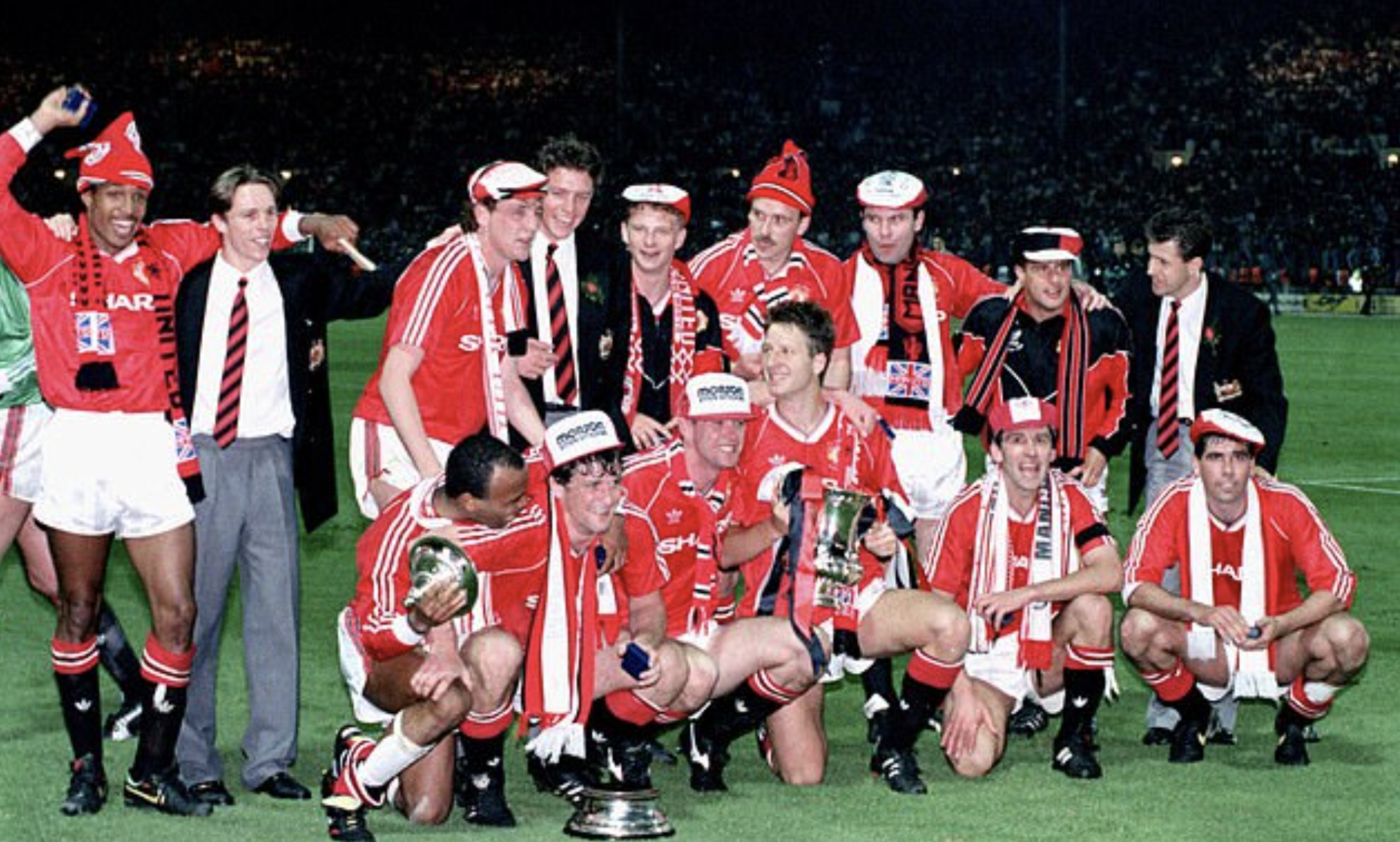 |
Man Utd players celebrate with the FA Cup in 1990 – the first title of Alex Ferguson's era. |
If not distant football history, Arteta can look to Man City's own example. The Etihad Stadium club won the English League Cup four consecutive times from 2018, and also secured the national league title in three of those seasons. More than anyone, Arteta understands Guardiola's philosophy: winning a title helps players believe they can do it again, meaning victory breeds victory. "A title gives you the feeling that, when the decisive moment comes, you have the character to conquer it," Arteta once affirmed.
If Arsenal defeats Man City, the team that has twice surpassed Arsenal in the Premier League title race in the 2022-2023 and 2023-2024 seasons, and has dominated English football for the past decade, the symbolism for Arteta will be even greater.
Should Arsenal win, this could be the moment the mantle is passed down from "master" to "apprentice," the moment Arsenal sheds its challenger image to become a true king, and potentially even begin a new era of dominance. Conversely, if they fail, doubts about the "Gunners'" resolve will return, more intense than ever.
For Guardiola, the significance of this final is more complex. While he often dismisses questions about leaving at the end of the season, he has never denied the possibility. There is a strong chance that this will be the 55-year-old manager's final season at the Etihad. Journalist Jonathan Wilson believes Guardiola might have left last season if things had not ended so poorly for Man City, because no king wants to abdicate on a sour note with a completely trophy-less season.
Guardiola is acutely aware of his legacy, reflected in his defensive posture whenever this topic is discussed at length in press conferences. After the defeat to Real Madrid in the Champions League last 16, when asked if winning only one Champions League in ten years at Man City was a humiliation, Guardiola sarcastically remarked that he should have won six times.
That number does not seem accidental. Carlo Ancelotti has won the Champions League five times, and Guardiola, clearly, wants to monopolize that record for himself. He understands that after 17 seasons managing three of the world's biggest clubs, he has had opportunities few others possess to set a new historical milestone.
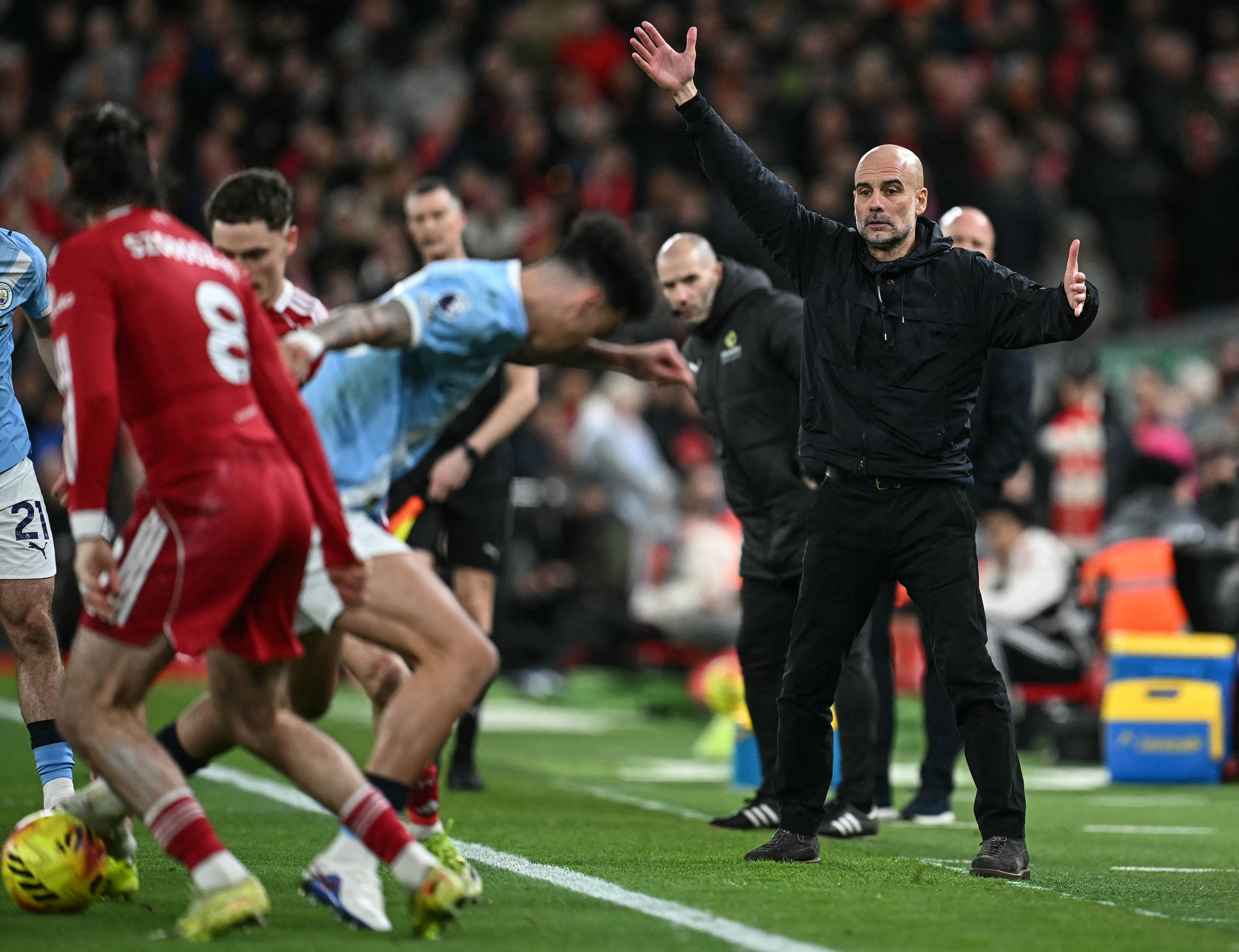 |
Coach Pep Guardiola during Man City's 2-1 victory over host Liverpool at Anfield in Premier League round 25 on 8/2/2026. Photo: AFP |
Coach Pep Guardiola during Man City's 2-1 victory over host Liverpool at Anfield in Premier League round 25 on 8/2/2026. Photo: AFP
The Champions League has slipped away once more, while the Premier League is theoretically still within reach. But to overcome Arsenal, Man City needs to rediscover the consistency they have lacked in the past two years during the final two months of the season. The question now is whether another English League Cup or FA Cup, or both, would be enough for Guardiola to leave as a winner?
Guardiola's motivation now stems not from what he can still win, but from what he can prevent his former assistant from achieving. Arsenal could become the first English team to win a quadruple this season. Guardiola has won two trebles (excluding secondary titles like the Club World Cup or Super Cup), but he has never touched a true quadruple. The ambition to reassert his identity is understandable.
No great team has ever been defined solely by the English League Cup. For football "superpowers," finals like this are sometimes just a footnote on a success chart, or a celebration for fans. But sometimes, precisely because of its position on the calendar – the first final of the season – it carries resonant meanings.
Perhaps Arsenal will taste success and crave it more, or perhaps the label of "lacking resolve" will be permanently stamped on them. It is only the English League Cup final, but this match could shape not only the final two months of the season but also the landscape of English football for years to come.
Hoang Thong