The VnExpress Da Nang International Marathon Herbalife Cup 2026 will take place this weekend, attracting thousands of domestic and international athletes. Beyond training, the weather is a critical factor that can directly impact race strategy and final performance.
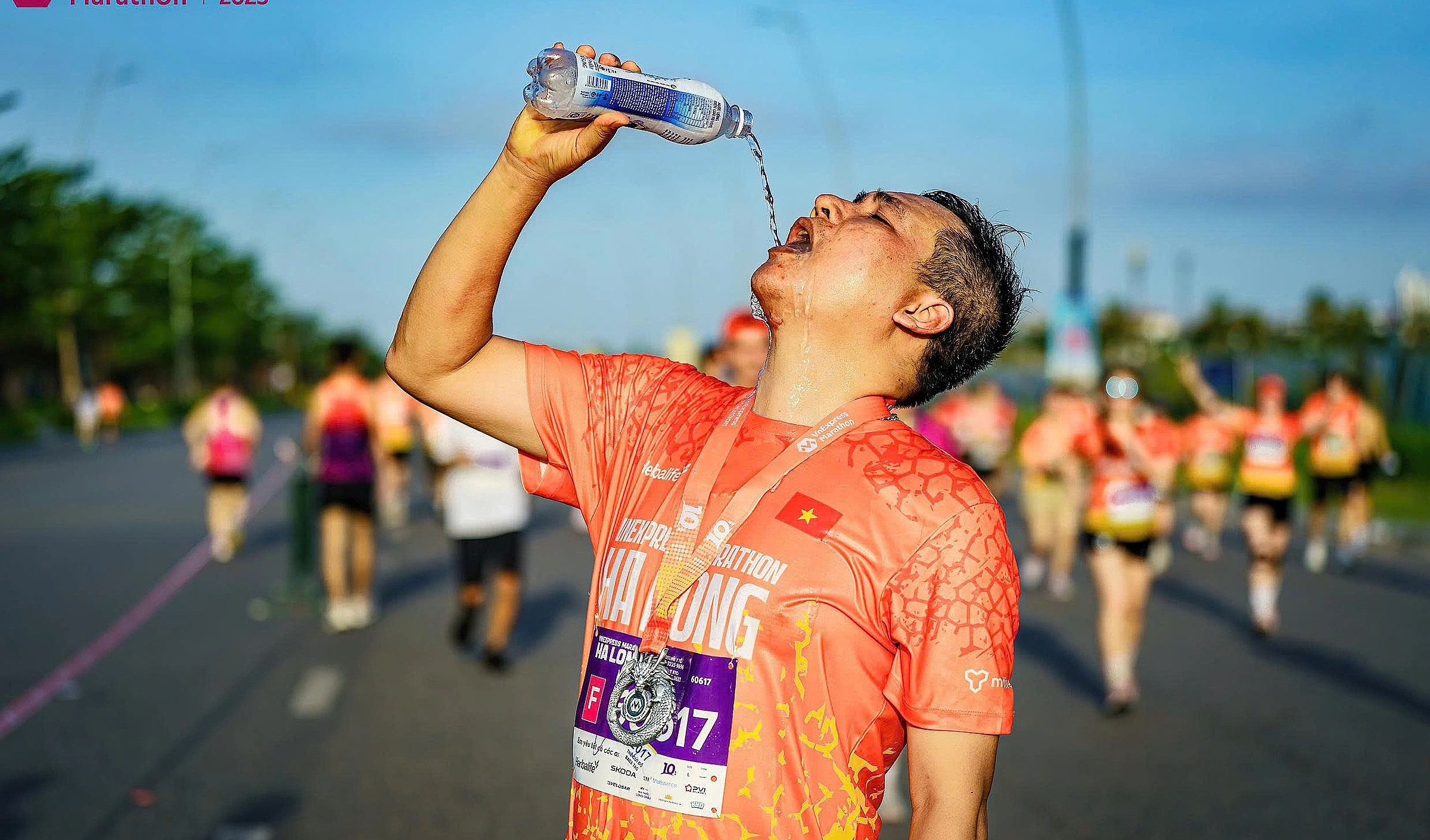 |
Runner replenishes water in the heat at the Ha Long race. Photo: VnExpress Marathon
According to AccuWeather data, Da Nang will maintain high temperatures in the days leading up to and during the event. On July 18, lows will be around 28 degrees C, with highs potentially reaching 37-38 degrees C. On race day, July 19, temperatures will rise rapidly after sunrise, with daily highs possibly touching 37-38 degrees C.
The likelihood of weekend showers is low, as Typhoon Ba Vi has changed course and weakened. However, high temperature fluctuations and humidity will persist, easily causing a stifling sensation and dehydration.
High temperatures force the body to expend more energy regulating its core temperature. During prolonged exertion in hot and humid conditions, sweat evaporates slowly, reducing the body's cooling capacity, while the loss of water and electrolytes increases over time.
 |
Anna Le chose a white and orange outfit with a breathable design and material for the Ho Chi Minh City night run, under weather conditions similar to Da Nang this weekend. Photo: VnExpress Marathon
This means the perceived exertion for the same pace can be higher compared to training in cooler conditions. For runners aiming to achieve a personal record (PR), attempting to maintain a planned pace without accounting for the weather can lead to rapid physical decline in the latter half of the race.
In the days leading up to the race, athletes should avoid intense training to compensate for lost volume. Light, short runs to maintain running rhythm are more suitable, allowing the body time to recover.
Runners from cooler climates should arrive in Da Nang early to acclimatize to the temperature, humidity, and daily routine. However, acclimatization to hot weather should be gradual, avoiding high-intensity training under the sun.
Sleep is another crucial factor. Athletes should maintain a consistent sleep schedule, avoiding late nights, and plan their travel schedule to the starting area in advance to reduce stress.
For longer distances, a carbohydrate fueling plan should be prepared before race day, and athletes should continue using familiar products. Sudden changes in food, energy gels, or drinks can increase the risk of digestive issues.
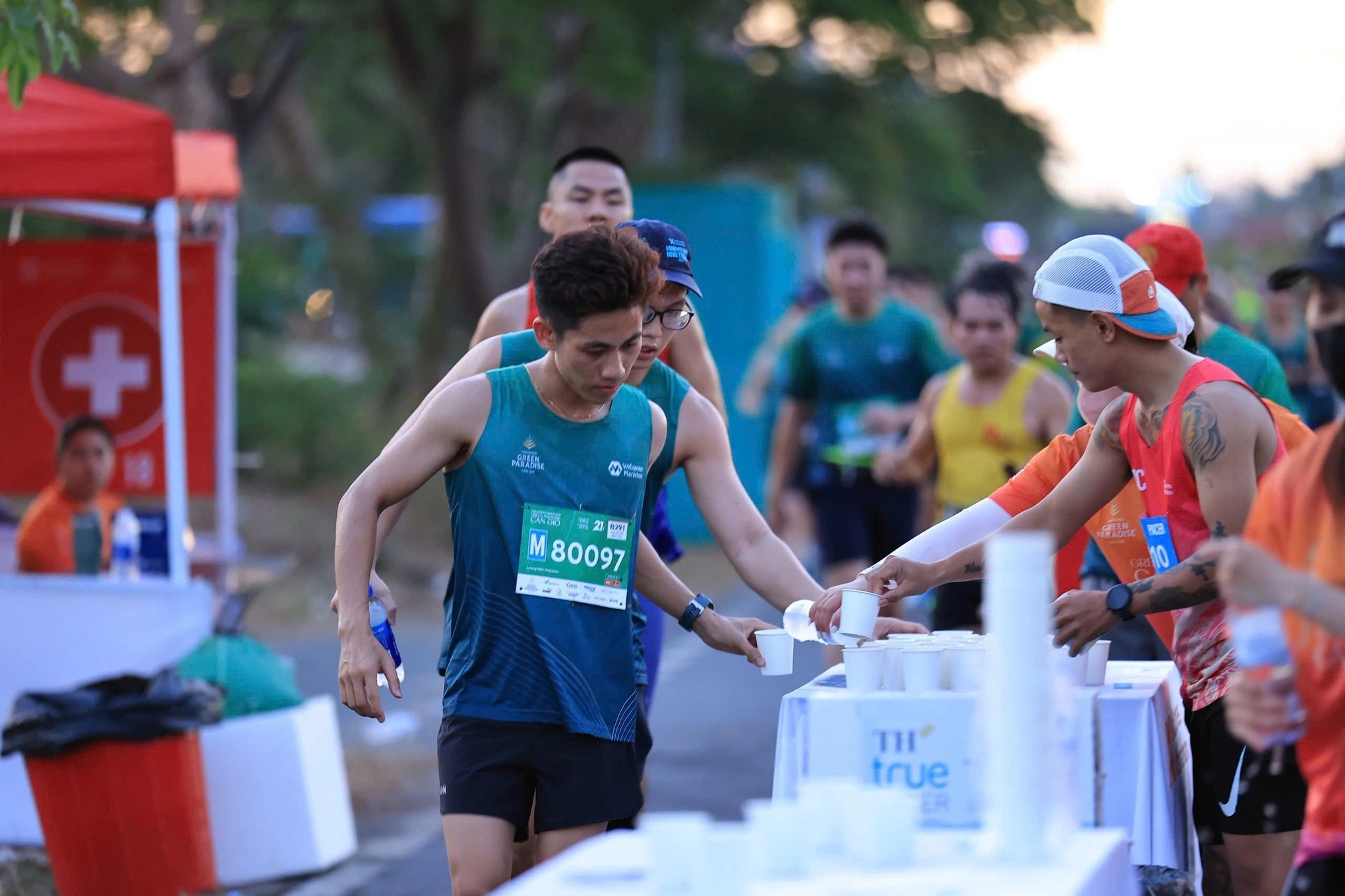 |
Organizers arranged numerous water stations along the course to help athletes replenish water, electrolytes, and cool down. Photo: VnExpress Marathon
Appropriate attire is also important for the weather conditions. Light, breathable clothing that wicks sweat effectively will aid the body's heat dissipation. For runners completing the course after sunrise, a hat, sunglasses, and sunscreen are essential items.
On race day, runners should consider a more cautious start than their initial goal. Instead of trying to maintain a fast pace from the early kilometers, participants should rely on their body's signals, heart rate, and actual conditions to adjust their speed.
Especially for the 21 km and 42 km distances, expending too much energy early in the race can cause difficulties as temperatures rise towards the end of the journey. Hydration and electrolyte replenishment should follow a plan tested during training. Runners should not wait until they are thirsty to drink, but also avoid consuming too much in a short period to prevent complications.
During the race, signs such as dizziness, nausea, disorientation, unusual headaches, or inability to maintain normal movement should be considered warning signals. Athletes should slow down, stop, and seek medical assistance if necessary, rather than attempting to continue the race.
Thy An
 |