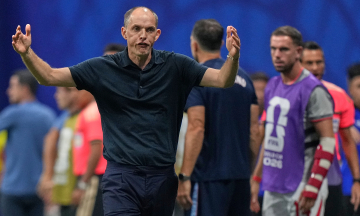
Despite the disappointment of an early exit from the Paris clay-court Grand Slam before the quarterfinals for the first time since 2009, the record holder of 24 Grand Slams found a positive, noting he had just been part of one of the most memorable matches in modern Grand Slam history.
"It was truly an amazing match I was part of," Djokovic said after losing to Joao Fonseca 6-4, 6-4, 3-6, 5-7, 5-7 on 29/5. "Obviously, it's a very tough loss to accept when you're two sets up. But I have to give huge credit to Fonseca. He played better at crucial moments in the fourth and fifth sets, constantly hitting unbelievable shots into extremely difficult angles. What he showed was truly incredible."
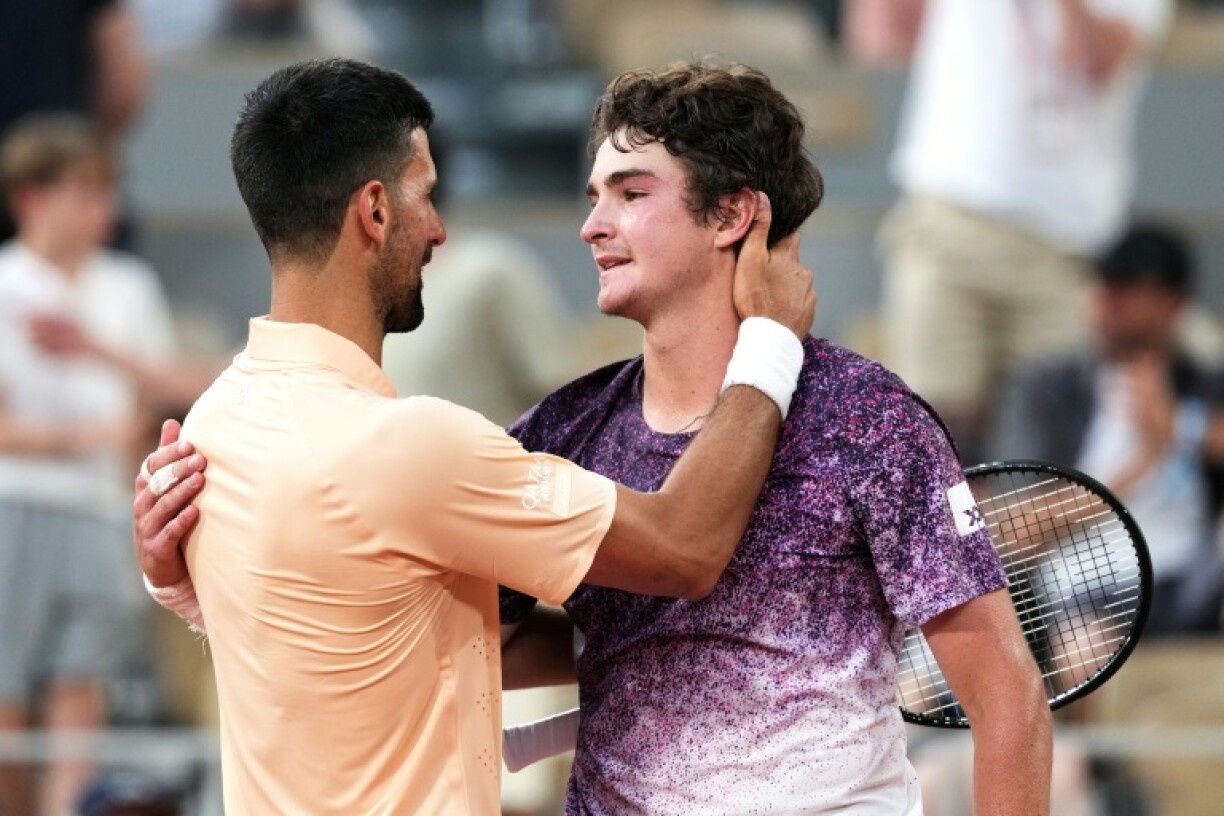 |
Djokovic (left) congratulates Fonseca after their third-round match at Roland Garros, on Philippe Chatrier court, Paris, France on 28/5. Photo: Reuters
Before this match, Djokovic had never lost to a teenager in 18 Grand Slam encounters. He therefore highly praised Fonseca's comeback, who won after 4 hours 53 minutes.
"Of course, it's not pleasant to face a player performing at that level, but I also don't think I did anything too wrong. He simply played better," Djokovic added.
The three-time Roland Garros champion also acknowledged the potential of Fonseca, whom he had previously expressed a desire to coach after retirement. "I congratulated him and told him he fully deserved the win, that he played an extraordinary match and should be proud of himself," Djokovic replied when asked what he said to Fonseca during their handshake at the net. "The tennis we saw from him is the reason for all the expectations surrounding his name. And today everyone understands why Fonseca garners so much attention."
Fonseca has garnered significant attention in recent years. This expectation stems from his powerful forehand and the passionate support of his enthusiastic Brazilian fans. After being completely outplayed in the two initial sets, Fonseca demonstrated remarkable composure. He served more accurately, unleashed powerful forehands, and regained control of baseline rallies from Djokovic before staging a comeback against the veteran player.
Djokovic had only once before lost after leading by two sets, against Jurgen Melzer in the Roland Garros 2010 quarterfinals. The 39-year-old also spoke about the support he received from the crowd on Philippe Chatrier court. Nole arrived in Paris having played only one match since March due to injury. In the match against Fonseca, there were moments when he appeared exhausted and struggled physically between points.
"There were times late in the match when I felt like I could barely stand on my feet," Djokovic said. "But every time I looked up at the stands and saw the crowd cheering me on, it was a magical feeling. So, if I set aside the disappointment and negative thoughts about the match result, there's still a lot for me to be proud of. What I experienced and felt today was very special. I am truly grateful for this experience."
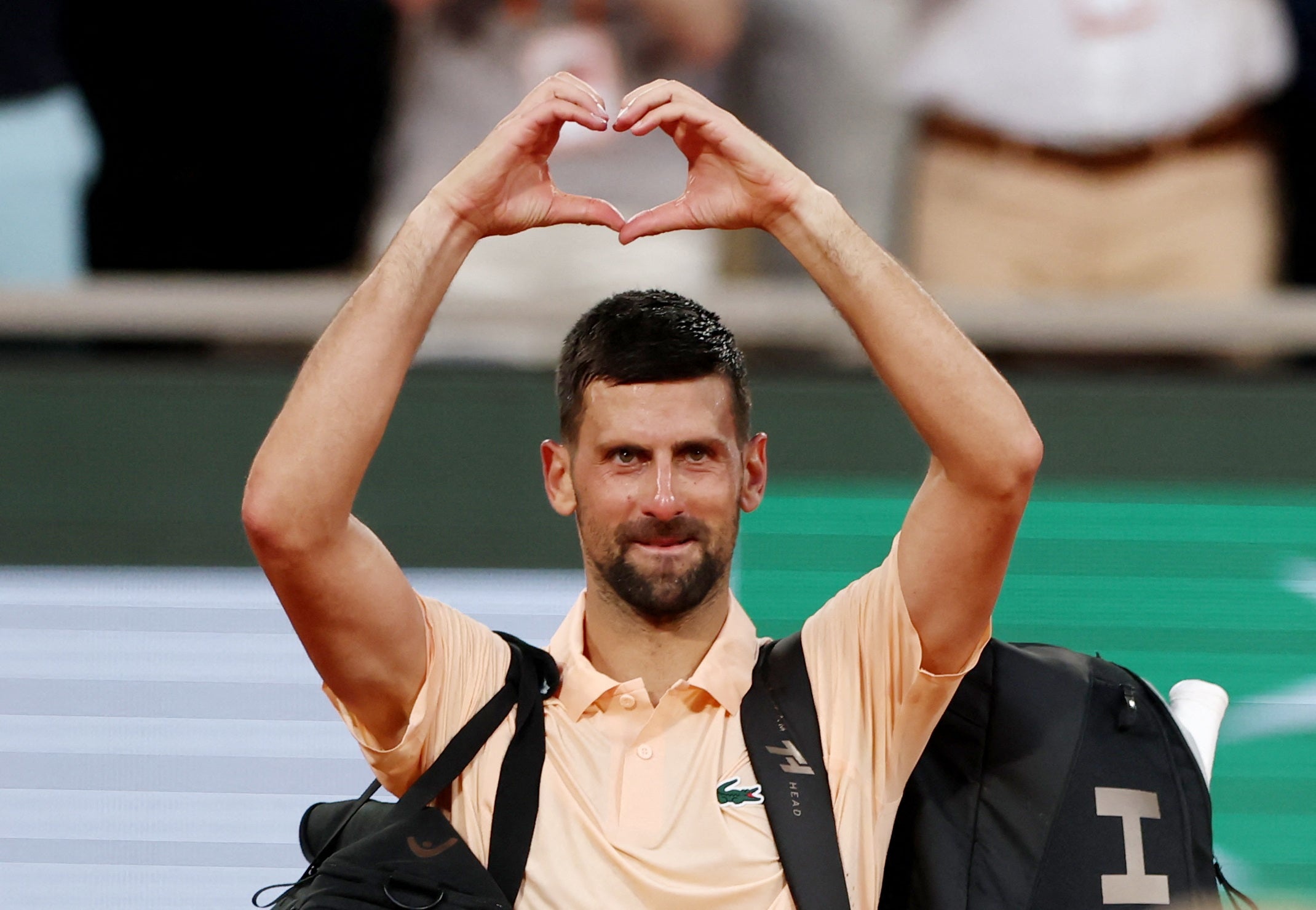 |
Djokovic thanks the spectators after his third-round match at Roland Garros, on Philippe Chatrier court, Paris, France on 28/5. Photo: Reuters
Djokovic hit more winners than Fonseca (70 compared to 68) and made fewer unforced errors (39 compared to 47). However, he admitted that physical issues as the match extended prevented him from stopping an increasingly confident Fonseca.
"Honestly, I ran out of energy," Djokovic revealed after the match. "I didn't feel well on court in the third and fourth sets. I think the end of the fourth set was my best chance, when I was leading 4-3 and 40-15 in the return game. But he played some incredibly good points, constantly attacking and serving well."
"Looking back at the important moments, could I have done anything differently?" Djokovic added. "One can always say yes. But sometimes you just have to say, 'Well done,' and congratulate your opponent. I tip my hat to him, who played incredible tennis."
Vy Anh