 |
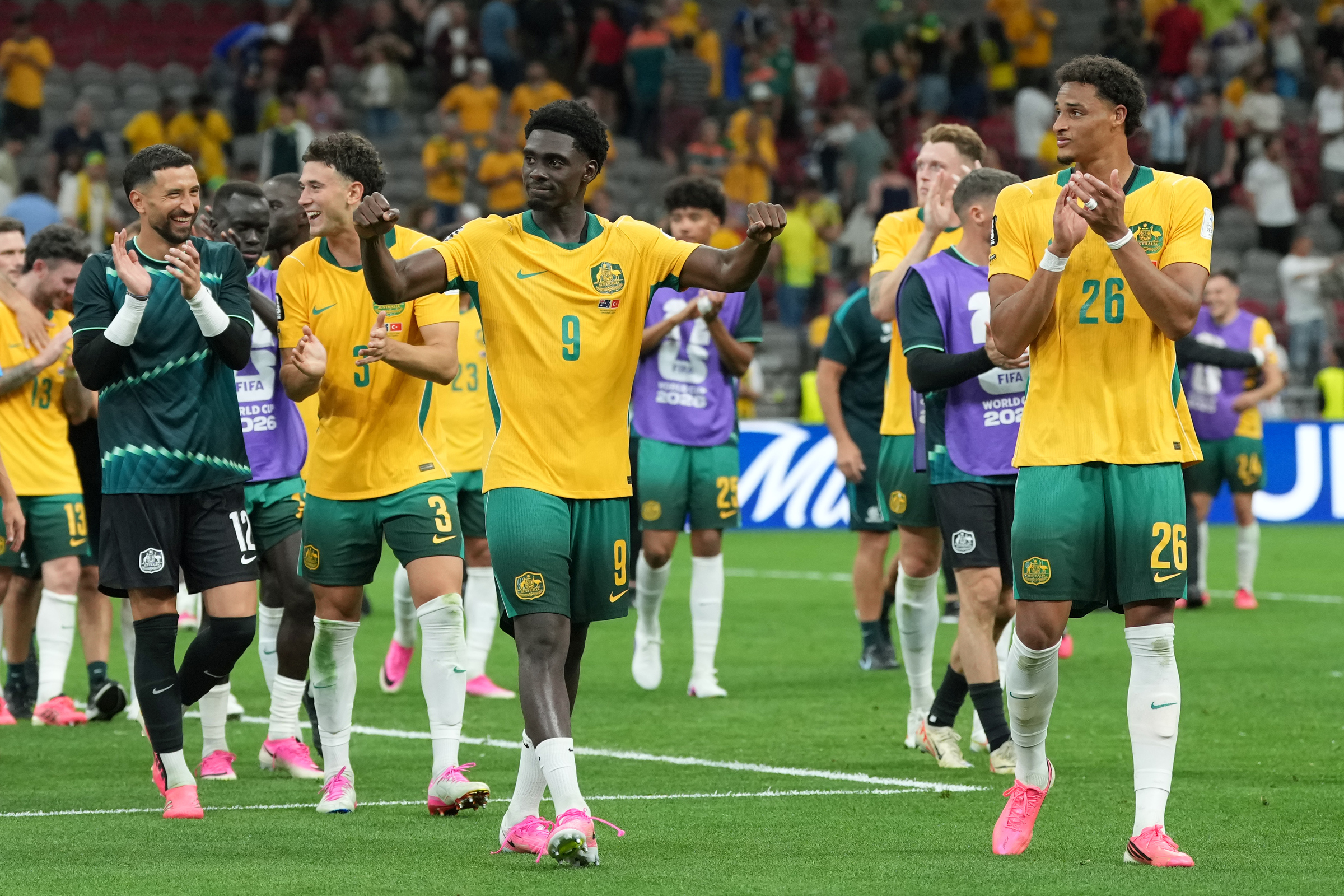
Mohamed Toure (9) and Tete Yengi (26) celebrate a goal after Australia's 2-0 victory over Turkey in Group D of the World Cup 2026, at BC Place, Vancouver (Canada) on 13/6. *Photo: AP*
Australia's squad for the World Cup 2026 showcases a significant shift, with a blend of locally grown talent and players from immigrant backgrounds. Out of 26 players, 18 were born in Australia, while the remainder are either foreign-born or have immigrant roots. This contrasts sharply with the "golden generation" of 2006, whose entire squad was born in Australia or New Zealand.
Captain and goalkeeper Mathew Ryan exemplifies the players who developed within Australia's domestic football system. Born in Sydney in 4/1992, he grew up in Plumpton, a western suburb that evolved from a semi-rural area into a residential hub with red-brick homes, small pitches, and community spaces. Despite initial doubts about his physique for a goalkeeper, Ryan emerged as one of Australia's most successful players in Europe after 2010, eventually becoming national team captain and participating in four World Cups.
However, the 2026 squad's strength also lies in its diverse origins, extending beyond players nurtured solely within Australia. Many members of the team hail from unique and challenging circumstances.
Australia fans celebrate the victory over Turkey. *Video*
Defender Milos Degenek, born in Knin, Croatia, in 1994, experienced the Croatian war firsthand. His family fled their homeland when he was just 18 months old, living in Serbia before migrating to Australia in 2000. During his early childhood, Degenek endured airstrikes and sought refuge in bunkers 20-30 meters underground.
Striker Awer Mabil, born in 1995 in the Kakuma refugee camp in Kenya, over 100 kilometers from the Sudanese border, also shares a powerful story. His parents, originally from South Sudan, left their home due to armed conflict. Mabil's childhood was marked by scarcity, where he played football using rolled-up plastic bags instead of a real ball. His family later resettled in Australia, providing him the opportunity to start a professional football career. By 2012, he was playing in the youth system of Adelaide United before earning a call-up to the national team.
Another compelling case is striker Nestory Irankunda, born in 2006 in Kigoma, Tanzania, in a refugee camp where his family sought asylum from the Burundi civil war. Just three months after his birth, Irankunda was brought to Australia, growing up in Perth before moving to Adelaide at the age of seven. In Adelaide, he played for local clubs like Croydon FC and Parafield Gardens, catching the eye of scouts from a young age due to his powerful shots and high speed.
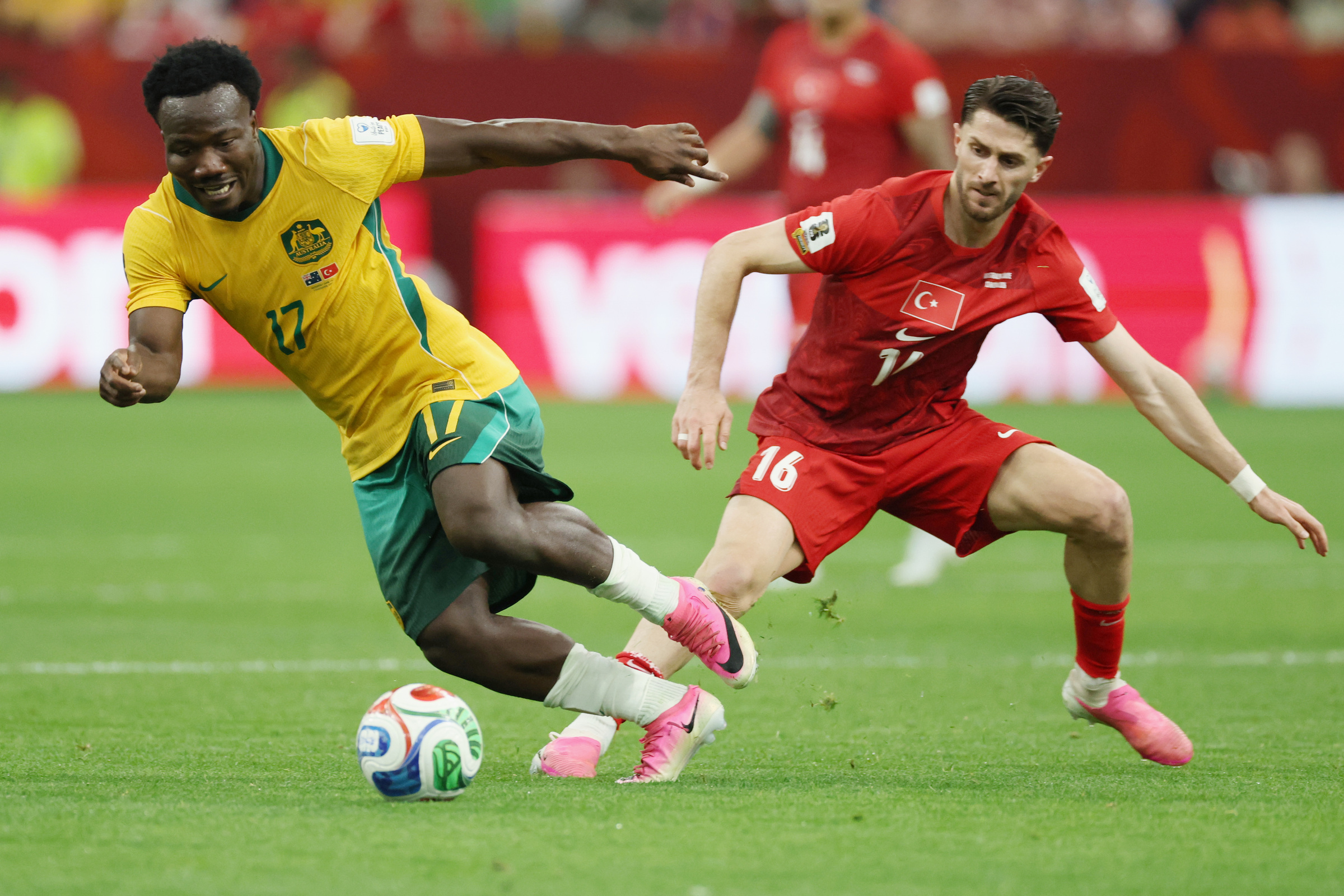 |
Striker Nestory Irankunda (17) dribbles past Ismail Yuksek (16) during Australia's 2-0 victory over Turkey in Group D of the World Cup 2026, at BC Place, Vancouver (Canada) on 13/6. *Photo: AP*
Irankunda made a significant impact in Australia's opening match of the World Cup 2026, scoring the first goal in the 2-0 victory against Turkey at BC Place in Vancouver on 13/6. From a counter-attack, the 19-year-old striker broke into the penalty area before striking with his right foot, sending the ball close to the post. He was also awarded player of the match.
The Toure family's journey is similarly remarkable. Mohamed Toure's parents fled Liberia due to civil war, walking through Sierra Leone to reach Guinea over nearly three weeks. In a refugee camp in Conakry, they started a family, and Mohamed Toure was born there in 2004. The entire family later migrated to Australia through a humanitarian program. In Adelaide, Mohamed Toure and his brother Al Hassan developed their football careers from a young age. The Toure and Irankunda families share a close bond, participating in community activities and training together at local clubs.
Australia's two goals against Turkey. *Video*
Beyond Africa, the Australian squad includes several players born in Europe. Defender Harry Souttar was born in Aberdeen, Scotland, to a Scottish father and an Australian mother. He chose to represent Australia, while his brother, John Souttar, plays for the Scotland national team. Defender Cameron Burgess also hails from Aberdeen, moving to Australia at 11 when his mother accepted a new job in Western Australia. Burgess subsequently developed through the local football system before becoming a professional.
Center-back Alessandro Circati was born in Italy but moved to Perth when his father, former player Gianfranco Circati, played for Perth Glory. Similarly, Paul Okon-Engstler was born in Belgium while his father was playing for Club Brugge. The squad also features many second-generation players, born in Australia to immigrant families: defender Aziz Behich is the son of Turkish Cypriot parents; midfielder Nishan Velupillay's father is of Sri Lankan Tamil Malaysian descent; and defender Jason Geria's father is Ugandan, having left his homeland in the 1980s. Some players have also lived in multiple countries, like midfielder Jackson Irvine, born in Melbourne to a Scottish father and a mother of Dutch and Maltese heritage. He has played professionally in Australia, Scotland, England, and Germany.
Australia's 2-0 victory earned them three points, placing them second in Group D behind the United States. This result underscores the effectiveness of a youthful and diverse squad, including players who were born or grew up in refugee camps. This composition partly reflects Australia's long-standing immigration and refugee resettlement policies.
Hoang An (according to ABC News)