 |
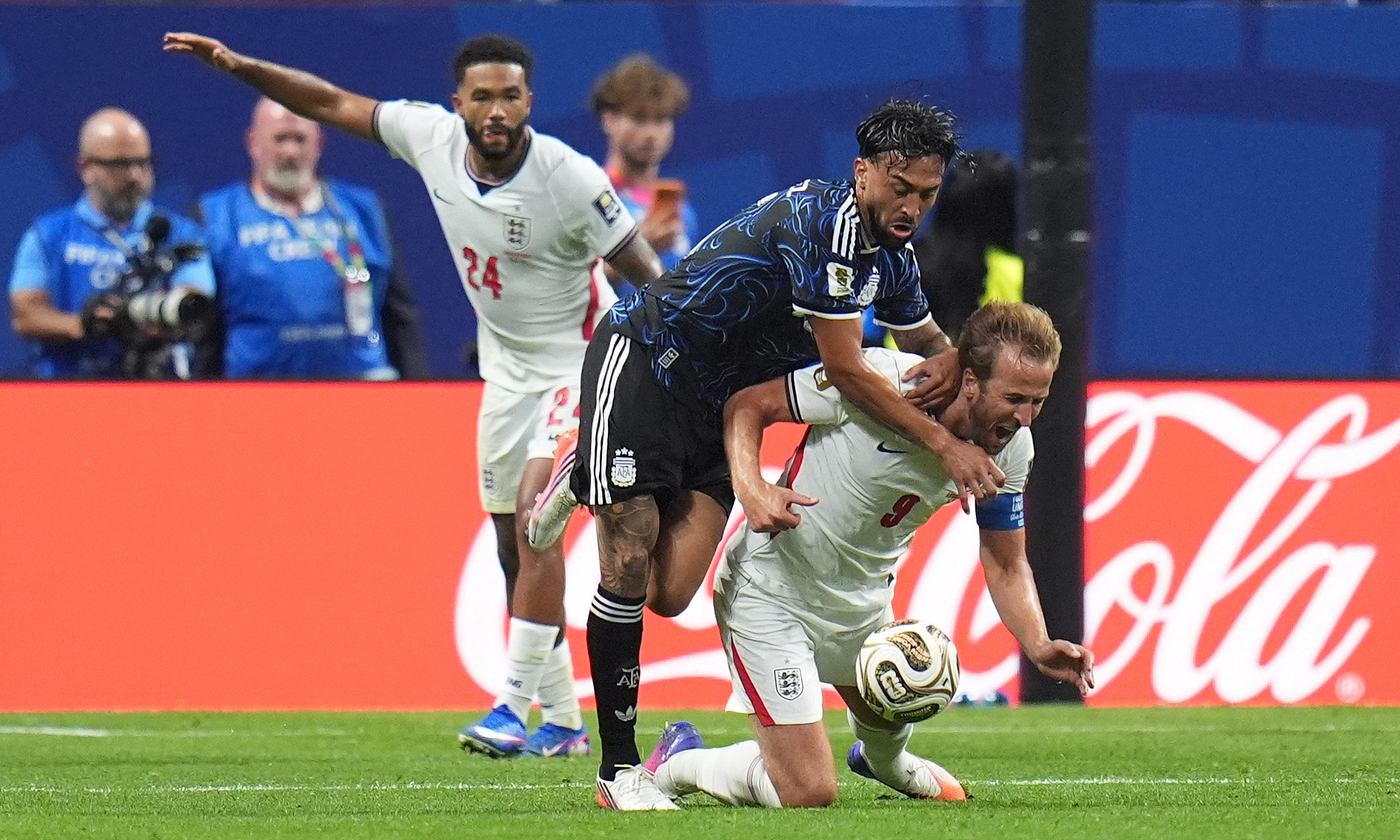
Nico Gonzalez (left) challenges Harry Kane during Argentina's 2-1 victory over England in the 2026 World Cup semi-final at Atlanta, USA on 15/7. Photo: AP |
Argentina has become a focal point of controversy at the 2026 World Cup. Following their 2-1 semi-final win against England, many English fans and media outlets criticized the reigning champions for their aggressive play, frequent tactical fouls, and provocation of opponents. The British newspaper Telegraph even cataloged 31 of Argentina's on-field tactics in Atlanta.
However, the impression Argentina creates on the field often differs significantly from what the statistics suggest, according to France's leading sports daily, L'Equipe. In the second minute of the semi-final, Lionel Messi was fouled by Elliot Anderson, but the referee did not blow the whistle. Immediately afterward, Enzo Fernandez intentionally fouled Anderson from behind. This appeared more like a warning than a genuine attempt to win the ball, and Fernandez received no card.
It is situations like these that have led to Argentina being labeled a "dirty" team. They do not shy away from physical contact, retaliate readily, react aggressively to referees, constantly apply psychological pressure on opponents, and are always prepared to commit fouls to disrupt counter-attacks.
Nonetheless, World Cup 2026 statistics present a different picture. Argentina leads the tournament in total fouls with 88. However, they have also played the most minutes, due to two matches going into extra time. When normalized to 90 minutes, Argentina ranks just 21st among 48 World Cup teams, averaging 11.4 fouls per match.
Their card count is even more surprising. Lionel Scaloni's squad has received only 9 yellow cards and no red cards after six matches.
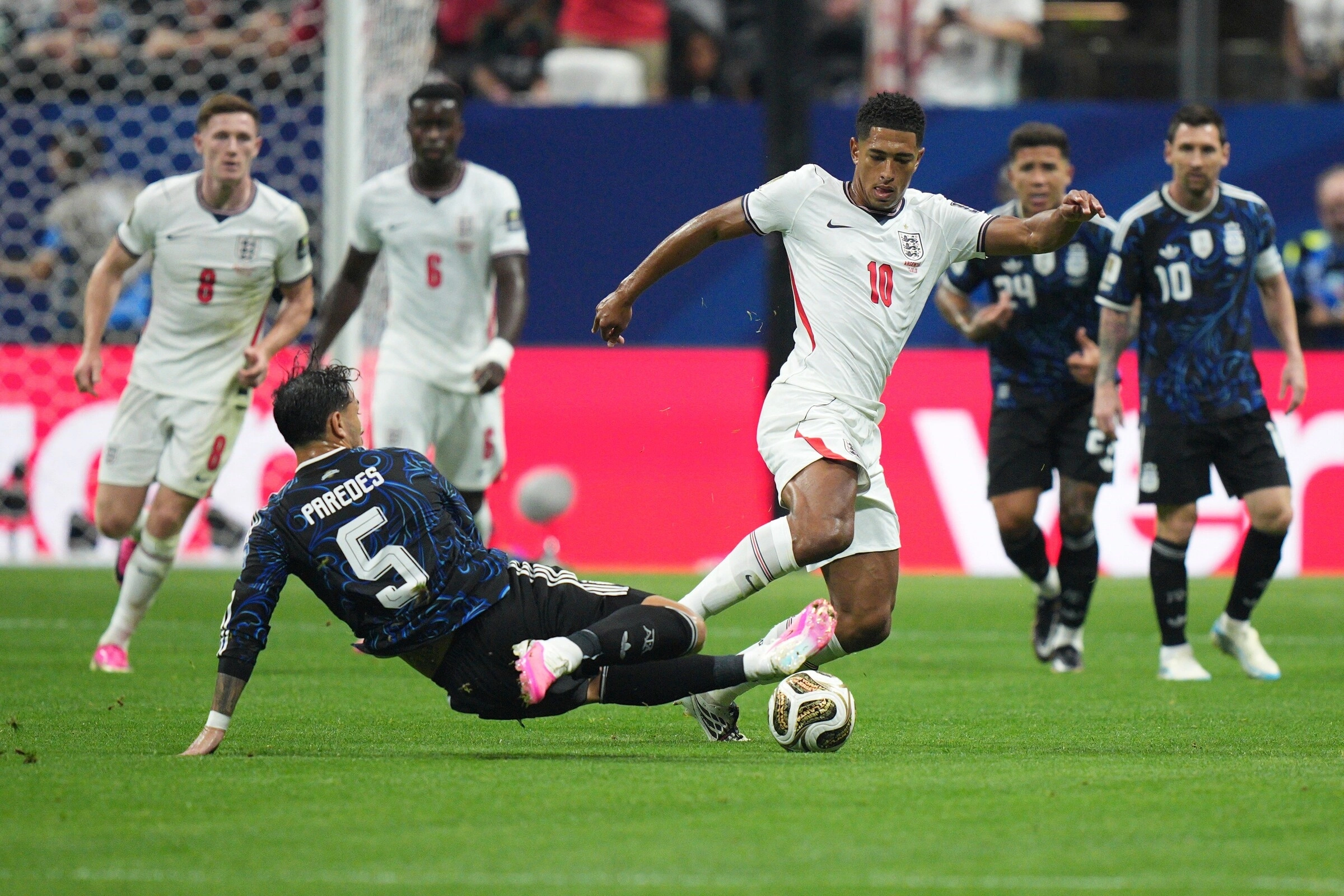 |
Leandro Paredes slides to tackle Jude Bellingham during Argentina's win over England in the 2026 World Cup semi-final in Atlanta, USA on 15/7. Photo: AP |
Even when assessed by time without possession – a more accurate measure of defensive intensity – Argentina is not the team committing the most fouls. Spain, for instance, is penalized more frequently by referees. This indicates that Argentina does not consistently engage in dangerous tackles.
The perception of their "bad image" stems from the *manner* of their fouls. Against England, Leandro Paredes pushed Jude Bellingham after the midfielder had already passed the ball. Giuliano Simeone constantly engaged in high-intensity challenges, committing three fouls due to his assertiveness. Additionally, there were numerous instances of pushes from behind, holding, or pulling jerseys in midfield to thwart counter-attacks.
Most of these are tactical fouls. They are rarely dangerous enough to warrant a red card but sufficient to disrupt an opponent's rhythm, cause frustration, and fragment the game. This style of football consistently tests the limits of what a referee will permit.
Many European defensive midfielders, such as Rodri and Aleksandar Pavlovic, also frequently employ similar tactical fouls. The difference lies in the way Argentinian players react. While many players try to appear innocent after each collision or actively de-escalate the situation, Argentinian players often seem unconcerned with such an image.
After Messi missed a penalty against Egypt in the group stage, Cristian Romero immediately pushed Emam Ashour and then walked away as if nothing had happened. The referee did not issue a card, even though this was an entirely avoidable foul.
Throughout the tournament, few Argentinian players have apologized to opponents after fouls. Only Lautaro Martinez in the match against Switzerland and Giovani Lo Celso against Jordan were noted for actively checking on opposing players after dangerous tackles. These were also two of the very few tackles that posed a serious risk of injury. Another instance involved Messi fouling Aissa Mandi, but no action was taken.
Argentina rarely commits fouls near their penalty area. With a high defensive line, their center-backs typically press aggressively from midfield. In their own final 30 meters, Argentina has committed only seven fouls, most of which occurred in wide areas.
This suggests that their fouls are calculated: just enough to prevent opponents from building play, while minimizing the risk of receiving cards or conceding dangerous free kicks. This can be seen as "discipline within indiscipline."
They constantly adjust their intensity based on the referee's officiating style. If a referee is lenient, more collisions will occur. If a referee takes a strict approach from the outset, Argentina significantly reduces its level of aggression. This highlights the distinction between a violent football team and one that understands how to exploit the boundaries of the rules.
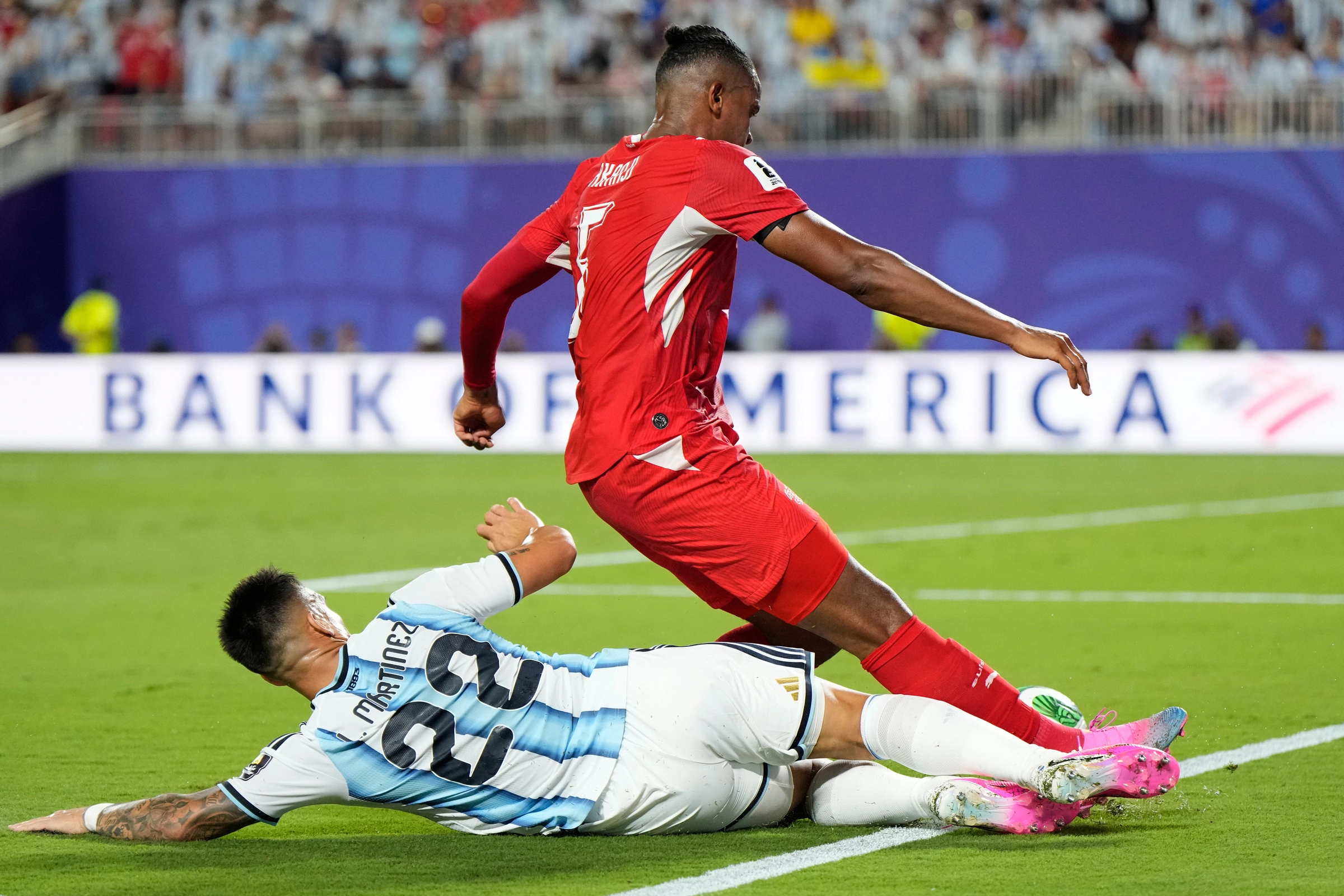 |
Lautaro Martinez (left) fouls Manuel Akanji during Argentina's 3-1 victory over Switzerland in the 2026 World Cup quarter-final in Kansas City, USA on 11/7. Photo: AP |
This style also reflects Argentina's football identity. While many national teams are increasingly influenced by European football's control-based, low-contact approach, Argentina maintains its tradition of viewing physical and psychological elements as crucial parts of the game.
They seek to win not only through skill but also through mind games, provocations, and well-timed fouls. Therefore, labeling Argentina a violent team might not be entirely accurate.
They do not have an unusually high number of cards, nor do they commit many crippling tackles, and they have not received any red cards at World Cup 2026. However, it is also difficult to say they play "beautiful" football.
Argentina is pragmatic, willing to commit tactical fouls, apply psychological pressure, and exploit every loophole permitted by the referee's officiating. Lionel Scaloni's squad simply knows how to play close to the edge of the rules, often making opponents feel as though they have crossed that line.
Hoang An (according to L'Equipe)