Tattooing marathon achievements on the body is a bold way to commemorate accomplishments. However, the practice became controversial when some runners were found to tattoo times that did not match official results.
The Official Marathon Time Integrity Unit (OMTIU), a self-proclaimed group, cross-referenced race data, GPS activities, and social media posts of three runners. They discovered that the tattooed times were faster than the actual results. OMTIU, also known as @officialunofficialtime on Instagram, has over 30,000 followers.
 |
The Official Marathon Time Integrity Unit (OMTIU) exposed three runners who tattooed faster marathon times than their actual results.
 |
The Official Marathon Time Integrity Unit (OMTIU) exposed three runners who tattooed faster marathon times than their actual results.
 |
The Official Marathon Time Integrity Unit (OMTIU) exposed three runners who tattooed faster marathon times than their actual results.
The group stated their increasing frustration with social media personalities posting race results based on GPS data, which is prone to inaccuracies, instead of official chip times. In 2025, they launched an Instagram page to expose alleged deception.
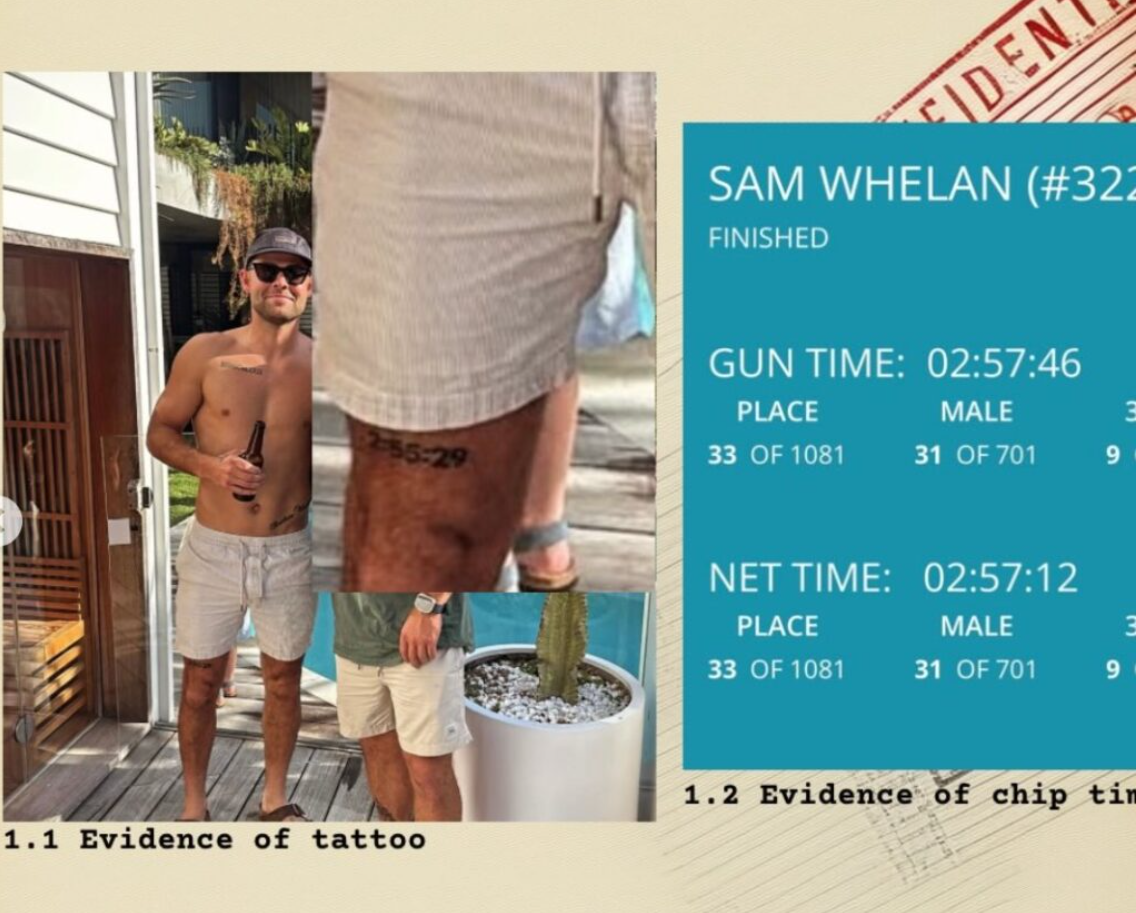
A runner at the Noosa Marathon in Australia had an official time of 2 hours 57 minutes 12 seconds. However, Strava data showed 2 hours 55 minutes 29 seconds, recorded when their watch reached the full marathon distance before the finish line. This individual tattooed the faster time on their leg. OMTIU asserted that only chip time is a valid result.
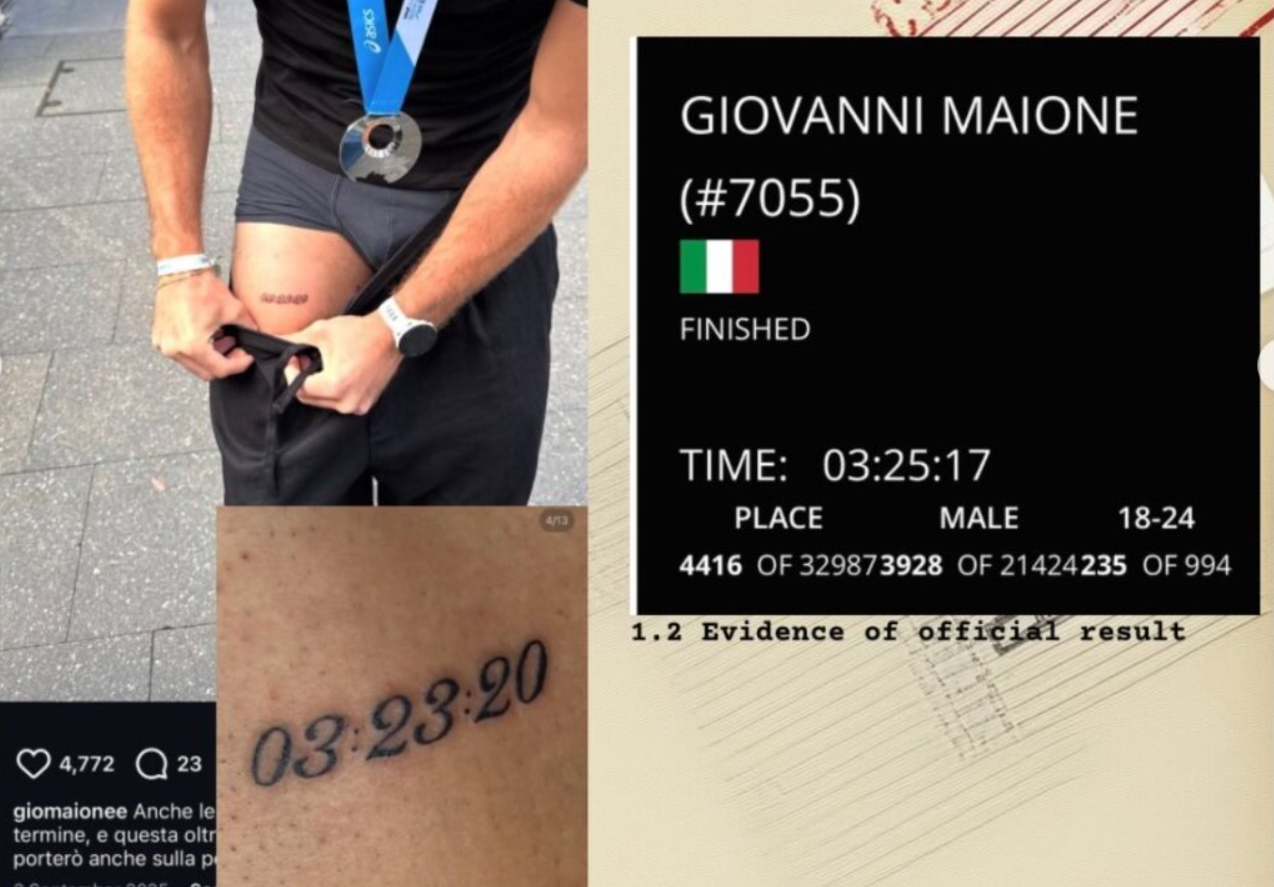
A second case involved a runner at the Sydney Marathon with an official time of 3 hours 25 minutes 17 seconds. Strava data indicated this athlete had not completed the full distance, yet they shared and tattooed a time of 3 hours 23 minutes 20 seconds. OMTIU deemed this figure "unverifiable."
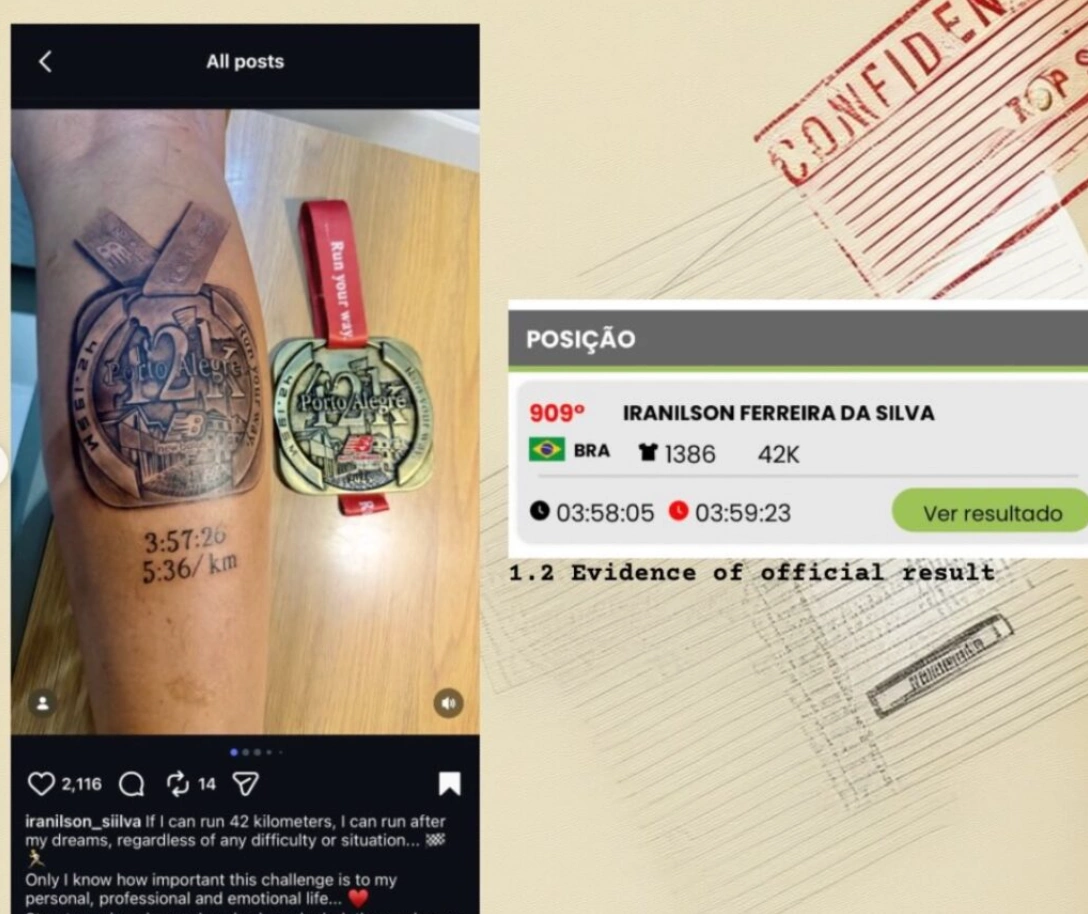
Another runner at the Porto Alegre Marathon in Brazil recorded a chip time of 3 hours 58 minutes 5 seconds. However, they tattooed 3 hours 57 minutes 26 seconds, a time calculated by "moving time," which excludes stops during the race.
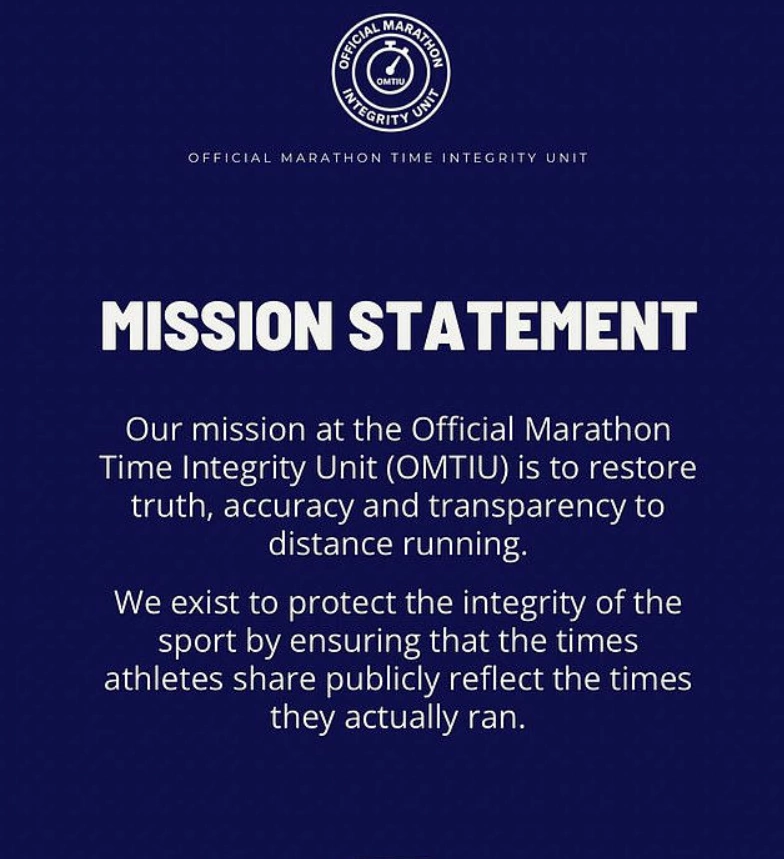 |
OMTIU stated its goal: to protect integrity, restore truth, accuracy, and transparency in long-distance running by ensuring publicly announced athlete achievements reflect their actual times.
OMTIU's methods have sparked controversy and mixed reactions. Some critics argue that publicly naming and shaming runners could lead to unnecessary humiliation, particularly for discrepancies of only a few minutes.
In response, OMTIU stated its objective is not to humiliate individuals but to ensure accuracy when achievements are made public. The group emphasized that in a sport valuing precision, like marathon running, all forms of expressing results—especially permanent ones like tattoos—must reflect reality.
In races, chip time is used instead of gun time for its higher accuracy. Courses are professionally measured, whereas GPS can be inaccurate, causing watches to register 42,2 km before the actual finish line.
According to Canadian Running Magazine, many runners have experienced GPS errors, and not all check thoroughly before announcing achievements. Thus, while the discrepancies in these cases are clear, many argue that publicly "investigating" for mere minute differences might be unnecessary, even extreme.
By Hong Duy (Source: Canadian Running Magazine)