A survey conducted by the U.S. Travel Association, involving over 9.500 participants from 10 countries, was released less than two months before the opening day, further intensifying existing concerns.
Previously, fans complained about high ticket prices and host cities facing financial difficulties. Additionally, the Middle East conflict affects logistics, with Iran's potential participation in the 2026 World Cup remaining uncertain.
"Success is not guaranteed," the U.S. Travel Association stated. According to the organization, concerns related to security, visa processing delays, and changes in US policies could reduce international visitor numbers and affect the event's potential.
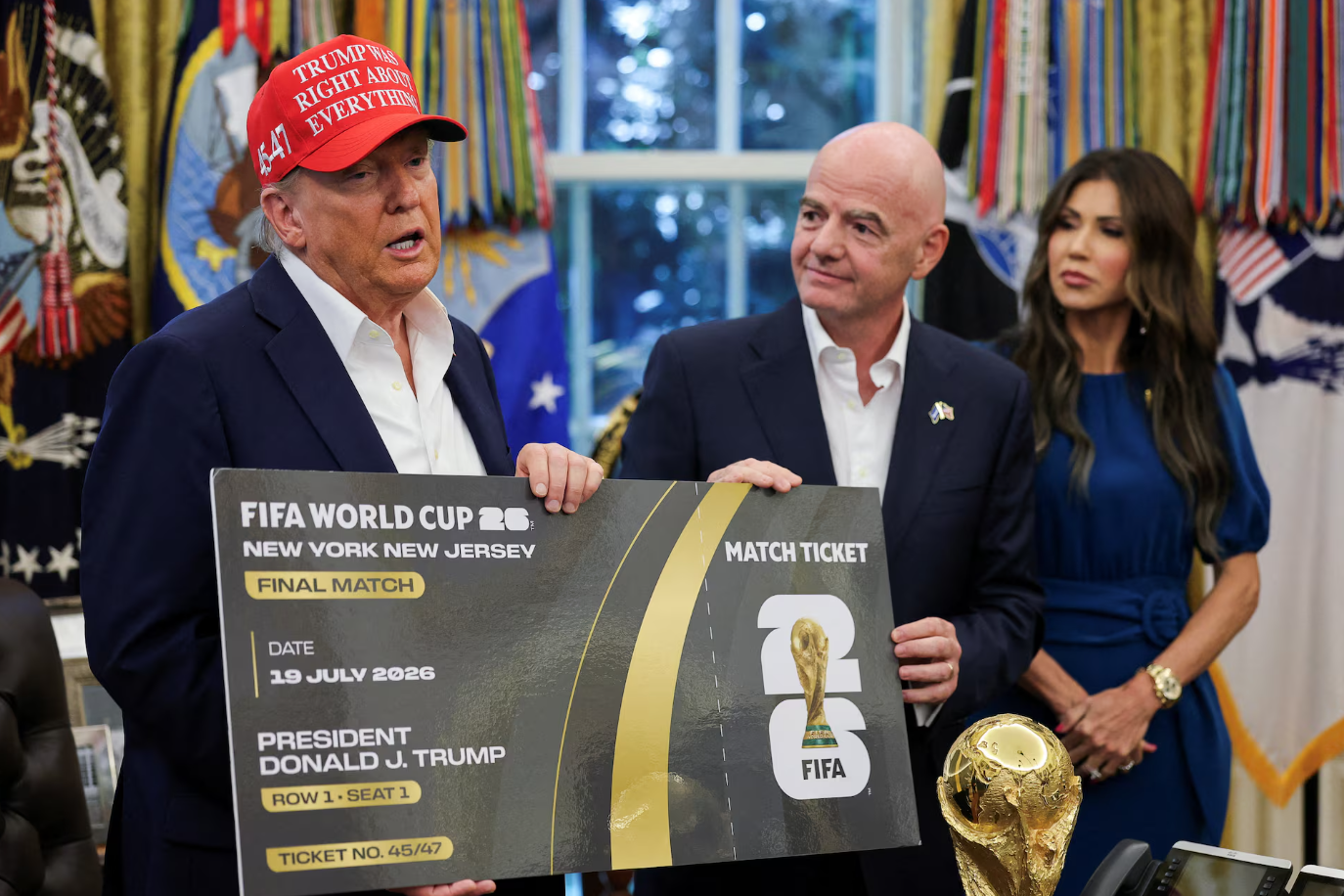 |
US President Donald Trump and FIFA President Gianni Infantino hold tickets for the 2026 World Cup final, with US Secretary of Homeland Security Kristi Noem standing behind them in the Oval Office, the White House, Washington D.C., on 22/8/2025. Photo: Reuters |
US President Donald Trump and FIFA President Gianni Infantino hold tickets for the 2026 World Cup final, with US Secretary of Homeland Security Kristi Noem standing behind them in the Oval Office, the White House, Washington D.C., on 22/8/2025. Photo: Reuters
Although organizers remain optimistic, with tickets purchased from over 200 countries and territories, flight and hotel booking data has not yet shown the expected surge in demand.
The International Federation of Association Football (FIFA) reportedly canceled thousands of hotel bookings in the three host nations: the US, Canada, and Mexico. Many hotels in the host cities have not yet recorded the predicted number of guests.
The survey did not include booking data but provided estimates on fan spending. Each international visitor is expected to spend approximately 5.048 USD, while domestic US fans traveling to other cities for matches are expected to spend an average of 4.794 USD.
Nearly one-quarter of participants stated that visa issues and border procedures influenced their decision to visit the US. The survey group included markets such as: the UK, Germany, France, Brazil, Canada, Mexico, and recent visitors to the US.
FIFA also faces criticism for implementing dynamic ticket pricing based on demand, leading to increased costs. Beyond tickets, other expenses also pressure fans.
On 6/4, the Massachusetts Bay Transportation Authority (MBTA) announced limited round-trip tickets to Gillette Stadium (referred to as Boston Stadium during the tournament) for 80 USD, causing concern among English and Scottish fan communities, as both teams are scheduled to play there.
"The costs could lead many to borrow money or use credit cards. It might sound funny, but there is a real risk of some people overspending," said Paul Goodwin, co-founder of the Scottish Football Supporters Association.
A report from 2/2025 by the U.S. Travel Association warned that the country's aviation system is not ready for the large influx of visitors expected for the World Cup and the 2028 Summer Olympics. Limitations such as outdated infrastructure, slow visa processing, and outdated security technology are major obstacles to welcoming international visitors.
The 2026 World Cup will take place from 11/6 to 19/7 in the US, Canada, and Mexico. This marks the first tournament in history to feature 48 teams, a significant increase from the previous 32, with a total of 104 matches expected. The event will be held in approximately 16 cities, most of which are in the US. This expansion offers more teams a chance to participate but also raises debate about the quality of play and travel pressures due to large geographical distances.
Hong Duy (according to ESPN)