"The developments throughout the 90 minutes plus extra time in the SEA Games 33 men's football final clearly demonstrate that a good start is not enough if you cannot cross the finish line first," Siamsport commented. From this, the newspaper outlined five valuable lessons that they believe their team needs to take to heart.
The cost of missing a third goal in the first half
The first half of the final was one of Thailand's best performances in the tournament. Coach Thawatchai Damrong-Ongtrakul's formation and tactics were nearly perfect.
The decision to start Waris Chuthong and Kakana Khamyok provided flexibility and technical quality on both wings and in the midfield. The overlapping runs of the two fullbacks, combined with the movements of Iklas Sanron, Seksan Ratree, and Kakana, disrupted the Vietnamese defense almost every time Thailand had possession.
A key aspect of Thailand's play was their high pressing in the opponent's half. Applying quick pressure, breaking up play, and denying the red-shirted players opportunities to build and launch attacks were crucial in helping Thailand take a 2-0 lead and control the game as desired.
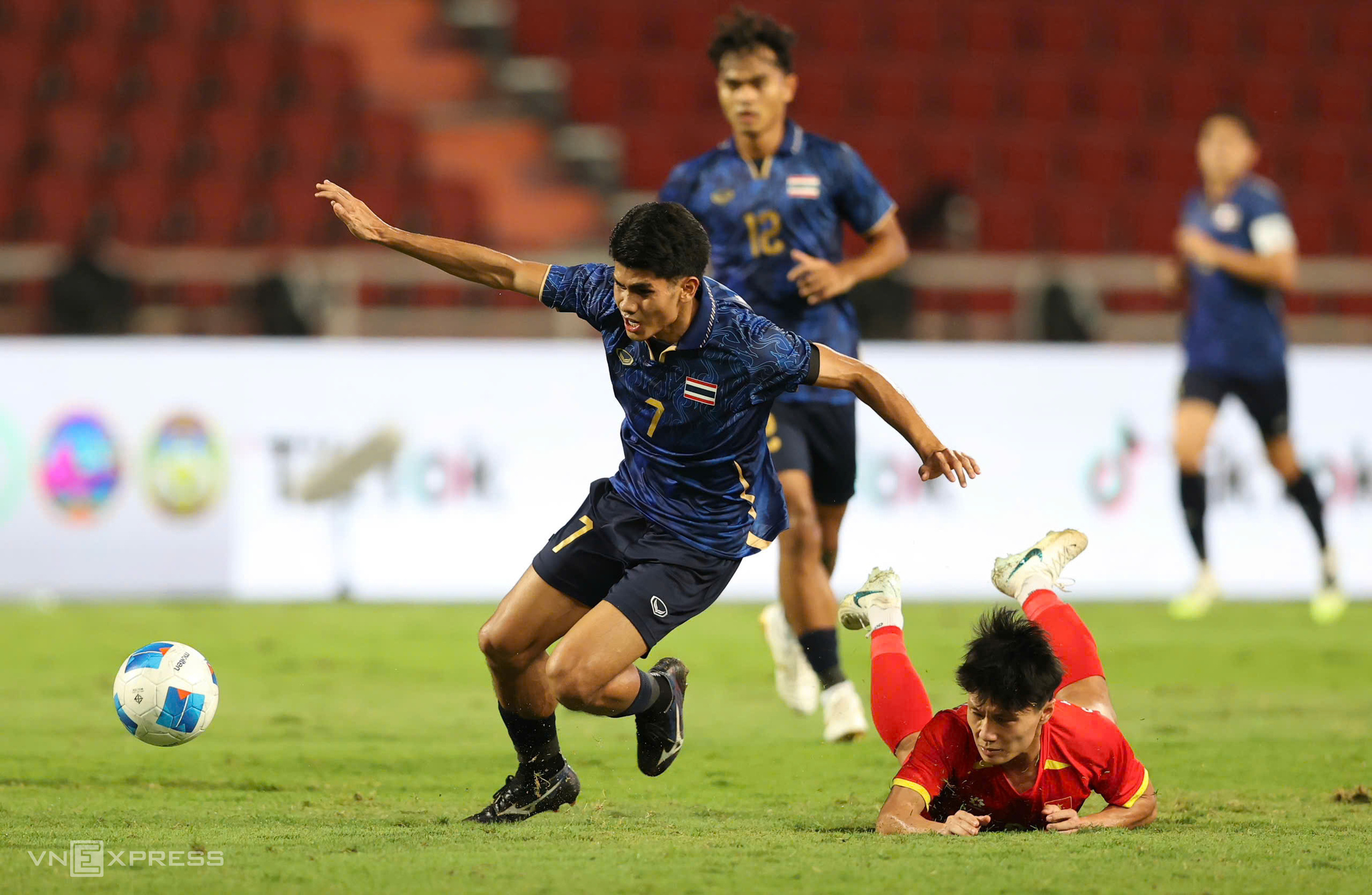 |
Kakana Khamyok evades a tackle from a Vietnamese defender in the first half of the SEA Games 33 men's football final at Rajamangala Stadium, Bangkok on 18/12. Photo: Duc Dong
However, failing to score a third goal was a factor that kept the match open. Thailand had chances to extend their lead in the first 45 minutes, but by missing them, they had to accept the consequences later.
The role of "unsung hero" Chaiyaphon Atthapan
A small detail that had a major impact in the first half was Thailand's use of Chaiyaphon as a defensive midfielder, sweeping alongside Sittha Boonlha in the midfield. The Sukhothai FC player ran tirelessly, pressing, disrupting rhythm, and preventing Vietnam from easily executing their preferred style of play.
Many times, the opposing team tried to build up play, but Chaiyaphon and his teammates intercepted the ball in midfield. This is why Vietnam had almost no clear attacking opportunities or approaches to Thailand's goal in the first 45 minutes. This also demonstrates that in major tournaments, sometimes it is not the superstars but the quiet, hardworking players who shape the direction of a match.
The turning point: Chanapach Buaphan's injury
When key defender Chanapach had to leave the field due to injury, the Thai defense immediately faltered. His replacement, Pichitchai Sienkrathok, had previously played as a right-sided center-back against Singapore, and his performance yesterday showed he was capable. However, the connection between him and Channon Thamma in the central defense lacked the same understanding as when Chanapach was on the field.
 |
Chanapach covers his face as he leaves the field on a stretcher due to injury. Photo: Duc Dong
This disorganization and lack of fluidity caused the Thai defense to loosen, with positions no longer held tightly. As soon as Vietnam narrowed the score to 1-2 early in the second half, the momentum and mindset shifted quickly.
Coaching adjustments made the difference
After conceding the equalizer at 2-2, Thailand seemed to be in complete shock. Their attack gradually ran out of ideas, while the defense dropped too deep, allowing Vietnam to regain control of the game and continuously press.
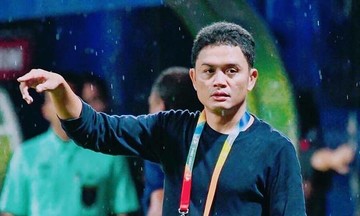
Meanwhile, Vietnam's coach Kim Sang-sik demonstrated his ability to change the game through shrewd personnel adjustments. Replacing captain Khuat Van Khang with Nguyen Thanh Nhan was a risky gamble, but coach Kim took that risk and won big, as the attacking player scored the decisive goal.
Conversely, Thailand's substitutions in the second half had no positive impact, except for number 10 Thanakrit Chotmuangpak, who was brought on too late. The difference in adaptability from the coaching bench ultimately decided the match's outcome.
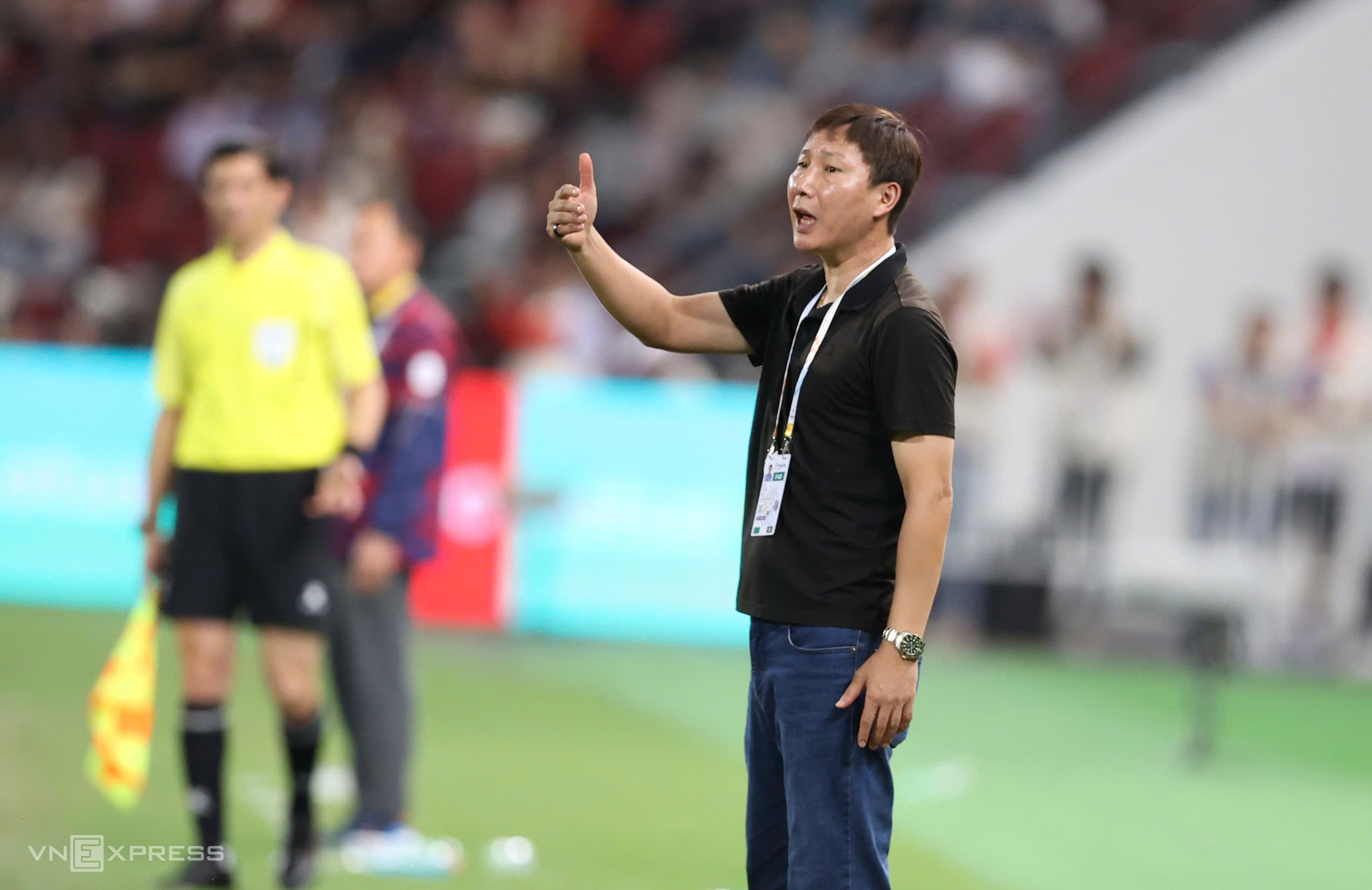 |
Coach Kim Sang-sik gives instructions during the final. Photo: Duc Dong
A big question mark for the future of Thai football
Losing to Vietnam 2-3 after an early 2-0 lead not only cost coach Thawatchai and his team the gold medal. It is also a valuable lesson and a lingering pain, as Thailand will have to wait at least two more years to reclaim their top position at the SEA Games, since their last gold medal in 2017.
However, a glimmer of light shines through the darkness. This SEA Games truly exposed both the potential and limitations of Thai football: from domestic management, the synergy and support from clubs, tactical consistency, to resilience and adaptability in difficult situations.
All of these present an opportunity for Thai football to "reset to zero" and start anew, if all stakeholders dare to face the truth.
Hoang Thong (according to Siamsport)