 |
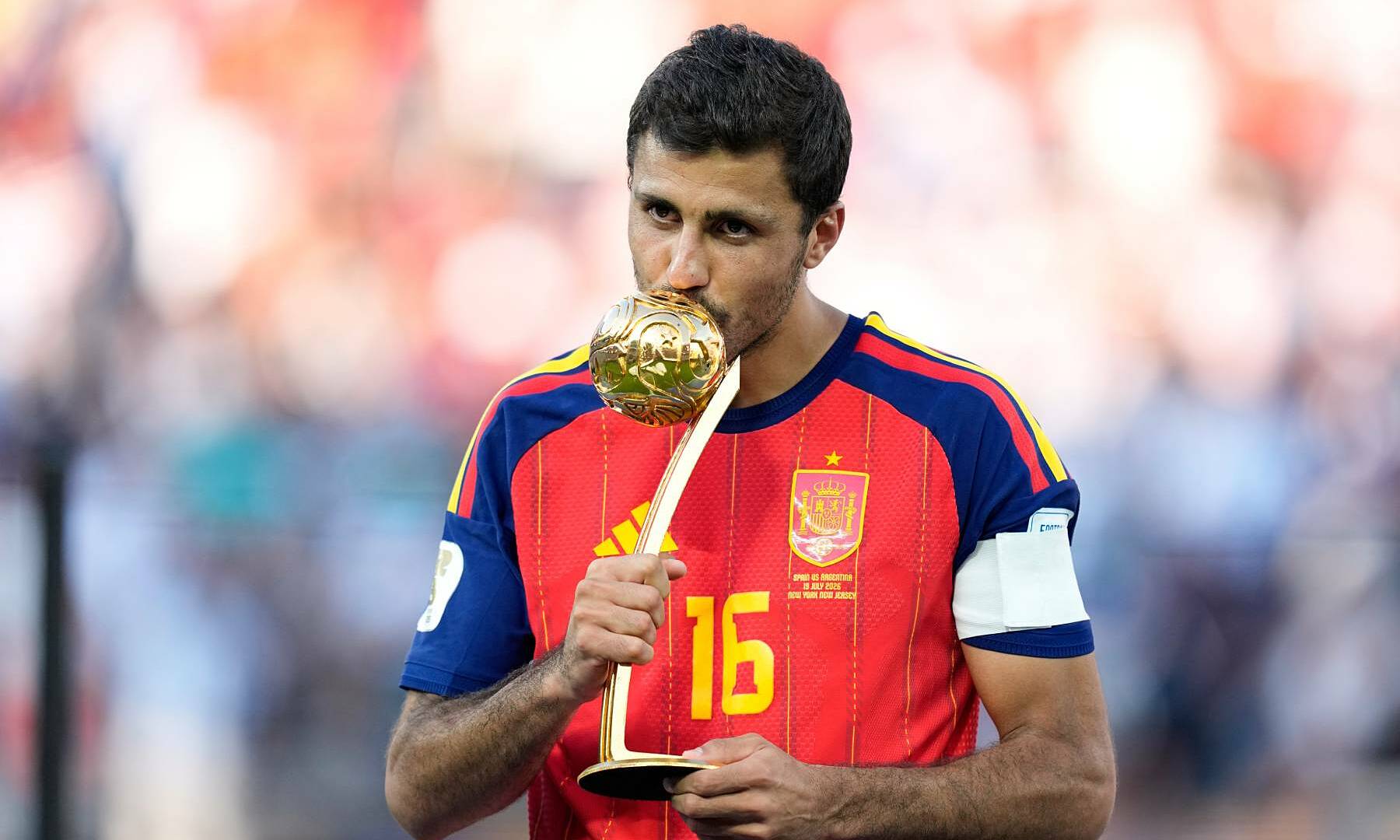
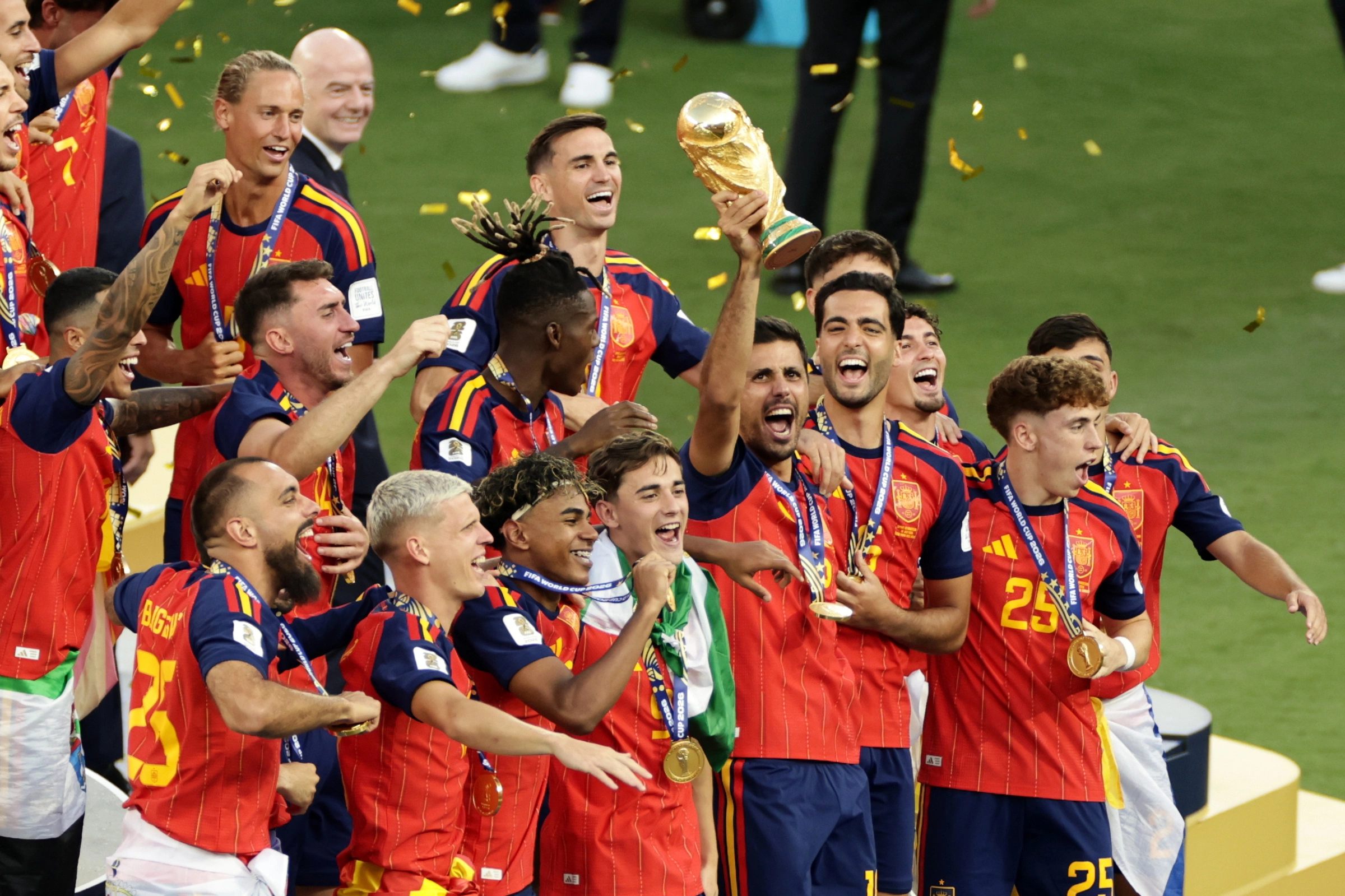
Midfielder Rodri (16) lifts the golden trophy after Spain's 1-0 victory over Argentina in the 2026 World Cup final at MetLife Stadium, New Jersey, USA, on 19/7/2026. *AP* |
After defeating Argentina in the 2026 World Cup final at MetLife Stadium in New Jersey, USA, Spain once again stands at the pinnacle of world football. This scenario recalls the summer of 2010, when they won the World Cup two years after their Euro 2008 title. History repeated itself perfectly: Spain triumphed at Euro 2024 and then conquered the 2026 World Cup, solidifying its position as the world's dominant footballing nation.
However, it would be incomplete to only consider the men's team's two major titles. Spain's success is no longer a story of a golden generation or a few outstanding individuals; instead, it is the result of an effective football development system operating from youth levels to the national team, for both men and women.
In the past five years, Spanish football has secured 16 world and European titles across all levels, from under-17 to the national team. The men's team won the Nations League 2023, Euro 2024, Olympic 2024, and World Cup 2026, while also claiming the European under-19 championship in 2026. Meanwhile, women's football has been even more impressive with 11 titles, including the 2023 World Cup, two consecutive Nations League championships in 2024 and 2025, the 2022 under-20 World Cup, the 2022 under-17 World Cup, the 2024 under-17 Euro, and five consecutive under-19 European championships from 2022 to 2026.
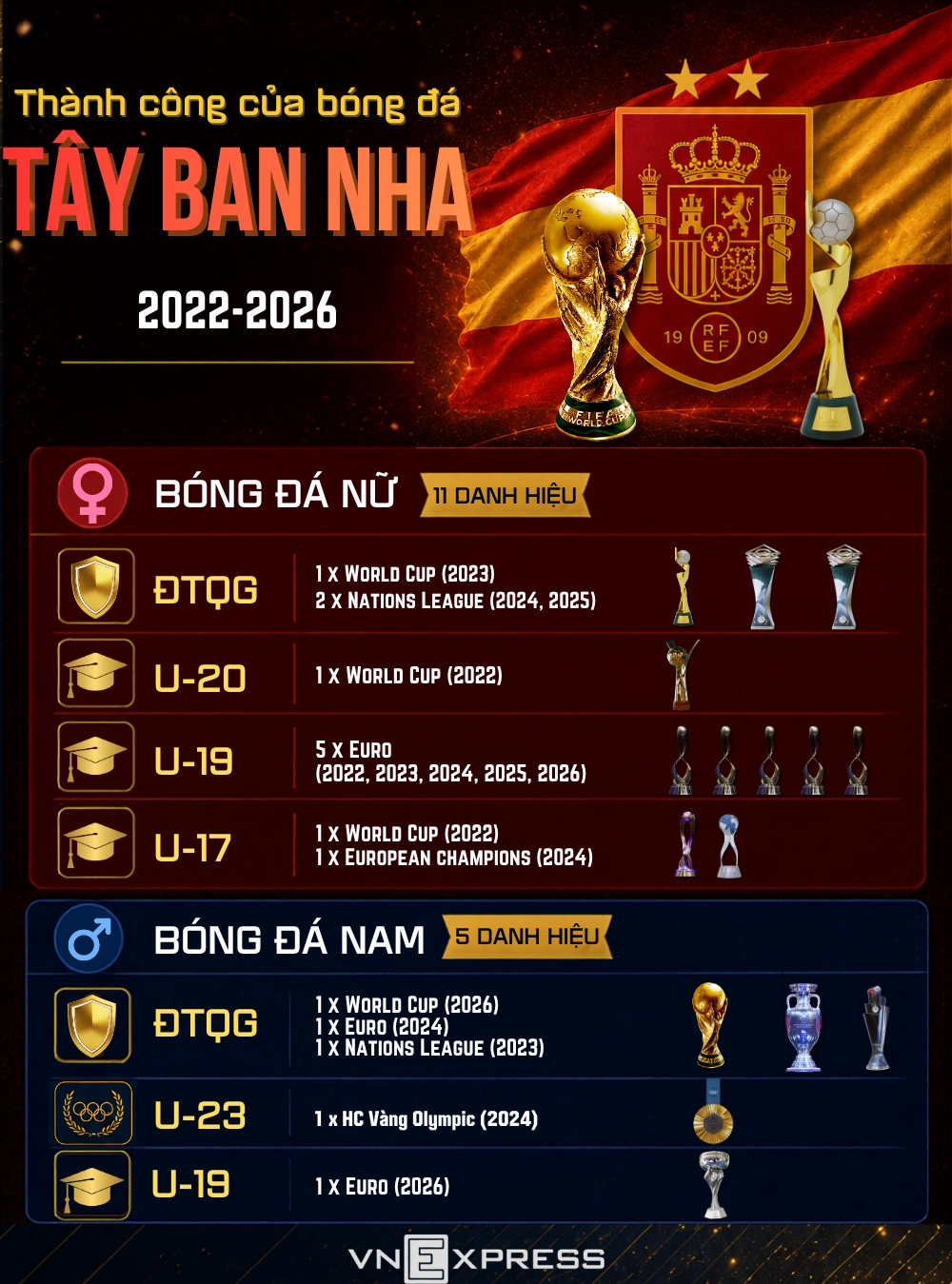 |
16 Spanish football titles over the past five years. |
This achievement makes Spain the first nation in history to simultaneously hold both the men's and women's World Cup titles. According to BBC Sport's Spanish football expert Guillem Balague, it is true dominance. "Everything is perfect", Balague commented. "Spaniards have their own way of playing football, and everyone believes in that philosophy. Most importantly, we never stop. The men's team won the 2010 World Cup after Euro 2008. Now we have done the same again".
Few expected a new cycle of success to arrive so quickly after the 2022 World Cup. At that time, Spain was eliminated by Morocco in the round of 16, and coach Luis Enrique departed. The Spanish Football Federation decided to entrust the national team to Luis de la Fuente, a name almost unknown on the biggest stages at both national team and club levels.
This was considered a risky decision because De la Fuente had never managed any major team. After retiring in 1994, he primarily worked in lower leagues, serving as an assistant or coaching youth teams, before moving on to oversee Spain's youth national teams.
"The Federation chose a coach who truly understood the philosophy and system of Spanish football", Balague said. "It was a very risky decision. I don't think many people believed he would be this successful".
In just under four years, De la Fuente has brought the Nations League, Euro, and World Cup to Spanish football – a collection of titles that made all doubts disappear.
According to former midfielder Juan Mata, this success is no coincidence: "De la Fuente knows most of the players very well because he coached them from the academy and youth teams. They grew up together. This is not just the current team but also for the future".
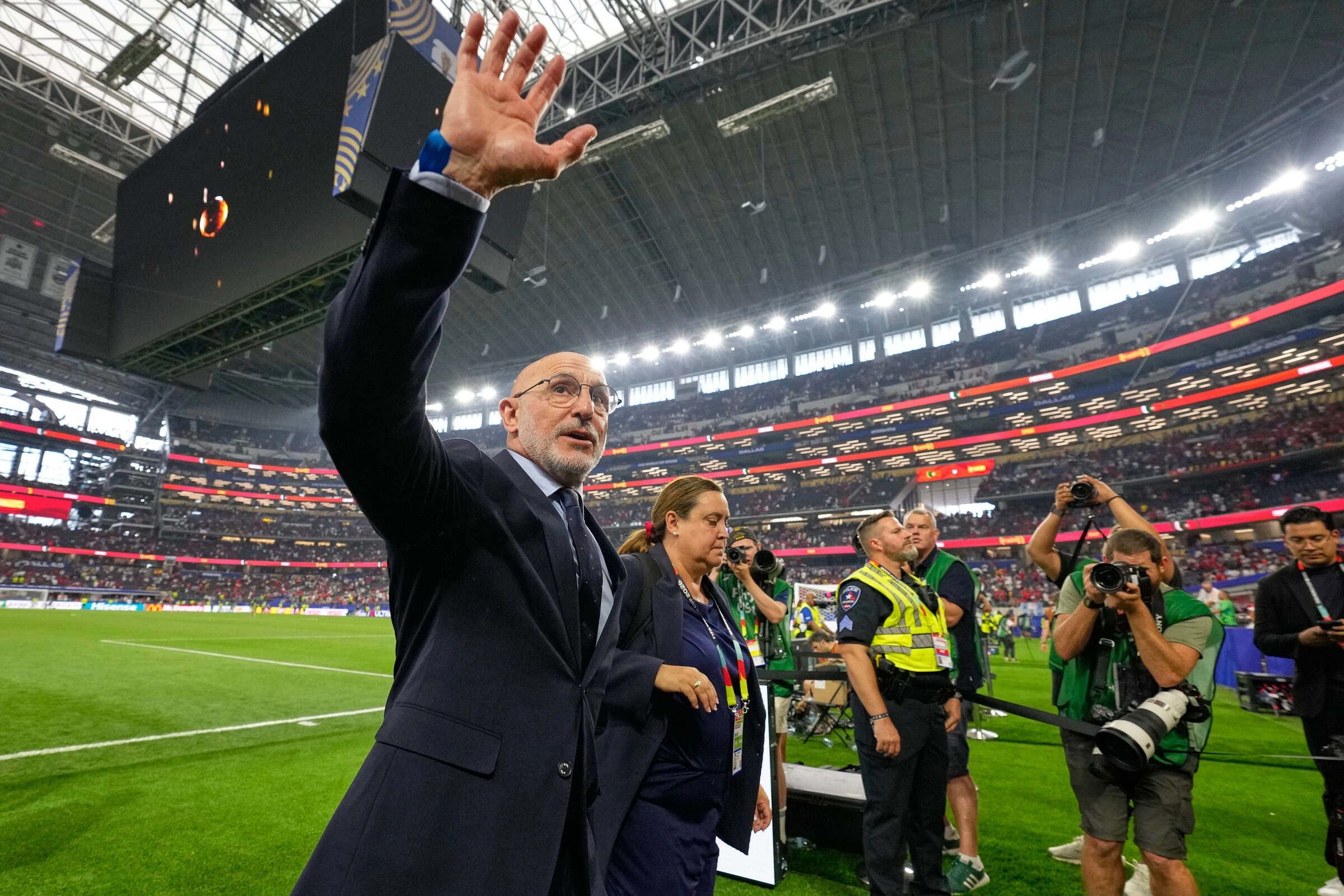 |
Spanish coach Luis de la Fuente leaves the field after Spain's 1-0 victory over Portugal in the round of 16 of the 2026 World Cup at Dallas, USA, on 6/7/2026. *AP* |
Unlike many coaches who focus solely on tactics, De la Fuente builds a team culture based on respect for opponents, respect for the development process, and maintaining composure.
Before the World Cup final, the 65-year-old coach recounted that some of his players had asked him: "Coach, what more do we have to strive for when we have won at every level?" His answer was simple: "The next goal is to win the next tournament". For De la Fuente, this team never allows itself to be satisfied.
That philosophy is most clearly reflected in their current form. Spain has gone 38 consecutive matches unbeaten, a record for any European or South American national team.
The success of the national team has also spread to club level. Even though Pep Guardiola left Man City after a decade of titles, Spanish coaches continue to be prominent across Europe. For example, the Premier League season 2026-2027 will feature at least one-quarter Spanish coaches, demonstrating the increasing influence of Spanish football.
If men's football is a symbol of stability, then Spanish women's football is a story of revolution. In 2023, the women's national team won their first World Cup after defeating England in the final. Just two years later, they added two consecutive Nations League championships.
"Ten years ago, when I played for Barca, the La Masia academy didn't even have a training system for women. We paid our own travel costs, our parents drove us to practice, and we didn't receive any salary", former Barca player Maria Garrido attributes the change to systematic investments over the past decade.
Garrido, now a journalist, emphasizes the changes in the last five years: "Everything has changed dramatically. Women's football has received serious investment with more youth levels, better facilities, more professional training conditions, and even a dedicated academy for women. This transformation has not only changed the sport but also how society perceives women's football".
What worries many opponents most is that Spain seems to have not yet reached its limit. In the men's team, Lamine Yamal and Pau Cubarsi are both only 19 years old but already possess World Cup winner's medals. Yamal became the third youngest player in history to play in a World Cup final, after Pele in 1958 and Giuseppe Bergomi in 1982. The fact that Yamal and Cubarsi both started also made Spain the first team to use two teenagers in a World Cup final.
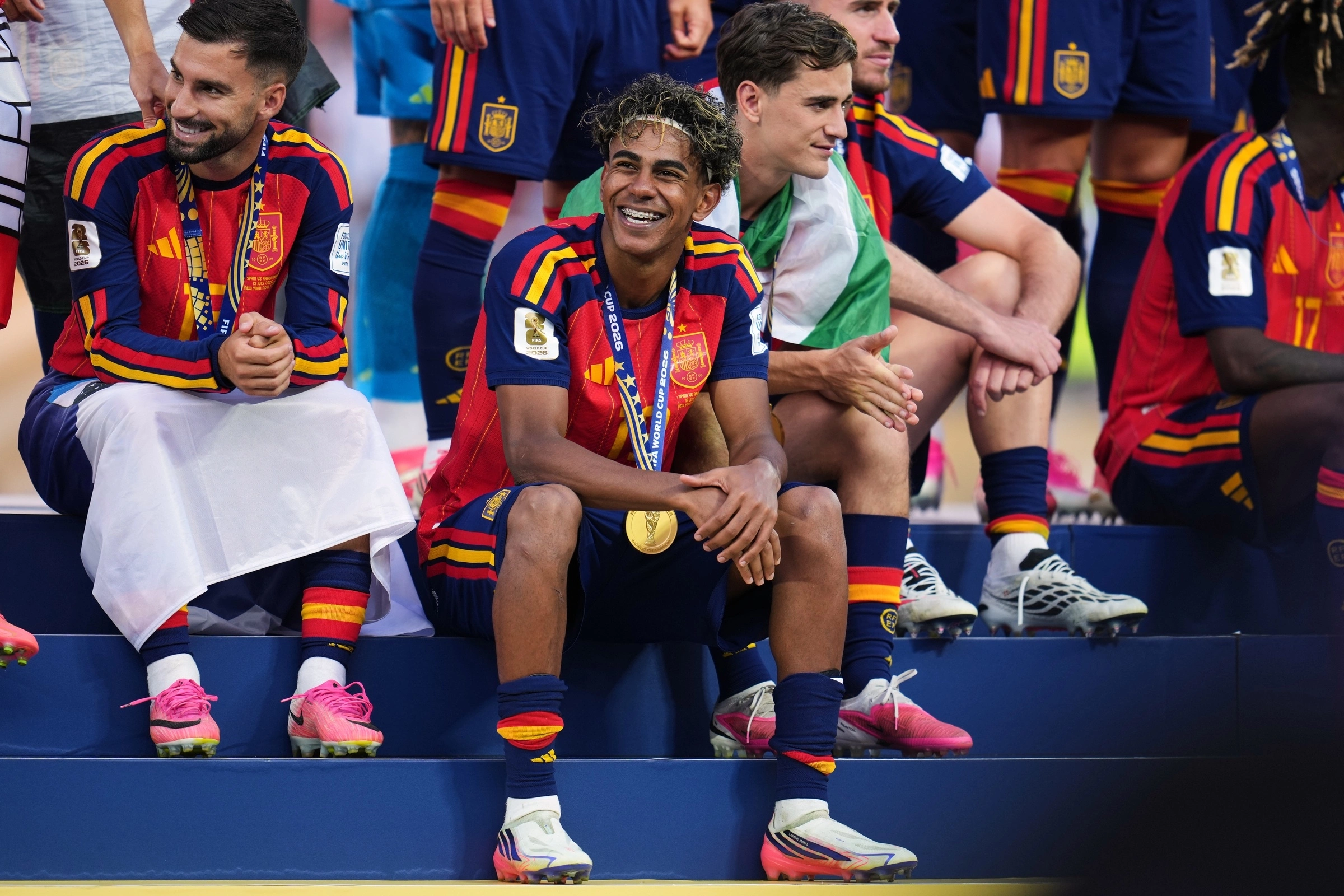 |
Spanish forward Lamine Yamal (19) celebrates the 2026 World Cup championship after a 1-0 victory over Argentina in the final at MetLife Stadium, New Jersey, USA, on 19/7/2026. *AP* |
Women's football also boasts a promising next generation. Vicky Lopez has won three Champions League titles with Barca at just 19 years old, while Salma Paralluelo has made over 50 national team appearances before turning 23.
"They play in a way that no other team in the world has proven they can approach", former England goalkeeper Joe Hart believes that what makes Spain most formidable is not a few stars, but the entire operating system. "No one truly troubled them in this World Cup. Throughout the tournament, opponents only managed 10 shots on target".
Former player Thierry Henry also believes Spain could dominate world football for many years to come: "I want to commend the entire system and what they have built. In the past, Spain didn't know how to win like this. But now, they win at every level".
With 16 titles in five years, simultaneous men's and women's World Cup victories, a 38-match unbeaten streak, and a continuous emergence of talented generations, Spanish football's global supremacy is no accident. Barring major disruptions, the world will likely have to get used to La Roja continuing to lift major trophies for many more years.
Vy Anh