Before Spain entered World Cup 2026, the most debated position in coach Luis de la Fuente's squad was not the midfield, attack, or center-back, but the goalkeeper.
David Raya had an excellent season with Arsenal, while Joan Garcia emerged as one of Europe's most promising goalkeepers after impressive performances in La Liga. Both had strong claims to compete for the starting spot.
Even Unai Simon admitted his rivals deserved consideration. However, the external narrative sharply contrasted with the internal views of the national team. Coach De la Fuente never doubted his favored player.
He once stated that Spain possessed "three of the best goalkeepers in the world", but simultaneously emphasized that Simon was an irreplaceable component in the team's system, both with and without the ball.
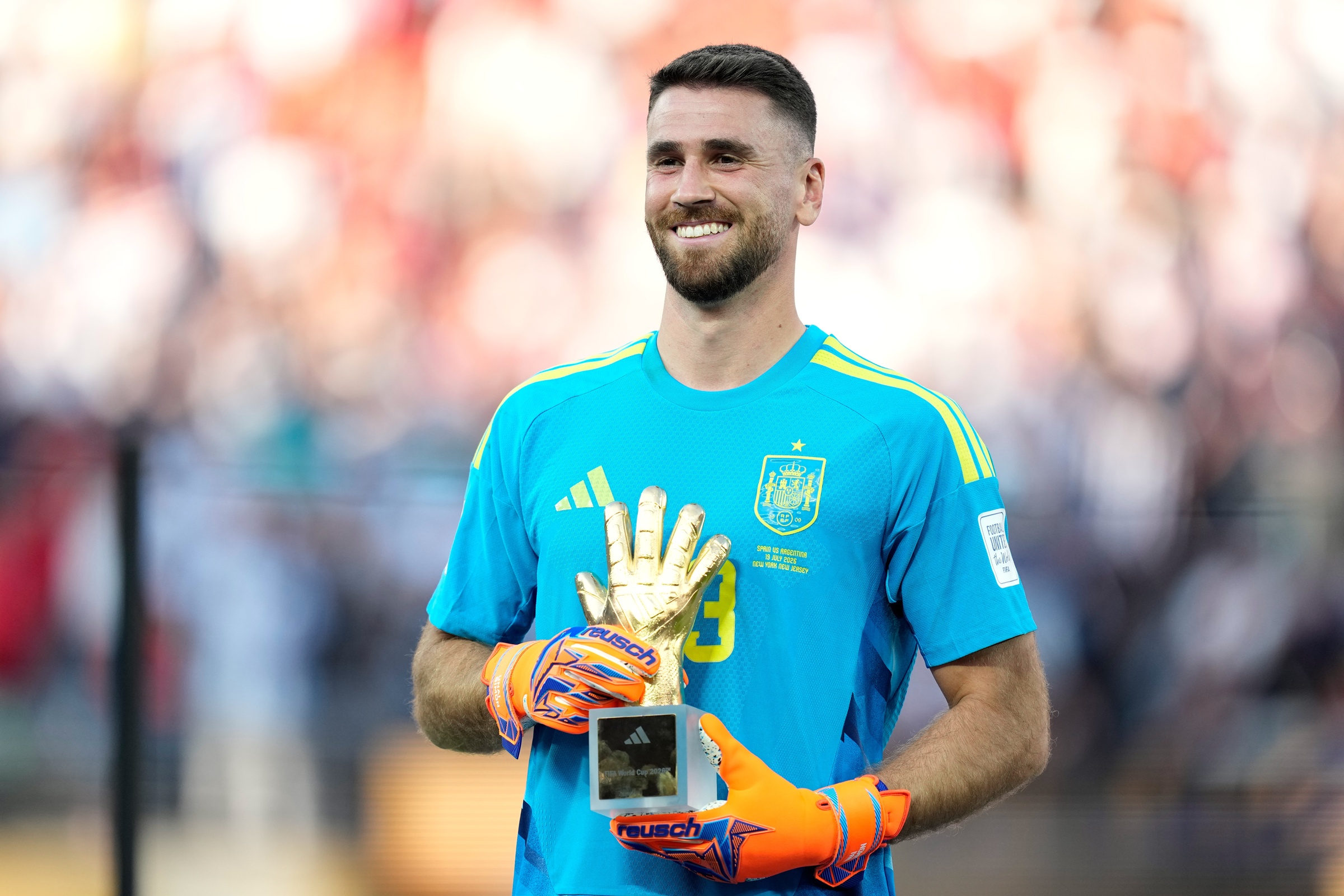 |
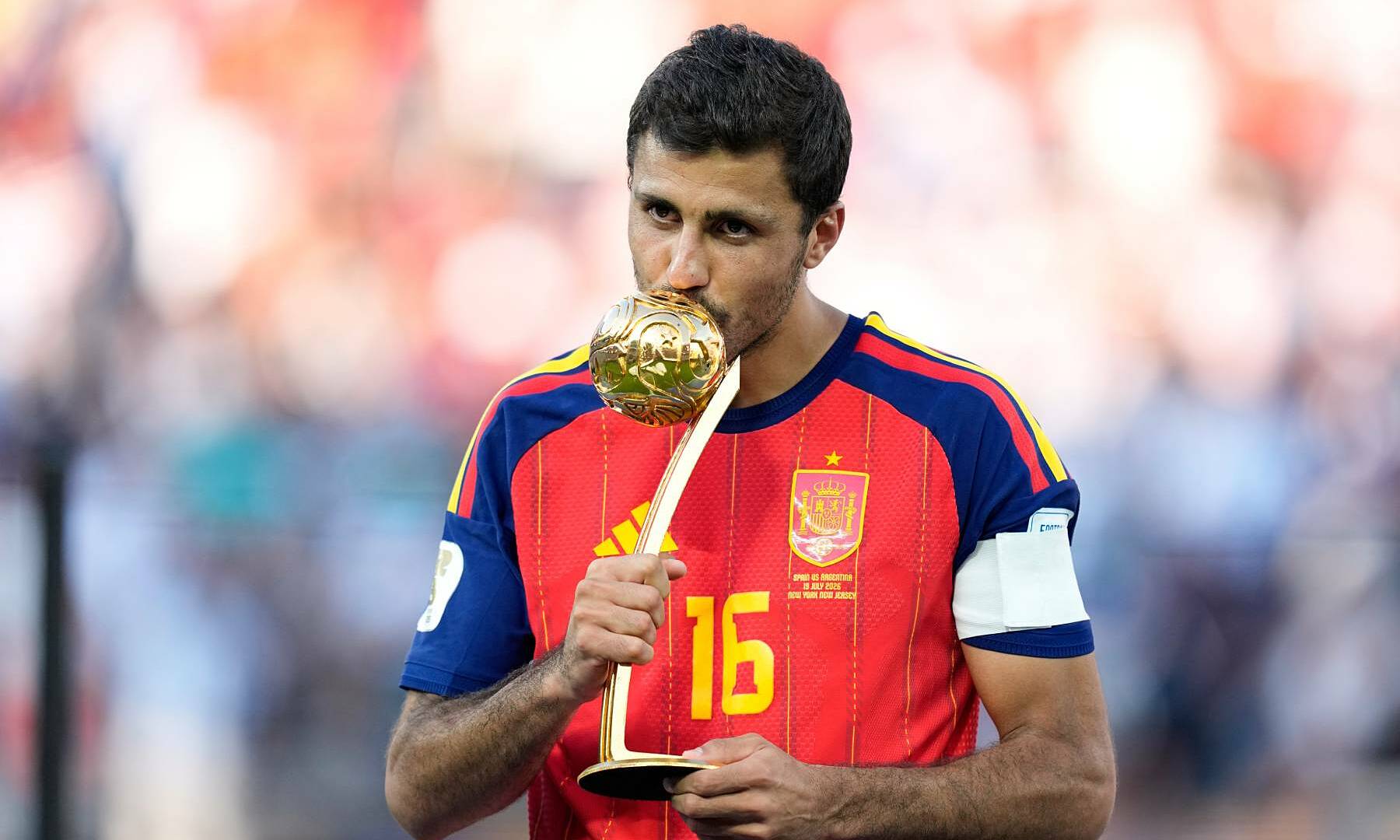
Spain's goalkeeper Unai Simon poses with his Best Goalkeeper award at the World Cup 2026 after the final match against Argentina at MetLife Stadium, East Rutherford (New Jersey, near New York, USA) on 19/7. Photo: AP |
This trust was repaid with a nearly flawless performance. In the final, Simon and Spain lifted the World Cup trophy, and he secured the Golden Glove award for the tournament's best goalkeeper.
The 29-year-old goalkeeper set a record of 7 clean sheets at a World Cup, achieving a save percentage of 91,7%, higher than anyone else. He also maintained a streak of 650 consecutive minutes without conceding a goal before Belgium scored against him in the quarterfinals. Throughout the tournament, Simon conceded 0,7 fewer goals than his expected goals conceded metric, demonstrating his ability to make saves beyond predictions.
Notably, Spain conceded only one goal in 8 matches - the best defensive record for a World Cup champion in history. However, these impressive statistics do not fully reflect Simon's value.
The Athletic Bilbao goalkeeper's greatest strength lies not in spectacular saves, but in his ability to neutralize danger before opponents can even take a shot.
His ability to read situations and anticipate early allows Simon to consistently appear at the right moment to intercept passes, rush out to control the ball, or cleanly catch crosses, rather than simply waiting on the goal line to react. This is also a crucial link in Spain's build-up play.
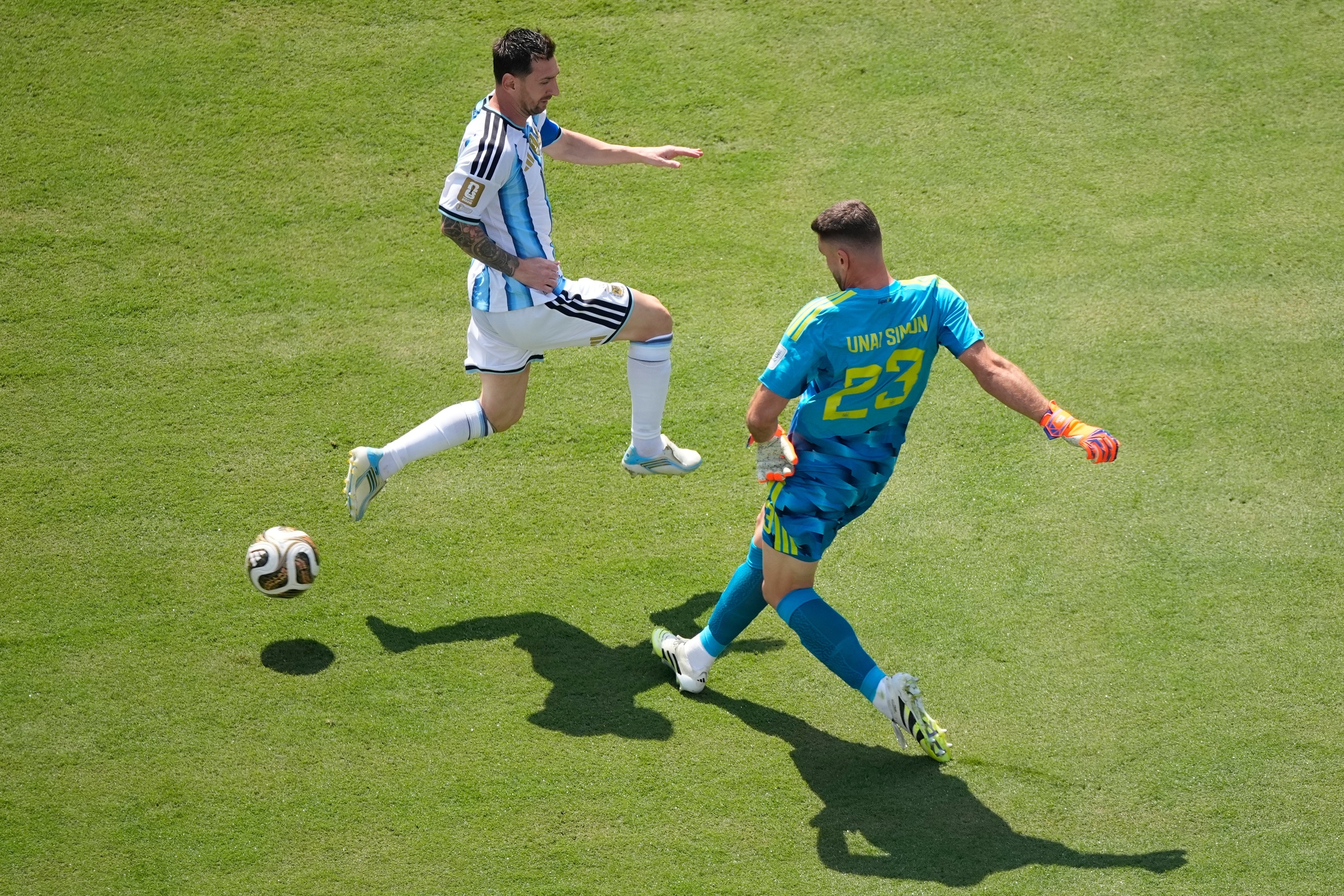 |
Spain's goalkeeper Unai Simon blocks an opportunity from Argentina captain Lionel Messi (10) during the World Cup 2026 final at MetLife Stadium, East Rutherford (New Jersey, near New York, USA) on 19/7. Photo: AP |
De la Fuente often instructed his players to pass the ball back to Simon to stretch the opponent's pressing block. Each time he received the ball, the goalkeeper had to make quick decisions: pass short to continue circulation, find space in midfield, switch wings, or deliver a long pass over the top when opponents pushed too high.
His composure and accurate passing allowed Spain to patiently build from the back, always having an option to escape pressure with precise long-range distributions. This balance between ball retention and quick transitions made Simon an irreplaceable piece in De la Fuente's philosophy.
This trust stemmed from more than just current form. De la Fuente had worked with Simon since his youth days with Spain. Together, they won the U19 European Championship, U21 European Championship, UEFA Nations League, Euro 2024, and now World Cup 2026. The 65-year-old coach once described his relationship with Simon as "almost like family", asserting that the goalkeeper remains one of the best in the world.
At the national team level, where training camps are short and stability is paramount, tactical understanding and trust between coach and goalkeeper are often as important as form. Simon is the clearest example of this.
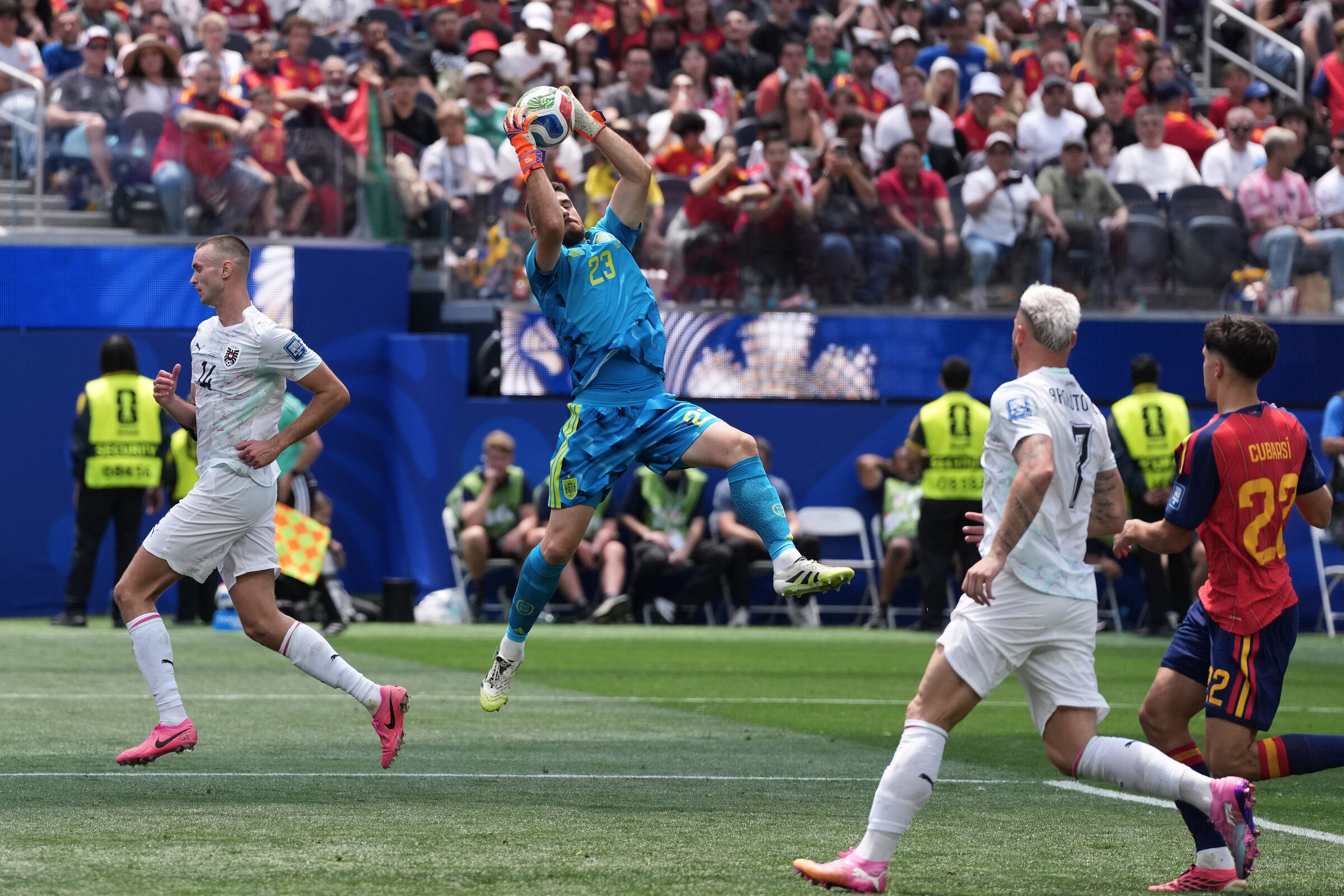 |
Unai Simon (in blue) catches the ball during Spain's 3-0 victory over Austria in the World Cup 2026 round of 16 at SoFi Stadium, Los Angeles, USA on 2/7. Photo: AP |
Beyond his footwork, he dominated the penalty area. Simon made 8 aerial ball collections at the World Cup, the most in the tournament, consistently rushing out to punch or catch crosses, intercepting dangerous low balls, and closing down angles at opponents' feet before they could shoot.
These situations rarely create explosive moments like a diving save, but they were fundamental to Spain building the tournament's most solid defense and progressing to the world championship.
Top goalkeepers do not just react to danger; they extinguish it before most spectators even realize the situation has arisen. The semifinal against France was the clearest testament to why coach Luis de la Fuente always placed absolute faith in Simon.
Facing Kylian Mbappe always forces goalkeepers to adjust their approach. The French forward's speed often causes defenders to drop deep, and goalkeepers are easily drawn closer to their goal line. However, Simon chose not to play it safe.
Throughout World Cup 2026, Spain maintained a high defensive line, accepting significant space behind them. This meant Simon had to frequently leave his goal to cover. He made 22 clearances outside the penalty area, the most in the tournament, demonstrating his role as a sweeper-keeper behind the defense.
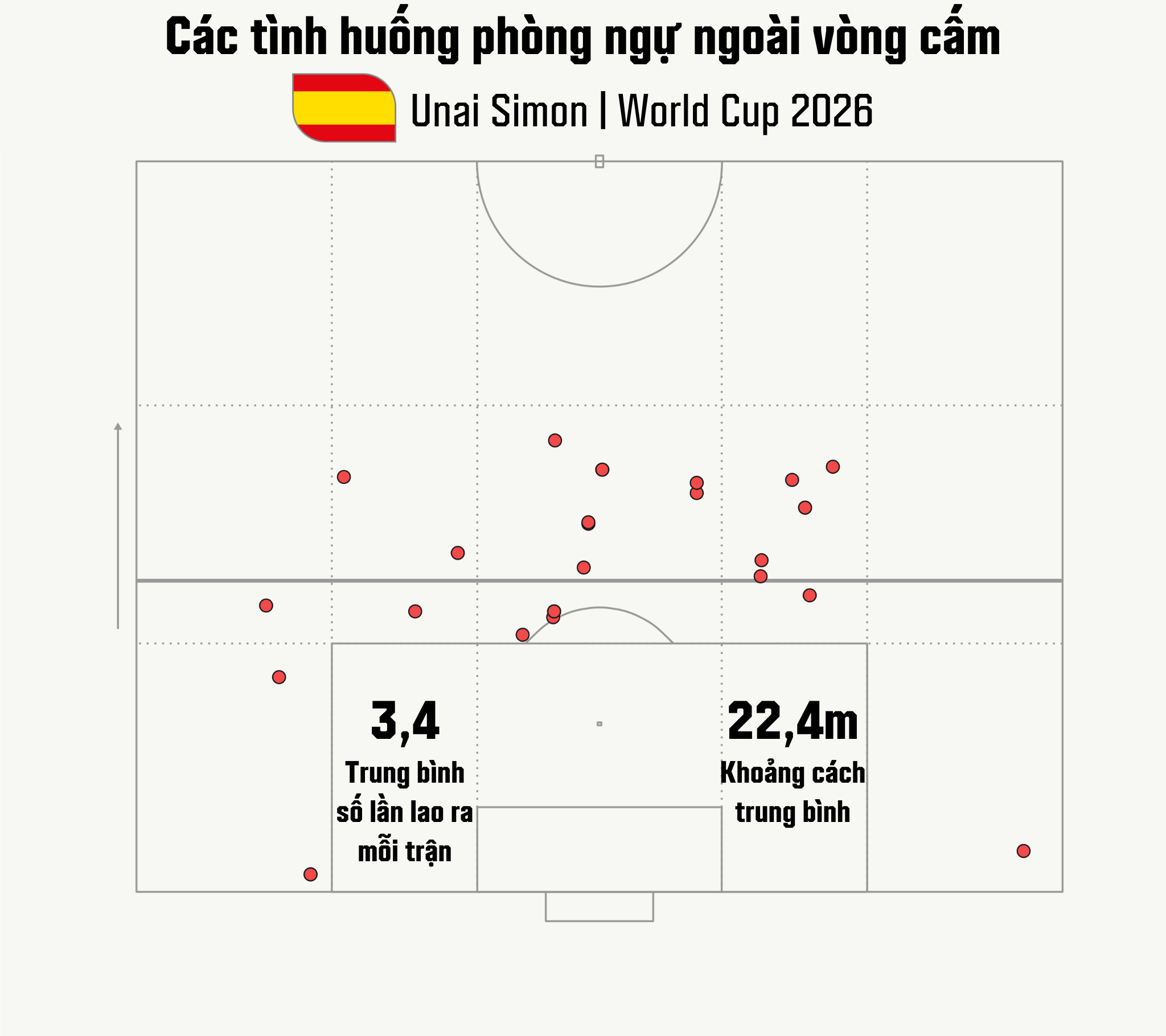 |
Unai Simon's defensive statistics outside the penalty area at World Cup 2026. |
In the match against France, the 29-year-old goalkeeper constantly read situations early to rush out and close down angles, intercepting at opponents' feet or coming off his line to cut through balls before Mbappe had a chance to sprint through on goal.
The final against Argentina further showed that these were not isolated moments, but an integral part of Spain's defensive system. In just the fifth minute, Simon rushed nearly 35 meters from his goal to intercept a through ball aimed at Lionel Messi before the Argentine superstar could even touch the ball.
This was a risk Spain deliberately accepted by employing a high defensive line. While many goalkeepers would instinctively retreat to protect their goal against a world-class striker like Messi, Simon trusted his ability to read the game, proactively advanced, and diffused danger at its earliest stage.
From a goalkeeper's perspective, every such rush begins with a series of split-second calculations: how much pressure is the player with the ball under, can defenders recover in time, and who has the best chance of reaching the ball first. When the answer is clear, hesitation almost guarantees failure.
Especially against Mbappe's speed, even half a second of doubt can turn a harmless through ball into a dangerous one-on-one situation. In reality, Simon often started moving before most spectators in the stadium even recognized the threat.
This proactive style of play is reminiscent of Manuel Neuer at World Cup 2014, when the German goalkeeper almost redefined the sweeper-keeper role with his bold rushes to intercept the ball, playing a major part in Germany's world championship victory.
Of course, not all of Simon's decisions were perfect. In the 81st minute of the semifinal against France, a less-than-decisive clearance forced the Spanish goalkeeper to immediately retreat and save Desire Doue's shot. However, his quick recovery and decisiveness in every situation further illustrated why De la Fuente always considered Simon an irreplaceable piece in Spain's World Cup conquest.
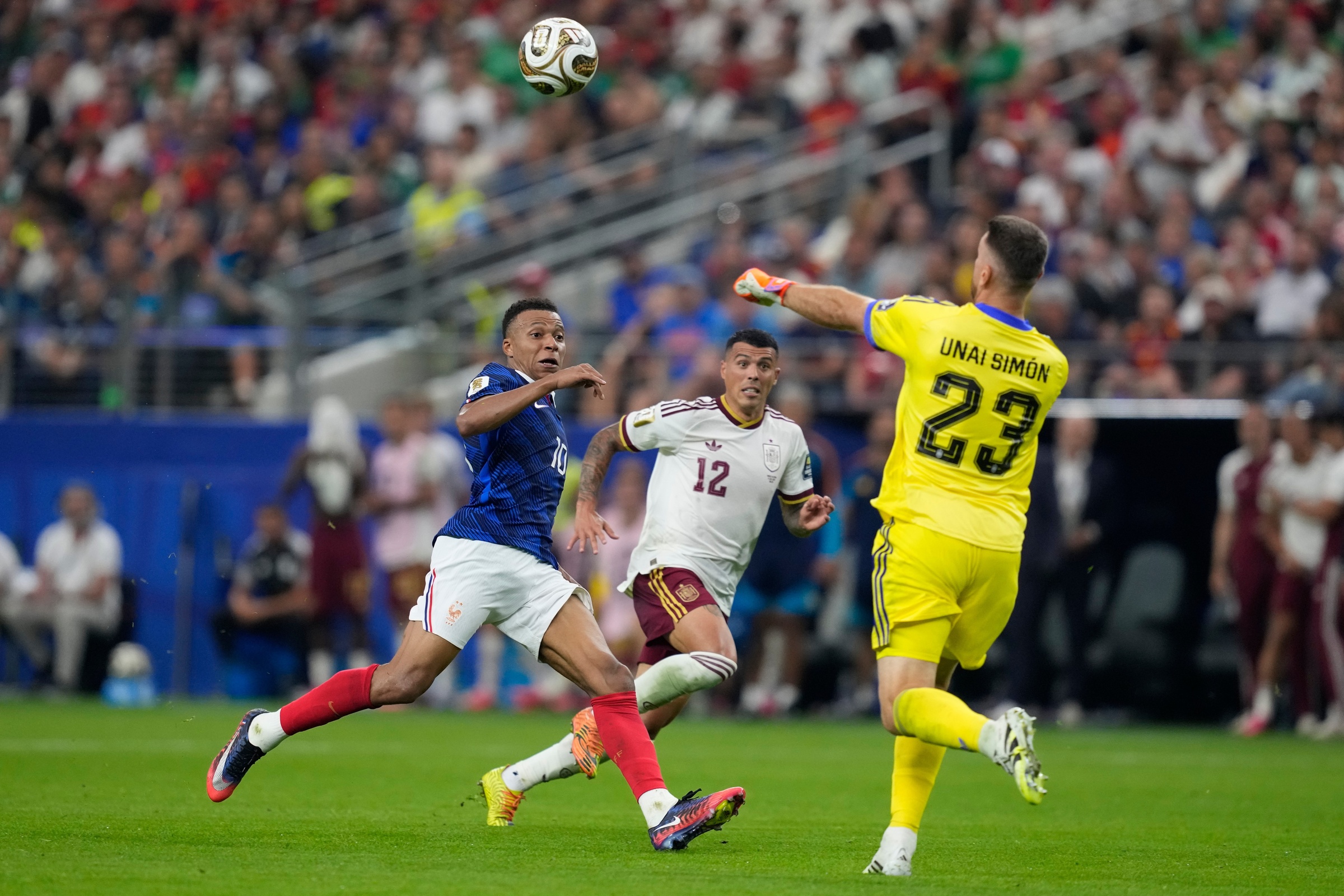 |
Spain's goalkeeper Unai Simon (23) challenges France forward Kylian Mbappe (10) with defender Pedro Porro (12) closing in during the World Cup 2026 semifinal at AT&T Stadium, Arlington (Texas, near Dallas, USA) on 14/7. Photo: AP |
In the late-game rush against Mbappe in the semifinal against France, Simon's clearance was not perfect. However, from a professional goalkeeping perspective, it was still the correct choice.
Had he stayed on his line, Simon would almost certainly have allowed Mbappe to reach the ball first and face the goal, with Spain leading 2-0. His proactive rush eliminated the most dangerous scenario, creating time for defenders to recover and provide support. Although the final execution was not entirely clean, Simon's decision offered the greatest chance for Spain to maintain their advantage.
This also highlights the difference between a proactive goalkeeper and one who merely reacts. Every time Simon successfully defused danger, it reinforced confidence in the defense, allowing defenders to maintain a high line, knowing there was always cover behind them. This trust fundamentally changed how the entire team defended.
Indeed, no one can accurately quantify how many opponent attacks were neutralized before they became scoring opportunities. But throughout World Cup 2026, Simon's ability to control the space behind the defense was one of the most important foundations for Spain having the tournament's most solid defense.
Perhaps the biggest reason why coach Luis de la Fuente never wavered in his choice for the number one goalkeeper is simple: Simon never gave him a reason to change.
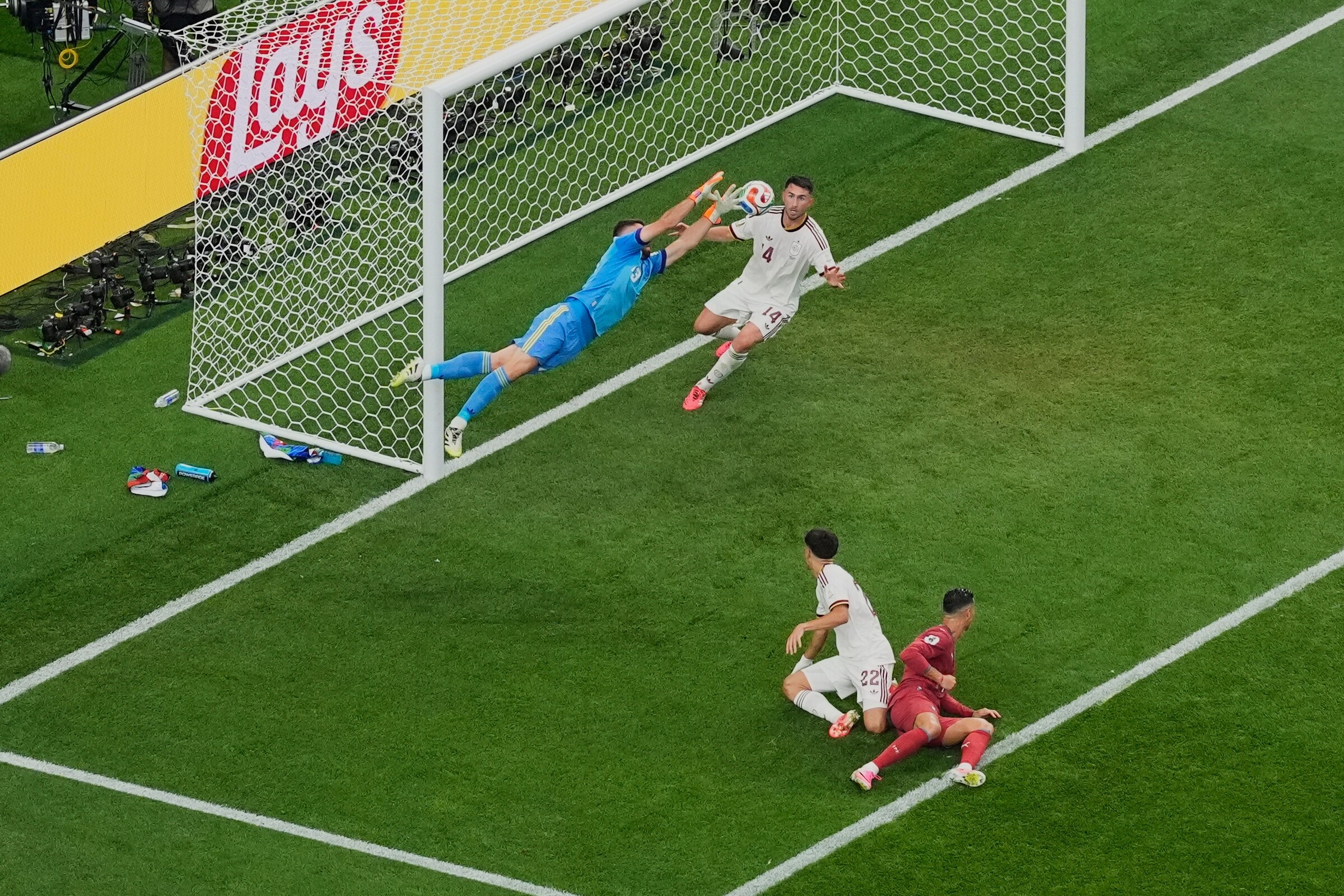 |
Goalkeeper Unai Simon saves a shot from Cristiano Ronaldo during Spain's match against Portugal in the World Cup 2026 round of 16 at Dallas Stadium, Texas, USA on 6/7. Photo: AP |
With each major tournament, the relationship between a coach and his number one goalkeeper becomes stronger. Every successfully navigated top-tier match further solidifies that trust. Before World Cup 2026, Simon had already won the UEFA Nations League and Euro 2024 with De la Fuente. This summer, he added the World Cup trophy and the Golden Glove award to his collection.
These achievements alone would make this a memorable tournament in the 29-year-old goalkeeper's career. However, statistics and titles still cannot fully convey his impact.
For Spain, the goalkeeper's role is not just about making saves. Simon is also the initiator of build-up play, the sweeper-keeper behind a high defensive line, and a vital link that ensures the entire system operates smoothly. This comprehensive skill set transformed him into one of the most crucial figures on Spain's journey to becoming world champions.
Vy Anh compiled