The tournament, held from 24/7 to 28/7, followed a 10-on-10 team format. Both sides competed in 10 rounds, with each round comprising 10 games. Each game had a time control of 30 minutes plus 15 seconds per move. A team earned two points for a round win, one point for a draw, and zero for a loss.
After five days of competition and a total of 100 games, Guangdong won eight rounds, while Vietnam secured only two. This concluded the tournament with a team score of 16-4 in favor of Guangdong. In terms of total game points, the Chinese representative also held a significant lead, scoring 119 points compared to the host's 81 points.
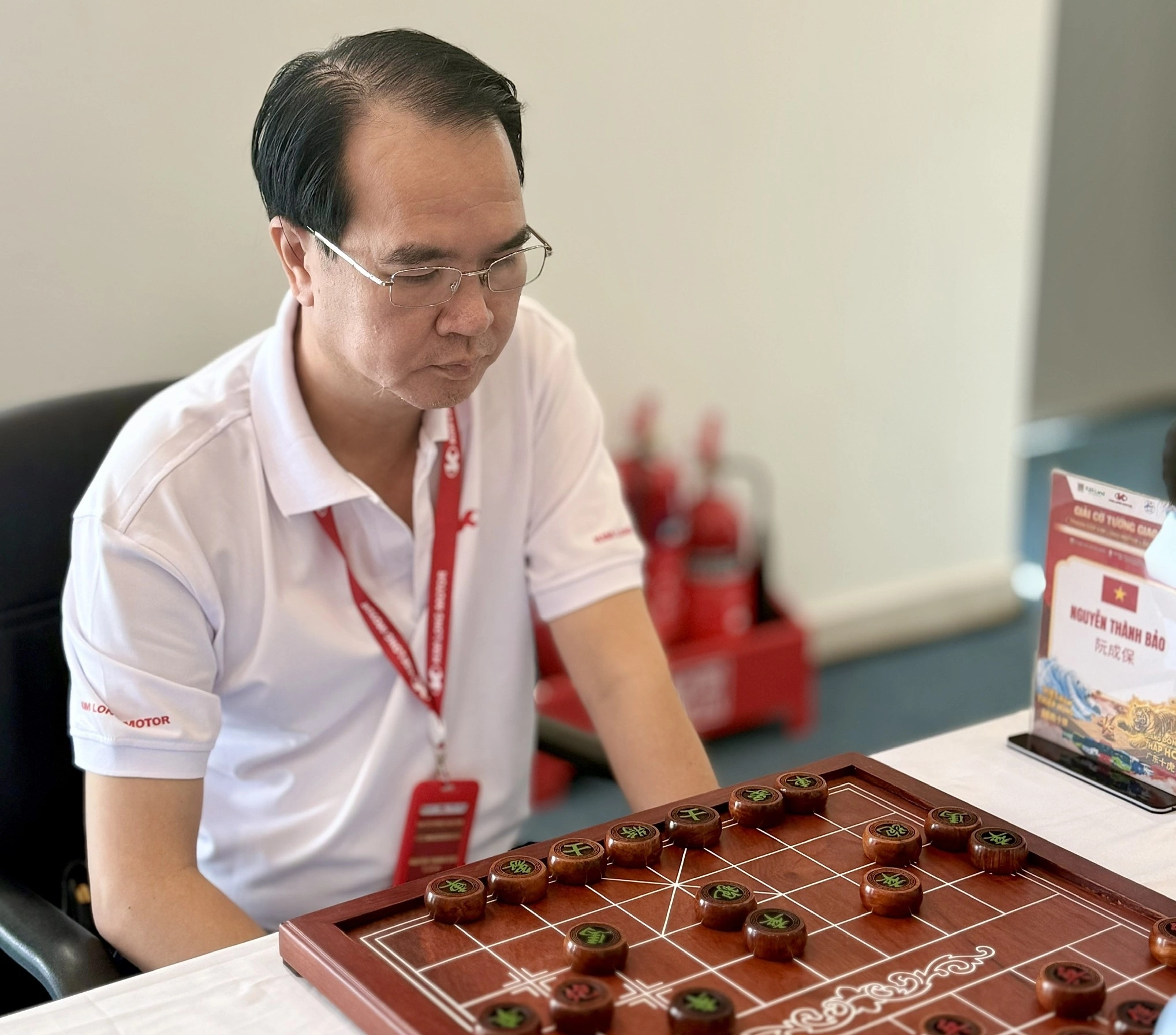 |
Xiangqi player Nguyen Thanh Bao during a game at the tournament in Da Nang on 28/7/2026. Photo: Organizers. |
The score difference reflected a clear disparity between the two teams. Guangdong had decided the outcome early, leading Vietnam 6-2 after eight rounds, even before the final day of play. The visitors continued their dominance in the final two rounds, extending their lead to 16-4.
Guangdong is merely a Chinese province, not the national team. However, it is a traditional xiangqi powerhouse in China, consistently producing many top players.
Vietnam's lineup included almost all of its strongest players. The squad featured Lai Ly Huynh, the reigning world champion and six-time national champion; Nguyen Thanh Bao, a three-time national champion; Ha Van Tien, the current national champion; along with former national champions Nguyen Minh Nhat Quang, Vu Quoc Dat, and Dang Huu Trang.
Despite this strong roster, the host players' performance was inconsistent. Nguyen Thanh Bao was the standout performer, scoring 15 individual points from 10 games, tying for first place with Tran Vu Ky of Guangdong. Born in 1982, Bao secured the top individual performance based on tie-breakers.
Meanwhile, Lai Ly Huynh did not perform as expected. The world champion scored only 11 points, tying for seventh place with Nhat Quang.
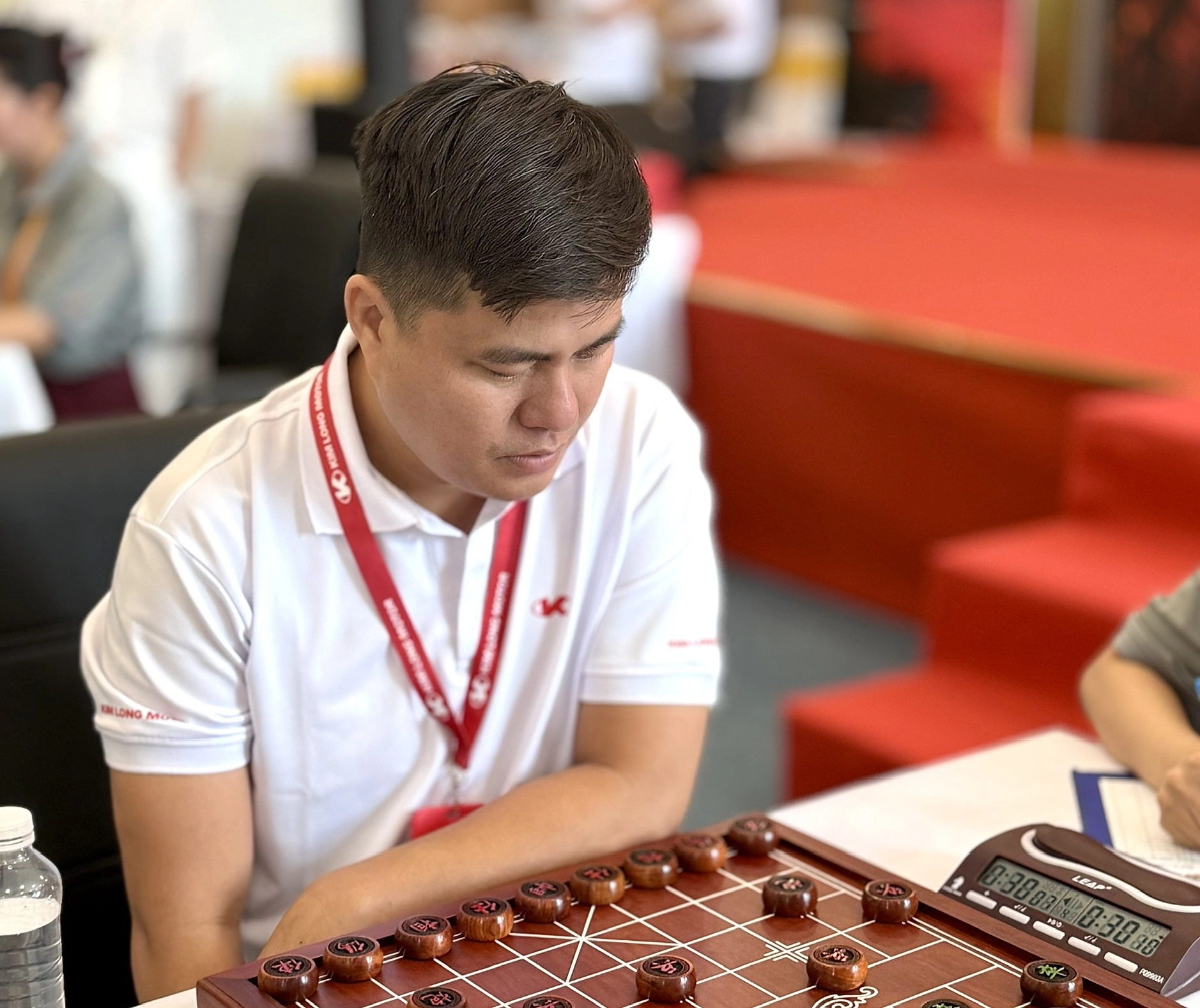 |
Xiangqi player Lai Ly Huynh at the tournament. Photo: Organizers. |
Beyond Thanh Bao, only Ly Huynh and Nhat Quang made it into the top 10 individual rankings for Vietnam. Guangdong dominated the top group with seven players: Tran Vu Ky, Hoang Van Tuan, Luong Van Long, Lieu Cam Thiem, Le Dac, Luong Nha Nhuong, and Duong Hong Kha. This highlighted the visitors' significantly greater squad depth.
The most significant difference was consistency. While not featuring many names well-known to Vietnamese fans, Guangdong players maintained stable performance throughout each round, minimized errors, and capitalized on opportunities.
This was the first time Vietnam and China organized a team friendly tournament using this model. Instead of traditional individual or team play, both sides adopted a 10-on-10 knockout format over 10 rounds, allowing many players to continuously compete against strong opponents.
Guangdong is China's most populous and economically developed province, home to major cities like Guangzhou and Shenzhen. With approximately 113 million residents across nearly 180,000 km², Guangdong's population is larger than Vietnam's, despite its area being roughly half. The province's GDP also exceeded 1,400 billion USD in 2018, nearly three times Vietnam's GDP in 2025.
Guangdong received 500 million dong in prize money for the championship, while Vietnam received 250 million dong as runner-up.
Xuan Binh