


The VnExpress Marathon Can Tho 2026 is scheduled for 10/5, a period when the Western Capital region enters its early summer heat. According to AccuWeather, temperatures on race day could reach 37 degrees Celsius with approximately 66% humidity. These conditions can directly impact a runner's ability to maintain exertion, especially in longer distances such as 21 km and 42 km.
According to Doctor Bui Phu Truong, medical team leader for VnExpress Marathon, the greatest risk to athletes stems not only from feeling "tired due to heat" but also from a thermoregulation disorder. When running long distances in the sun, the body must generate energy for muscles while continuously dissipating heat through sweat. However, high humidity reduces the effectiveness of sweat evaporation, causing heat to accumulate faster and potentially pushing body temperature beyond safe limits.
 |
Heatstroke is caused by prolonged exposure or exertion in high temperatures. *Freepik* |
"This condition can lead to dehydration, electrolyte imbalance, heat cramps, heat exhaustion, and especially exertional heatstroke," the doctor stated.
In sports medicine, exertional heatstroke is a serious complication when competing in hot weather. Runners may initially experience vague symptoms such as an unusually fast heart rate, mild dizziness, headache, chills, muscle cramps, or a feeling of early fatigue. If they continue to exert themselves, the condition can worsen, with body temperature rising, potentially exceeding 40 degrees Celsius in severe cases, accompanied by confusion, loss of coordination, or fainting.
Therefore, Doctor Truong advises participants to consider body temperature management an important part of their race strategy. In hot and humid conditions, athletes should proactively reduce their pace earlier than planned, prioritize cooling down at water stations, consistently replenish electrolytes, and not attempt to maintain time goals if their body shows any unusual signs.
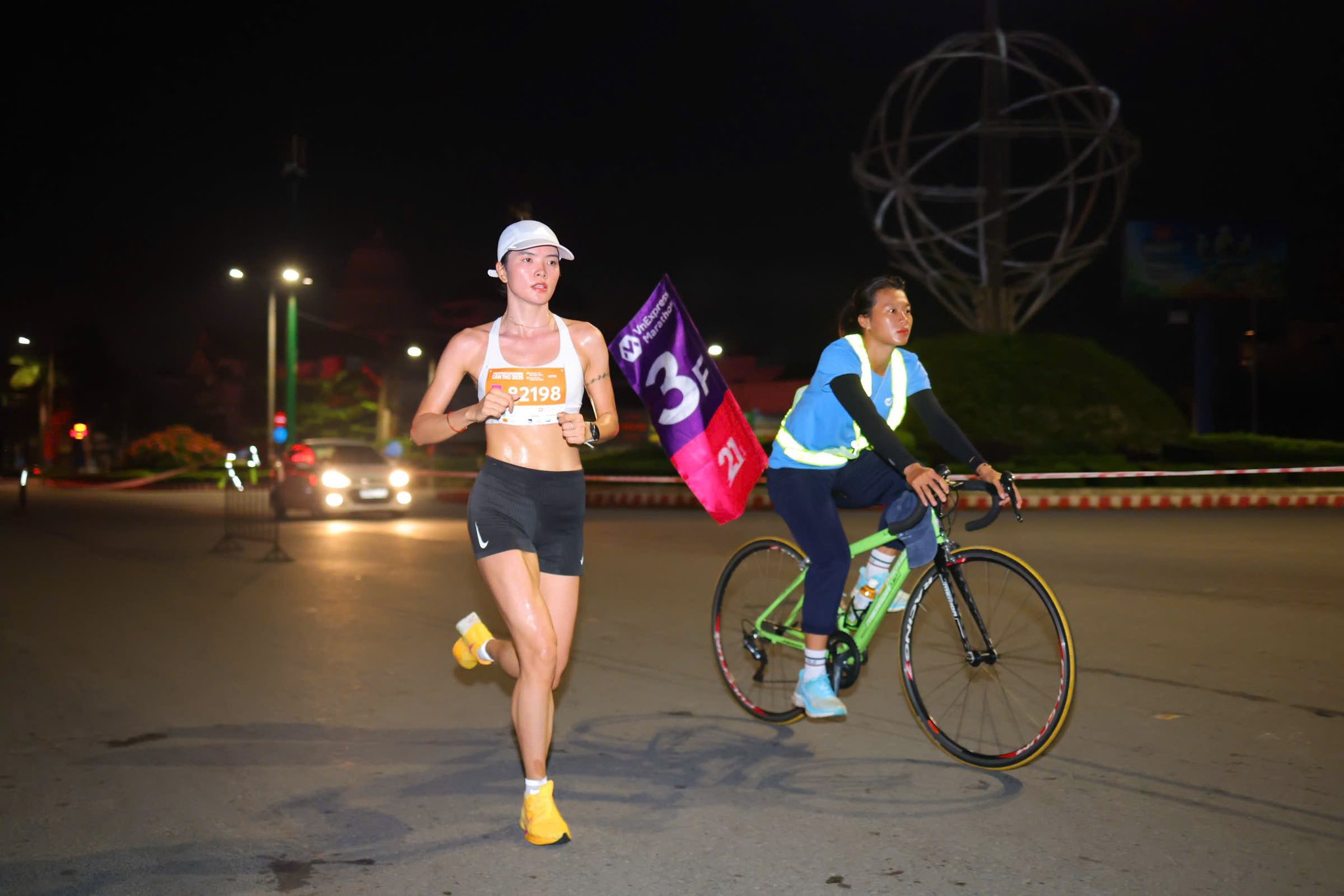 |
Runner Tran Duyen chose light-colored shirts and a cap when competing at VnExpress Marathon Can Tho 2025. *VnExpress Marathon* |
Before race day, runners should begin hydrating the evening prior, rather than waiting until race morning to drink large amounts of water. The meal 2-3 hours before the race should prioritize easily digestible carbohydrates like bread, oatmeal, bananas, or light rice; avoid eating too much or trying new foods.
A common mistake is drinking only plain water. In hot and humid weather, the body loses significant sodium through sweat, so athletes need proper electrolyte replenishment to reduce the risk of cramps, decreased performance, or hyponatremia caused by excessive plain water intake. Depending on their physical condition and race distance, athletes can use electrolyte tablets or sports drinks in amounts tested during training.
Regarding attire, runners should choose light-colored, thin, heat-dissipating shirts; use a wide-brimmed hat or UV-protective glasses; and apply sunscreen 20-30 minutes before starting. Thick, stuffy, dark-colored clothing or apparel not previously worn for long runs should be avoided in hot conditions.
During the race, athletes should drink small sips regularly, without waiting until they feel thirsty. At water stations, participants should actively cool their neck, nape, armpits, and douse their hands and feet with water. These measures help lower surface body temperature and support thermoregulation.
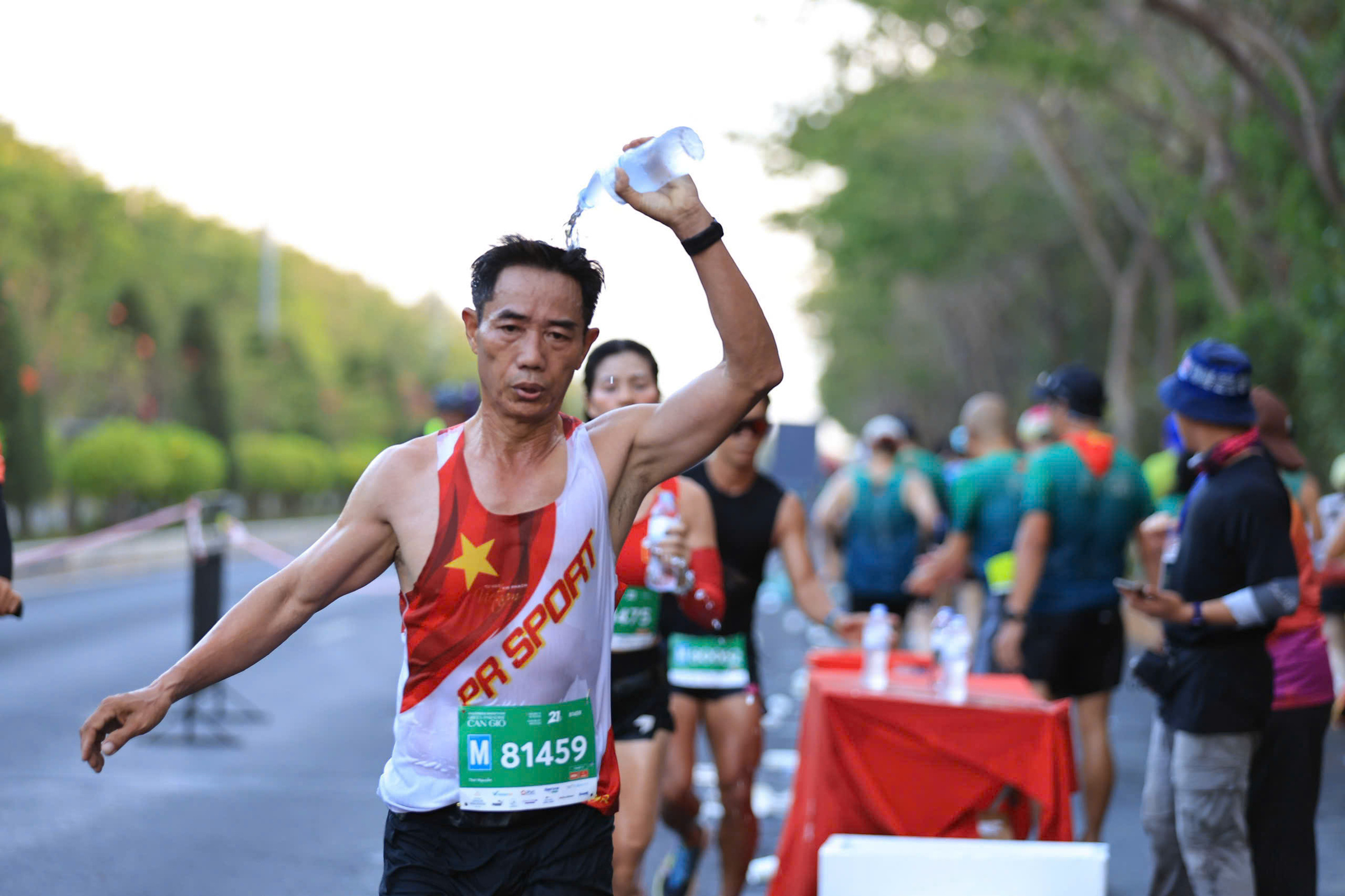 |
A male runner douses himself with water to cool down at VnExpress Marathon Can Gio, held in early may. *VnExpress Marathon* |
Runners also need to monitor for unusual signals such as a faster-than-usual heart rate, goosebumps despite the heat, dizziness, continuous cramps, nausea, loss of concentration, or a feeling of a significant drop in pace despite effort. If these signs appear, runners should slow down, seek shade, go to a medical station, or alert support staff, rather than continuing to push to achieve their time goal.
"In unfavorable weather conditions, knowing when to stop is sometimes a professional decision for an endurance athlete," the doctor said.
After finishing the race, athletes should not sit or lie down immediately. A gentle walk for a few minutes helps stabilize circulation and reduces the risk of post-exertion hypotension. In the first 30-60 minutes, runners should slowly rehydrate and replenish electrolytes, supplementing with light carbohydrates and protein to restore glycogen and muscles, while cooling their bodies with cold towels or resting in a shaded area.
"If, after the race, symptoms such as severe headache, confusion, prolonged nausea, persistent cramps, a prolonged fast heart rate, infrequent urination, or dark urine still appear, runners need early medical evaluation as these could be signs of severe dehydration or heat injury," Doctor Phu Truong concluded.
Along the race course, the organizing committee will arrange 14 medical stations, 6 ambulances, along with a team of 21 doctors and 42 nurses on standby at fixed medical points and in ambulances. The vehicles are equipped with necessary medications, supplies, and emergency equipment. Additionally, the event has 6 mobile doctors and two automated external defibrillators (AEDs) to support emergency situations.
At water and medical stations, the organizing committee also prepares ice packs and sponges containing cold water for athletes to use during the race, helping to cool down and lower body temperature when needed.
Hai Long


