 |
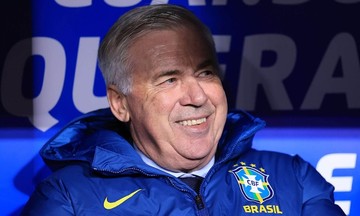
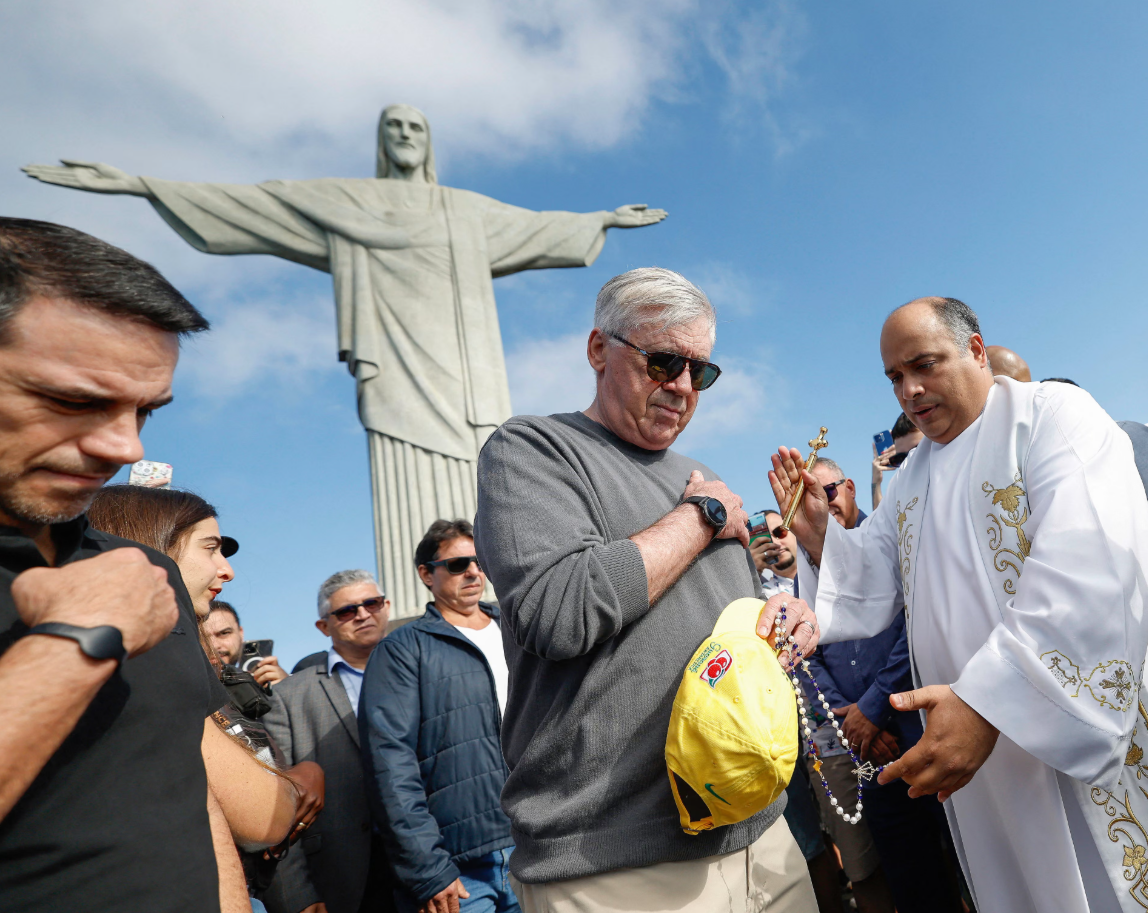
Coach Carlo Ancelotti visits the Christ the Redeemer statue in Rio de Janeiro after being appointed head coach of the Brazil national team. Photo: AFP |
As Carlo Ancelotti's private plane banked over the iconic Christ the Redeemer statue upon his arrival in Rio de Janeiro for his debut as Brazil's head coach, Diego Fernandes, the businessman instrumental in the deal, turned to him. "Carlo," Fernandes remarked, "God is blessing you to bring the sixth star to Brazil."
This symbolic moment belied the challenges ahead. The World Cup 2026 draw in Washington placed Brazil in a complex group alongside Morocco, Scotland, and Haiti. This setup risks early knockout stage clashes with formidable teams such as the Netherlands, Japan, or England. Moreover, the demanding schedule on the US East Coast, characterized by frequent travel and hot, humid conditions, evoked an unwelcome memory for Ancelotti.
In 1994, he served as assistant coach for the Italy national team during the World Cup in the United States. The Azzurri reached the final but lost to Brazil in a penalty shootout. Three decades later, that memory partly influenced the Brazilian Football Confederation (CBF) to place its trust in Ancelotti, hoping he would lead the Selecao to their sixth World Cup title.
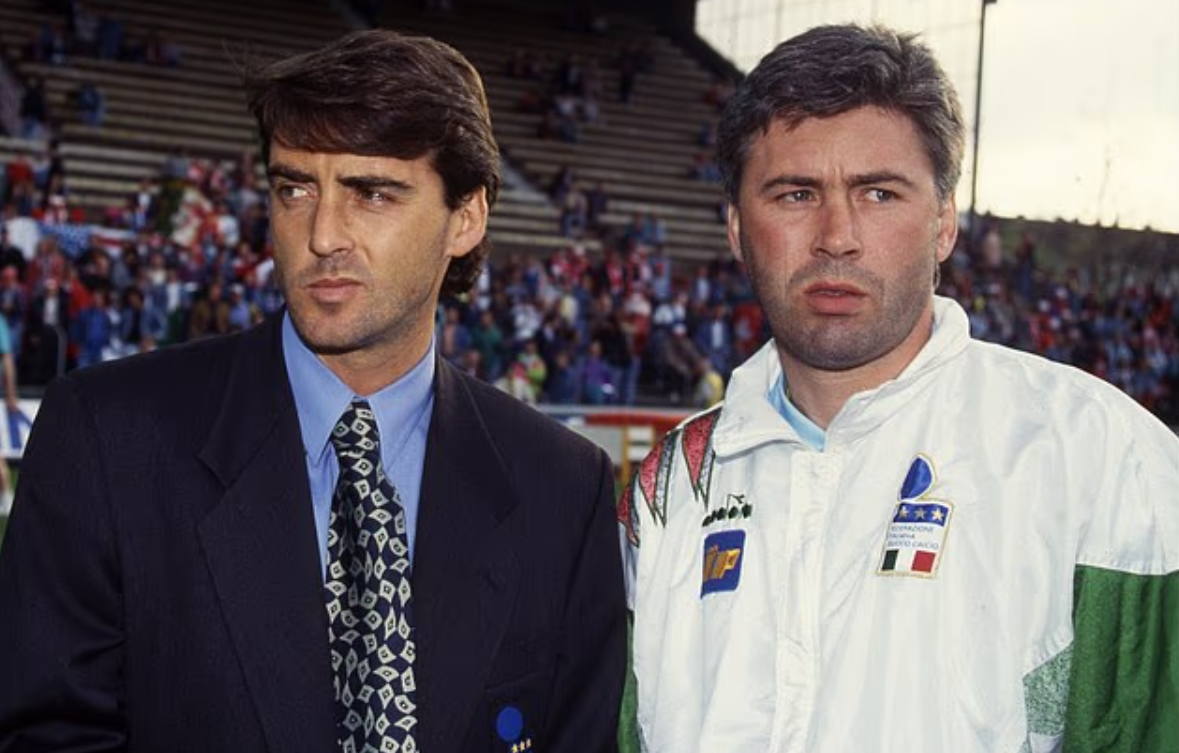 |
Carlo Ancelotti was assistant coach for the Italy national team when they reached the 1994 World Cup final. |
The idea to invite Ancelotti originated not from the CBF leadership, but from Fernandes. He first considered it after Brazil's 1-1 draw against Venezuela in a World Cup 2026 South American qualifier in 11/2024.
"Brazil played poorly, lacking identity or control," the businessman stated. "Players like Vinicius shine at Real but fail to perform for the national team. I believed Brazil needed a coach of sufficient stature for the players to trust completely, and Carlo was the top choice."
However, the plan faced public opposition. Brazil had won the World Cup five times with domestic coaches, and the sentiment against foreign coaches remained deeply ingrained. Fernandes acknowledged this as the biggest obstacle.
Undeterred, he approached Davide Ancelotti, Carlo's son and assistant, seeking a connection. Simultaneously, Fernandes sought out a figure of immense influence in Brazilian football: legend Zico. "They love Zico in Brazil," Fernandes explained. "He played in Serie A, competed against Carlo, and represents beautiful football. I knew Zico's voice could protect Carlo from public scrutiny."
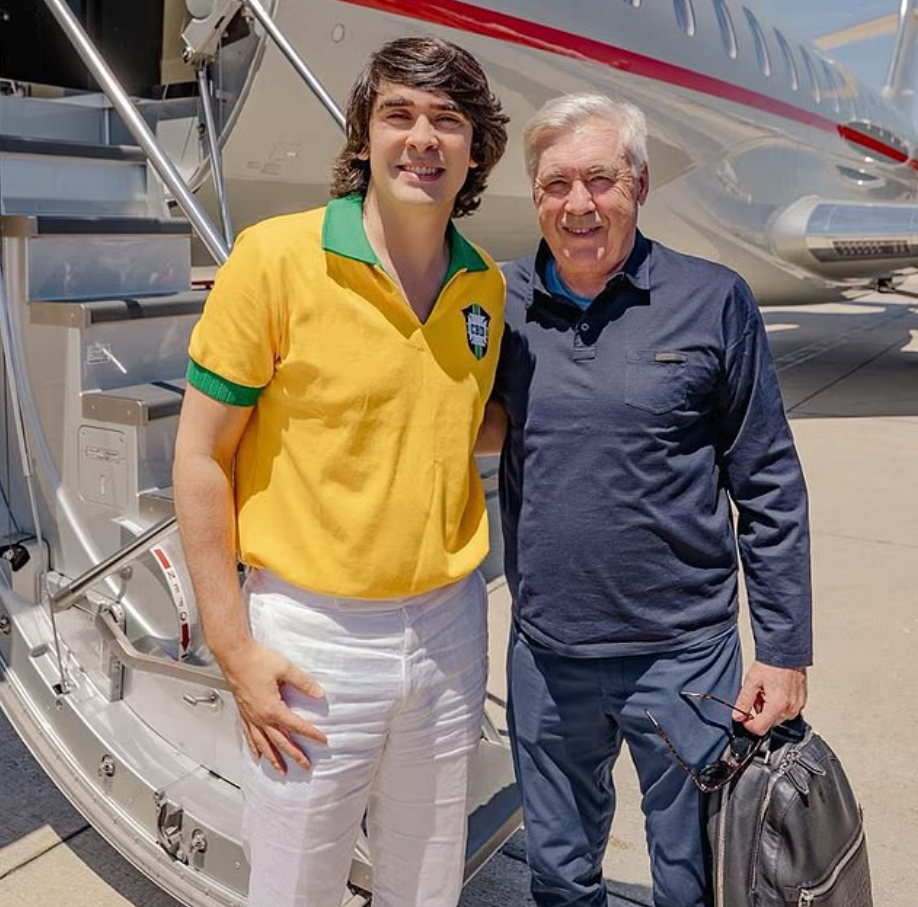 |
Coach Carlo poses with Diego Fernandes, the businessman central to the deal. |
Zico's involvement helped the plan progress, but Ancelotti still had a contract with Real and received numerous other offers, including financially lucrative proposals from the Middle East. This placed significant pressure on Fernandes.
To differentiate his approach, he decided to appeal to emotions. A film crew was dispatched to Brazil's favelas, capturing images of children playing football on empty lots. These scenes were interspersed with moments of fan despair from historic defeats: the 1998 World Cup final, and the 1-7 loss to Germany in the 2014 semifinals, featuring tears in the stands.
At the video's conclusion, the children looked into the camera and declared, "Carlo Ancelotti, we are waiting for you. You are the best coach for the Brazil national team."
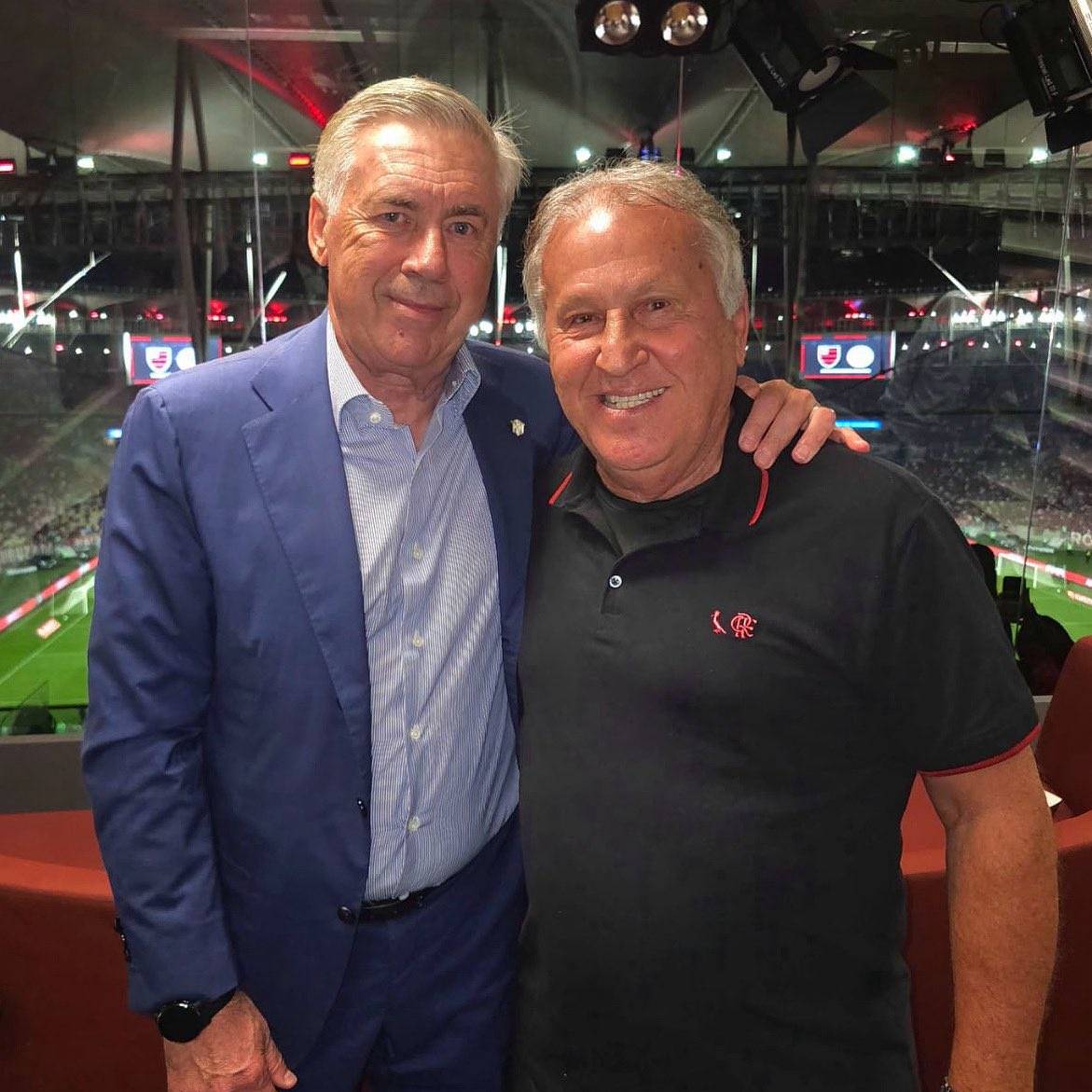 |
Coach Carlo Ancelotti poses with legend Zico at Maracana Stadium. |
A turning point occurred during a meeting at Ancelotti's Madrid home this spring. As Ancelotti prepared his signature pesto pasta, he and his wife watched the video. "After watching it, Carlo began recounting Brazil's football history to his wife," Fernandes recalled. "Just by looking into his eyes, I knew everything had changed."
The connection with Zico also held personal significance for Ancelotti. He once shared that as a young Roma player, he was tasked with marking Zico in a Serie A match.
"He told me he couldn't sleep all night," Fernandes recounted. "For 85 minutes, Carlo marked him tightly and played well. But in just one moment of carelessness, Zico controlled the ball with his chest and scored the decisive goal. That was Zico, needing only a second to make a difference."
The contract finalization process also encountered hiccups. On the day the two sides were exchanging final terms, Internet systems in Spain and Portugal experienced outages, preventing lawyers from confirming documents.
"Carlo's phone rang constantly; things changed by the hour," Fernandes stated. "It truly was not an easy day."
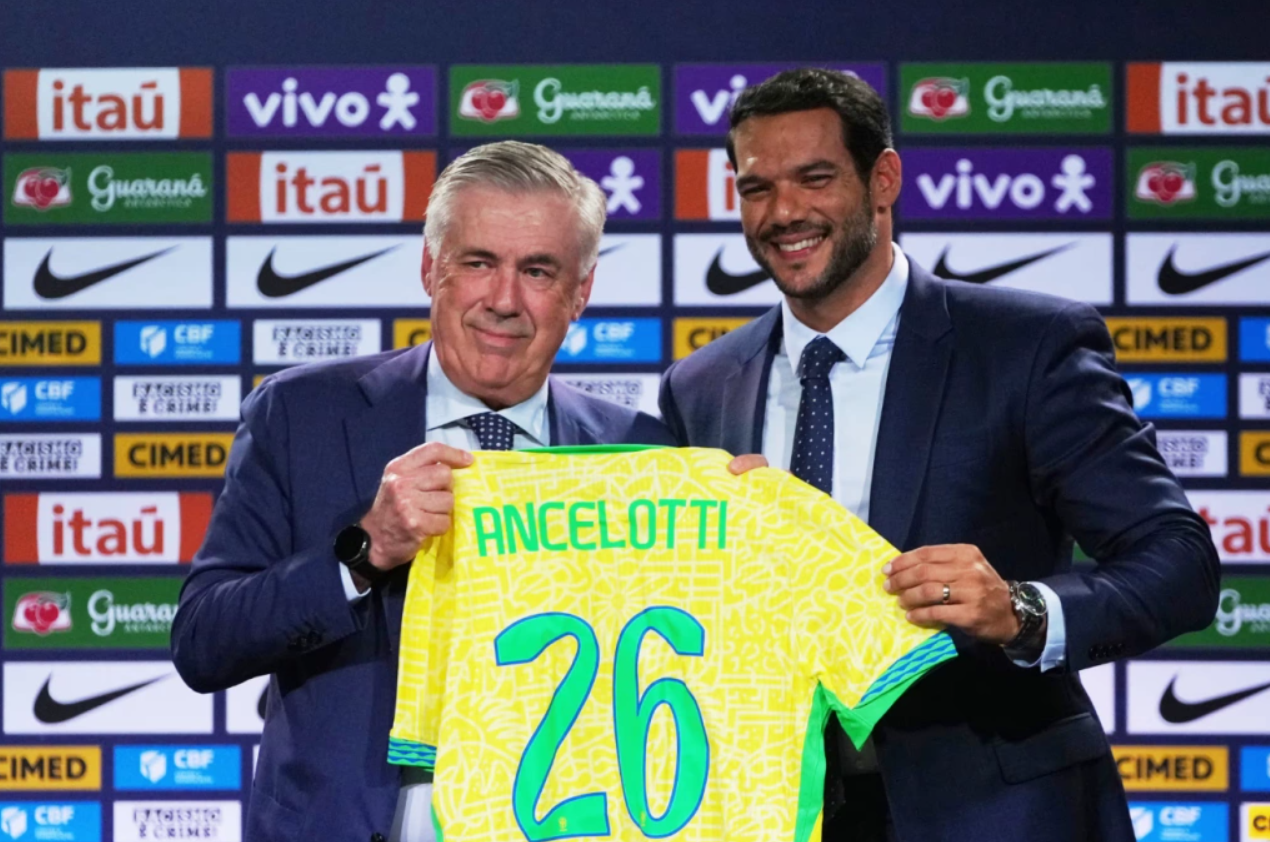 |
Coach Carlo Ancelotti (left) receives a Brazil jersey from Brazilian Football Confederation (CBF) President, Samir Xaud. Photo: AP |
Finally, on 12/5, the CBF confirmed Ancelotti signed a contract to lead the Brazil national team until the end of the World Cup 2026. Two weeks later, he and Fernandes flew to Rio de Janeiro, passing the Christ the Redeemer statue and Maracana Stadium.
"Many people tracked the flight on apps," Fernandes said. "When we landed, the airport was packed. They couldn't believe this was actually happening."
With Ancelotti, Brazil gambles on the experience and resilience of a coach who has won the Champions League five times. If the Selecao secures their sixth star, it will be a fitting reward for a deal built not just on money, but on trust and emotion.
Hong Duy (according to Daily Mail)