 |
Taste Atlas, an online gastronomic guide, has compiled a list of the 76 top pork dishes across Asia, offering a culinary journey for those planning to explore Eastern cuisine. Vietnam proudly features nine dishes on this prestigious list, showcasing the rich diversity of its pork-centric culinary traditions.
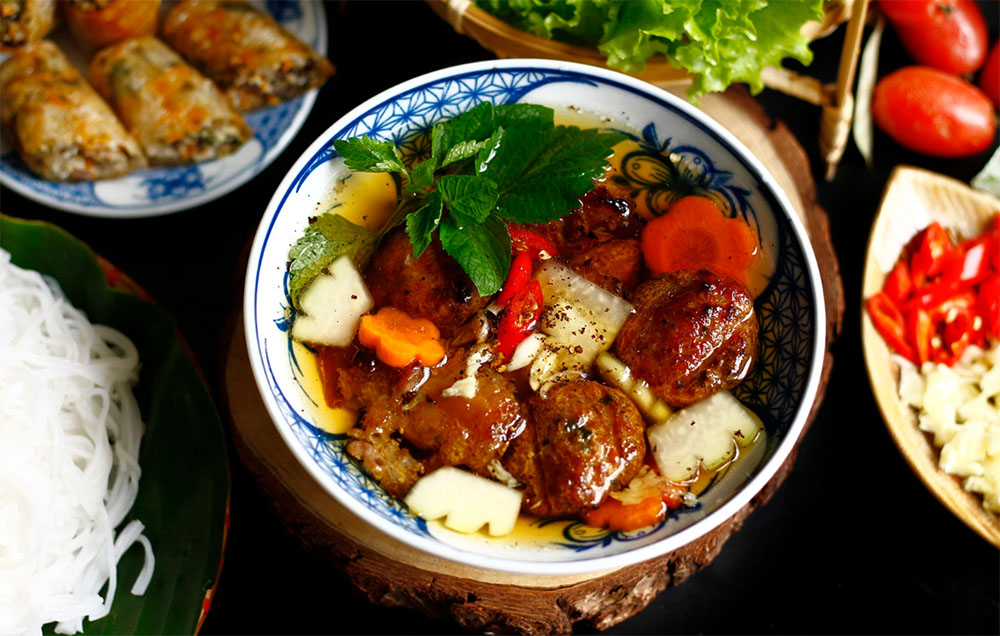
One of the most celebrated Vietnamese dishes on the list is bun cha, ranking 4th with a score of 4,3/5. This iconic dish combines grilled pork patties and slices with vermicelli noodles, served in a sweet and sour broth alongside fresh herbs. While available throughout Vietnam, Hanoi is particularly famous for its bun cha.
Bun cha gained international recognition after appearing on the program “Parts Unknown”, when late chef Anthony Bourdain and former U.S. President Barack Obama enjoyed the dish during their 2016 visit to Vietnam. Photo: Bui Thuy
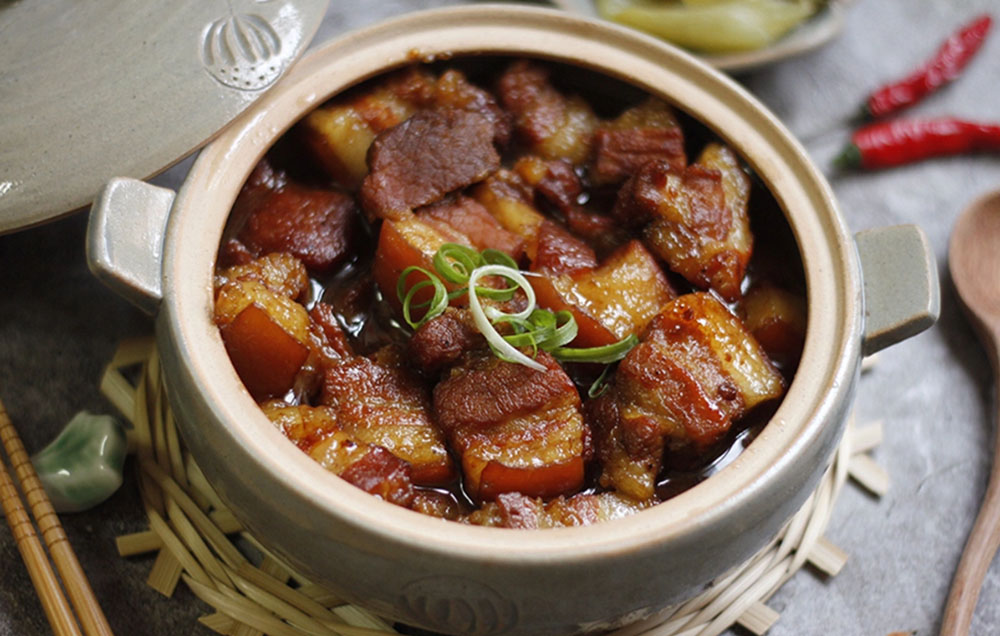 |
Thit kho tau, a braised pork and egg dish, secured the 20th spot. This savory meal features diced pork simmered in a rich, amber-hued caramelized sugar sauce, complemented by boiled eggs, shallots, soy sauce, sugar, fish sauce, and coconut water. Photo: Bui Thuy
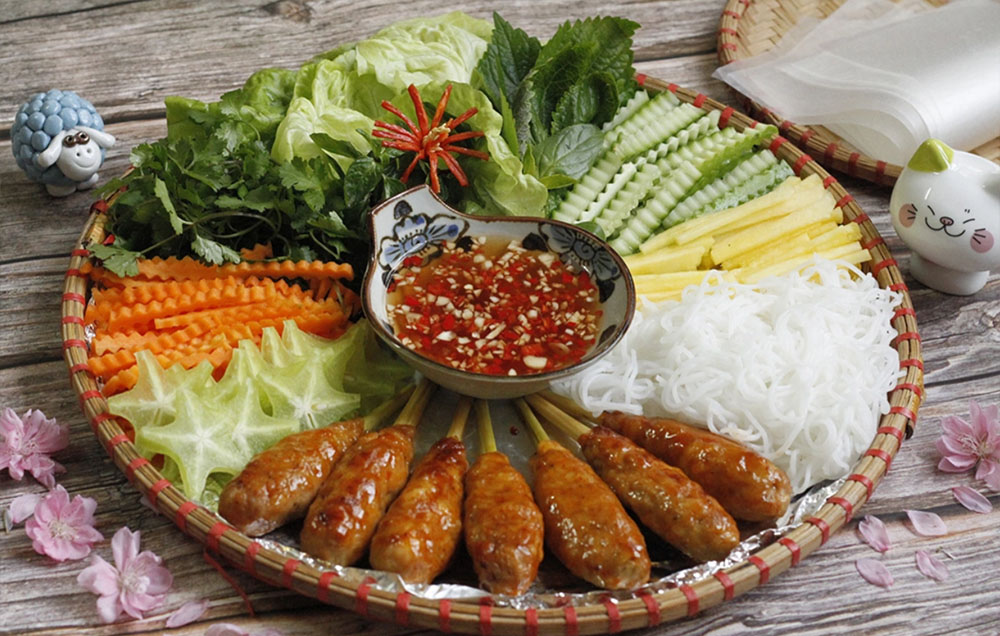 |
Nem lui, a specialty originating from Hue, ranks 24th with a score of 4,1/5. This dish consists of seasoned ground pork wrapped around lemongrass stalks, then grilled to perfection. Nem lui is typically served with fresh vegetables, rice paper, and a sweet and sour dipping sauce. Photo: Bui Thuy
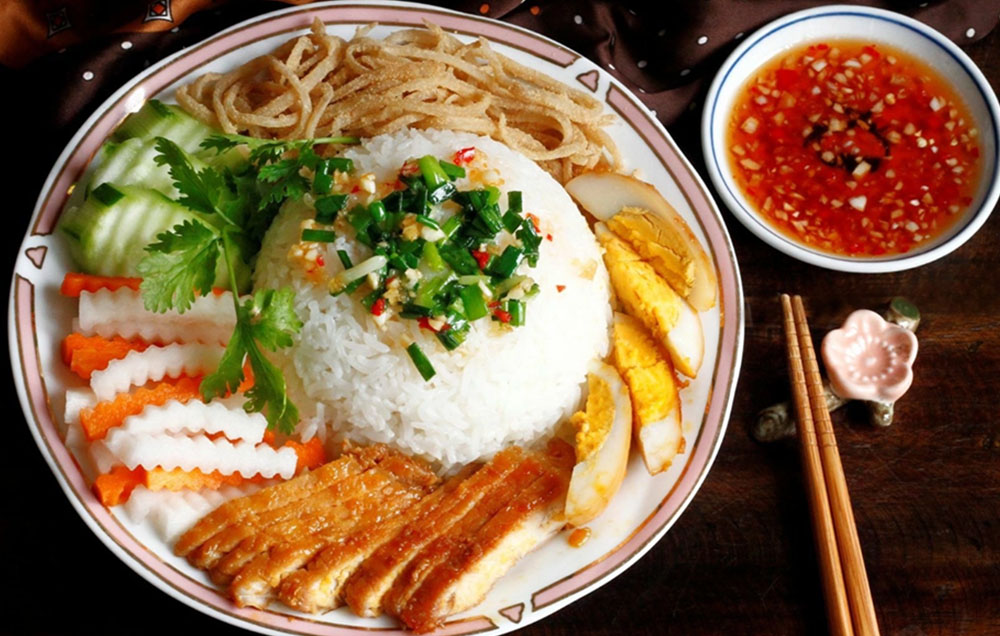 |
Com tam, a classic of Southern Vietnamese cuisine, holds the 29th position with a score of 4/5. Taste Atlas describes it as a hearty meal featuring grilled pork chops served with broken rice, sweet and sour pickled vegetables, fish sauce, and thinly sliced pork skin mixed with roasted rice powder. Photo: Bui Thuy
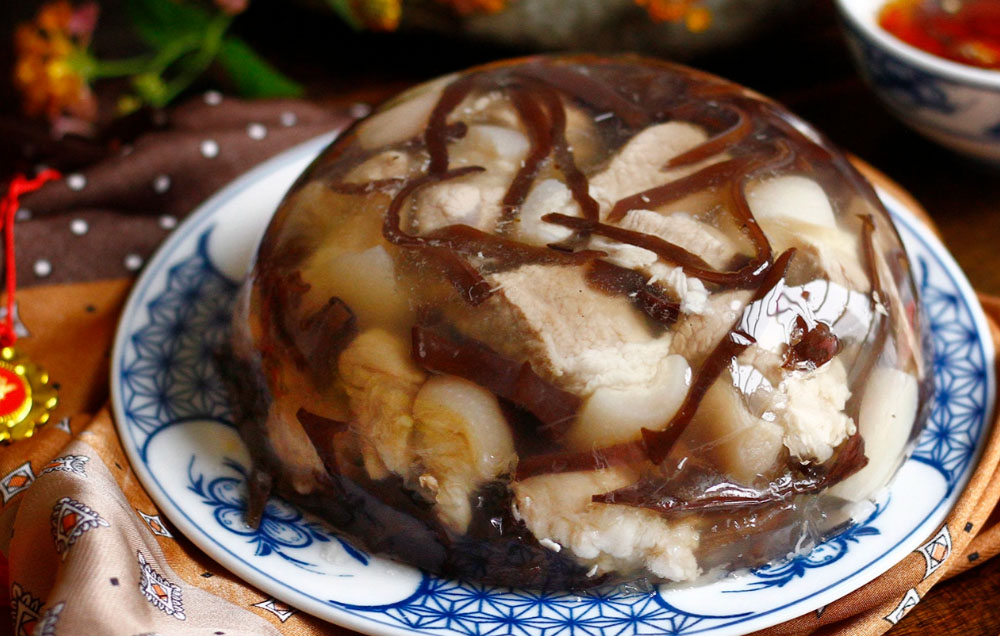 |
Thit dong, translated as "jelly meat", is a unique Vietnamese dish with a gelatinous texture. It is prepared by slow-cooking pork until tender with thinly sliced carrots, mushrooms, wood ear mushrooms, and various spices. The mixture is then allowed to cool and solidify, achieving a jelly-like consistency.
Vietnamese people often enjoy thit dong with rice during the Lunar New Year or in winter, accompanied by pickled vegetables. Photo: Bui Thuy
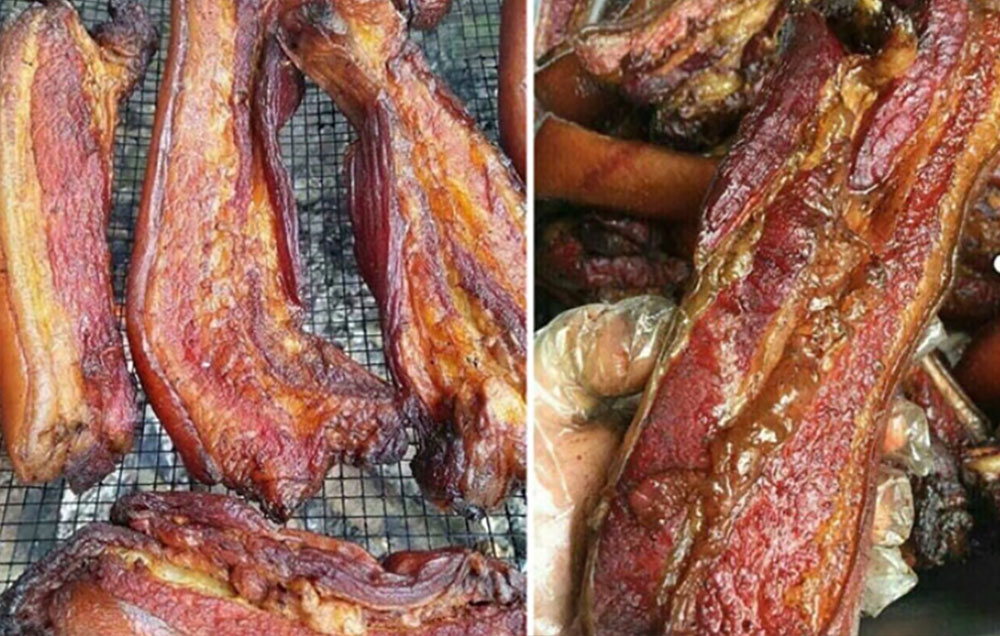 |
Cai meo xao thit lon gac bep, a familiar dish from the northern mountainous regions like Sa Pa, features stir-fried pickled mustard greens with smoked pork belly. This flavorful combination includes garlic, soy sauce, salt, and pepper, and is typically served with white rice. Photo: Lan Anh
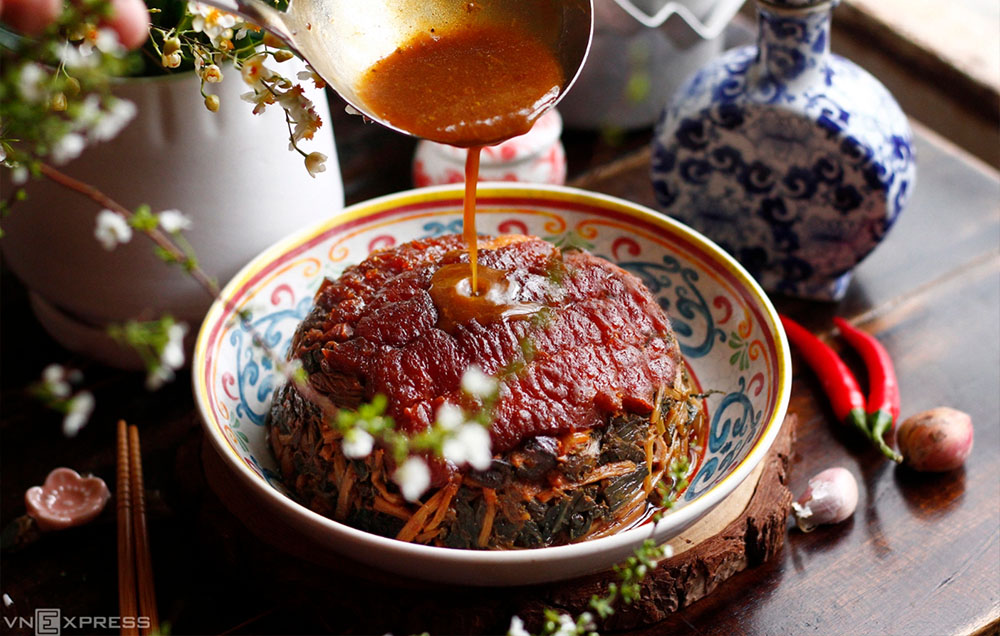 |
Khau nhuc, a tender, slow-cooked pork dish, is a renowned specialty in northern mountainous areas such as Lang Son and Quang Ninh. Originating from a braised pork dish in Guangdong, Trung Quoc, khau nhuc was adapted in Vietnam and became a staple for special occasions, holidays, and weddings.
The name khau nhuc derives from the Chinese pronunciation, where "khau" means steamed until soft, and "nhuc" means meat, indicating a dish of stewed or steamed tender meat. Photo: Bui Thuy
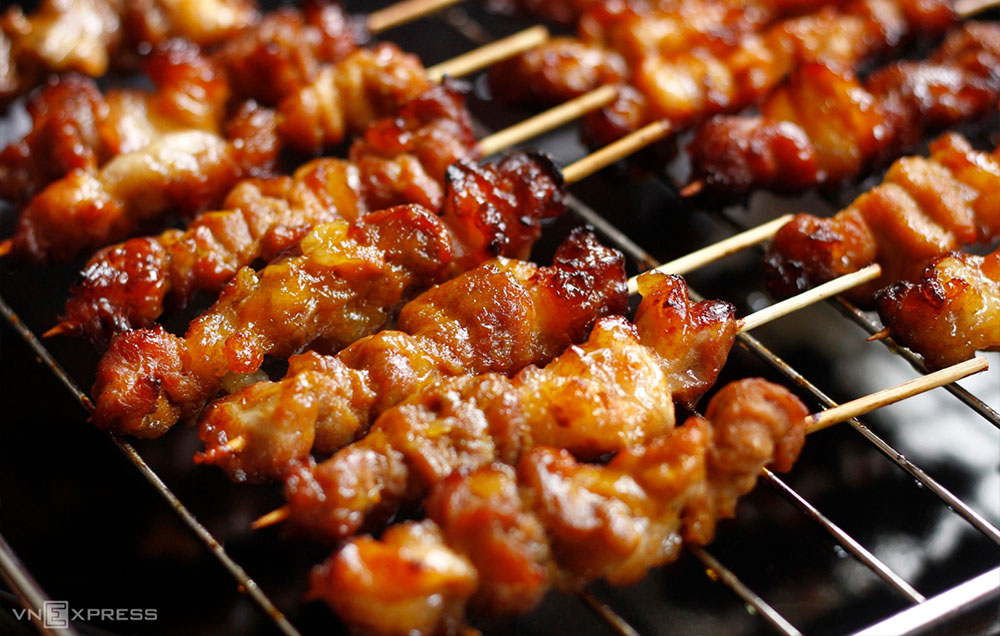 |
Thit xien nuong, or grilled skewered pork, is a local favorite in Sa Pa, ranking 74th on the list. This dish uses seasoned black pork, skewered and grilled over charcoal, served with sesame salt.
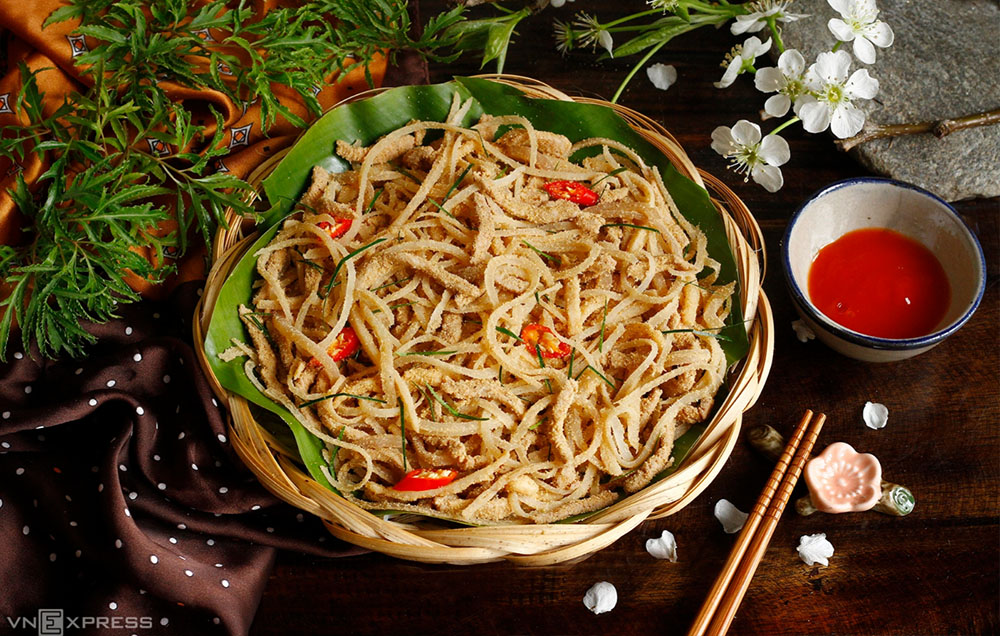 |
Nem Phung is the final Vietnamese dish featured, a specialty from Phung town, Dan Phuong district (now Dan Phuong commune), on the outskirts of Hanoi. This dish is often associated with a well-known folk verse: "Nem Phung with fig leaves / Makes travelers from four directions yearn for a time gone by."
The ingredients for nem Phung include pork (both lean and fatty), pork skin, sticky rice, plain rice, soybeans, and fig leaves. The rice selected for the roasted rice powder must be a good quality plain rice, with a small amount of "nep cai hoa vang" sticky rice.
The preparation involves mixing the roasted rice powder with the separated, finely chopped pork skin and pork. This mixture is then wrapped in fig leaves, followed by banana leaves, and tied with bamboo strips to form a "nem fruit". Photo: Bui Thuy
Established in 2015, Taste Atlas presents tens of thousands of dishes to readers based on evaluations and research by culinary experts, chefs, and diners.
It also connects over 9.000 local restaurants globally, celebrating local dishes from casual to high-end, sparking curiosity about new culinary experiences for travelers.
Anh Minh (According to Taste Atlas)