Dogs have long been trusted companions to humans. Leveraging this relationship, US Customs and Border Protection (CBP) utilizes detector dogs as a key tool for inspecting passengers and cargo. The primary goal is to prevent harmful plant pests and animal diseases from entering the country from abroad.
In 1984, the US Department of Agriculture (USDA) established the first "Beagle Brigade" detector dog program at Los Angeles International Airport. Beagle dogs and their mixes are favored for airport use due to their keen sense of smell, small size which doesn't intimidate, their love of food (making them easy to train), and their gentle nature with people.
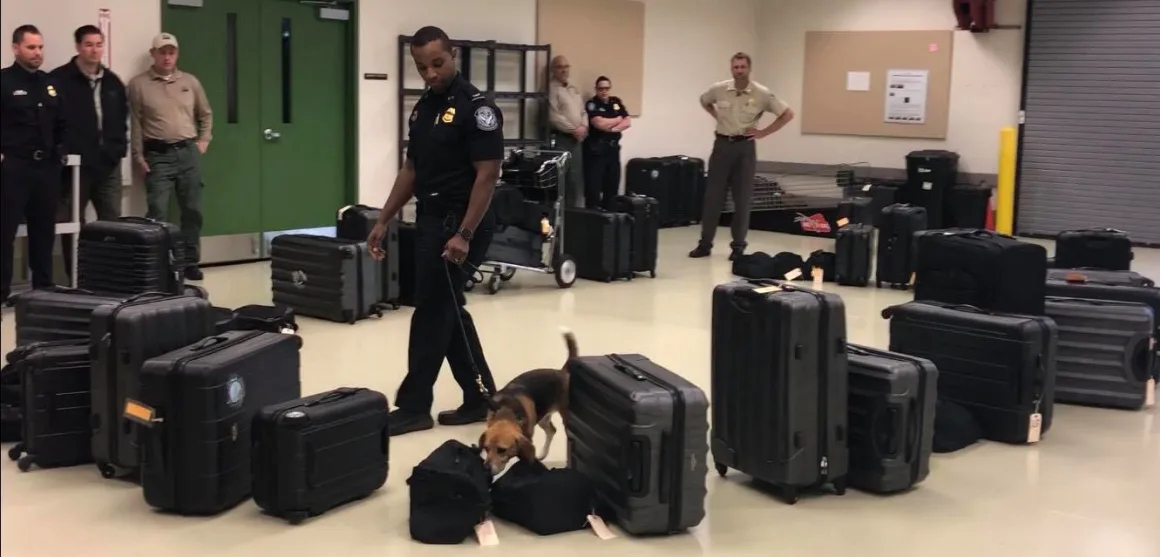 |
The Beagle Brigade at Hartsfield-Jackson Airport (Atlanta). Photo: CNN |
The dogs' ability to distinguish and focus on a specific scent—from an orange to a live snail—makes them invaluable assistants in finding hidden prohibited agricultural products. When searching for high-risk fruits, vegetables, plants, or meat from other countries, "the nose knows all". A well-trained agricultural detector dog can scan a piece of luggage for smuggled or forgotten fruit in seconds, while a customs officer would take longer to open and inspect it directly.
In 2023, the brigade had about 150 Beagle dogs and Beagle mixes. Statistics from 2022 show that the dogs detected and helped confiscate over 150,000 agricultural items, ranging from fruits and vegetables to concealed pork and beef. They are considered the "first line of defense" against foreign diseases, helping to protect tens of billions of USD in US agricultural exports.
Joseph Chopko, a detector dog training officer, explained that fruits can carry pests like the Mediterranean fruit fly, which devastates domestic agriculture. With no natural predators, this species multiplies rapidly. Meanwhile, pork and related products can carry pathogens from African swine fever.
"Not only would billions of USD vanish, but many people would also lose their jobs if the disease spread", he said.
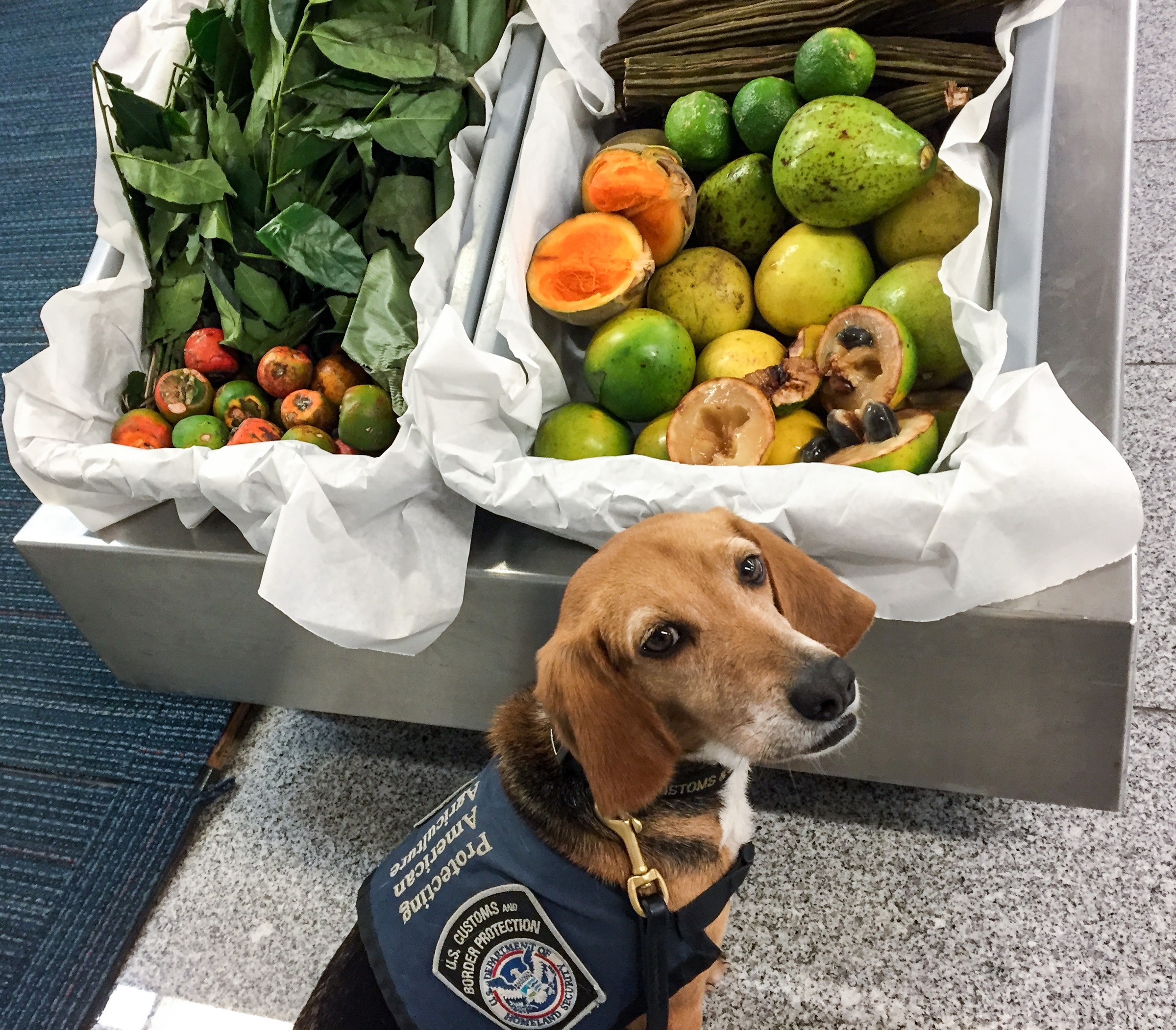 |
A Beagle dog at Hartsfield-Jackson Airport. Photo: AJC |
Dogs receive training at the National Detector Dog Training Center in Newnan, Georgia. They learn to recognize five basic scents: apple, mango, citrus, pork, beef, and specific regional odors. A major advantage is their super-sensitive sense of smell combined with speed, allowing them to check dozens of suitcases in mere seconds.
Depending on the work environment, dogs are taught different reactions upon target detection: a passive reaction, where the dog sits to signal; or an active reaction, where the dog scratches with its paw to indicate. Dogs in the team are recruited when they are one to two years old, possessing a friendly temperament—neither shy nor aggressive—and typically retire at 9 years old. A crucial criterion is that the dog must enjoy snack rewards but must not be greedy or growl when seeing food. All items they sniff out are destroyed after being documented.
In Asian destinations like Thailand and Taiwan, Beagles are also widely used at airports.
Travelers entering Taiwan will see a giant Beagle dog model placed directly in the baggage claim area of Taoyuan Airport, serving as a reminder about prohibited items. This dog team has been working since 2002 to control agricultural products and invasive pests. Statistics show they handle up to 90% of the work in detecting illegal items.
In 2015, these Beagle dogs were also tasked with finding fire ant nests that gnaw on electrical wiring, posing a threat to aviation safety. By combining Beagles for searching and potato chips to lure ants from their nests, Taoyuan Airport controlled 98 percent of the fire ant population.
The Department of Livestock Development of Thailand launched a detector dog force at Suvarnabhumi Airport, Bangkok, comprising 14 Beagle dogs in 2022. That year, they detected a shipment containing 100 kg of pigeon meat from Saudi Arabia. On 16/12/2025, this task force also drew attention when it detected a suitcase containing pork sausage and pork from a traveler from TP HCM at Suvarnabhumi Airport.
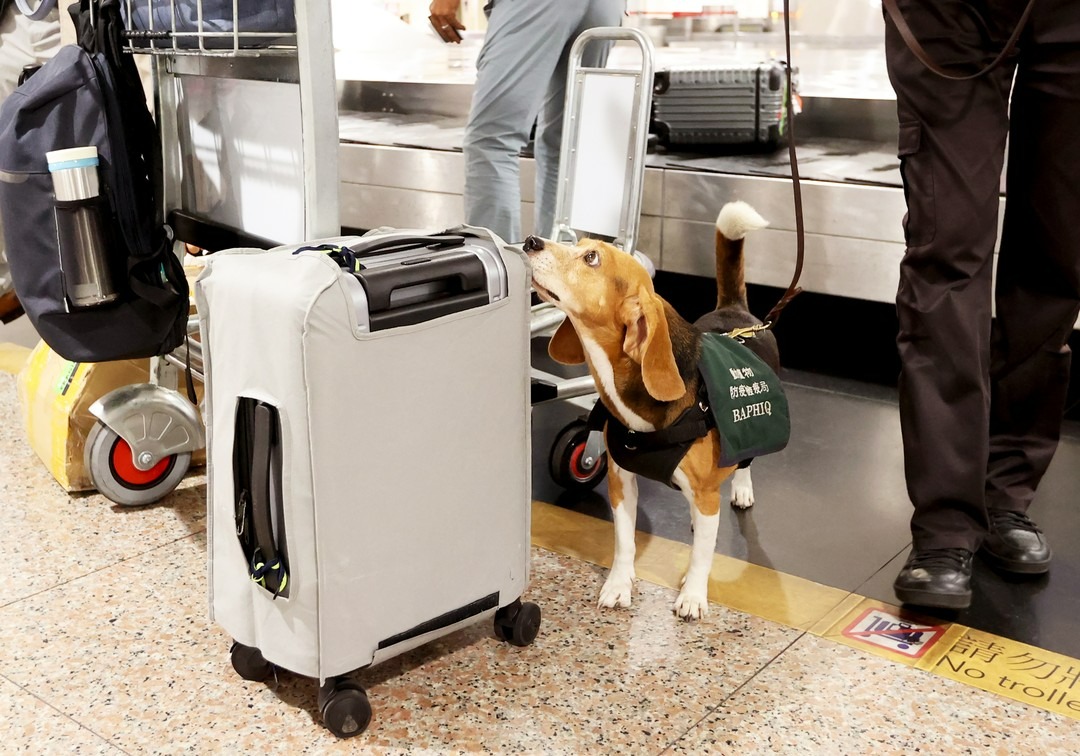 |
Beagle dogs at Taoyuan Airport. Photo: Taoyuan Airport |
Currently, the US agricultural detector dog program has expanded to over 180 teams, operating at border crossings, passenger train stations, cargo warehouses, and international postal facilities to protect national agricultural security.
Notably, all detector dogs at the National Detector Dog Training Center (NDDTC) near Atlanta are adopted from shelters or donated by private individuals.
While you affectionately observe a small Beagle dog at the airport, it is likely sniffing out a mango hidden at the bottom of a nearby passenger's suitcase. Every day, these "four-legged warriors" contribute to protecting the nation's agriculture directly from the airport.
Hoai Anh (According to CNN, CBP, The Smart Local, Shibasenji)