On 5/8, Ly Son District authorities announced they had investigated and addressed a 30-year-old Chinese tourist who drove a motorbike onto the To Vo Arch national relic.
When questioned, the tourist claimed to understand neither English nor Vietnamese, and therefore did not comprehend the warning signs prohibiting climbing in the area. Officials documented the incident, delivered a formal warning, and secured a commitment from the tourist against future infractions.
To Vo Arch was designated a national relic in 2025, leading local authorities to ban climbing to preserve its geological structure and ensure visitor safety. In April, Ly Son District authorities installed warning signs and have consistently reminded tourists to respect the site.
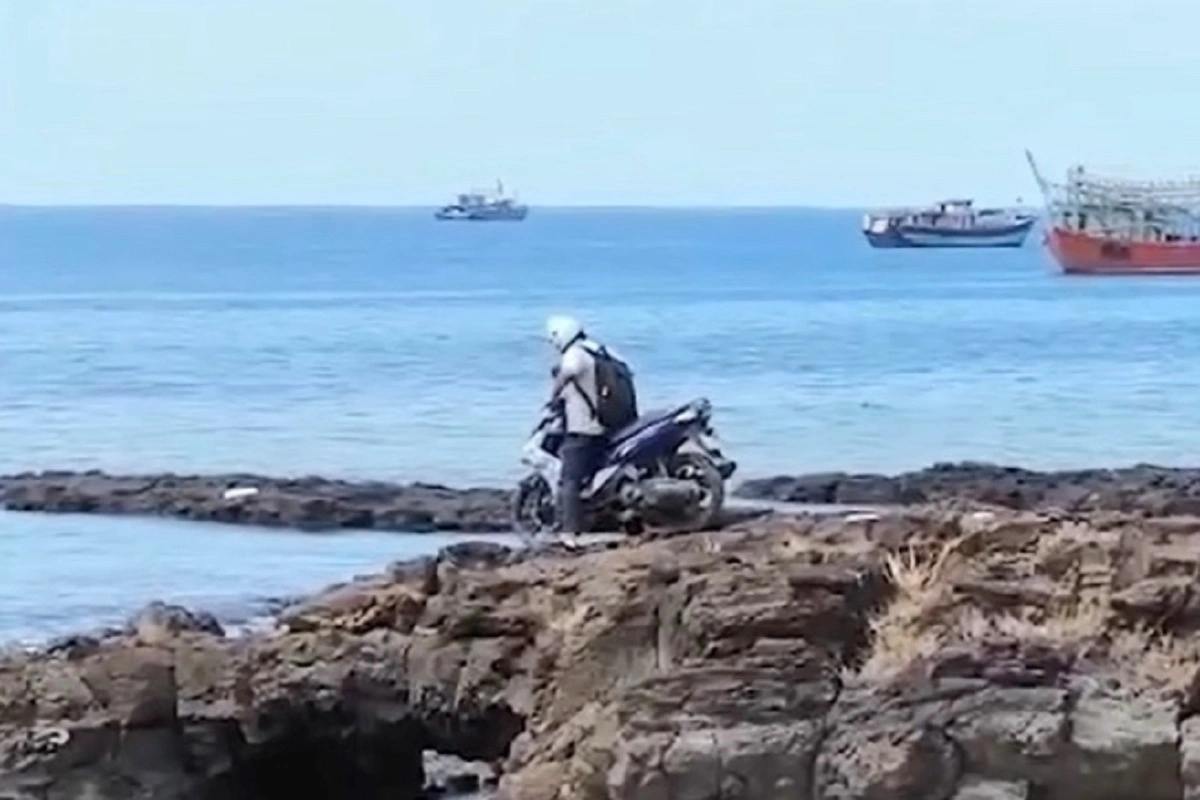 |
An image of the Chinese tourist riding a motorbike onto the To Vo Arch rock formation, captured by Ly Son residents. *Screenshot from video* |
Despite these measures, instances of visitors climbing To Vo Arch persist. In July, several groups were observed scaling the rock arch for photos, disregarding warnings from bystanders.
According to Vo Thi Huong, Deputy Head of the Ly Son District's Culture and Information Department, tourist sites on the island currently lack permanent security personnel. Consequently, site management largely depends on visitors' self-awareness. For those climbing To Vo Arch, authorities can only issue warnings, as specific penalty regulations are not yet in place.
To Vo Arch is a unique natural landmark, formed by ancient volcanic eruptions and shaped over millennia by relentless ocean wave erosion. This basalt arch, approximately 9 meters long and 2,5 meters high, is situated on the western side of Dao Lon (Big Island), its creation spanning tens of millions of years and influenced by sea level changes dating back 6,000 years.
To enhance visitor experience and protection, Ly Son District is undertaking a project to upgrade To Vo Arch into a more structured tourist attraction. The project, slated for completion in Q3, will include designated visitor pathways and the deployment of personnel for site management and protection.
Pham Linh