The Dutch-flagged MV Hondius cruise ship departed Ushuaia port in Tierra del Fuego province, southern Argentina, on 1/4. Five days later, a 70-year-old Dutch tourist fell ill while traveling with his wife. Previously, the couple had gone bird watching in various locations across South America. The patient exhibited hantavirus symptoms, a rodent-borne virus.
The man, his wife, and another passenger subsequently died. The incident evoked memories of the Covid-19 pandemic, though health experts state the two viruses share few similarities.
 |
Ushuaia city from above. Photo: AP |
The search for the outbreak's source is now focused on Ushuaia. However, local officials assert that the likelihood of the Dutch couple contracting the illness during their 48-hour stay in the city before boarding the ship is "almost zero."
On 11/5, a thin layer of snow began to cover the area, signaling the approaching ski season and the gradual end of the tourist season. The last of the 500 cruise ships that dock in Ushuaia annually have departed. Currently, only small boats remain, carrying tourists to visit sea lion colonies and seabirds on nearby islands.
"Everything seems fine," stated Cardona, a Colombian tourist traveling with his wife on a cruise ship to Argentina. Despite this, he and his wife wore masks to stay warm and prevent hantavirus infection. Meanwhile, tourist Silvina Galarza from Concordia city reported seeing few people wearing masks.
 |
A corner of Ushuaia city |
Tierra del Fuego provincial officials asserted that the city could not be the origin of the outbreak. They highlighted that the first Dutch patient fell ill five days after leaving port. According to the World Health Organization (WHO), the hantavirus incubation period ranges from one to six weeks, most commonly two to three weeks.
Local officials also stated that Tierra del Fuego has not recorded any hantavirus infections since 1996. The long-tailed colilargo mouse, which carries the Andes strain capable of human-to-human transmission, primarily inhabits Argentina's northern provinces. However, questions remain regarding a local subspecies of mouse. An Argentine expert team is expected to arrive in Ushuaia in the coming days to test samples for the virus.
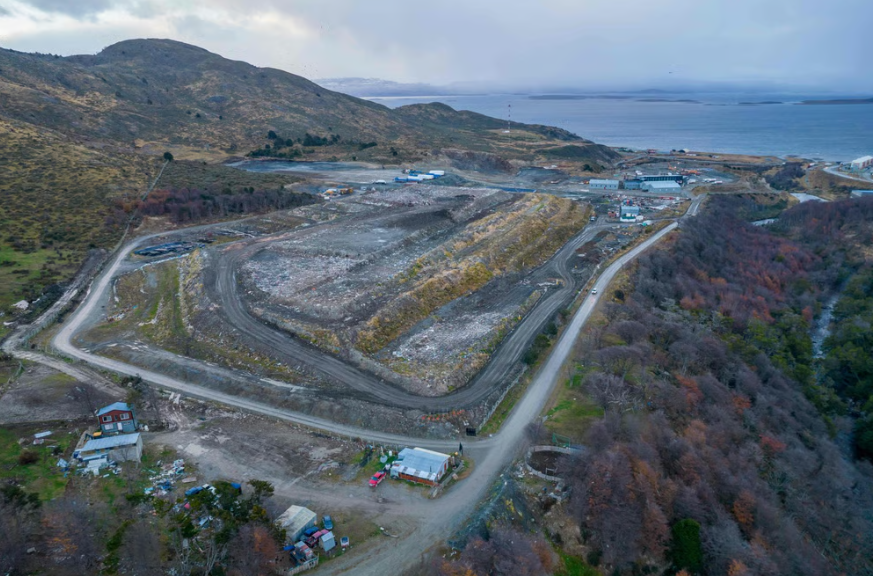
A landfill located approximately 6 km from Ushuaia is becoming a focus of speculation. Local media reported that the Dutch couple might have visited this site to find native bird species like the white-throated caracara.
[VIDEO_445491]
Inside the MV Hondius cruise ship. Video: NTD News
The partly open-air landfill attracts many scavenger birds. This area is surrounded by barbed wire fencing but can still be accessed via several dirt roads. Although no official tours exist, regional tourism head Juan Manuel Pavlov stated he had heard of some tour companies taking visitors there to find rare birds.
However, Guillermo Deferrari from the Ushuaia Scientific Research Center dismissed the landfill-related hypothesis. He explained that colilargo mice are herbivores, living on seeds and fruits in forest ecosystems, not in landfills like common rats.
Nevertheless, persistent doubts continue to worry local tourism businesses. Angel Brisighelli, a cruise company manager, stated: "Clearly, a destination being associated with disease spread is not a good thing."
He noted that despite officials downplaying Tierra del Fuego's involvement in the outbreak, public attention remains focused on the MV Hondius's departure from Ushuaia.
Ushuaia is surrounded by the Martial mountain range and the Beagle Channel, with a population of nearly 75,000. Located at 54 degrees South latitude, it is considered the world's southernmost city and is often referred to by Argentinians as "the end of the world."
The city's slogan is "Ushuaia, fin del mundo, principio de todo" (The end of the world, the beginning of everything). Tourist Luis Cardona affirmed that virus or not, he would still be willing to return to the city.