Guangzhou is renowned for its stewed soups, chicken hotpot, and late-night dining culture (ye xiao). Durian chicken hotpot has become increasingly popular on local restaurant menus over the past 10 years.
The dish combines Qingyuan chicken, a famous breed from Guangdong province, with fresh durian imported from Southeast Asia. This unique combination initially deterred many diners due to durian's strong aroma but has gradually become a draw for tourists seeking novel culinary experiences in southern China's gastronomic capital.
Cantonese people traditionally cook chicken with coconut, traditional Chinese herbs, or light-flavored soups. As durian imports from Southeast Asia surged from 2023, durian-infused hotpots and stews became increasingly common. According to SCMP, in 2023, China imported over 1,4 million tons of fresh durian, with 929,000 tons from Thailand and 493,000 tons from Vietnam.
China remains the world's largest durian importing market. Customs data indicates the country imported approximately 6,99 billion USD worth of durian in 2024.
The main ingredients for durian hotpot include chicken, bone broth, and fresh durian flesh. Many local establishments use Qingyuan chicken for its firm, lean meat that retains sweetness after prolonged simmering.
The broth also incorporates coconut water or ingredients like red dates and goji berries. Once the water boils, fresh durian flesh is added directly to the pot. Under heat, the fruit's pulp gradually dissolves, creating a light yellow color and a characteristic thick consistency for the hotpot broth. Some restaurants briefly stir-fry the chicken over charcoal to enhance its aroma before adding the broth and durian.
Some variations of durian chicken hotpot utilize the white pith inside the durian's hard, spiky rind. This pith, once the sharp thorns are removed, is simmered with the broth to impart a subtle sweetness.
Contrary to many diners' initial expectations, durian chicken hotpot does not taste like a dessert. When cooked, the durian's pungent aroma mellows, transforming into a creamy, buttery flavor. The chicken retains a slight chewiness, and the broth becomes richer and thicker than traditional chicken hotpots.
To balance the richness and "heatiness" (a concept in traditional Chinese medicine), diners often add mustard greens or bok choy. Starches like noodles or rice vermicelli are typically added at the end of the meal to absorb the thick durian sauce.
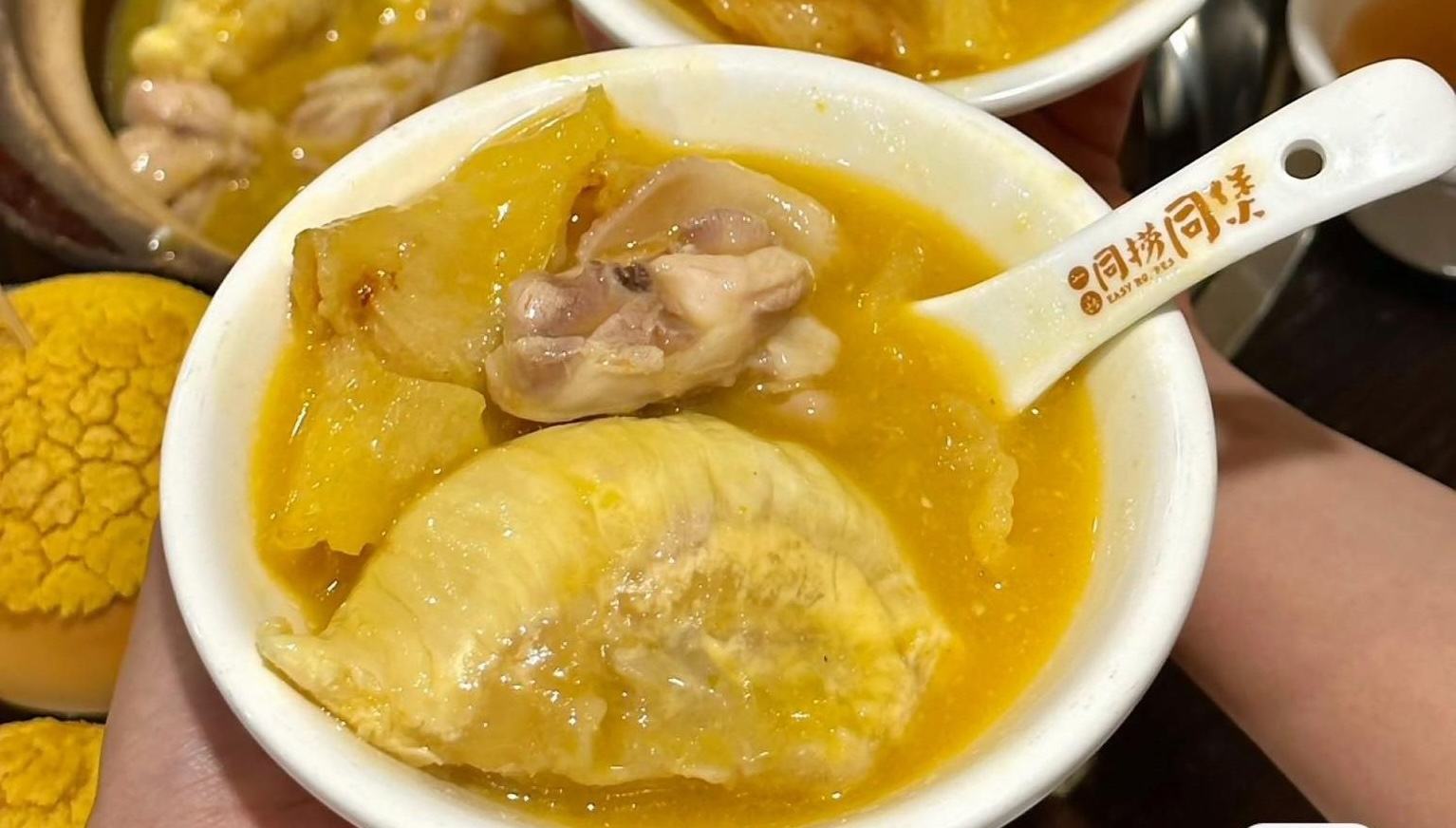 |
Chicken hotpot cooked with durian. Photo: Let's go travel |
Durian chicken hotpot is frequently found in the food districts of Panyu, Yuexiu, and some older residential areas of Guangzhou, serving groups for dinner or late-night meals.
The cost for a hotpot serving a group of two to three people ranges from 180-260 Chinese Yuan (26,5-38,3 USD). This price can increase to 350 Chinese Yuan if diners request premium durian varieties like Musang King.
The dish's influence has extended beyond China's borders to destinations with large Chinese communities, such as: Singapore, Auckland, and Kuala Lumpur. Sum Made restaurant in Auckland added durian hotpot to its winter menu from 2024, experiencing a significant increase in customers after the dish went viral on social media. In Kuala Lumpur, Malaysia, some restaurants have also developed durian chicken hotpot as a variation combining herbal hotpot with local ingredients. Claypot Sifu restaurant serves a version using coconut milk, free-range chicken, and Musang King in a clay pot.
By Mai Phuong (Source: SCMP, Xinhua)