In August 2025, a family of nine in Yunnan was hospitalized in critical condition after consuming wild-picked mushrooms. This incident was not isolated in the region. Each rainy season, from june to september, southwestern Chinese provinces like Yunnan enter their mushroom season, bringing a wave of food safety risks.
Despite continuous government warnings sent via phone, advising residents "do not pick, sell, or eat strange, high-risk wild mushrooms," poisoning incidents remain common. From 1978 to 2010, authorities recorded over 400 deaths in the area attributed to "Yunnan sudden death syndrome." Victims often experienced sudden cardiac arrest at the onset of the rainy season, with no apparent cause.
Following extensive research, experts identified the culprit as a small white mushroom, scientifically named *Trogia venenata*. Another theory suggests victims were poisoned by Barium, a heavy metal absorbed by mushrooms from the soil. The combination of toxins from this mushroom and Barium accumulated over multiple meals is believed to have caused these unexpected deaths.
In 2024, the trend "come to Yunnan to eat mushrooms" gained popularity on social media. However, alongside the culinary allure, numerous reports documented cases of hallucinogenic poisoning, most commonly described as seeing "little people," after consuming unidentified wild mushrooms.
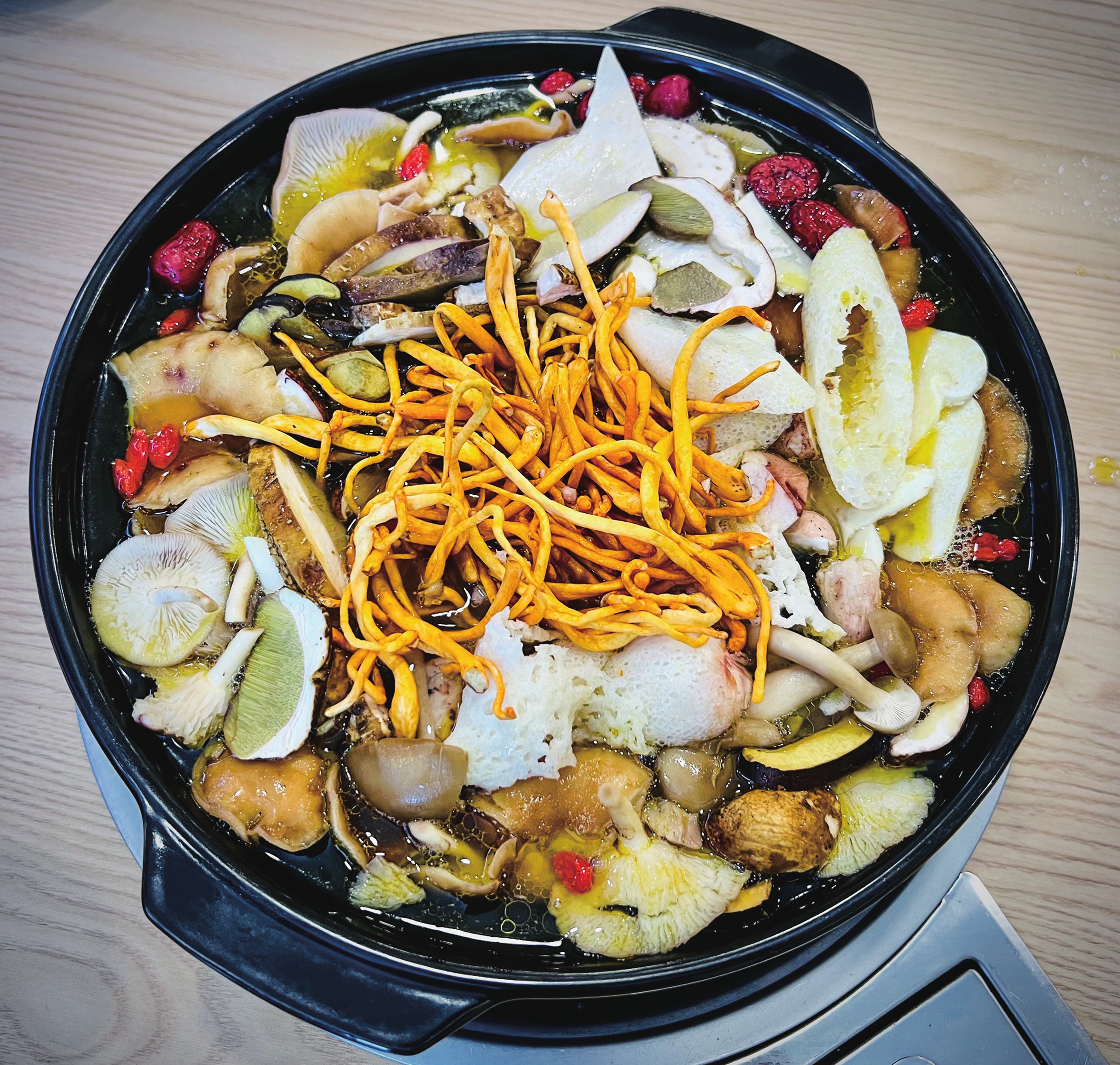 |
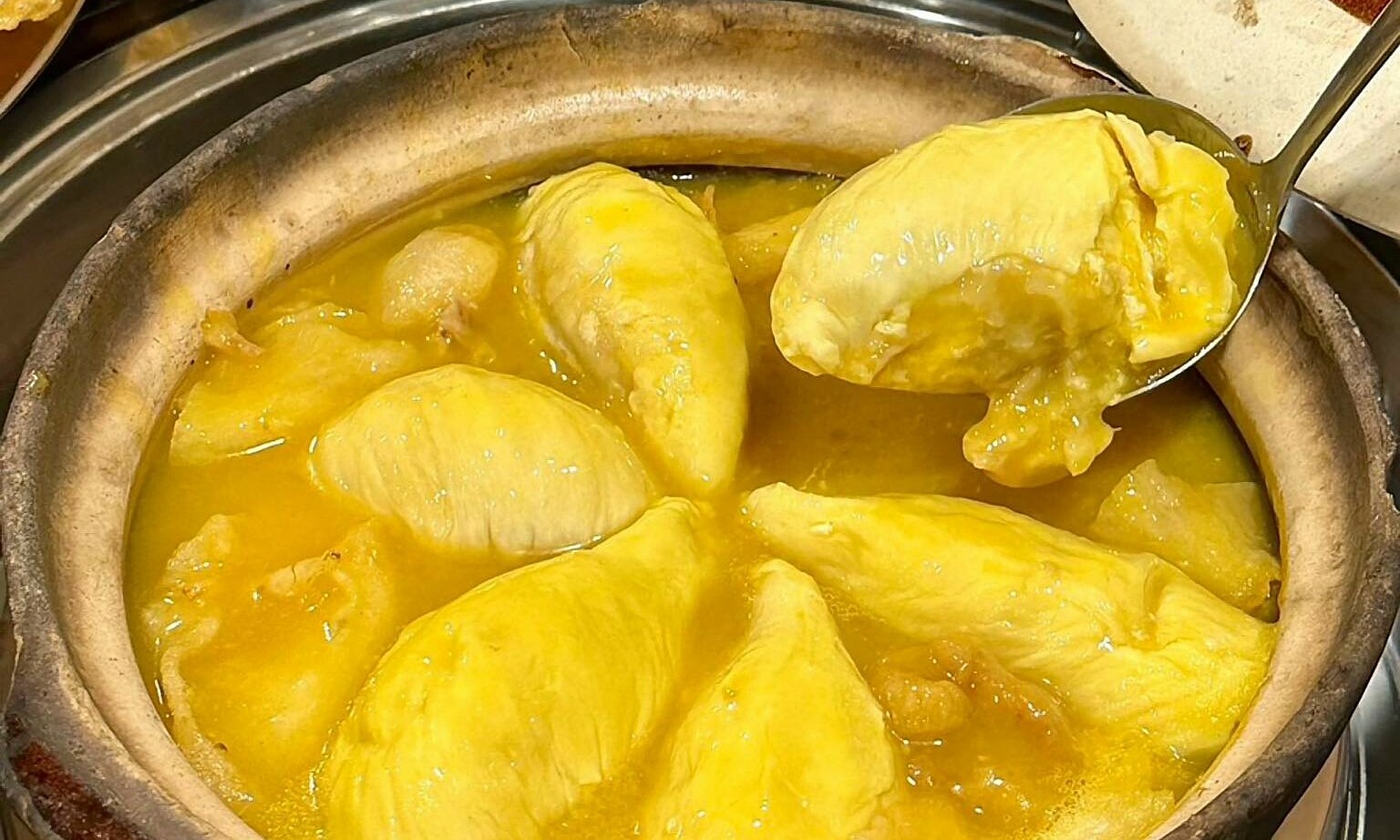
Yunnan mushroom hotpot. *Photo: Global Times* |
Shi Jun, a member of the Science Communication Committee of the Chinese Botanical Society, explained that seeing "little people" is a neuropsychiatric reaction to mushroom poisoning. He emphasized, "that's not the only symptom. Eating poisonous mushrooms can also cause death."
China has a long history with mushrooms, dating back thousands of years. At three Neolithic sites in Zhejiang province, archaeologists unearthed five specimens believed to be lingzhi (*Ganoderma lucidum*). Analysis revealed that ancient inhabitants were gathering and using lingzhi as far back as 6,800 years ago.
This rich heritage is particularly strong in Yunnan, often called the "kingdom of wild mushrooms." Of the approximately 2,500 edible wild mushroom species found globally, Yunnan alone is home to over 900 species. This represents about 36% of the world's total diversity and nearly 90% of all known Chinese mushroom varieties.
Geography plays a key role in Yunnan's abundant mushroom growth. The province is situated on a low-latitude plateau, where significant day-night temperature differences and high humidity create ideal conditions for fungi. Its rugged terrain, with mountains covered in forests, provides a rich supply of leaf litter and organic matter, further fostering mushroom proliferation.
According to Shi Jun, mushrooms often have a meat-like texture due to polysaccharide compounds. Their inherent sweetness comes from amino acids like glutamic acid and aspartic acid, combined with various nucleotides.
Zhu Yi, an associate professor of food safety and nutrition at China Agricultural University, noted that the distinctive flavor of wild mushrooms is derived from trace elements, humus, and root secretions present in their natural environment. The synergy of these components creates a complex profile of concentrated flavors.
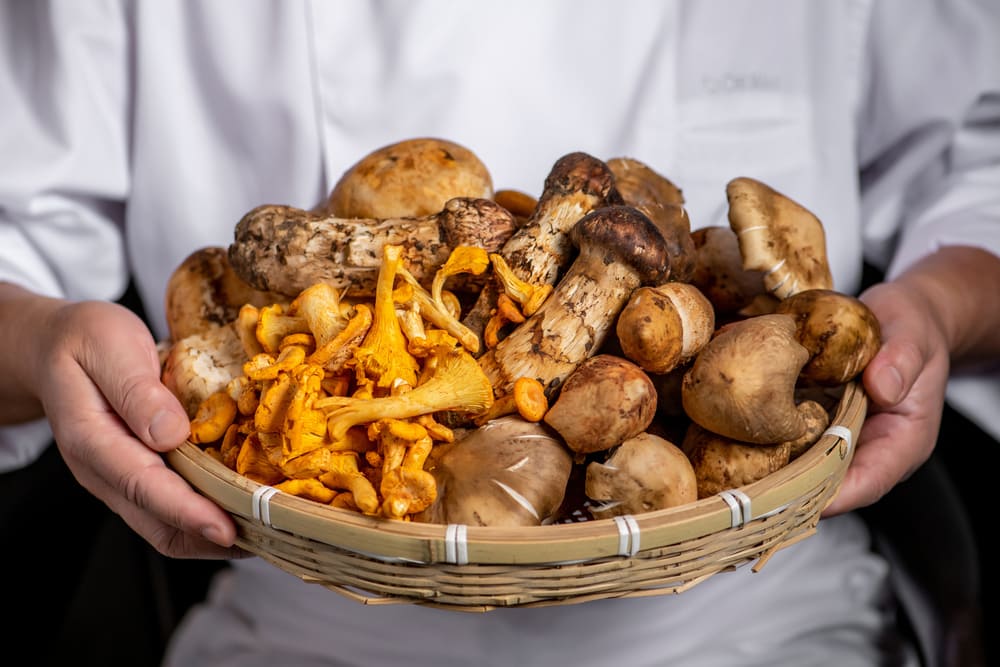 |
Mushroom dishes at a restaurant in Yunnan. *Photo: Michelin Guide* |
Despite their culinary appeal, the risk of mushroom poisoning remains ever-present. China currently identifies over 500 species of poisonous wild mushrooms, with Yunnan alone accounting for more than 200 species, over 20 of which contain potent toxins.
Attempting to identify wild mushrooms independently carries significant risk, as many species share similar appearances, making differentiation difficult. A common misconception is that high temperatures can neutralize all toxins.
In reality, thorough cooking only detoxifies certain species, such as Jian Shou Qing mushrooms. For many other types, particularly gilled mushrooms, the toxins are highly stable and resist breakdown even when thoroughly boiled or steamed.
Hoai Anh (According to Global Times, Australian Geographic)