Sophie Axon, a British traveler, has identified five common traits among the world's happiest countries, as ranked by the World Happiness Report 2026. After living in Denmark for six years and traveling extensively through Iceland, Finland, Sweden, and Norway, Axon observed that happiness in these nations is not a coincidence. Instead, it is deeply embedded in their systems, landscapes, and communities, shaping the rhythm of daily life. She noted that life in Nordic countries often feels as though someone has pressed a "pause" button, characterized by a slow and tranquil pace.
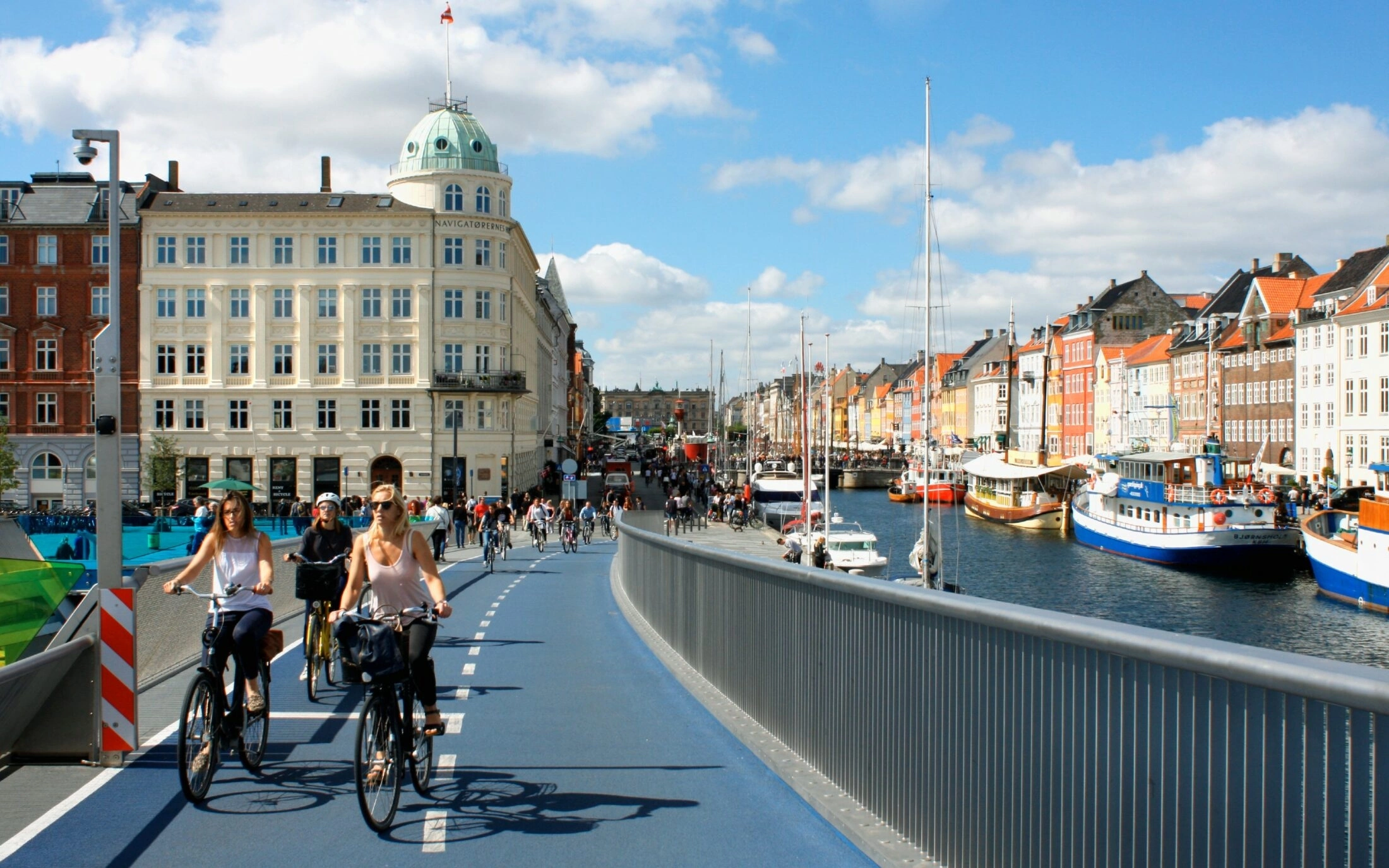 |
People cycling in Copenhagen, Denmark. *Photo: Storage* |
**Embracing timeless philosophies**
A key characteristic of these happy nations is their commitment to timeless philosophies rather than fleeting trends. In her six years in Denmark and over 10 years researching Nordic culture, Axon found that philosophical concepts like Hygge, Fika, Lykke, and Friluftsliv have permeated popular culture. These philosophies describe feelings of calm, comfort, happiness, warmth, or slow living and relaxation. Initially, Sophie thought these were just trends, but after moving to Denmark and living with a local and a Swedish visitor, she realized how deeply ingrained these philosophies were in their daily lives.
This way of life is reflected in how people enjoy meals, the leisurely pace of walking, how rest periods are naturally woven into the day, and the importance of being outdoors and spending quality time with loved ones. What Sophie once perceived as a distant trend has become a sustainable lifestyle that she continues to adopt.
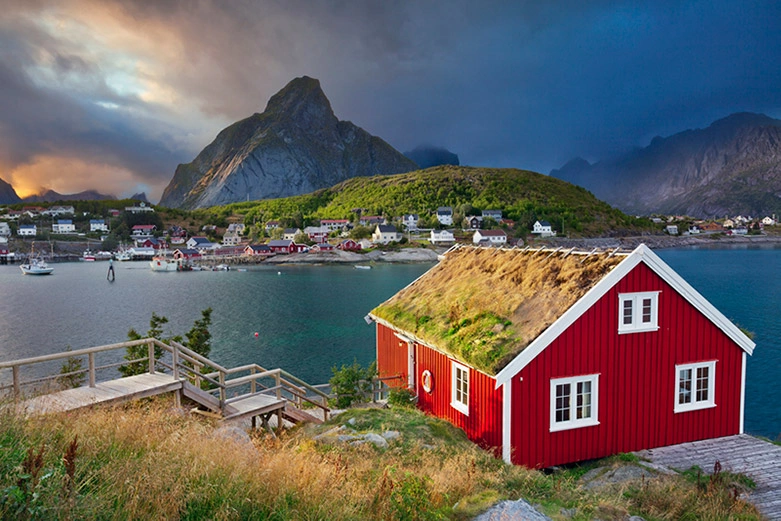 |
A red-painted house with a grass roof in Norway. *Photo: Life in norway* |
**Trust is the key to happiness**
Trust forms a fundamental pillar of happiness in these societies. Sophie moved to Denmark in spring 2020 and quickly realized how differently a society can operate when trust is a default. In Copenhagen, regulations during the pandemic came with recommendations—bars closed early, masks became part of daily life, and indoor gatherings were restricted. People always complied without objection. When Sophie asked a Danish friend why they always followed, the friend replied, "because we believe everything has a reason".
Sophie gradually understood that this trust was present in tiny, almost imperceptible details of daily life: parents leaving strollers with sleeping infants outside cafes, neighbors helping each other without hesitation, and late-night walks in the city feeling safe. It was no surprise to her, then, to learn that Denmark ranks highest globally in interpersonal trust, with nearly 75% of residents assuming "most people are trustworthy", significantly higher than the global average of 25%. This spirit of trust is a pillar supporting happy communities.
**Nature: The best free therapy**
The profound connection to nature serves as a powerful, free therapeutic tool. The ABBA museum might have first drawn Sophie to Sweden, but what impressed her most was nature. She vividly remembers a moment standing in Uppsala, not at a famous tourist spot, but in front of a lake with gentle ripples and tall green grass surrounding it. She paused unconsciously, immersing herself in nature as the city noise gradually gave way to birdsong and the soft sound of water lapping the shore. "For the first time in years, my heart rate slowed down", she said.
**Balancing private space and community integration**
A unique balance between personal independence and strong community bonds contributes significantly to well-being. Living in Norway as a foreigner, Sophie quickly noticed how differently people there made friends. Despite being highly independent, many Norwegians form deep bonds with childhood friends, connected by memories and places. They are proud of their hometowns, reminiscing about russefeiring (a distinctive high school graduation celebration), weekend trips to hytte (country cabins), and stories only insiders understand.
Sophie admired such friendships, but most of her relationships were new and based on shared interests. Moreover, constantly moving between countries left her in a state of independent living. Over time, the British traveler realized she had missed valuable opportunities to build and maintain a community around her. "I realized my life could be much happier if I allowed independence and community to coexist. 'Learning from' the Norwegian way of life, in a sense, truly made me happier."
**Working to live, not living to work**
The philosophy of "working to live" rather than "living to work" is deeply ingrained in Nordic work culture. Sophie's decision to move to Norway once depended entirely on securing a work visa. After three years working at startups and freelancing, she started her first "serious" job – working in a 7-story office building, with a canteen, many coffee machines, and dozens of colleagues. The first time she requested leave to visit family, Sophie was extremely anxious about reduced productivity. But contrary to her worries, her boss was very understanding. Over time, her dedication to work received recognition, and during her annual review, Sophie's boss said, "Here, we do not live to work; we work to live."
The company's CEO also emphasized this multiple times in meetings, stating that they "value the time employees dedicate to the company". What impressed her most when working in Nordic countries was the flexibility integrated into daily life, along with a clear understanding that work should revolve around life, not the other way around.
By Anh Minh (Source: CnTraveller)