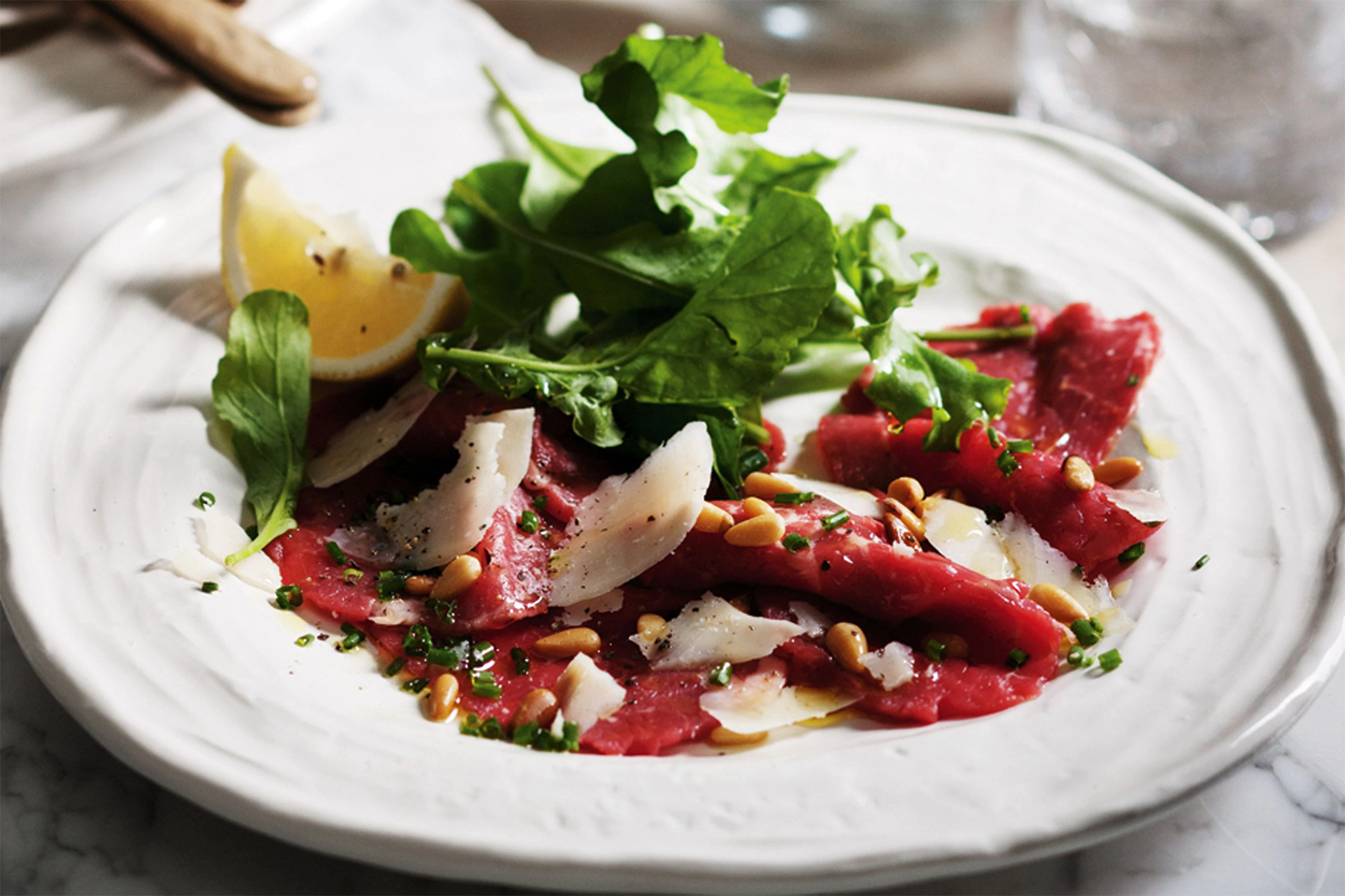
Carpaccio is a traditional Italian dish renowned worldwide, often served as an appetizer. It consists of thinly sliced raw beef, arranged on a plate with olive oil, grated cheese, lemon juice, salt, and pepper to enhance its flavor and aroma. The dish also includes accompanying greens like rocket, onion or shallots, and capers.
 |
Carpaccio with traditional ingredients. *Photo: Delicious.au*
Beyond being a dish, carpaccio symbolizes culinary creativity and dedication. According to Food Republic, carpaccio refers to meticulously chilled raw beef tenderloin sliced paper-thin. Taste Atlas states that chef Giuseppe Cipriani, owner of Harry’s Bar in Venice, Italy, created carpaccio in 1950. He first prepared the dish for Countess Amalia Nani Mocenigo after her doctor advised her to eat raw meat.
Cipriani drew inspiration from a Piedmont specialty: thinly sliced raw beef served with lemon juice, olive oil, and shaved white truffles. As an art enthusiast, he named the new dish "carpaccio" in honor of painter Vittore Carpaccio, whose artistic style and color palette resembled the vibrant red of the raw meat.
Today, carpaccio is a staple on menus in Italian restaurants globally. While originally made from raw beef, it has evolved to incorporate various ingredients. Raw fish like salmon or tuna are frequently used. Chefs also create vegetable carpaccio versions using ingredients such as eggplant, beetroot, zucchini, and figs. This diverse preparation makes the dish a popular choice for many diners.
 |
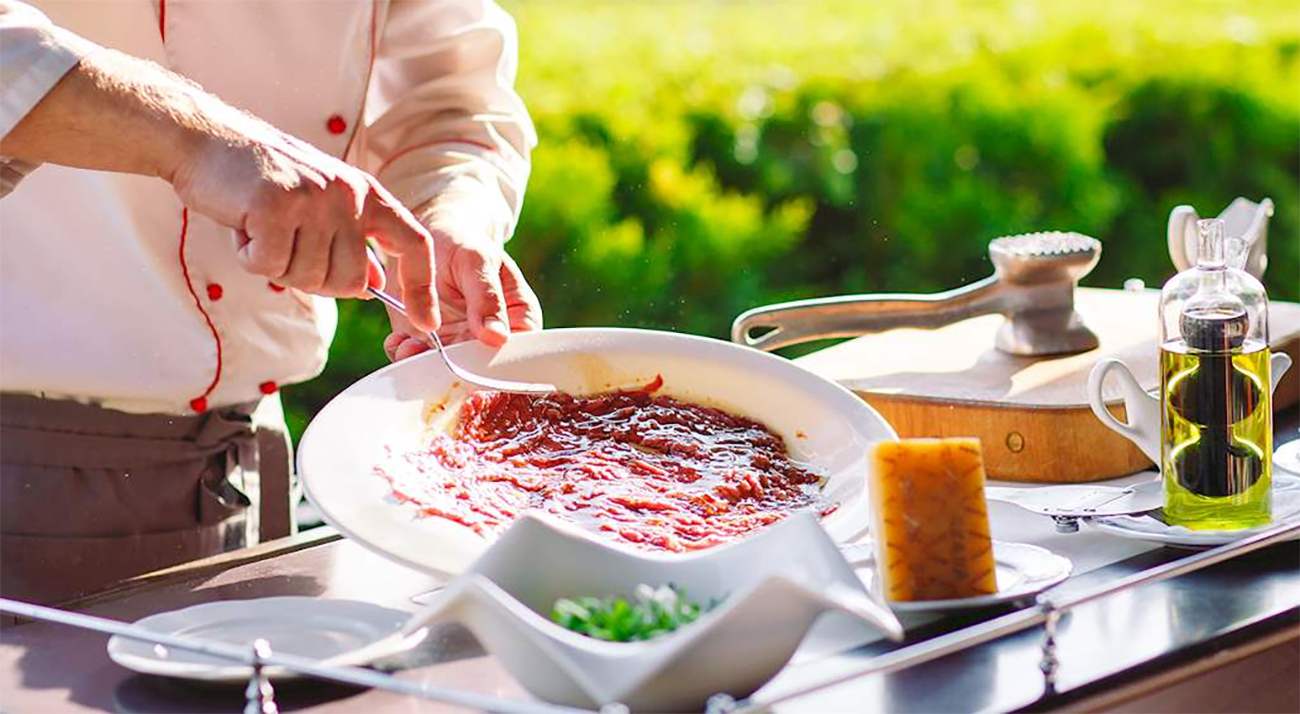
A chef preparing carpaccio. *Photo: Taste Atlas*
Despite many innovations, carpaccio retains its sophistication. More than a dish, carpaccio is an art form balancing ingredients, flavors, and quick preparation. Each bite stimulates the palate, evoking enjoyment and enticing diners toward the main course.
On international culinary forums, carpaccio is often compared to tartare. While carpaccio features sliced meat, tartare consists of finely chopped or minced raw meat. Tartare accompaniments include mayonnaise, capers, onion, ground pepper, raw egg yolk, and Worcestershire sauce. Many theories suggest Cipriani might have drawn inspiration from tartare when creating carpaccio, as tartare originated in the 19th century. Cipriani's original carpaccio recipe, found in Harry’s Bar cookbook, includes five ingredients: beef, mayonnaise, Worcestershire sauce, lemon juice, and milk, which bears a resemblance to tartare.
On Vietnamese culinary forums, many diners often liken carpaccio to the dish tiet canh due to their initial visual impression. The two dishes differ entirely in ingredients and preparation, yet both are raw and share a similar presentation.
 |
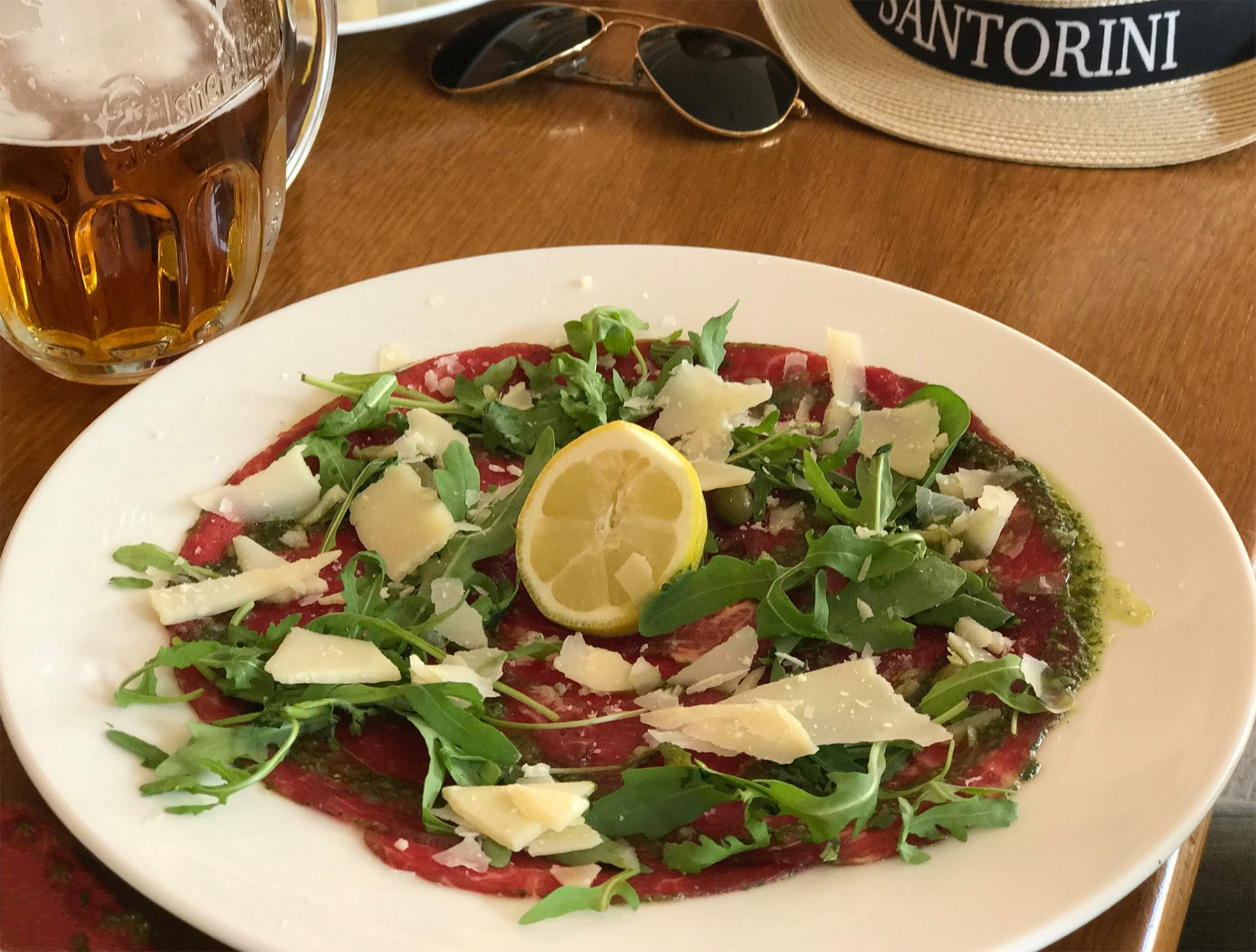
Carpaccio at a restaurant in Greece. *Photo: Minh Hung*
 |
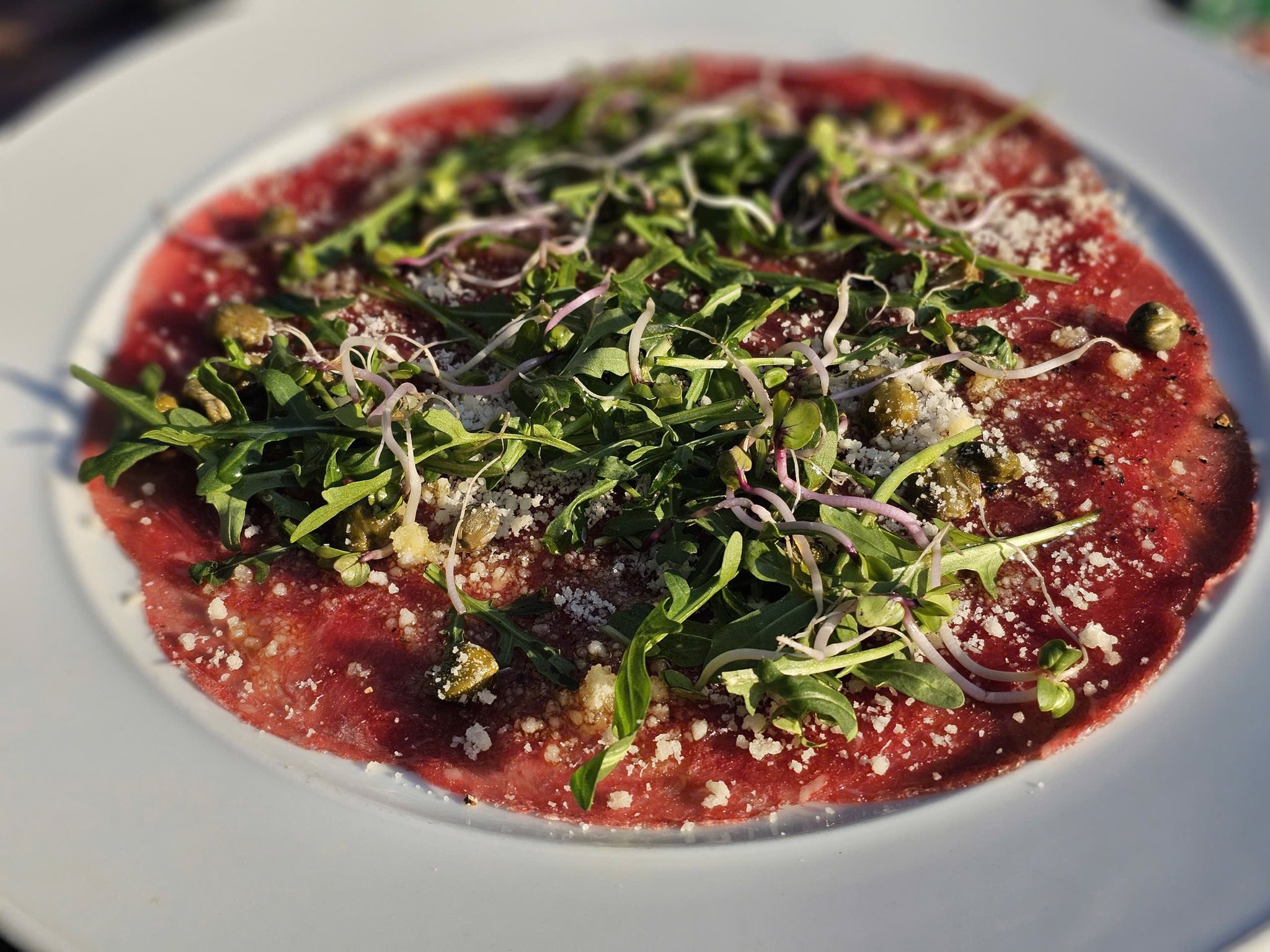
Carpaccio at a restaurant in Italy. *Photo: Minh Hung*
"Fresh sprouts mixed with bitter rocket, a touch of olive oil, and salty capers enhance the sweetness of the meat slices," diner Minh Hung described. He also authored photos of carpaccio taken at various Italian restaurants across Europe, which forum members "acknowledged for their similar presentation to tiet canh," despite unrelated flavors. Forum member Choco stated, "This is a famous appetizer, just like 'our own tiet canh'." Hung Nguyen added, "The presentation truly resembles tiet canh; I was startled when I first saw it."
Carpaccio is typically served with toasted bread. For an authentic carpaccio dish, fresh ingredients are paramount, and the meat must be tender. Sauces and seasonings are balanced harmoniously. The dish is best enjoyed with a glass of wine to highlight the freshness of the meat and fish.
Tam Anh compiled