 |
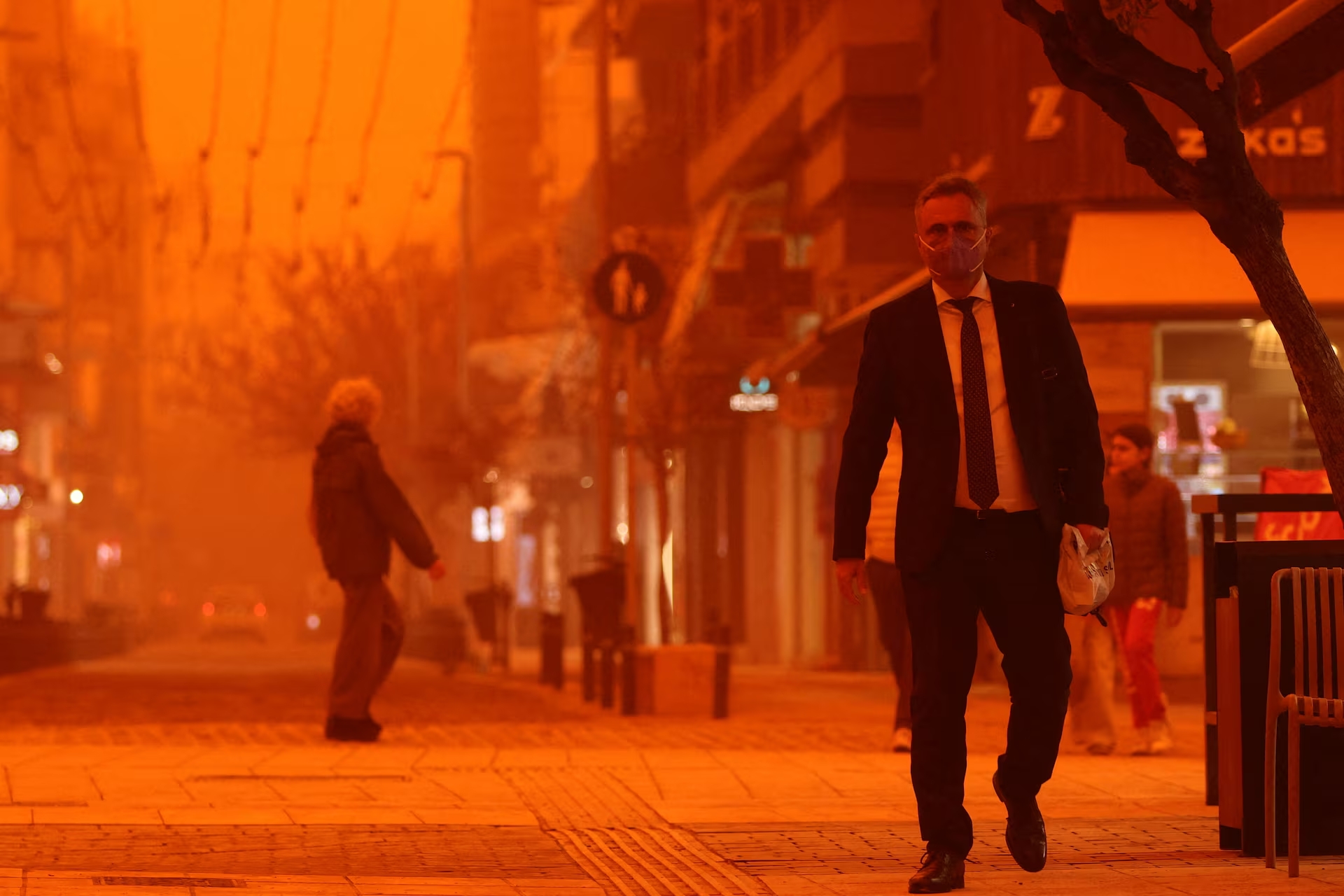
A man wore a mask while walking through the orange haze in Heraklion, Crete island. According to meteorology experts from the European Union's Copernicus Atmosphere Monitoring Service, Crete's sky turned vivid orange as dense fine dust strongly scattered short light wavelengths like blue and violet, leaving primarily long wavelengths such as red and orange to reach human eyes. Photo: Stefanos Rapanis |
A man wore a mask while walking through the orange haze in Heraklion, Crete island. According to meteorology experts from the European Union's Copernicus Atmosphere Monitoring Service, Crete's sky turned vivid orange as dense fine dust strongly scattered short light wavelengths like blue and violet, leaving primarily long wavelengths such as red and orange to reach human eyes. Photo: Stefanos Rapanis
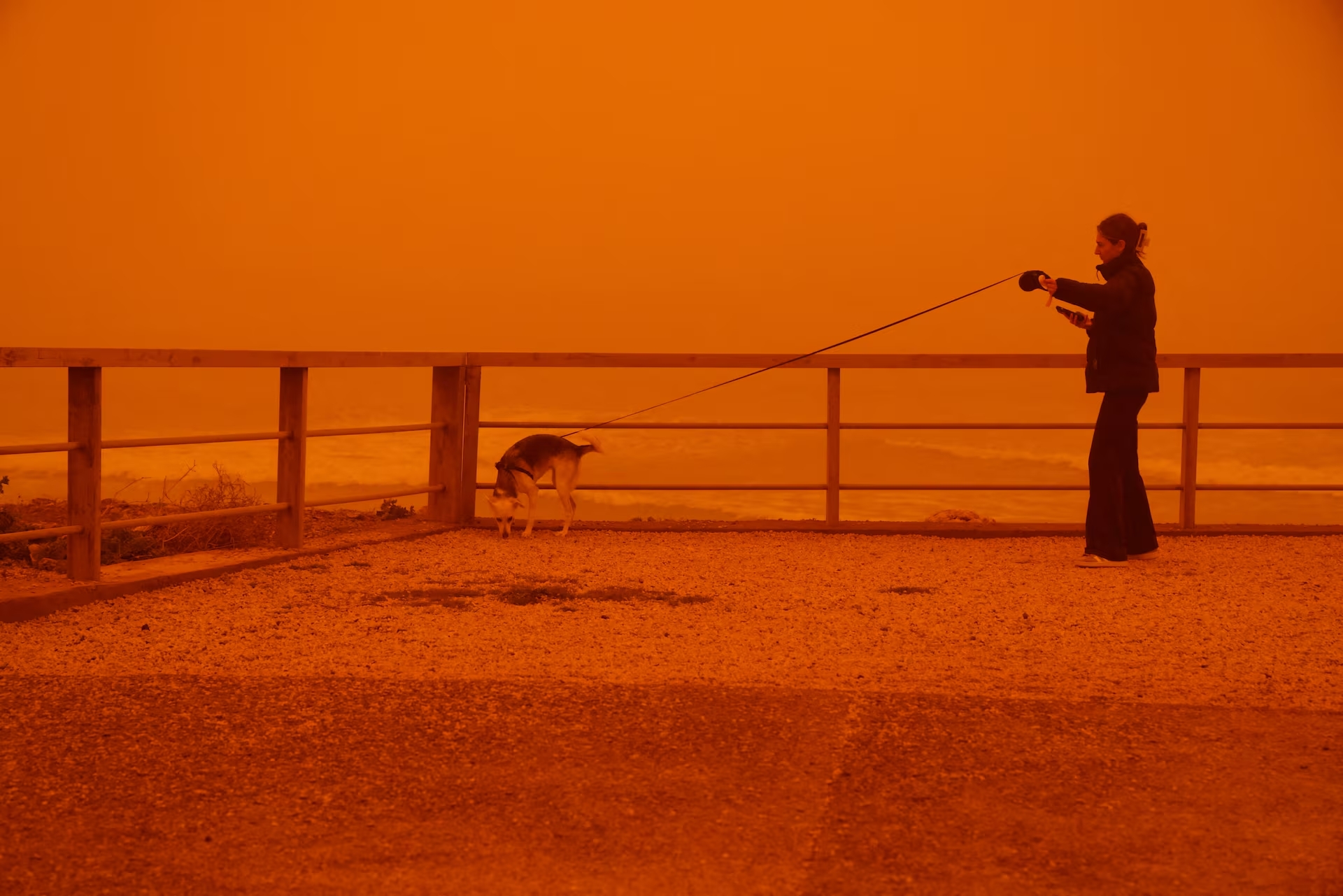 |
The combination of storm Erminio and the "Calima" dust phenomenon from the Sahara desert caused Crete island's sky to turn deep orange. Flight operations at Heraklion's main airport were disrupted, with at least two flights diverted due to unsafe landing visibility. Photo: Stefanos Rapanis |
The combination of storm Erminio and the "Calima" dust phenomenon from the Sahara desert caused Crete island's sky to turn deep orange. Flight operations at Heraklion's main airport were disrupted, with at least two flights diverted due to unsafe landing visibility. Photo: Stefanos Rapanis
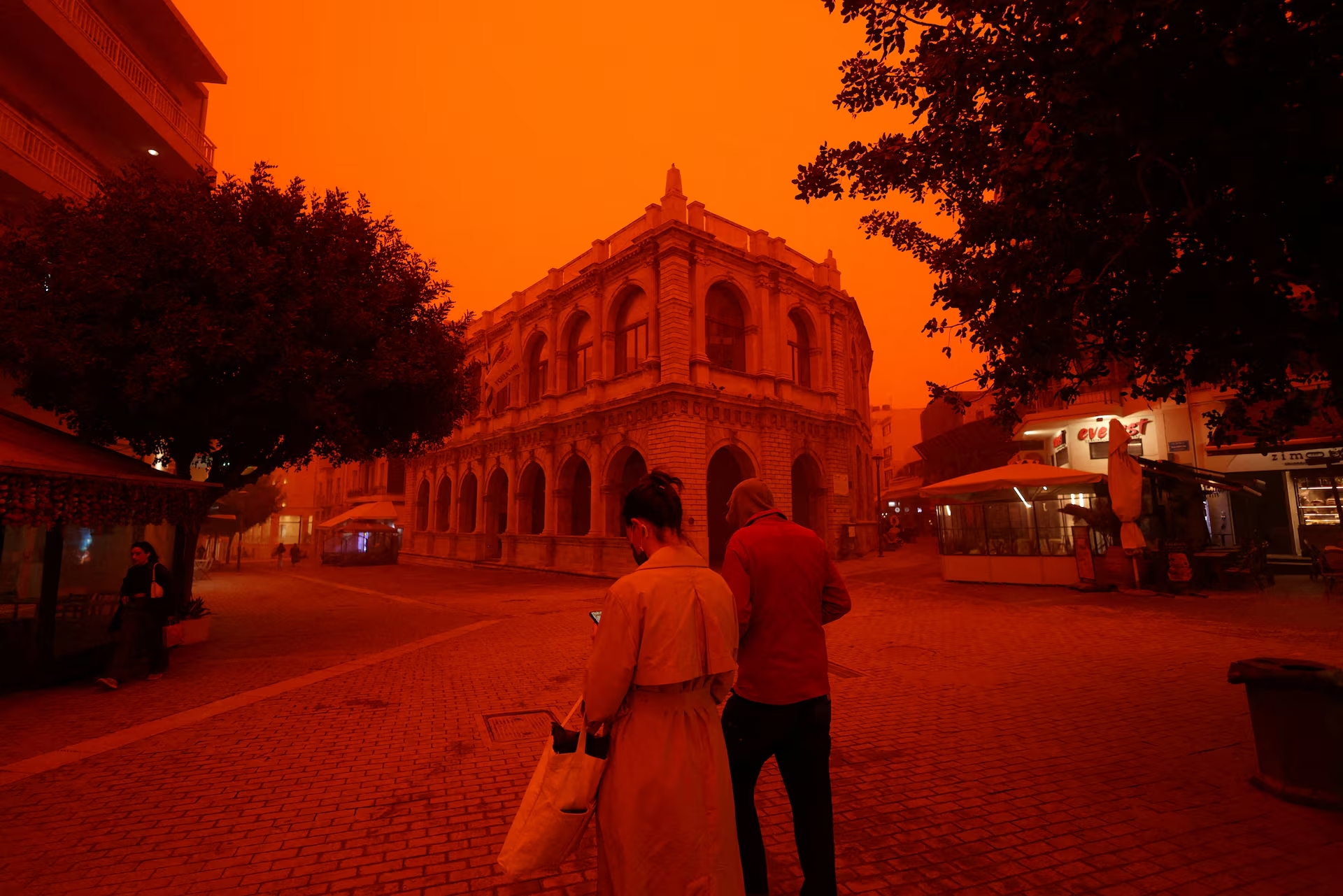 |
The Calima phenomenon occurs when extremely strong southerly winds sweep fine dust and sand from the Sahara desert (North Africa) across the Mediterranean Sea into Southern Europe. The sky turned vivid orange because the concentration of fine dust in the air in Crete exceeded 1,000 micrograms/m3. Photo: Stefanos Rapanis |
The Calima phenomenon occurs when extremely strong southerly winds sweep fine dust and sand from the Sahara desert (North Africa) across the Mediterranean Sea into Southern Europe. The sky turned vivid orange because the concentration of fine dust in the air in Crete exceeded 1,000 micrograms/m3. Photo: Stefanos Rapanis
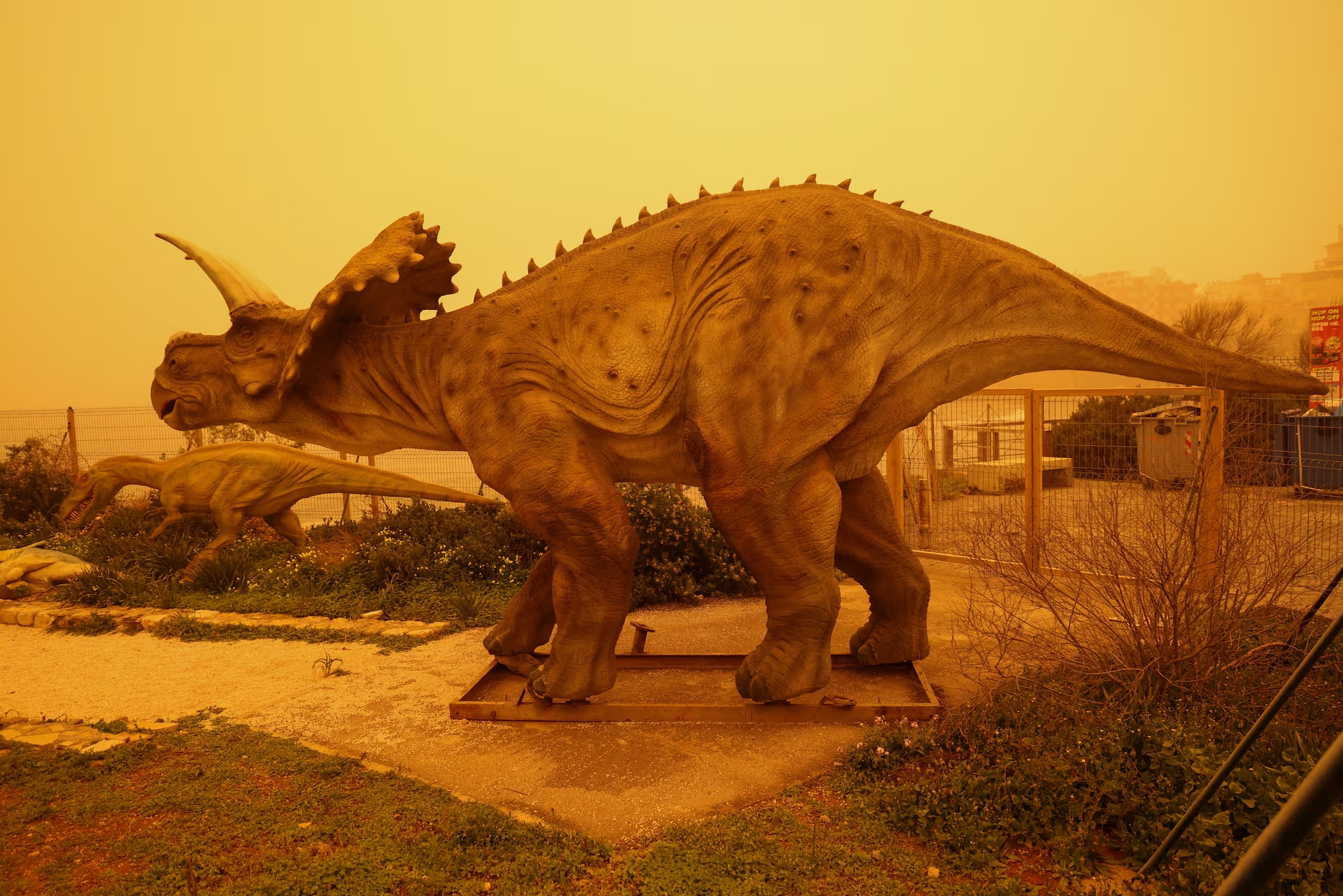 |
Dinosaur statues stood amidst the dusty haze outside the Natural History Museum of Crete, in Heraklion city, Crete island. Located near the Heraklio coast, the museum features not only dinosaur models but also an earthquake simulator, allowing visitors to experience historical earthquakes in a safe environment. Photo: Stefanos Rapanis |
Dinosaur statues stood amidst the dusty haze outside the Natural History Museum of Crete, in Heraklion city, Crete island. Located near the Heraklio coast, the museum features not only dinosaur models but also an earthquake simulator, allowing visitors to experience historical earthquakes in a safe environment. Photo: Stefanos Rapanis
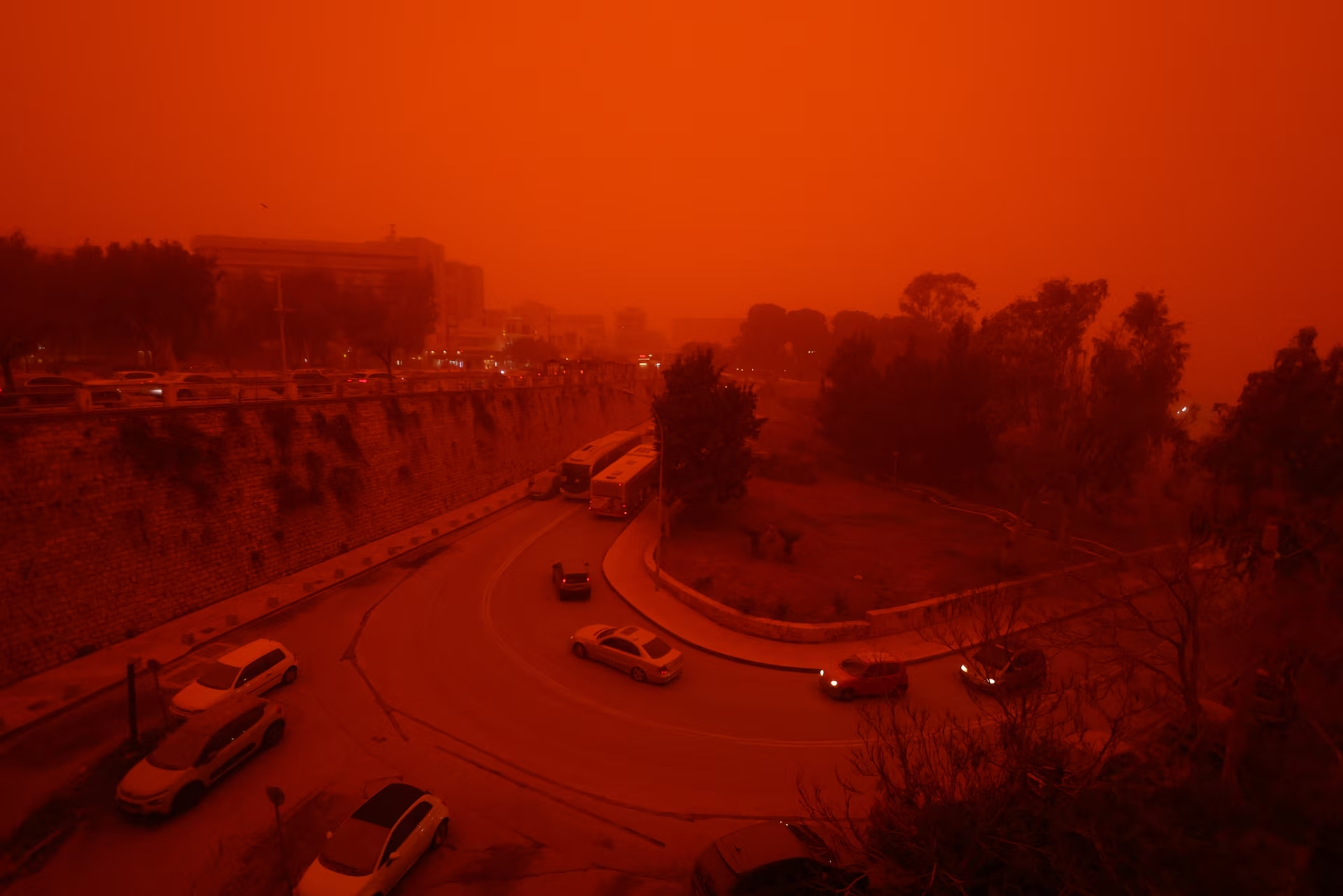 |
Heraklion city was enveloped in a red-orange haze. Photo: Stefanos Rapanis |
Heraklion city was enveloped in a red-orange haze. Photo: Stefanos Rapanis
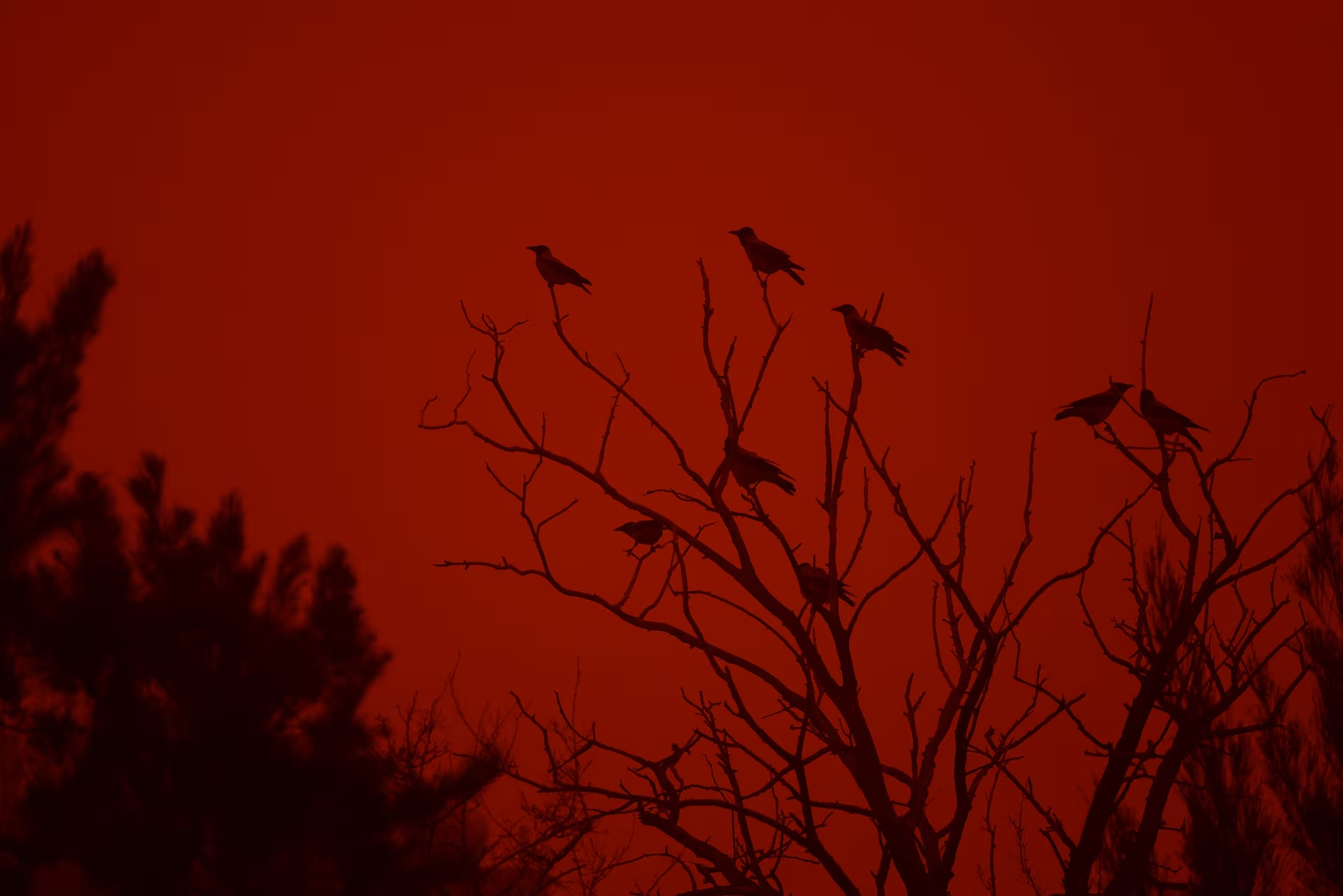 |
Greek authorities implemented a temporary outdoor work ban from 18h to 22h in several areas, including Attica, central Greece, Thessaly, Peloponnese, Southern Aegean, and some northern regions. Photo: Stefanos Rapanis |
Greek authorities implemented a temporary outdoor work ban from 18h to 22h in several areas, including Attica, central Greece, Thessaly, Peloponnese, Southern Aegean, and some northern regions. Photo: Stefanos Rapanis
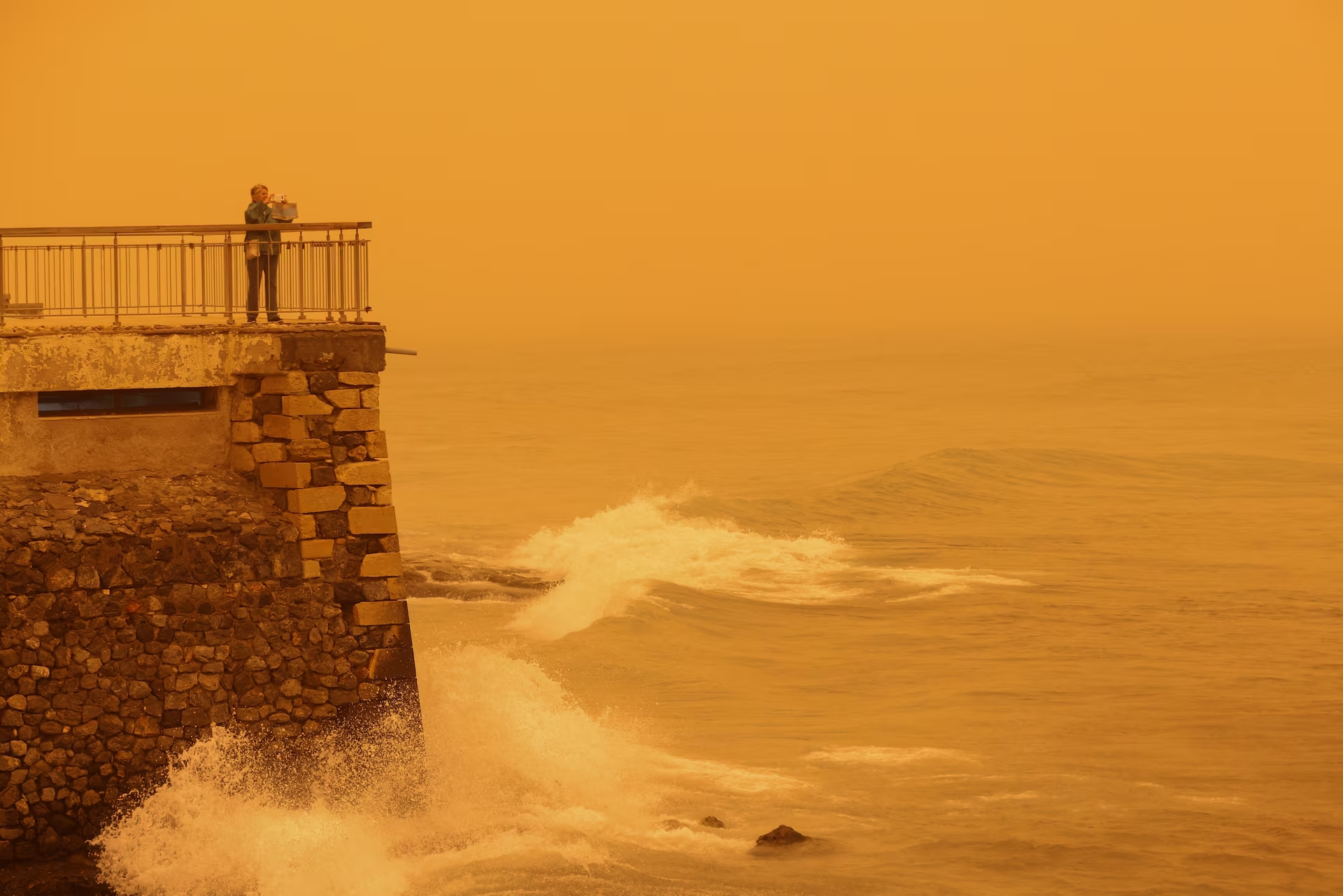 |
A woman photographed the horizon, which had turned a vivid yellow. Photo: Stefanos Rapanis |
A woman photographed the horizon, which had turned a vivid yellow. Photo: Stefanos Rapanis
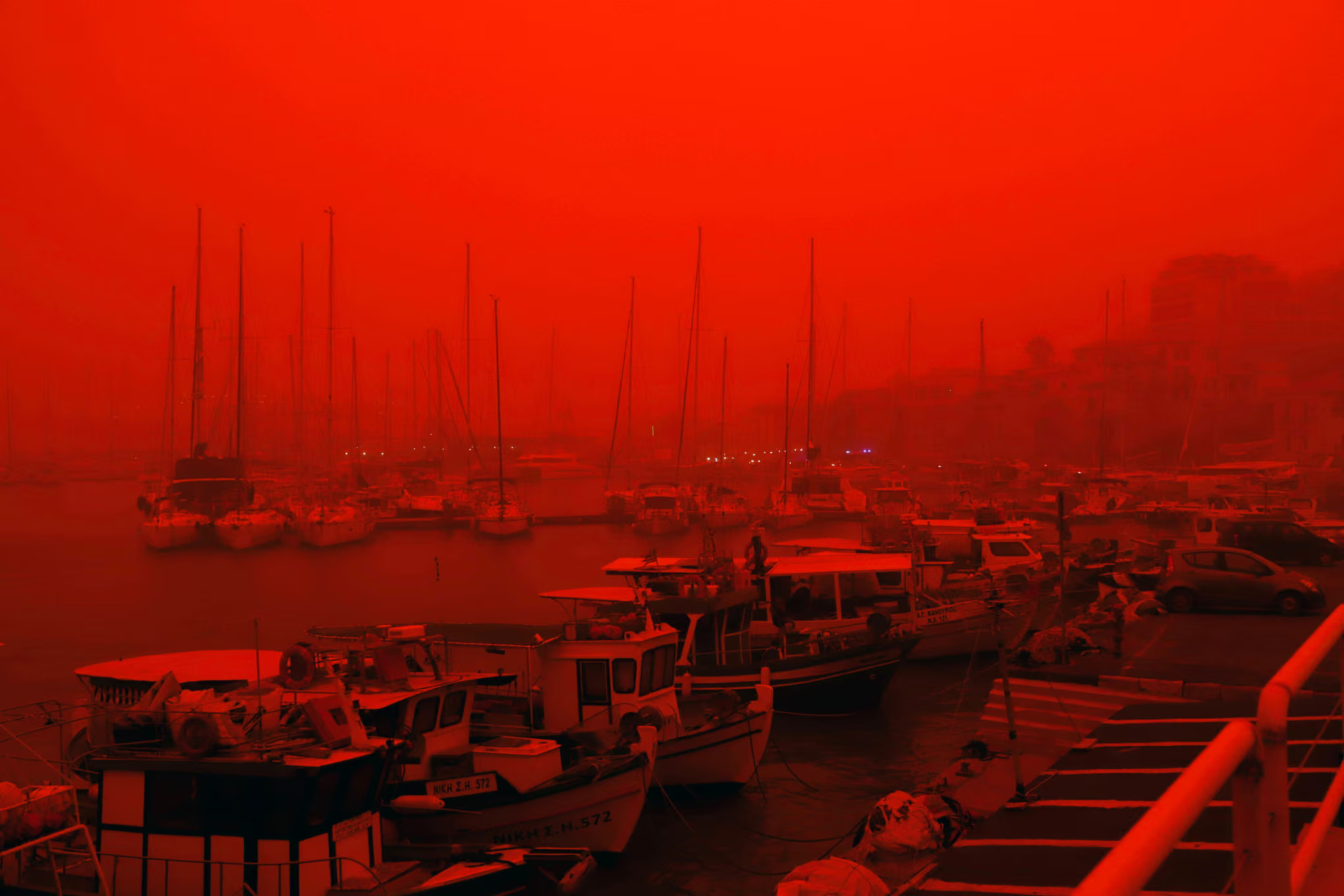 |
Boats lay still at Ierapetra port, south of Crete island, under a red sky caused by the dust storm. Ierapetra directly received fine dust and hot winds from North Africa, leading to limited visibility and a halt to all maritime activities. Ierapetra is the main departure point for tours to Greece's renowned Chrissi island. Photo: Nikos Chalkiadakis/EPA |
Boats lay still at Ierapetra port, south of Crete island, under a red sky caused by the dust storm. Ierapetra directly received fine dust and hot winds from North Africa, leading to limited visibility and a halt to all maritime activities. Ierapetra is the main departure point for tours to Greece's renowned Chrissi island. Photo: Nikos Chalkiadakis/EPA
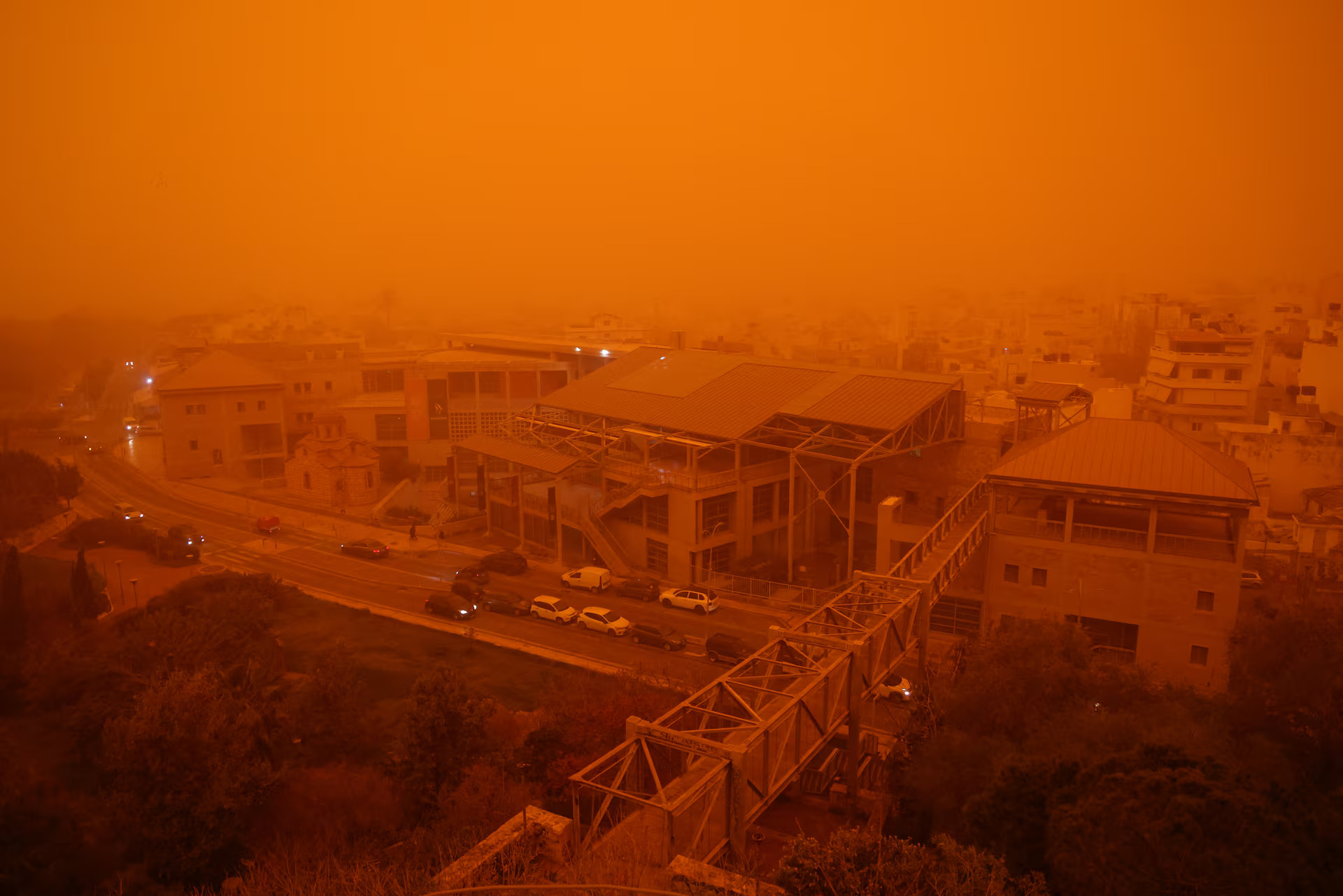 |
Due to its geographical proximity to the North African coast, Crete island frequently experiences desert dust and hot Sahara winds much stronger than those affecting the capital or northern islands. Photo: Stefanos Rapanis |
Due to its geographical proximity to the North African coast, Crete island frequently experiences desert dust and hot Sahara winds much stronger than those affecting the capital or northern islands. Photo: Stefanos Rapanis
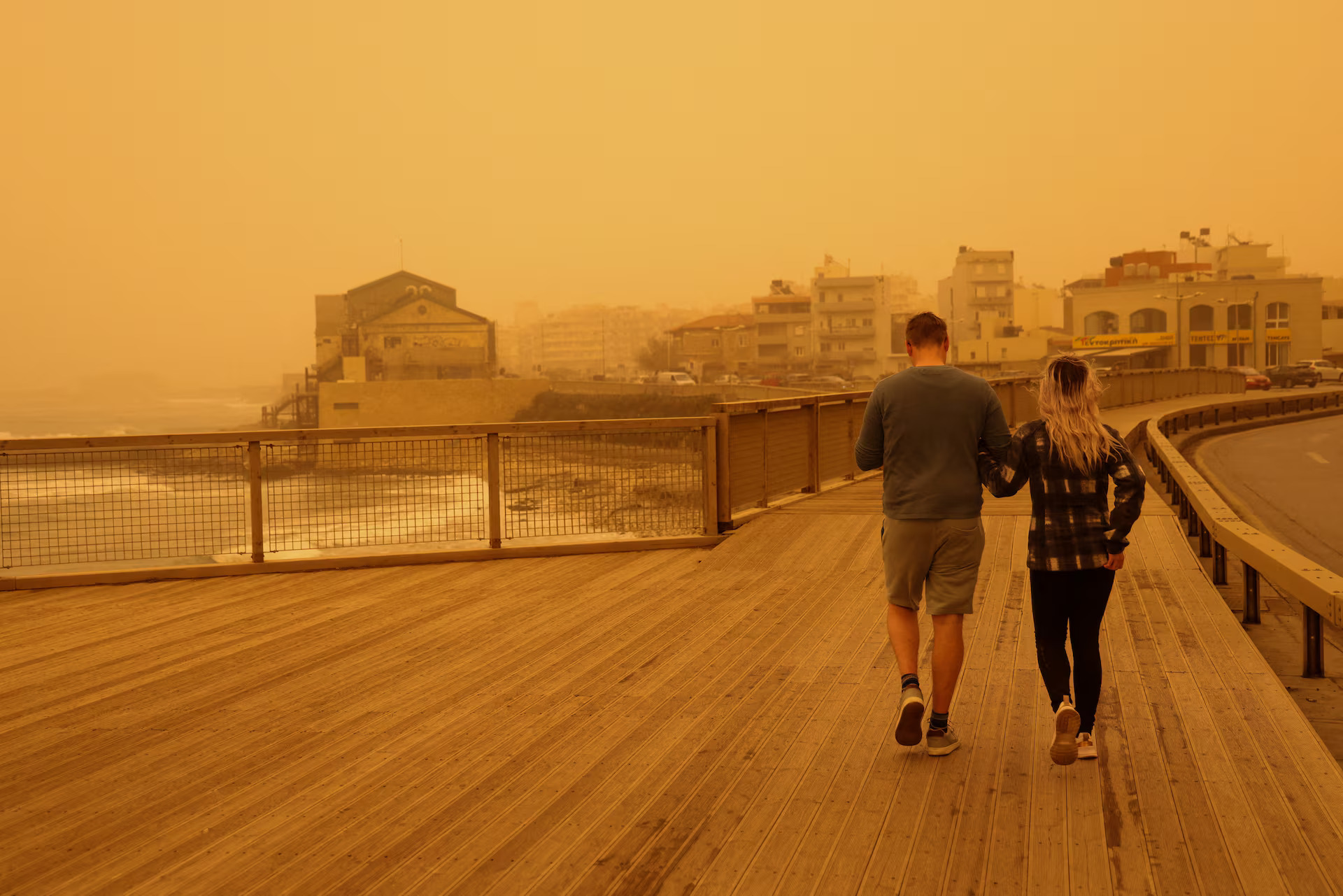 |
After two days engulfed in the Sahara dust storm, economic, tourism, and transportation activities on Crete island returned to normal from 3/4. Local authorities and businesses are focused on clearing sand and mud clinging to streets, hotels, and archaeological sites to prepare for the upcoming peak tourist season during the Easter holiday. Photo: Stefanos Rapanis |
After two days engulfed in the Sahara dust storm, economic, tourism, and transportation activities on Crete island returned to normal from 3/4. Local authorities and businesses are focused on clearing sand and mud clinging to streets, hotels, and archaeological sites to prepare for the upcoming peak tourist season during the Easter holiday. Photo: Stefanos Rapanis
Mai Phuong (According to Reuters, The Guardian)