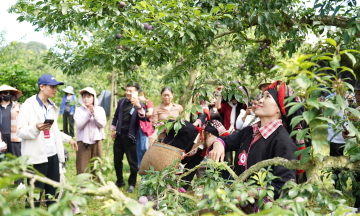
In late February, Truong Thi Huong from Hanoi stopped at Doc Tham Ma. After three local children braided her hair and posed for photos, she asked about the cost. The children replied, "However much you want, we don't demand anything." Moved by their politeness, Huong gave them a 100,000 VND note and all the snacks she had.
"I know the authorities request not to give money or food, but I did it out of pity for the children," Huong said.
A VnExpress survey on 20/3 revealed a clear division in tourist opinions. About 36% of respondents affirmed they would still give money to children carrying flowers; 40% said "no," and the rest would consider it depending on the children's attitude and circumstances.
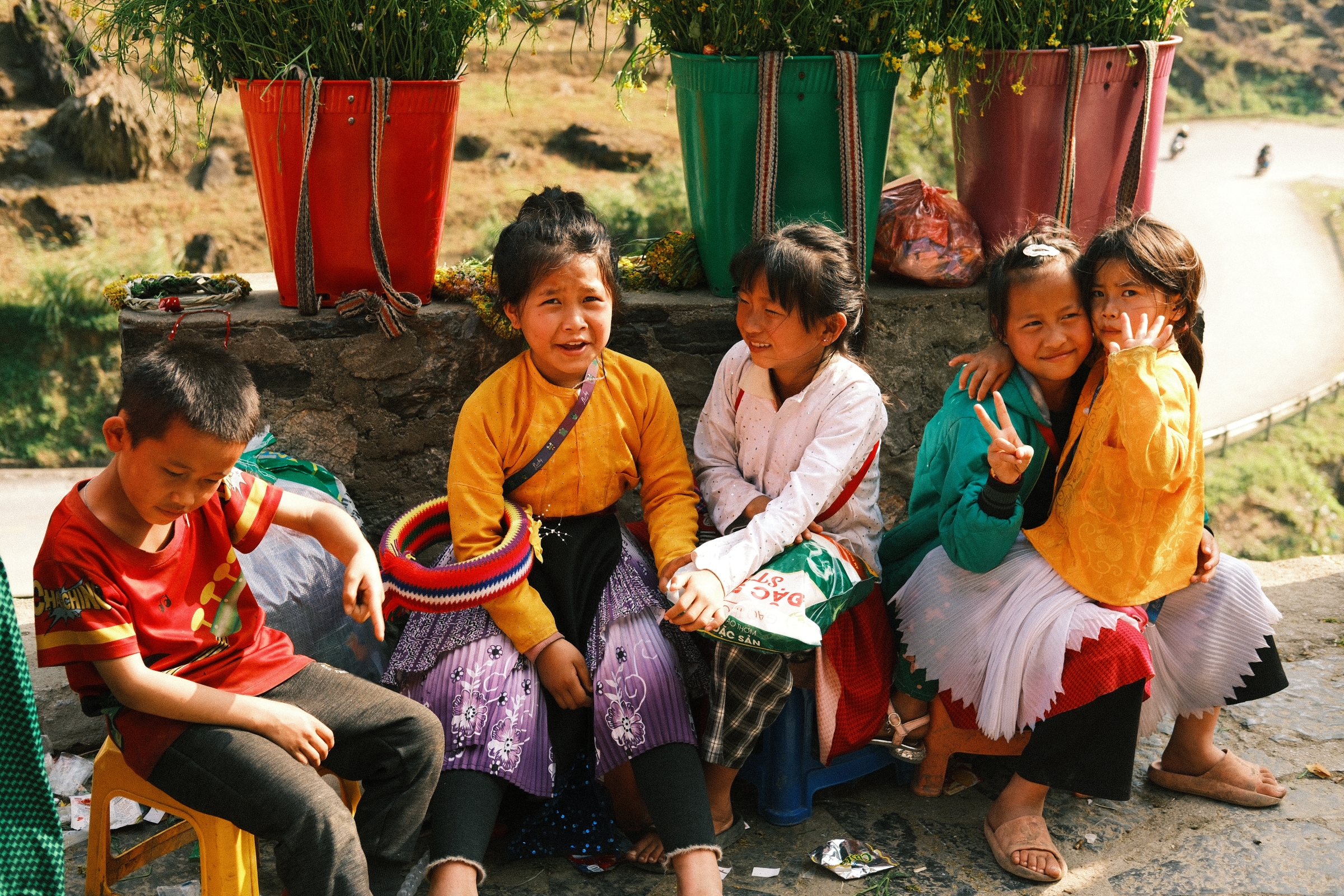 |
Children at Doc Tham Ma in February. Photo: NVCC
Readers Nguyen Duc Thanh and Minh Hung, who have visited Ha Giang multiple times, believe that living conditions in the highlands remain difficult. They see children carrying flowers and posing for photos with guests as a gentler way to earn a living compared to working in the fields.
"If their living conditions are not good, why shouldn't I be allowed to help?" Hung questioned.
However, tourism professionals and managers see a darker picture. Nguyen Van Tuan, founder of Jasmine Tours Ha Giang, consistently instructs his drivers to remind guests not to give money to children. He believes that earning money too early and easily makes children lazy and prone to dropping out of school.
On a weekend at Doc Tham Ma, many children and elderly people gather, waiting for tourists. A child can earn about 300,000 VND per day, but most of this money is confiscated by parents or collected by adults on the spot.
"Many say the image of children at Doc Tham Ma is beautiful, but I don't see anything beautiful about it," Tuan stated frankly.
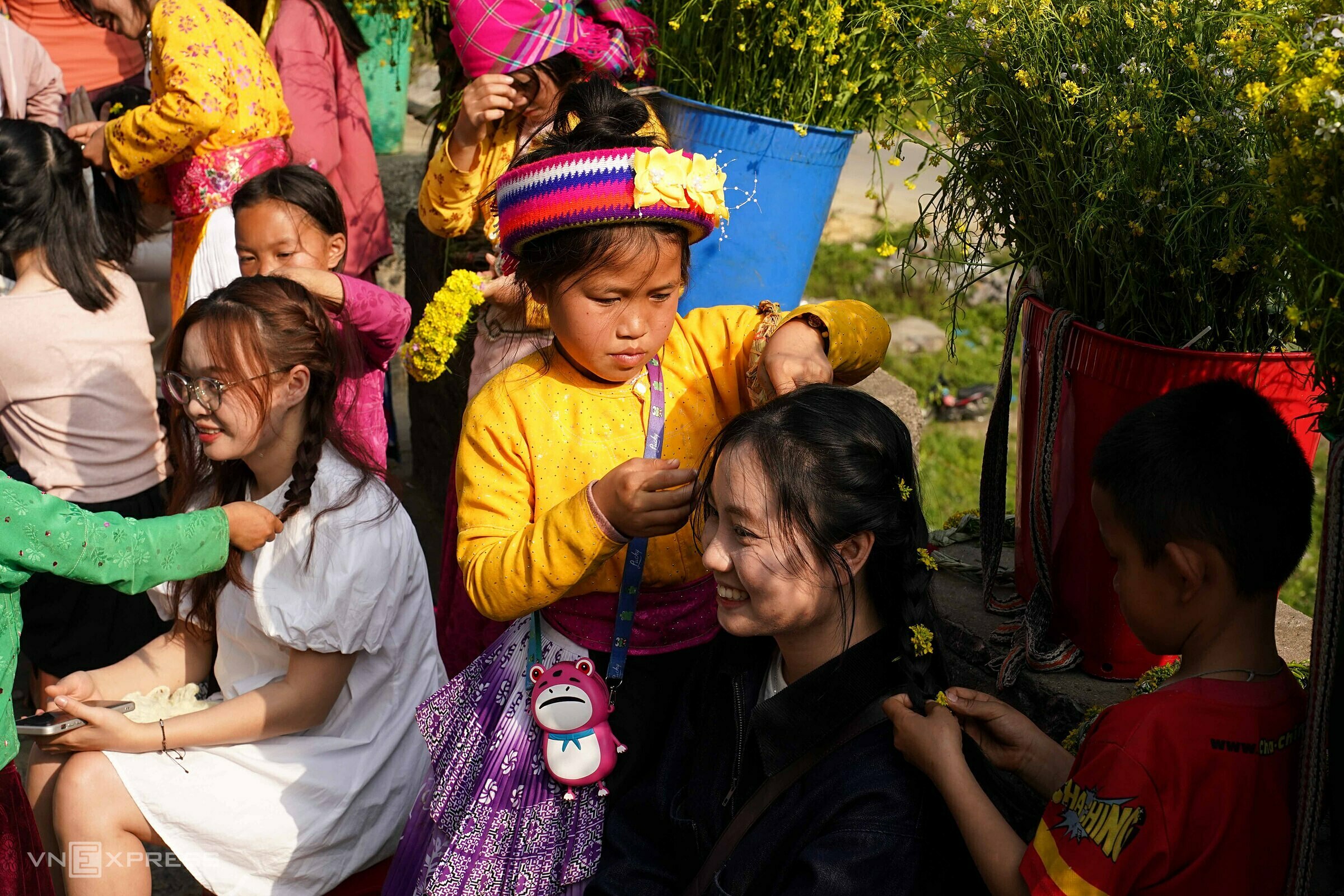 |
Children at Doc Tham Ma braiding hair for tourists in March. Photo: Hoang Giang
Doctor Trinh Le Anh, from the Faculty of Tourism Studies, University of Social Sciences and Humanities, Vietnam National University, Hanoi, stated that he did not take photos with children at Doc Tham Ma during his trip earlier this year. He affirmed that the act of "giving money for photos" creates an incentive mechanism for children to leave school and engage in activities that generate direct income from tourists.
According to the expert, children can be part of the tourism ecosystem, but not by directly generating income on mountain passes. Instead, they should participate indirectly through education and family, for example, by learning foreign languages, learning to tell local cultural stories, or supporting suitable activities in community-based tourism models. When they grow up, they can become valuable local tour guides.
More importantly, the role of state management and local authorities is to establish clear principles, such as preventing children from engaging in commercial activities at tourist sites, while also creating alternative livelihoods for families.
Hoang Xuan Don, head of the management board of Dong Van Karst Plateau Global Geopark, shares this view, emphasizing that children need to develop a good awareness of the value of labor through systematic education by adults, with the full participation of social organizations and authorities.
Both Ha Giang and Tuyen Quang provinces are actively working to educate residents on knowledge and culture, organizing many programs to integrate local cultural knowledge and sustainable tourism economic development into schools.
With a large number of schools and students in the region—over 150 schools and tens of thousands of students at all levels—Don noted that this effort has yielded encouraging results, with increasing generations of students maturing, entering the workforce, and affirming their role as masters of the heritage region.
"There are still shortcomings that need addressing, but we are all striving to ensure children spend their maximum time studying rather than directly earning money," Don said.
Meanwhile, a representative from Phu Bang Commune People's Committee, the unit managing Doc Tham Ma, stressed that tourists must comply with the rule of not giving money or gifts to children. This practice, they warn, indirectly fosters a group of lazy individuals, becoming a social burden. If tourists wish to show goodwill, the representative advised them to contact the commune authorities for introductions to schools or to contact schools directly.
"That is the proper way to encourage children to study diligently and escape poverty," said the representative of Phu Bang Commune People's Committee.
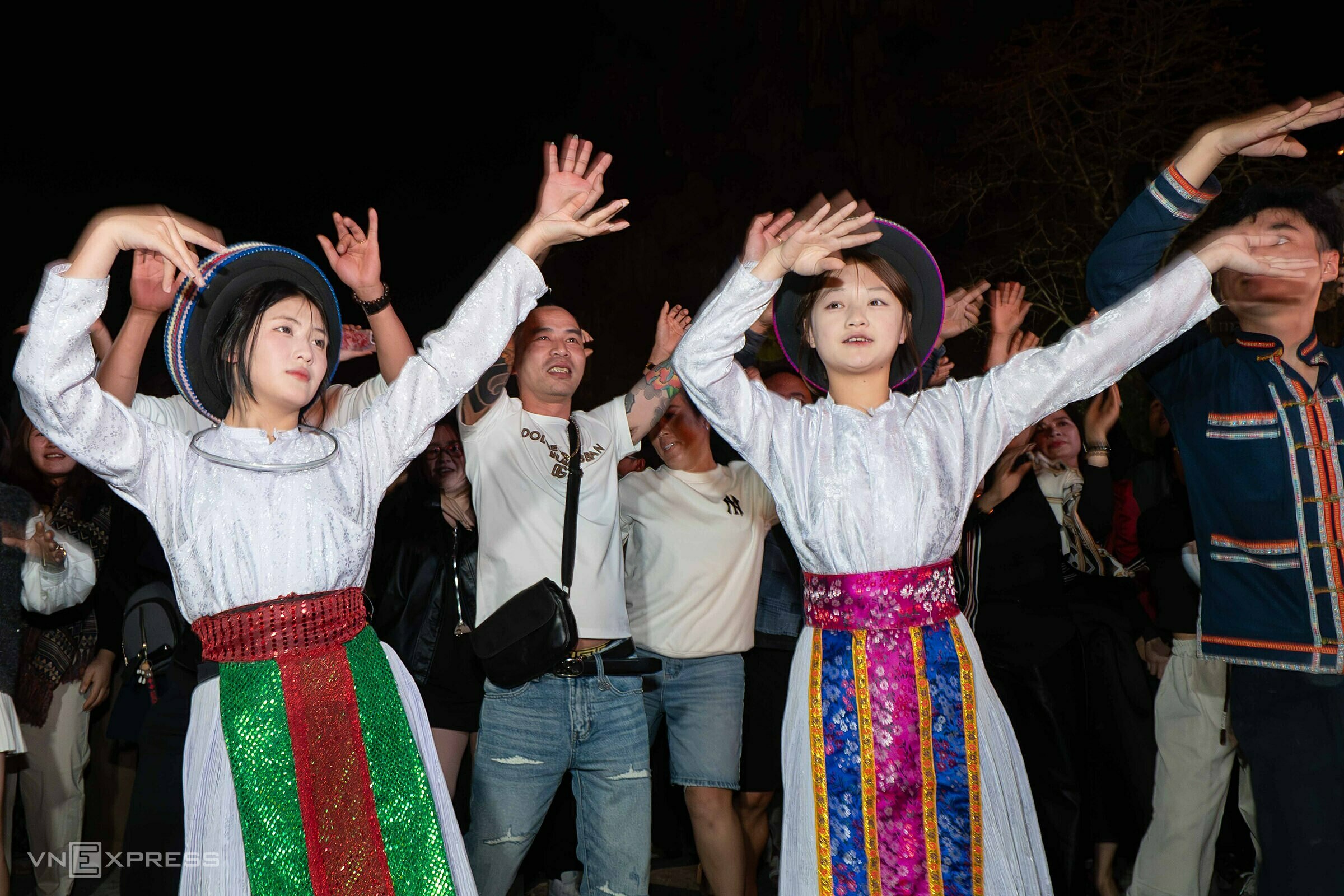 |
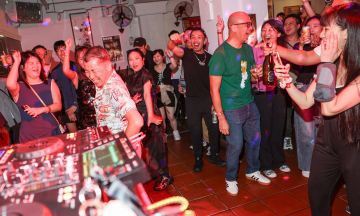
Cultural exchange night in Dong Van on 28/2. Photo: Hoang Giang
In Dong Van Old Quarter, every evening, cultural official Sung Manh Hung organizes exchange nights between locals, and domestic and international tourists. Hung has a team of children who assist, creating a lively atmosphere for tourists to participate.
According to Hung, children can also contribute to tourism promotion and development under strict supervision. Participating children receive a small stipend sufficient to cover their studies and support their families.
This helps children gain confidence, understand, and appreciate their ethnic cultural identity more. Beyond school, Hung believes children also need to develop life skills and communication abilities with tourists as Ha Giang gradually becomes a tourism hotspot.
Children participate in cultural activities, connecting with tourists in Dong Van Old Quarter on weekends. Video: Anh Tu
Hoai Anh