 |
Residents made snowmen on a street near Hongik University. Seoul authorities announced they had added 20 subway trains during the morning rush hour and extended bus peak operating hours by 30 minutes to ease traffic pressure due to the heavy snowfall. |
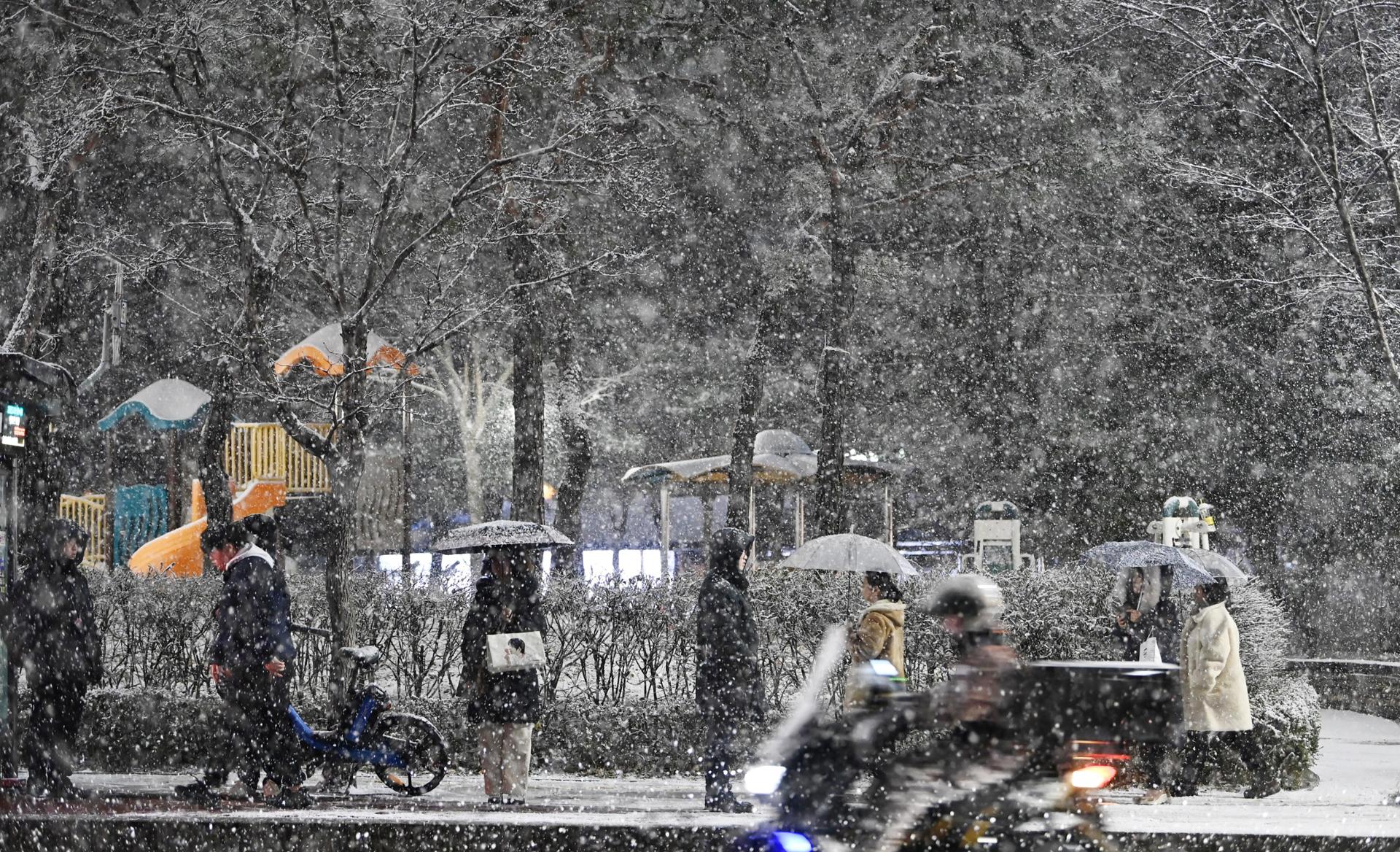
Many areas across South Korea experienced their first snowfall of the season on 4/12. Heavy snow blanketed Seoul in the evening, prompting officials to issue a warning.
According to the Korea Meteorological Administration (KMA), snow fell at a rate of 1-3 cm per hour in the capital starting around 6 PM on 4/12. Some areas in Gyeonggi province, a suburb of Seoul, recorded snow falling at a rate of up to 3 cm per hour. The Ministry of Interior and Safety activated an emergency response center, raising the heavy snow warning level from "attention" to "alert." This warning applied to Seoul, Incheon, all of Gyeonggi province, and parts of Gangwon province.
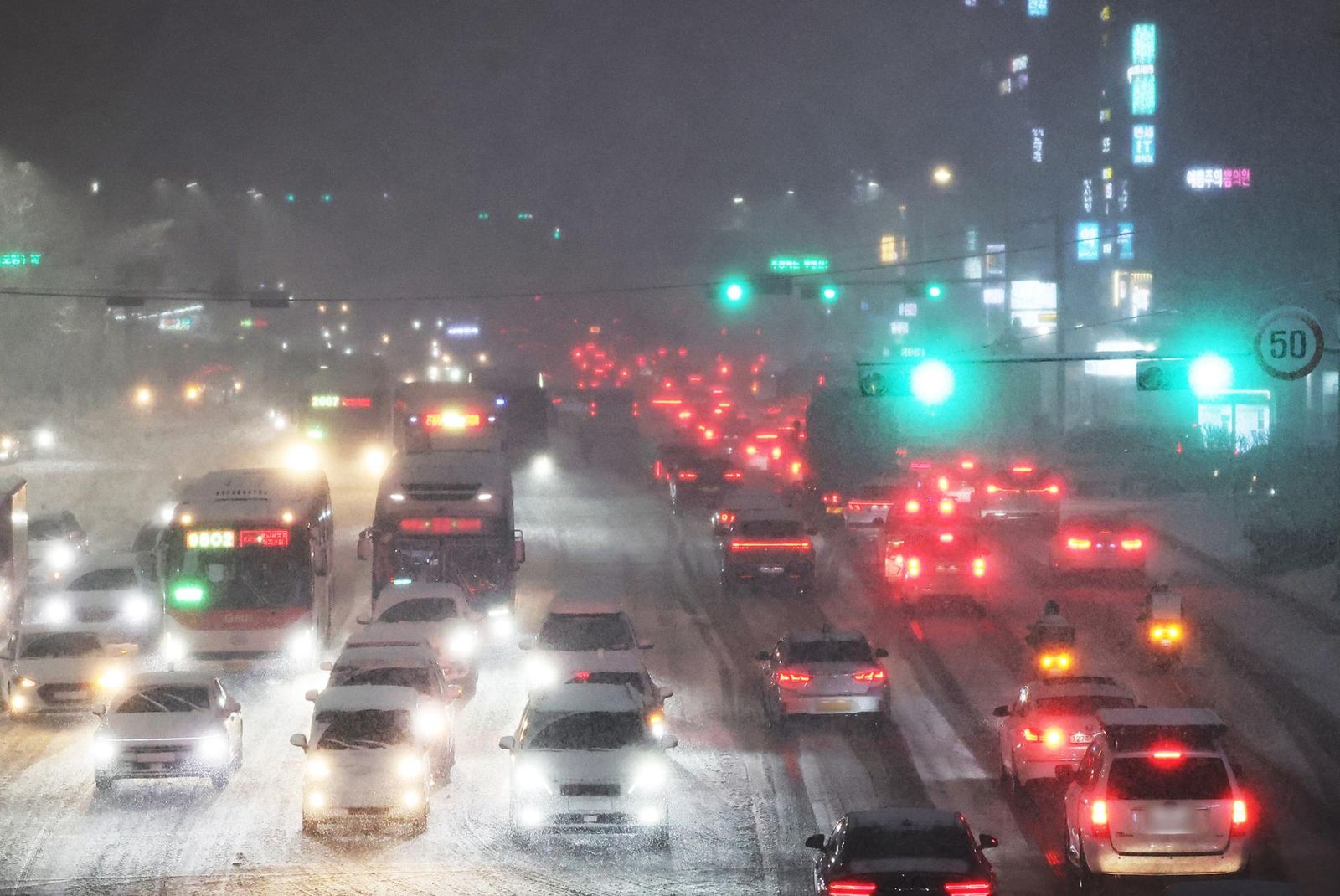
The immediate impact of the snowfall was visible across the city. The first snow covered areas near Hongik University in west Seoul on the evening of 4/12, where tourists were seen taking photos on snow-dusted streets. Vehicles moved slowly on a main avenue in Suwon, Gyeonggi province, as residents navigated the slick conditions.
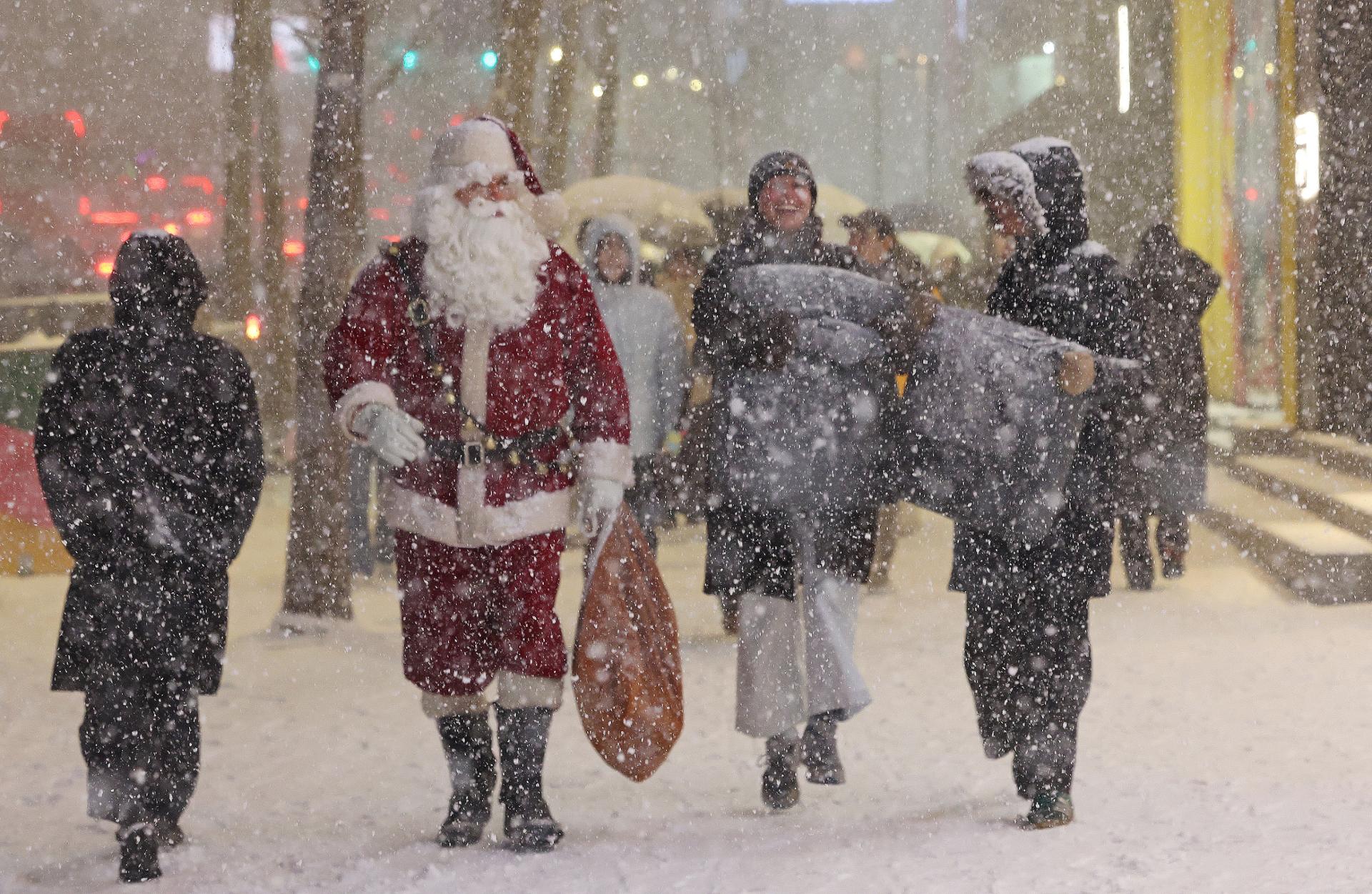 |
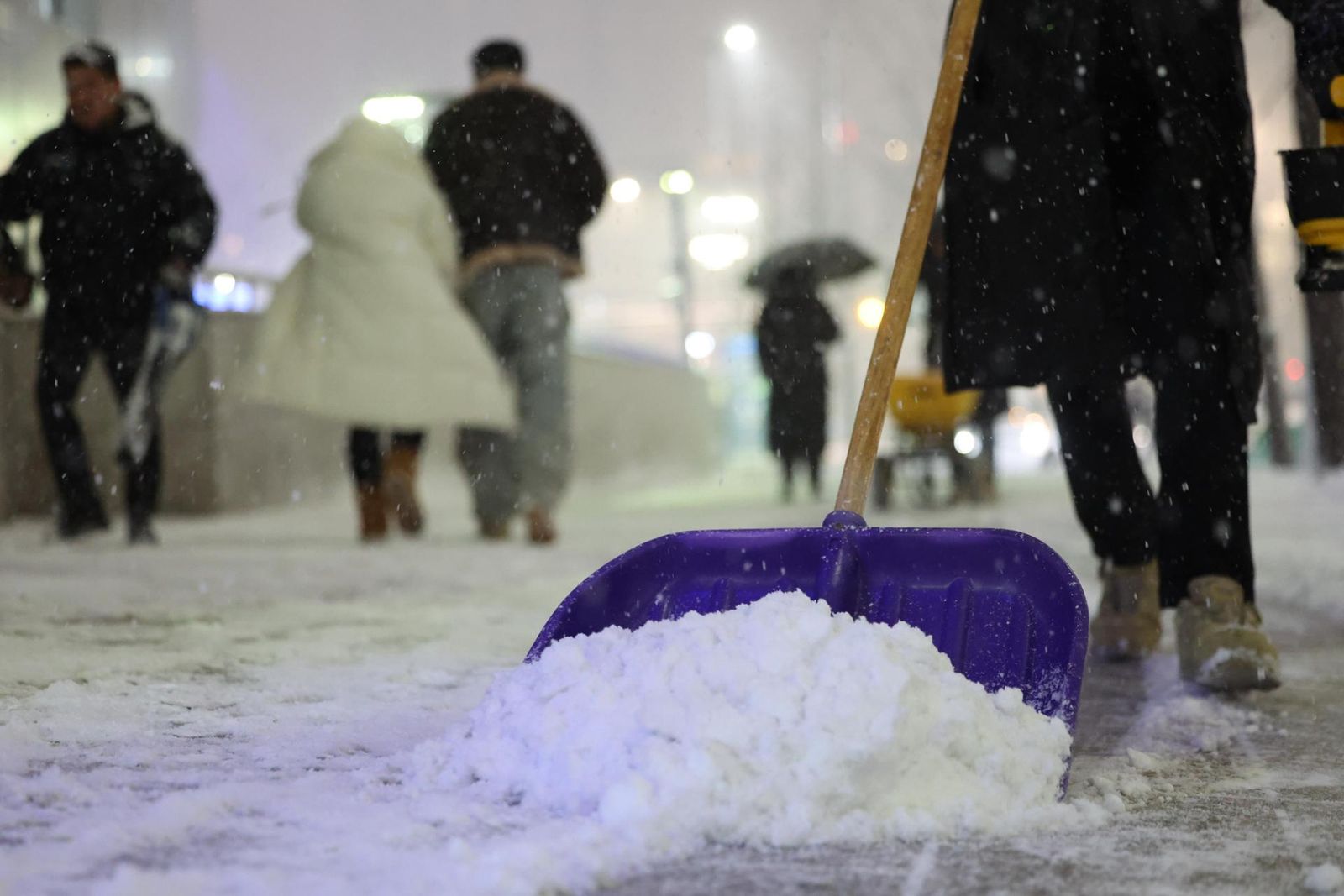
Residents shoveled thick snow in front of stores. |
Northern Gyeonggi and the inland mountainous areas of Gangwon province were forecast to receive up to 8 cm of snow. Temperatures dropped sharply overnight, increasing the risk of ice and making travel difficult the following morning. Authorities warned residents and tourists to be aware of slippery patches of ice and black ice while traveling on 5/12, as snow and rain had the potential to freeze overnight. The lowest temperatures after the first snowfall were forecast to range from -11 to 2 degrees C, with daytime highs from 1 to 9 degrees C.
 |
A football match between Bucheon FC and Suwon FC was cancelled due to heavy snowfall at a stadium in Bucheon, Gyeonggi province. |
The rush hour on 5/12 in Seoul clearly showed the impact of the first snowfall. Residents moved cautiously on icy roads, and many accidents were reported. By 8 AM, snow accumulation reached 4,7 cm in Dobong district and 4,2 cm in Gangdong district. The temperature in Seoul dropped to -6,7 degrees C.
 |
Local authorities in Seoul were urged to expedite snow removal, manage traffic congestion, and inspect vulnerable structures such as greenhouses, barns, and older homes. Residents and visitors were advised to use public transportation and exercise caution when traveling on slippery roads. |
Authorities spread calcium chloride to break the ice on major roads, but traffic jams, bus delays, and overcrowding persisted. Near Sinpung station, slippery road surfaces caused many people to fall.
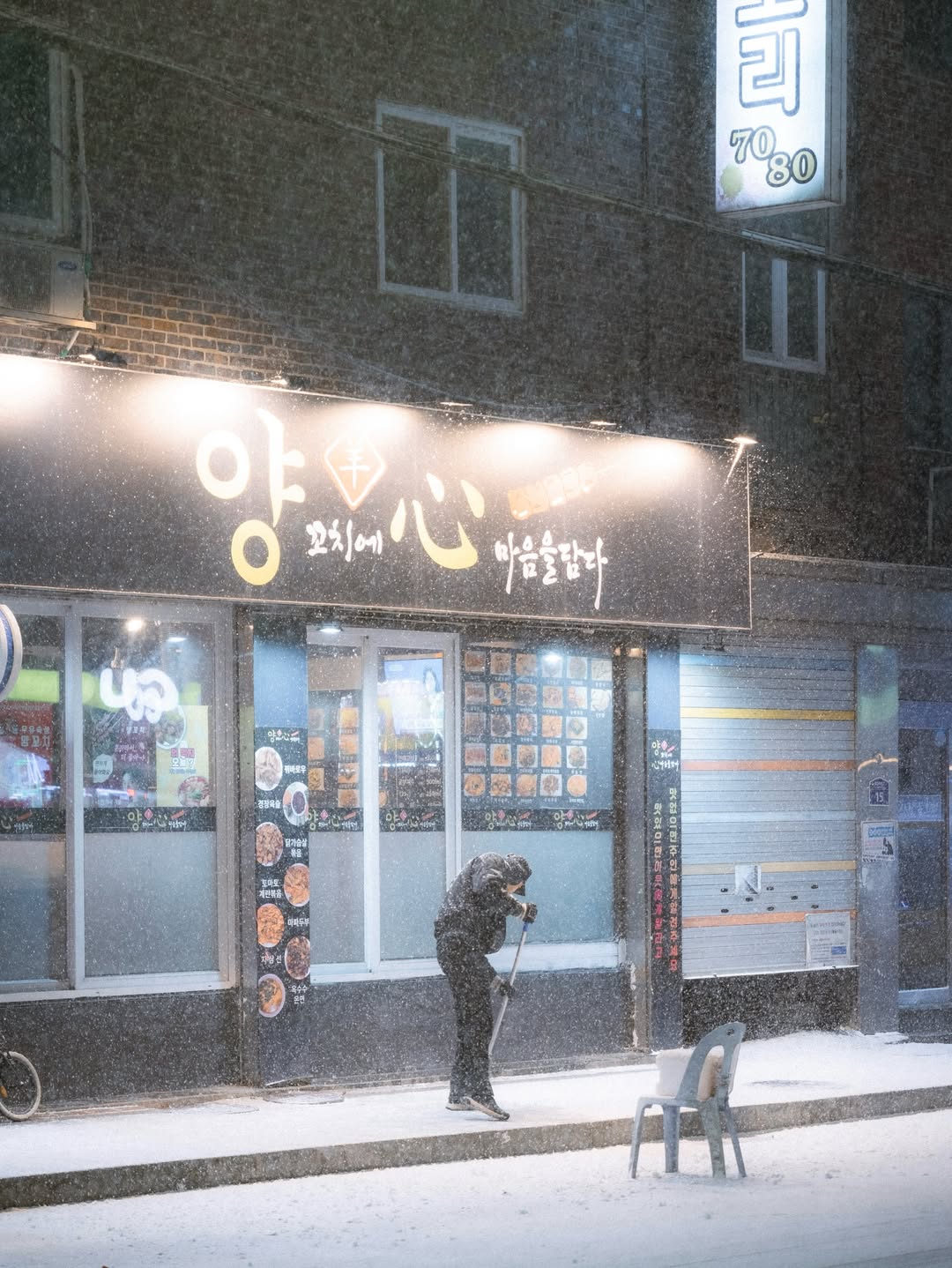 |
The heavy snowfall also led to cancellations, including a football match between Bucheon FC and Suwon FC at a stadium in Bucheon, Gyeonggi province.
 |
 |
 |
Over the weekend of 6-7/12, the cold air was expected to weaken as northwesterly winds gradually shifted to warmer westerly winds, leading to a slight increase in temperatures.
Mai Phuong (According to Korea Times, Yonhap)