Scientists recently released rare documentary footage of a small fish species named Parakneria Thysi, also known as Shellear fish, measuring 3,7 cm to 4,8 cm, in the lower Congo river.
According to Nature, this migration is one of nature's most extreme, as the fish directly confront gravity and swift currents to conquer the 15 m high waterfall.
Unlike most migratory fish that jump over waterfall steps, Parakneria Thysi choose to "walk" up. Thousands of individuals gather at the base of the falls, utilizing the wet rock edges to inch their way upwards. They begin their journey at the end of the rainy season, using small projections on their pectoral and pelvic fins to cling to the rock, wiggling their rear bodies to create propulsion and slide upwards.
On average, each fish takes 9 hours 45 minutes to complete the journey. However, this time is almost entirely spent resting, including 9 long one-hour breaks and 30 minutes of short pauses, totaling only 15 minutes of actual movement. Throughout this period, they face the risk of being swept away by the current or becoming prey for birds or human fishing activities.
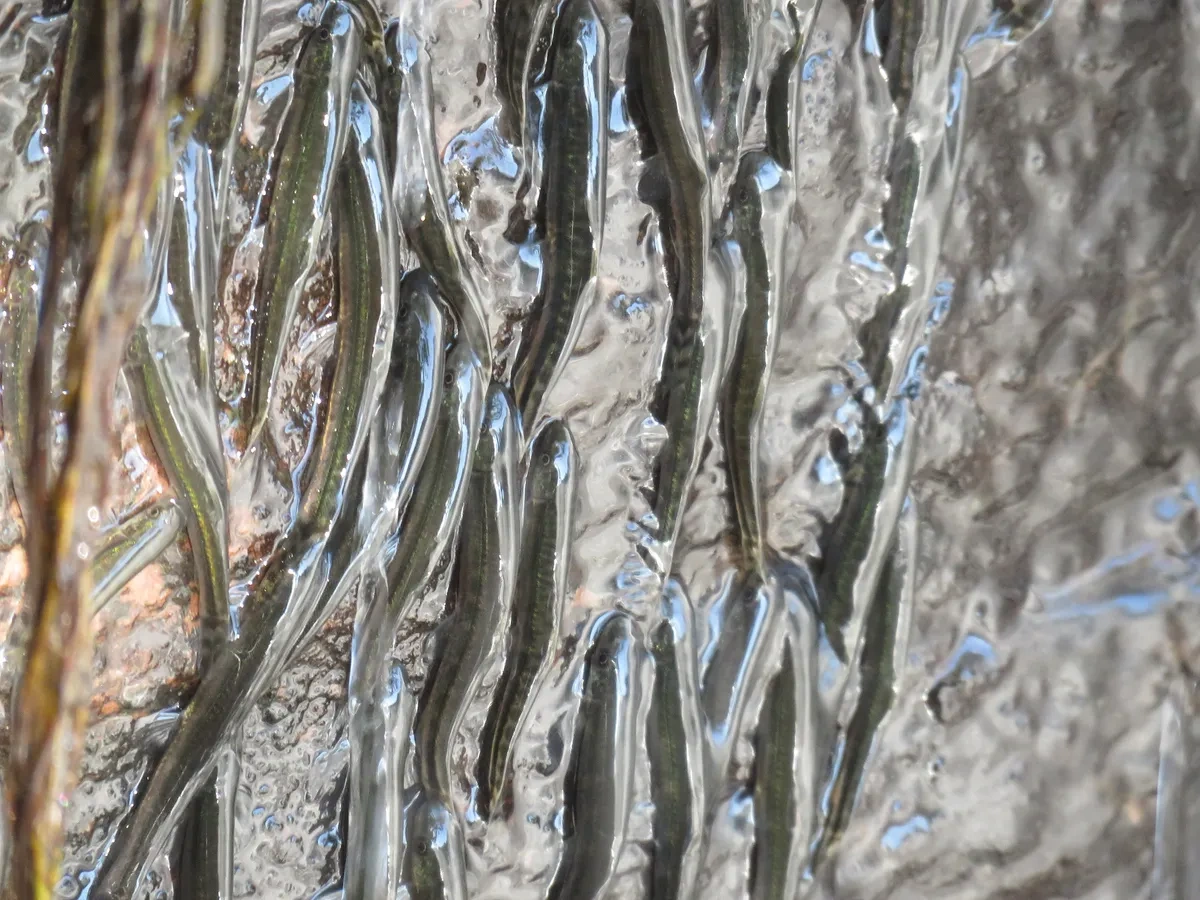 |
The small fish species is scientifically known as Parakneria Thysi. Photo: ZME Science |
According to Scientific Reports, scientists recorded this activity four times in 2018 and 2020. The driving force behind this migration is the instinct for reproduction. Above the steep waterfalls lies a tranquil upstream region with fewer predators and abundant food sources like algae and microorganisms on rocks. Conquering the falls allows Shellear fish to occupy an exclusive habitat where larger predatory fish cannot reach.
The migration season is believed to start in early 4 and end in 5 annually, when water levels decrease at the end of the rainy season. Fish climb the falls between 4 PM and 6 PM, coinciding with sunset, while the fewest numbers are recorded at sunrise.
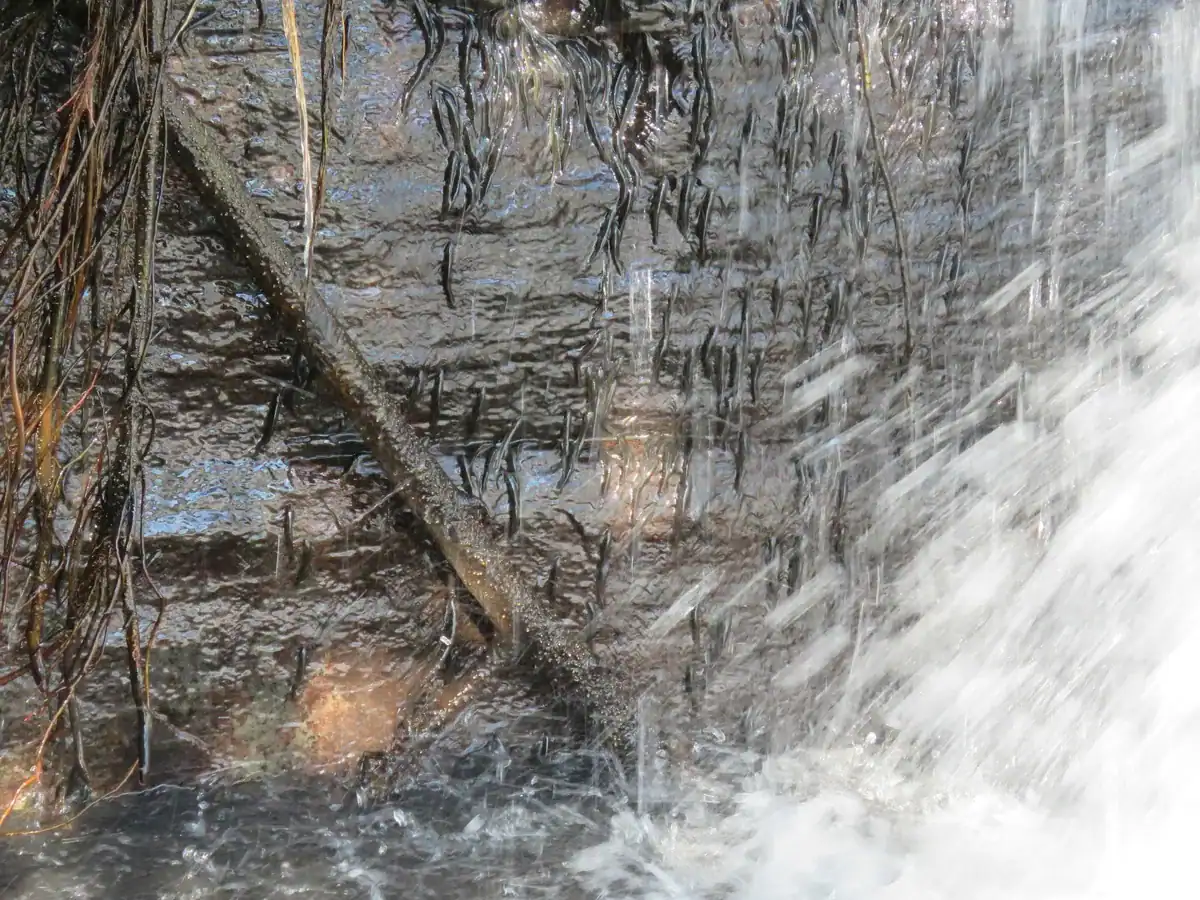 |
The small size of the fish directly confronts gravity and swift currents. Photo: ZME Science |
Despite their extraordinary adaptability, these fish still face threats from human fishing and irrigation.
The discovery of this fish's activity not only enriches the understanding of the Congo river ecosystem, the world's deepest river, but also provides environmental planners with a more cautious perspective when constructing hydropower projects, helping to avoid disrupting the unique migration route of this fish species.
Mai Anh (According to Nature, ZME Science, BBC Discover Wildlife)