A new coordination regulation, signed by the People's Committees of Quang Ninh province and Hai Phong City on 26/3, has established four common itineraries. This agreement, announced by the Ha Long - Yen Tu World Heritage Management Board, allows tourist boats to transport passengers flexibly between the two localities, enhancing visitor experience and streamlining travel.
The regulation includes specific operational guidelines. Overnight accommodation boats must anchor at designated points within their registered locality. To ensure safety and protect the heritage site, all tourist and high-speed passenger vessels are required to install AIS or GPS devices, maintaining continuous connection and data sharing between the Quang Ninh Port Authority and Hai Phong Port Authority. Operational hours are set from 5h to 20h in summer, and from 5h30 to 19h in winter. The managing locality will oversee vessels operating within its administrative boundaries and address any issues. Furthermore, boats must adhere to strict environmental standards, including effective wastewater treatment systems and a ban on single-use plastic products.
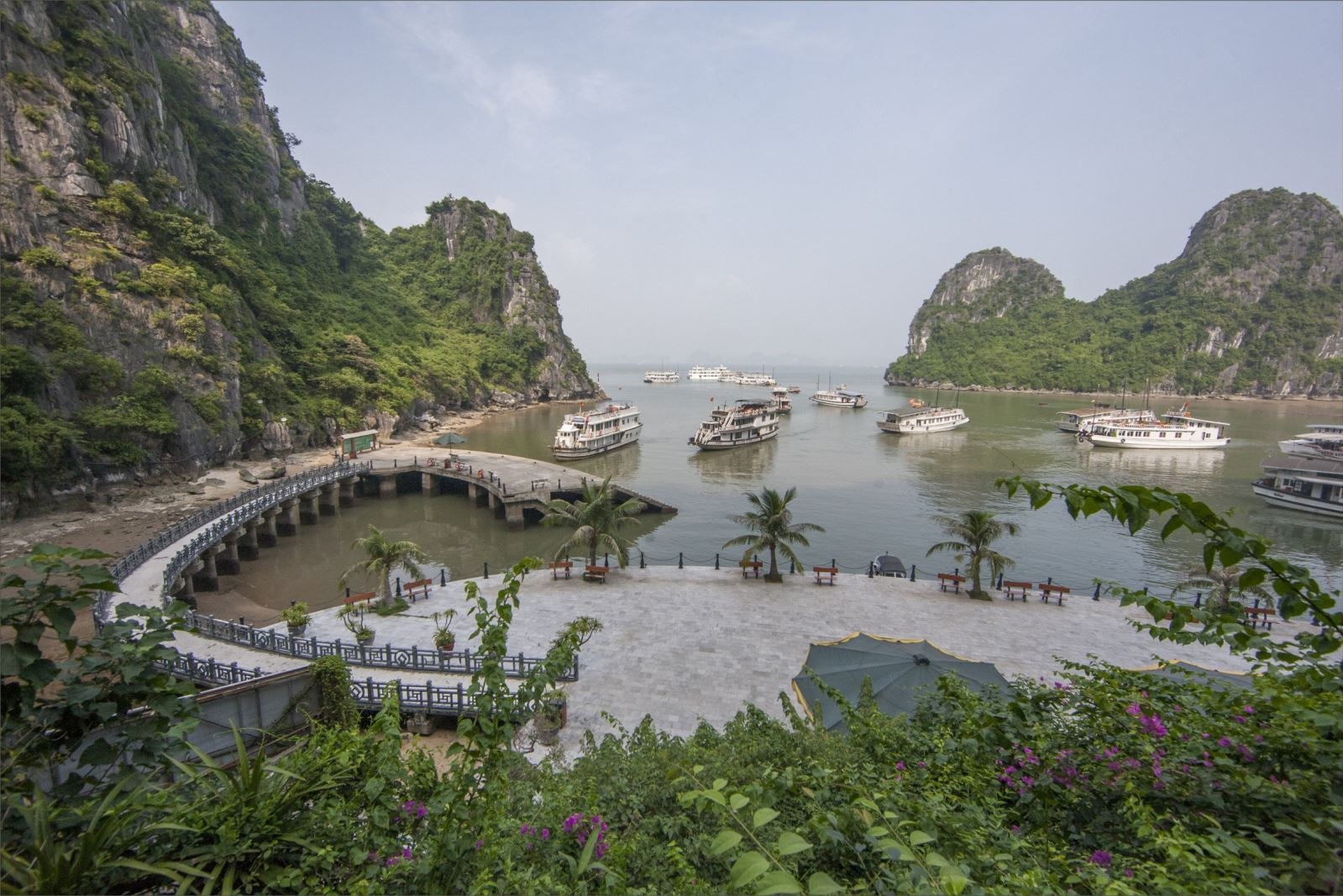 |
A boat tours Thien Cung cave in Ha Long Bay. Photo: Le Tan |
A boat tours Thien Cung cave in Ha Long Bay. Photo: Le Tan
Nguyen Thi Hanh, Vice Chairwoman of the Quang Ninh Provincial People's Committee, emphasized the significant development potential this coordination regulation brings. "The joint management of tourist boat operations between Ha Long Bay and Lan Ha Bay will unlock immense development potential for tourism in both localities," Hanh stated, "contributing to increased visitor numbers and enhancing the value of heritage exploitation for Quang Ninh province." She further directed the Ha Long - Yen Tu World Heritage Management Board to collaborate immediately with boat associations to establish unified standards. These standards must ensure that all vessels fully comply with technical safety and environmental protection requirements outlined in the Ministry of Construction's circulars for overnight tourist boats, floating restaurants, and hotels, alongside other relevant provincial safety regulations.
This initiative is projected to facilitate the movement of an additional 5,000 to 6,000 domestic and international tourists daily, along with over 50 overnight boats, traveling between Lan Ha Bay and Ha Long Bay. The four newly established common itineraries are:
- VHL3 - Lan Ha Bay: Connects Cua Van, Tien Ong cave, Ba Ham lake, Ba Men temple (Ha Long) with Tra Bau, Sang cave, Toi cave, Ba Trai Dao, and Cai Beo fishing village (Lan Ha).
- VHL4 - Lan Ha Bay: Passes through Co cave, Thay cave, Vong Vieng (Ha Long) to Sang cave, Toi cave, Ong Cam, and Gia Luan pier (Lan Ha).
- VHL5 - Lan Ha Bay: Connects iconic sites such as Thien Cung, Dau Go, Hon Trong Mai (Ha Long) with Gia Luan, Tra Bau, Sang cave, and Viet Hai gate (Lan Ha).
- VHL6 - Lan Ha Bay: Travels from Hon Chan Voi, Tung Lam island (Ha Long) to service points and Viet Hai pier in Lan Ha Bay.
Historically, Ha Long Bay, part of Quang Ninh, and Lan Ha Bay, part of Hai Phong City, are contiguous and share similar geographical features, effectively forming a single natural complex. Despite this, their separate administrative management, particularly concerning tourism operations, has posed challenges for both businesses and visitors. The new regulation addresses these long-standing issues. This initiative gained further urgency following the 2023 recognition of Ha Long Bay - Cat Ba Archipelago as a World Natural Heritage site. Therefore, the agreement not only enhances waterway traffic safety and security but also aligns with the broader goal of sustainable development and the protection of the heritage values, as recommended by UNESCO.
Le Tan