 |
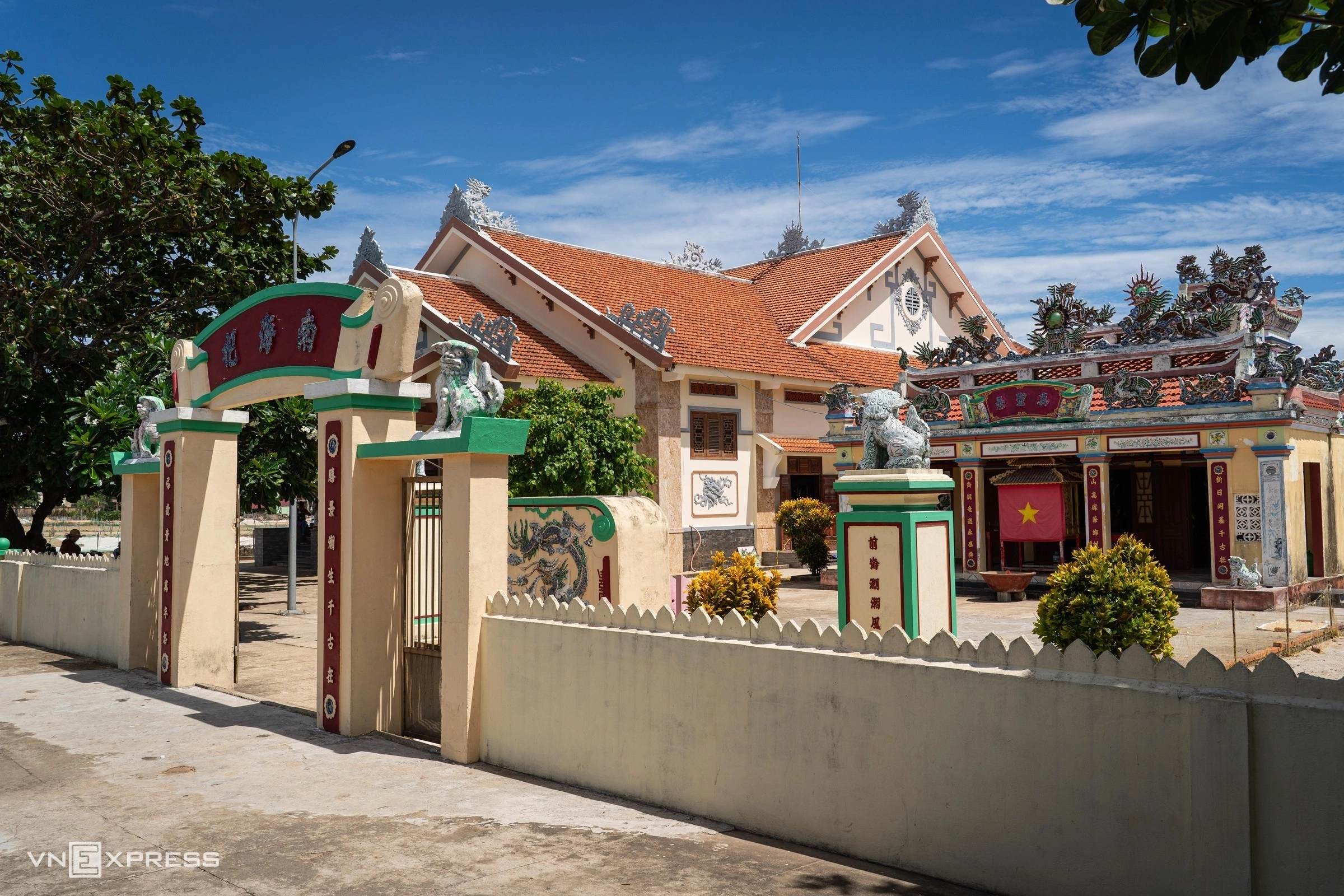
The temple's architecture is shaped like the Chinese character "tam" (three), featuring three interconnected buildings: the front hall, main hall, and rear sanctuary. Outside, a screen and pillars stand. The roofs are adorned with "two dragons adoring the moon" motifs and carvings of the four sacred animals, typical of communal temple architecture in central Vietnam. |
Tan Temple, a significant cultural site on Ly Son Island, is renowned for preserving the two largest whale skeletons in Vietnam. This unique destination attracts numerous visitors eager to delve into the island's deep-rooted traditions and history, particularly its connection to maritime life and the revered Ong whale worship.
The two prominent Ong whale skeletons at Tan Temple received recognition from the Vietnam Records Organization as the largest in the country on 6/2025. These revered remains were also bestowed the titles Dong Dinh Dai Vuong and Duc Ngu nhi vi ton than. In early 2022, experts undertook a comprehensive restoration project, recreating the skeletons in dynamic swimming poses, gracefully curving and propelling themselves forward. This extensive project, which included the construction of a dedicated exhibition house, involved a total investment of 14 billion VND.
Tan Temple, also known as So Dai Duong, is situated in An Vinh village, Ly Son special district. Originally constructed in 1832 during the 13th year of Emperor Minh Mang's reign, it underwent reconstruction in 1901. Due to significant sea encroachment, the local community relocated and rebuilt the temple in 2002.
Researchers suggest that the tradition of whale worship, known as Ong worship, originated with the Cham people before being adopted by the Vietnamese and Chinese. During the Nguyen dynasty, folklore tells of King Gia Long bestowing the title "Nam Hai deity" upon the Ong whales, encouraging their veneration in remembrance of a whale that had saved him.
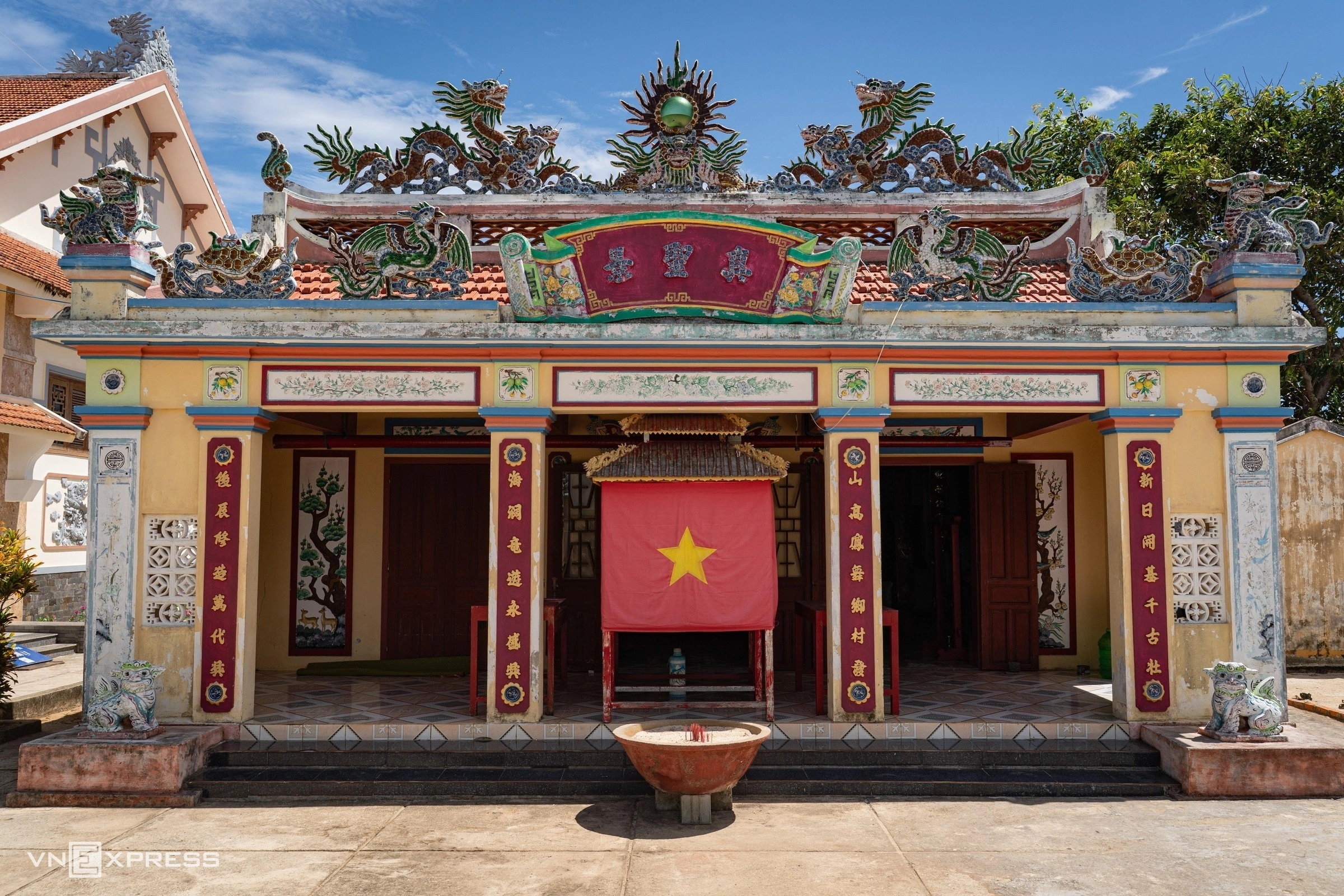 |
The temple's main hall (pictured) features three sections, housing altars dedicated to the Ong whales and other revered local deities. The interior is arranged for locals to perform rituals, offer incense, and commemorate the Ong whales that drifted ashore in Ly Son's waters. |
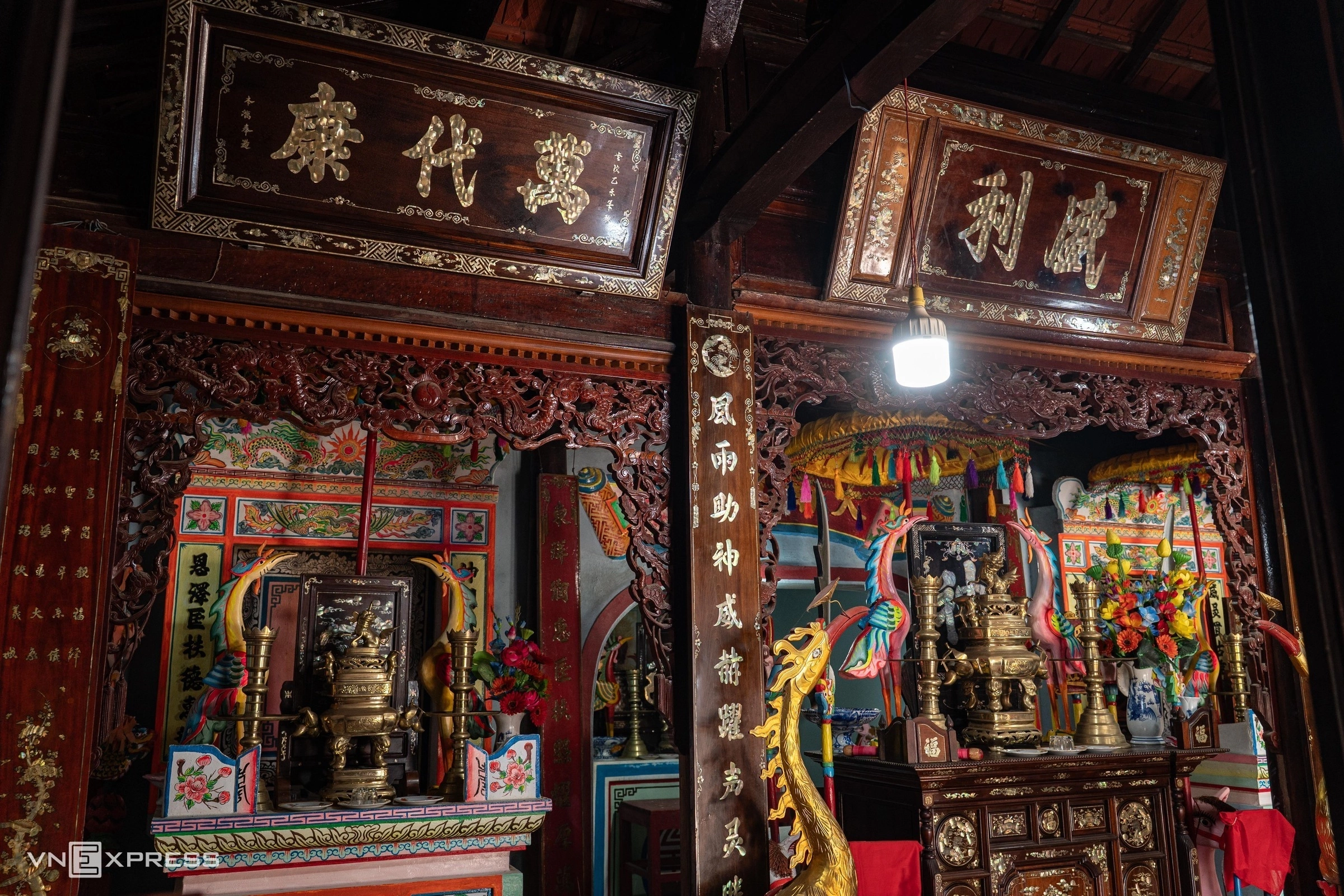 |
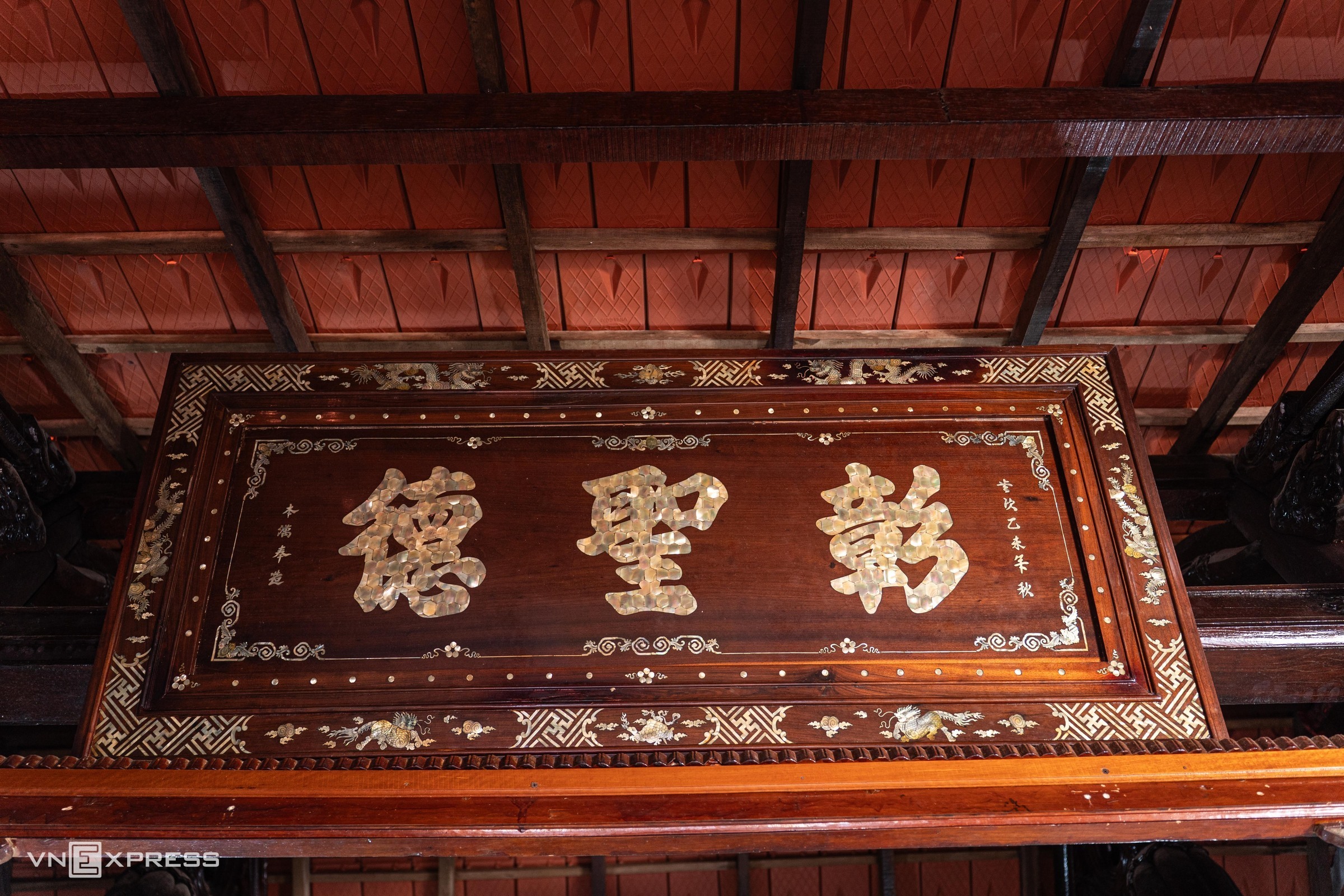
A horizontally inlaid mother-of-pearl plaque adorns the central section of Tan Temple's main hall. |
 |
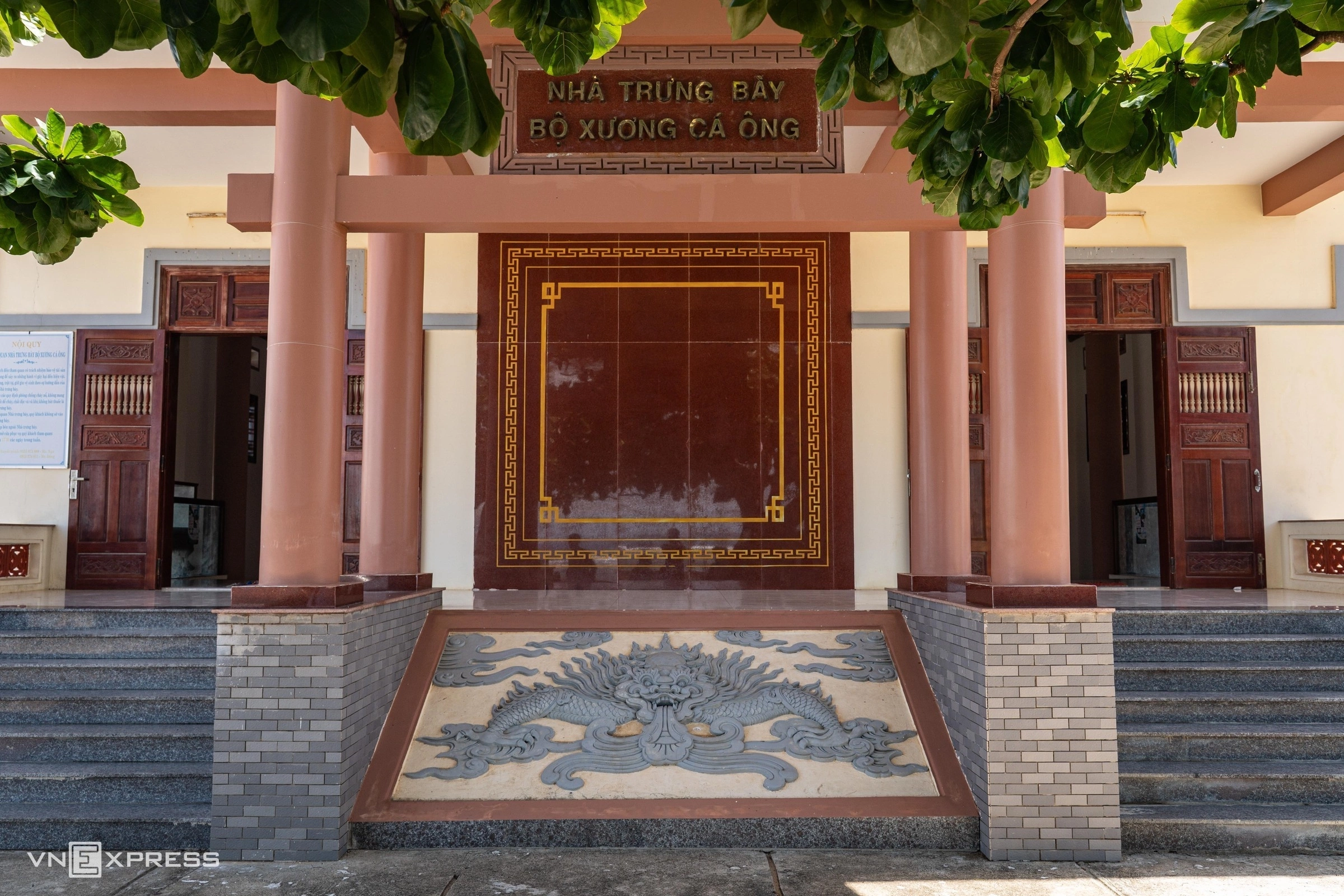
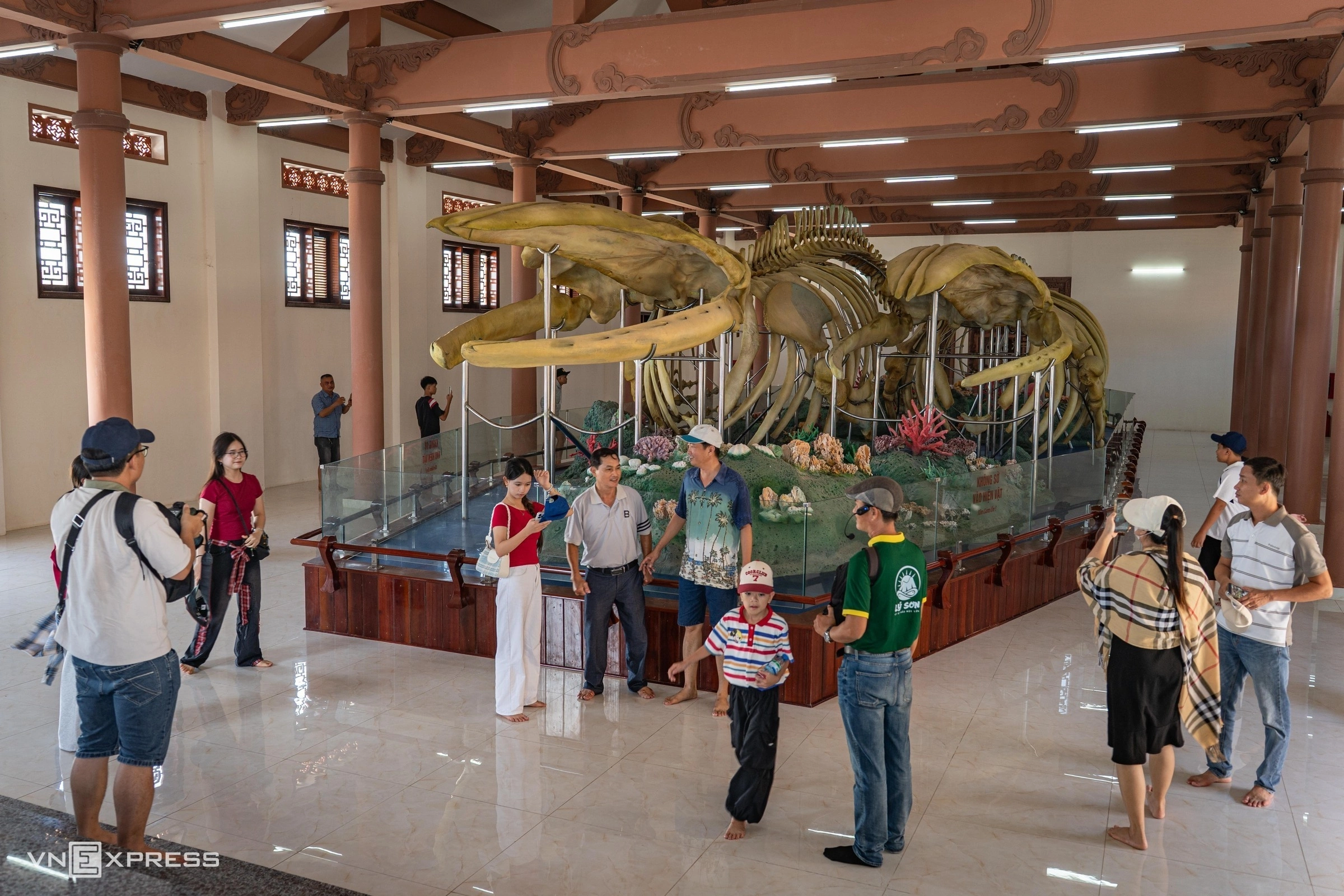
To the right of the main shrine stands the exhibition house for the Ong whale skeletons. Ly Son is home to 7 temples dedicated to Ong whales, each preserving dozens of "jade bones" (skeletons) ranging from several decades to over 300 years old. The two Ong whale skeletons at Tan Temple were recognized by the Vietnam Records Organization as the largest in Vietnam on 6/2025 and were bestowed the titles Dong Dinh Dai Vuong and Duc Ngu nhi vi ton than. |
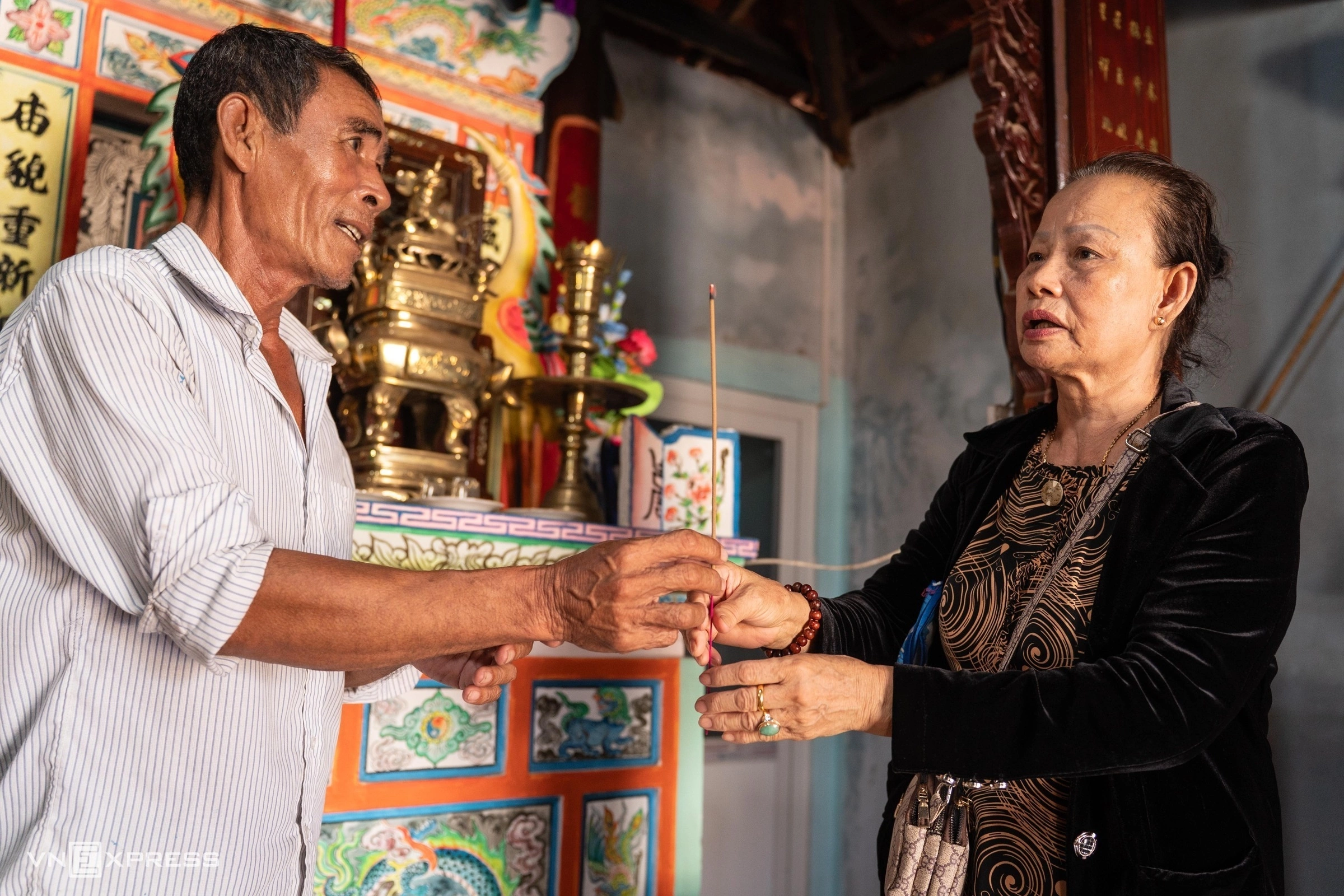
Pham Trai, at 60 years old and the caretaker of Tan Temple, states that island records indicate two Ong whales drifted ashore in the early 19th century. Following their deaths, the local fishing community organized elaborate funeral ceremonies. Annually, the temple hosts four major festivals at the beginning and end of the year, in addition to two death anniversaries for the Ong whales. Fishermen gather to perform worship rituals, seeking safe voyages and prosperous catches.
 |
In early 2022, experts fully restored the two whale skeletons at Tan Temple, recreating them in dynamic swimming poses, gracefully curving and propelling themselves forward. The restoration project, including the exhibition house construction, involved a total investment of 14 billion VND. |
 |
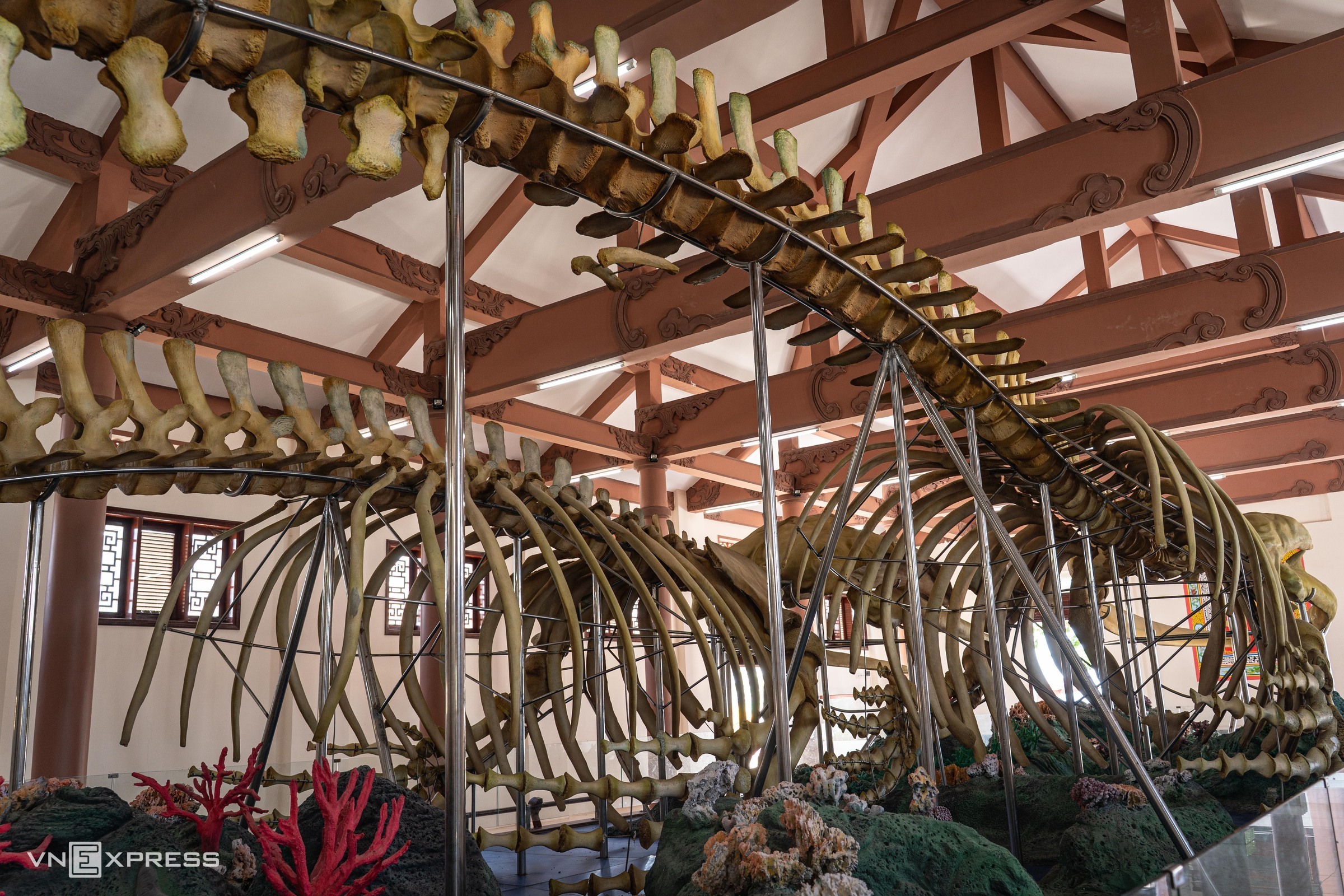
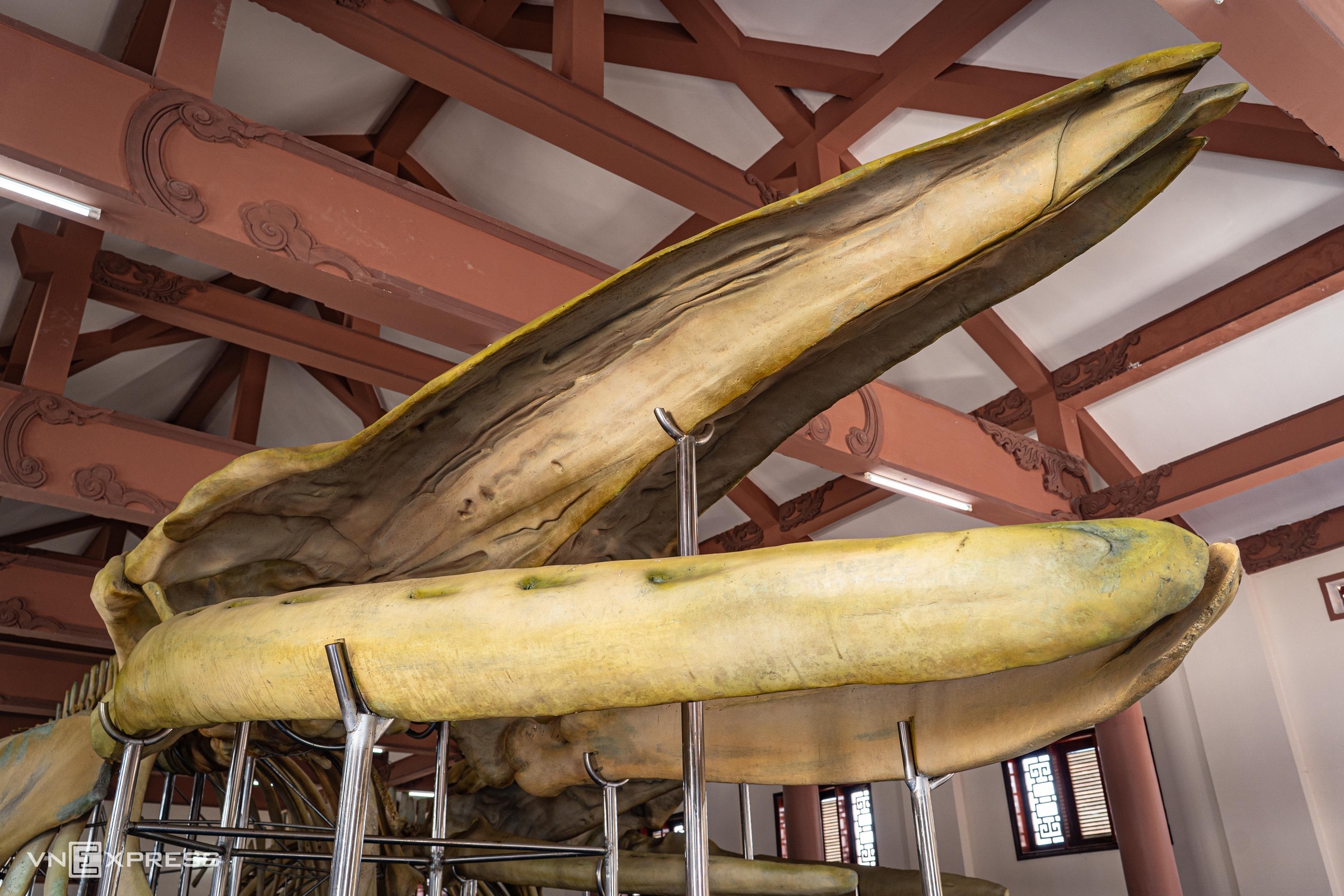
The construction team fabricated support frames, plasticized some decayed bone sections, and recreated the entire whale head using composite plastic. |
 |
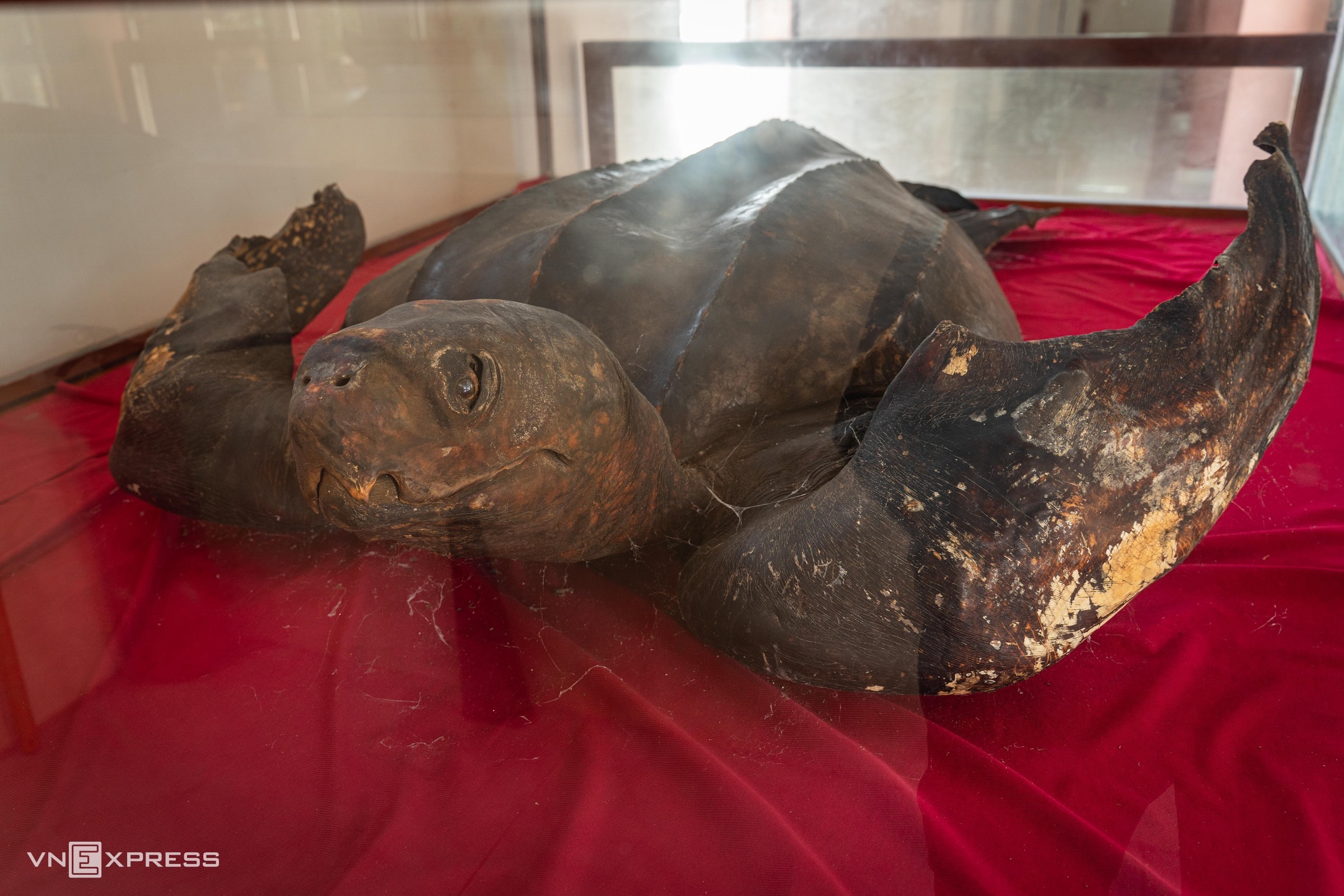
A sea turtle specimen displayed within the whale skeleton exhibition house. |
The restored "Dong Dinh Dai Vuong" measures 22 m in length, while "Duc Ngu nhi vi ton than" is 18 m long. Each skeleton comprises 50 vertebrae, 28 ribs measuring nearly 10 m, a skull 4 m high, and a tusk 4,7 m long.
 |
 |
 |
Tan Temple is situated along Ly Son's cultural and historical sightseeing route. Visitors can combine their visit with An Vinh Communal House and the Hoang Sa and Bac Hai Flotilla Exhibition House before proceeding to Hang Pagoda, Thoi Loi Mountain, and To Vo Arch. The site offers free admission. Visitors are requested to wear modest attire, maintain silence, refrain from touching sacred items, and observe the temple's regulations during their visit.
By Tuan Anh
*Photos: Hoang Giang*