Electronic locks may appear on passenger luggage after X-ray screening at Korean international airports. If a suitcase is unsuitable for a lock, airport staff may use a paper label instead. These four lock colors each correspond to a different category of goods, signaling specific inspection requirements.
Passengers encountering a lock or inspection label on their luggage must not remove, move, or tamper with the seal. Travelers should inspect their luggage and fully declare all regulated items to avoid penalties.
Each color indicates a specific type of item requiring attention:
Yellow locks are typically used when luggage is suspected of containing cigarettes, alcohol, or luxury items exceeding the 600 USD duty-free allowance.
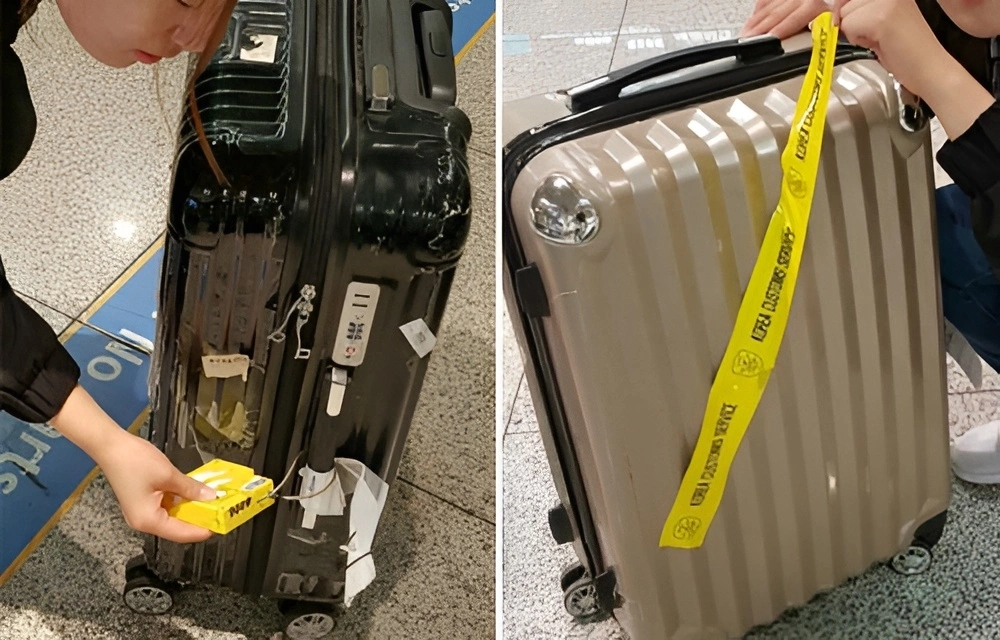 |
Passenger luggage containing items requiring inspection will be affixed with a lock (left) or a paper label by Korean airport authorities. *Segye Ilbo* |
Red indicates that luggage may contain security threats such as sharp weapons, firearms, or explosives, requiring further inspection.
Green locks are used for animal products such as meat and sausages.
Orange is for plants, vegetables, or fruits subject to quarantine.
Animal products requiring declaration:
Passengers carrying live animals, animal products, or those who have visited farms or worked with animals, must complete inspection procedures. Items requiring declaration include: beef, pork, lamb, chicken; processed meats like ham, sausages, beef jerky, canned meat; products from bones, horns, ivory; eggs; and dairy products such as milk, cheese, and butter.
Live animals and animal products entering South Korea must possess a valid quarantine or heat treatment certificate issued by the country of origin. Products originating from or transiting through prohibited areas, including live animals and processed meat, are not permitted entry.
Plant quarantine regulations:
Passengers carrying plants, fruits, vegetables, seeds, orchids, seedlings, cut flowers, soil, and similar products must declare them to customs for inspection. Items requiring declaration include: fruits, vegetables, cut flowers, seeds, young plants, bulbs, roots, nuts, fresh or dried agricultural products, medicinal herbs, and various other plant products.
Most fresh fruits and vegetables are prohibited from entry. Additionally, South Korea prohibits: rice plants, husks, straw, and related products (except milled rice); walnuts in their shells; unripe beans; unpeeled potatoes and sweet potatoes; and plants used for sowing and seedlings. Pests and live insects, including those kept as pets, are also prohibited. Certain prohibited seedlings and cuttings include those from the Maloideae subfamily (such as apples and pears), the Rutaceae subfamily (such as tangerines and oranges), grapevines, and pine trees.
By Anh Minh (According to Segye Ilbo, Visit KTO)